
iTechGuides is reader-supported. When you buy through links on our site, we may earn an affiliate commission. As an Amazon Associate I earn from qualifying purchases. Learn more
RobStride actuators combine a motor, reducer and driver in an integrated unit intended for robot joints and other applications. To choose and control one, match its model-specific torque, mass, dimensions, voltage and mounting to the joint, then verify the CAN hardware and software protocol against the exact motor and firmware. Product-page figures are manufacturer-listed specifications—not independent performance tests.
What a RobStride integrated actuator includes
RobStride describes the RS00 as an integrated motor, reducer and driver for robot joints and other applications. In practice, “integrated” describes the actuator assembly; it does not mean that a host computer can connect without a compatible power supply, CAN interface, wiring and control software. See RobStride’s RS00 product page for its description.
RobStride’s model pages list different torque, mass and reduction-ratio values. Treat each as a starting point for selection, not as proof that a motor can meet a particular robot’s needs. The values below are manufacturer specifications; the pages did not state a publication year.
Recommended Free Tools
How to compare models for a joint
These models illustrate why the model number matters. “Peak load” and “peak torque” are the wording used on the respective pages; do not assume that peak torque is continuously available. Confirm rated load, thermal limits and operating conditions in the full documentation before sizing a joint.
#1 Best Overall

- Highly-integrated Includes motor, driver circuitry, planetary reducer, and dual magnetic encoders in a compact 405g four-in-one design
- Reliable Connection Equipped with XT30PB electrical terminals ensuring stable high-current power and signal transmission
- Dual Encoder Features 14-bit dual magnetic encoders for high-precision feedback and control
- Wide Voltage Compatibility Supports 24-60V input range, perfectly optimized for 48V battery-powered robotic systems
- High Torque Density Delivers 17 N.m peak torque with a 7.75:1 reduction ratio, ideal for high-performance quadruped and humanoid robots
| Model | Listed peak load or torque | Listed mass | Reduction ratio |
|---|---|---|---|
| RobStride 00 | 14 N·m peak load | 310 g ± 10 g | 10:1 |
| RobStride 01 | 17 N·m peak torque | 380 g | 7.75:1 |
| RobStride 05 | 5.5 N·m peak load | 191 g ± 10 g | 7.75:1 |
| RobStride 06 | 36 N·m peak load | 621 g ± 10 g | 9:1 |
Sources: RobStride’s 00, 01, 05 and 06 product pages. These figures are listed specifications, not results from a head-to-head test.
Start with joint loads, not the peak figure
Estimate the torque and speed the joint needs across its actual operating cycle, including the load, acceleration, gravity and duty cycle. Then check the selected model’s rated operating limits and thermal guidance in its manual. A peak figure alone cannot establish whether an actuator is suitable or how long it can sustain a load.
Rank #2

- Highly-integrated Includes motor, driver circuitry, planetary reducer, and dual magnetic encoders in a compact 3-in-1 design
- Education Focused Specifically optimized for developers and educational users, offering a cost-effective solution ($80) for robotic learning
- Dual Encoder Features 14-bit dual magnetic encoders for precise position recognition and control
- Wide Voltage Compatibility Supports 15-60V input range (Rated 48V), adaptable to various power supply systems
- High Torque Output Delivers 6 N.m peak torque with a 9:1 reduction ratio using powder metallurgy gears
Check the mechanical and electrical envelope
- Compare actuator mass and dimensions with the robot’s payload and available space.
- Confirm the mounting pattern and required clearances against the full model documentation and your joint design.
- Match the model’s rated and allowable voltage to the power system; do not transfer voltage specifications from one model page to another.
- Account for encoder, control, thermal and environmental requirements, as well as the CAN and software stack available to your host.
The RS00 page lists a 48 V rated voltage, a 24–60 V voltage range and a CAN baud rate of 1 Mbps. These are RS00 page specifications, not defaults for the other models. Check the chosen actuator’s current documentation before designing its supply or bus configuration.
Crashes, No Sound, or Screen Glitches?
Random freezes, missing sound and display glitches usually trace back to one bad driver. Find and replace yours safely.Free scan · under a minutePC Slower Than It Used to Be?
A free scan shows the junk files, broken settings and background clutter dragging Windows down - then fixes them in one click.Free scan · Windows 10 & 11What to verify in the CAN and host setup
RobStride’s RS04 manual describes a CAN-to-USB debugging arrangement: “The joint motor adopts CAN communication method, with two communication lines connected to the debugger through CAN to USB tool.” It recommends a YourCee USB-CAN module for that setup and specifies a serial-protocol frame header of 41 54 and frame tail of 0D 0A. Those details document the manual’s RS04 debugger setup; they do not establish compatibility for every actuator, adapter or host. Consult the RobStride 04 manual and confirm the exact hardware combination you plan to use.
Rank #3

- Highly-integrated: Features a four-in-one design integrating driver, motor, planetary reducer, and dual magnetic encoders in a lightweight 880g package.
- High Torque Density: Delivers 60 N.m peak torque with a 9:1 reduction ratio, achieving a torque density of 66.67 N.m/kg.
- Dual Encoder: Equipped with dual magnetic encoders for high-precision position feedback.
- Wide Voltage Compatibility: Supports 15-60V input range (Rated 48V), optimized for modern battery-powered robots.
- Convenient Development: Comes with comprehensive debugging software, modules, and sample programs for easy development.
Before connecting a host, check the selected motor’s manual for the bus bitrate, frame format, IDs, termination, wiring, power requirements and any required setup sequence. The cited robstride_driver hardware guide discusses SocketCAN-compatible and official RobStride USB-CAN options in its RS02 setup. It can inform implementation choices, but it is not a substitute for the manufacturer’s instructions for your model.
Are prefabricated cables required?
The available manual documents CAN lines connected through a CAN-to-USB debugger, but does not establish that prefabricated cables are generally required or identify a universal cable specification. Before buying or making a cable, use the exact model’s wiring documentation to confirm connector, pinout and electrical requirements. A community discussion includes one person asking about prefabricated XT20+20 cables; that question alone does not show that they are necessary.
Rank #4

- Highly Integrated Design: Features an integrated 4-in-1 structure that combines the driver, motor, planetary gearbox, and dual magnetic encoders into one compact unit, helping simplify system layout and reduce installation complexity.
- High Torque Output: Built with a 9:1 reduction ratio and capable of delivering up to 120 N·m peak torque, offering strong torque performance in a compact form factor for demanding motion applications.
- Dual Magnetic Encoders: Equipped with dual magnetic encoders to support accurate motion sensing and position feedback, helping improve control performance and operational stability.
- Wide Input Voltage Range: Supports a 15V–60V input range with 48V as the rated voltage, making it suitable for a variety of power system designs, including many battery-powered robotic platforms.
- Development-Friendly and Application Ready: Includes debugging software, functional modules, and sample programs to support evaluation and development. Suitable for use in robotics, automation equipment, and other motion control applications.
Why a software library may not work out of the box
A CAN connection is only one part of integration. A library must also encode and decode the protocol and control mode that the selected motor and firmware expect. A community SDK describes a useful three-layer architecture—motor API, protocol serialization/deserialization and transport—which helps locate where a mismatch may occur. Its architecture is an implementation reference, not a vendor compatibility guarantee; see the SDK architecture documentation.
Quick wins for a faster PC:
Scan for outdated or missing drivers - takes under a minuteDriver Scan →Repair Windows errors before they cause bigger problemsFix Now →Fix the driver behind crashes, sound loss and screen glitchesFind Drivers →Requirements can be specific to a software path. The cited LeRobot RobStride implementation states that its motor implementation uses CAN and requires MIT control mode for compatibility with that implementation. That is not evidence that every RobStride motor or library requires MIT mode.
Best Value
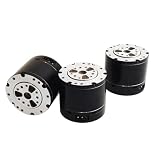
- ROBSTRIDE00:QDD 14N.m integrated actuator module
Community protocol notes also warn that behavior may differ between firmware revisions. Treat protocol details from third-party repositories as version-sensitive, and defer to current official documentation for deployment decisions. The HIRO Industries protocol notes describe private-protocol frame layout and firmware variation.
A practical integration sequence
- Choose the exact model. Record its full model designation and use that model’s product page and manual rather than extrapolating from another actuator.
- Validate joint sizing. Compare required torque and speed, actuator mass and volume, mounting, voltage, thermal conditions and control needs with the model’s documented limits.
- Confirm the bus and adapter. Verify wiring, pinout, bitrate, IDs, termination, power and frame format in the selected model’s documentation; confirm the host interface and adapter support the intended setup.
- Check the software path. Identify the library’s supported transport, protocol and control mode, then verify that the selected motor and firmware meet those assumptions.
- Test and capture useful diagnostics. Follow the manufacturer’s setup guidance, then record the model, firmware version and bus configuration. If troubleshooting, capture a redacted CAN trace that removes sensitive information while preserving the relevant frames and timing.
Keeping those details together makes a software or bus mismatch easier to distinguish from a power, wiring or model-selection problem. Product specifications and community repositories can change, so confirm current documents and library behavior for the hardware and software versions you will deploy.
Quick Recap
Product prices and availability are accurate as of the date/time indicated and are subject to change. Any price and availability information displayed on Amazon at the time of purchase will apply.

