
Free tools Windows power users keep installed
One-click scans. No signup required.
Yes, it may be possible as an experimental setup, but a Raspberry Pi 4 Model B is not a Mojang-certified client platform, and reliable performance is not guaranteed. You need a 64-bit ARM Linux system, Java 17 or later, and a launcher with ARM64-compatible libraries. The Pi 4’s Vulkan 1.0 capability is below Mojang’s current Vulkan 1.3 minimum target, so the current requirements do not support a promise of smooth play.
What running 1.18.2 on a Pi 4 involves
Minecraft Java Edition 1.18 uses Java 17. Mojang’s 2021 technical notes say custom Java setups and third-party launchers need Java 17 or later. On a Pi 4, that means finding not only the right Java version but an ARM64 build and a launcher whose libraries and rendering path work with the system.

Mojang’s 1.18.2 release notes tell players to install the release by opening the Minecraft Launcher and clicking Play. That instruction describes the standard launcher flow; it does not establish support for an official Raspberry Pi ARM build. Do not assume the standard launcher will install or run on a Pi 4.
Mojang’s release notes also describe universal tags, the placefeature command, experimental data-pack customization for cave generation and custom structures, and a warning that 32-bit users were approaching end of support. Those are release details, not evidence that the Pi 4 client is supported.
Quick wins for a faster PC:
Repair Windows errors before they cause bigger problemsFix Now →Fix the driver behind crashes, sound loss and screen glitchesFind Drivers →Clear out junk files and repair common Windows errorsFree Scan →#1 Best Overall
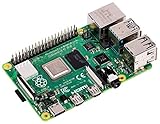
- Broadcom BCM2711, Quad core Cortex-A72 (ARM v8) 64-bit SoC @ 1.5GHz
- 1GB, 2GB, 4GB or 8GB LPDDR4-3200 SDRAM (depending on model)
- 2.4 GHz and 5.0 GHz IEEE 802.11ac wireless, Bluetooth 5.0, BLE Gigabit Ethernet
- 2 USB 3.0 ports; 2 USB 2.0 ports.
- Raspberry Pi standard 40 pin GPIO header (fully backwards compatible with previous boards)
How the Pi 4 compares with current Minecraft requirements
Raspberry Pi lists the Model B with a 64-bit Broadcom BCM2711 quad-core Cortex-A72 CPU at 1.8GHz, VideoCore VI graphics, OpenGL ES 3.1, Vulkan 1.0, and memory options from 1GB to 8GB. Mojang’s current minimum target, published in 2026, is 1080p at 30 FPS on the Fast preset, with a four-core CPU, Vulkan 1.3-capable graphics with at least 2GB VRAM, and either 8GB of system memory with discrete graphics or 12GB with integrated graphics.
| Area | Raspberry Pi 4 Model B | Mojang’s current minimum target | What that means |
|---|---|---|---|
| CPU | Quad-core Cortex-A72 at 1.8GHz (Raspberry Pi specification) | Four-core CPU (Mojang, 2026) | The core-count description matches, but that alone does not establish equivalent performance. |
| Graphics API | OpenGL ES 3.1 and Vulkan 1.0 (Raspberry Pi specification) | Vulkan 1.3-capable graphics (Mojang, 2026) | The Pi 4’s listed Vulkan version is below Mojang’s current target. |
| Memory | 1GB, 2GB, 3GB, 4GB, or 8GB LPDDR4-3200 (Raspberry Pi specification) | 8GB with discrete graphics or 12GB with integrated graphics (Mojang, 2026) | The Pi 4’s graphics are integrated; even the 8GB board is below the listed 12GB target for integrated graphics. |
| Performance target | No standardized, reproducible Pi 4 benchmark for the 1.18.2 client is established here. | 1080p at 30 FPS on Fast (Mojang, 2026) | Do not treat the target as a Pi 4 result or infer a frame rate from it. |
The 2026 requirements are a current comparison point, not a Pi-specific test or a retrospective statement of 1.18.2’s original minimum requirements. The mismatch makes the Pi 4 an experimental client target rather than a modern Java gaming PC with assured compatibility.
Rank #2

- Includes Raspberry Pi 4 4GB Model B with 1.5GHz 64-bit quad-core CPU (4GB RAM)
- Includes Pre-Loaded 32GB EVO+ Micro SD Card (Class 10), USB MicroSD Card Reader
- CanaKit Premium High-Gloss Raspberry Pi 4 Case with Integrated Fan Mount, CanaKit Low Noise Bearing System Fan
- CanaKit 3.5A USB-C Raspberry Pi 4 Power Supply (US Plug) with Noise Filter, Set of Heat Sinks, Display Cable - 6 foot (Supports up to 4K60p)
- CanaKit USB-C PiSwitch (On/Off Power Switch for Raspberry Pi 4)
Choose an installation route carefully
ARM64 Linux with a compatible launcher
Use a 64-bit Raspberry Pi OS or another ARM64 Linux installation, Java 17 or later, and a launcher that supplies libraries compatible with ARM64. The launcher must also offer a rendering path that works with the Pi’s graphics stack. Compatibility depends on the particular OS, drivers, launcher, and renderer; the available facts do not establish one universal Pi 4 installation recipe.
PojavLauncher’s documentation discusses renderer options, including Holy GL4ES as its default performance renderer and device-specific limitations for Vulkan/Zink. Its main project focus is mobile platforms, so its renderer documentation can inform experimentation but does not certify a Pi 4 setup.
Rank #3

- Includes Raspberry Pi 4 4GB Model B with 1.5GHz 64-bit quad-core CPU (4GB RAM)
- CanaKit 3.5A USB-C Power Supply with Noise Filter (UL Listed) specially designed for the Raspberry Pi 4 (5-foot cable)
- CanaKit USB-C PiSwitch (On/Off Power Switch)
- Set of 3 Aluminum Heat Sinks for the Raspberry Pi 4
Community-documented native-launcher method
A Raspberry Pi forum guide from 2020 describes an unofficial Pi 4 Java setup and calls for a 5.1V, 3.0A supply and an open-sided or fan-cooled case. Treat this as a dated community report, not current compatibility certification or a guarantee that the same steps work with a present-day OS or launcher.
Whichever route you investigate, use a valid Minecraft account and comply with Mojang/Microsoft licensing. Do not assume an unofficial launcher or setup removes the need for a licensed account.
Set up the board and display
Raspberry Pi’s listed interfaces and power requirements imply a few practical basics: game and operating-system storage on microSD, a display connection through one of the two micro-HDMI ports, and a USB-C supply rated for at least 3A. Raspberry Pi lists an ambient operating range of 0–50°C. Those specifications help you assemble a functional system; they do not predict Minecraft frame rate.
Cooling and adequate power are sensible reliability precautions. The 2020 community guide recommends active cooling, but neither it nor the board specifications establish that a particular fan or case increases FPS.
Outdated Drivers Are Slowing You Down
One free scan finds every outdated or missing driver and matches the right update for your exact hardware.Free scan · exact hardware matchWindows Errors? Fix Them Before They Spread
Repair common Windows errors and clear accumulated junk for a smoother, more stable PC - no reinstall needed.Free scan · no reinstallBest Value
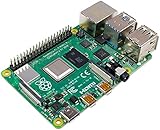
- Broadcom BCM2711, quad-core Cortex-A72 (ARM v8) 64-bit SoC @ 1. 5GHz
- 2. 4 GHz and 5. 0 GHz IEEE 802. 11b/g/n/ac wireless LAN, Bluetooth 5. 0, BLE
- 2 × USB 3. 0 ports, 2 x USB 2. 0 Ports
- 2 × micro HDMI ports supproting up to 4Kp60 video resolution
- Micro SD card slot for loading operating system and data storage
Tune for stability before chasing speed
- Start with modest graphics settings. Use a low render distance and simulation distance, and reduce the resolution if the display setup allows it. The goal is to lower the workload before judging whether the launcher and renderer are stable.
- Keep the software path simple. Begin with vanilla Minecraft or a lightweight optimization approach rather than layering many changes at once.
- Allocate memory conservatively. Minecraft Help warns that mismatched memory allocation can cause crashes, lag, or stuttering, and notes that JVM arguments control allocation. There is no one allocation value established here for every Pi 4 configuration.
- Change one setting at a time. If stability or responsiveness changes, you can identify which adjustment mattered instead of guessing among several simultaneous changes.
- Back up worlds before editing JVM arguments. Minecraft Help specifically advises backing up worlds before changing these arguments.
- Test renderer choices on the actual board. GL4ES and Vulkan/Zink behavior is device- and driver-dependent. Documentation supports trying compatible paths; it does not establish a universal best renderer or a guaranteed frame rate.
What performance claims can—and cannot—tell you
No standardized, reproducible benchmark for the Minecraft 1.18.2 client on a Pi 4 is established here. Forum FPS reports can differ in operating system, drivers, renderer, resolution, render distance, and board configuration, so they should not be presented as a universal expectation. A useful report should identify those settings and the exact hardware and software tested.
Quick Recap
Product prices and availability are accurate as of the date/time indicated and are subject to change. Any price and availability information displayed on Amazon at the time of purchase will apply.

