
Free tools Windows power users keep installed
One-click scans. No signup required.
iTechGuides is reader-supported. When you buy through links on our site, we may earn an affiliate commission. As an Amazon Associate I earn from qualifying purchases. Learn more
Sometimes—but the i3 and i7 labels alone cannot tell you whether an upgrade will work. For a desktop, the exact i7 must be supported by the motherboard, chipset, and BIOS. For a laptop, the processor is often soldered in place and may not be replaceable. Check the computer or motherboard maker’s support information for your exact model before buying a CPU.
What determines whether an i3-to-i7 upgrade will work?
Compatibility depends on the exact processor and computer, not simply the processor tier. For a desktop, verify the proposed i7 against the motherboard or system maker’s supported-processor list, including its socket, chipset, and required BIOS version. Intel advises checking those details before replacing a processor; missing BIOS support can prevent the system from booting or displaying an image (Intel Desktop Processor Upgrade Information).
For a laptop, the decisive question is whether the CPU is physically replaceable. Laptop processors are frequently soldered to the motherboard, in which case an upgrade may not be possible (Intel laptop processor guidance).
Why the socket and processor name are not enough
Even processors that appear to use the same socket may require different chipsets. Intel’s compatibility reference lists LGA1151 for multiple processor generations, but says i7-87xx processors require Intel 300 Series chipset boards and are not compatible with Intel 100 or 200 Series boards (Intel desktop processor compatibility).
#1 Best Overall

- Game Without Compromise. Play harder and work smarter with Intel Core 14th Gen processors
- 20 cores (8 P-cores plus 12 E-cores) and 28 threads. Integrated Intel UHD Graphics 770 included
- Up to 5.6 GHz with Turbo Boost Max Technology 3.0 gives you smooth game play, high frame rates, and rapid responsiveness
- Compatible with Intel 600-series (with potential BIOS update) or 700-series chipset-based motherboards
- DDR4 and DDR5 platform support cuts your load times and gives you the space to run the most demanding games
BIOS and firmware support can also vary by board and processor. For 12th-, 13th-, and 14th-generation desktop processors, Intel lists the LGA1700 socket and 600 or 700 Series desktop chipsets; a board may also require the manufacturer’s latest BIOS, firmware, and CSME. Check the motherboard maker’s instructions for the exact board and CPU rather than assuming a shared socket guarantees compatibility (Intel 12th, 13th, and 14th Generation Desktop Processor Compatibility).
How to check a desktop before buying an i7
- Identify the exact hardware. Find the current processor model and the motherboard or complete computer model. Use the system maker’s documentation or the motherboard’s model identification; the i3 name alone is not specific enough.
- Check the official CPU support list. Look up the exact proposed i7 on the motherboard or computer manufacturer’s supported-processor page. If the model is not listed, do not assume it will work.
- Verify socket, chipset, and BIOS requirements. Confirm the exact board revision where applicable, supported chipset, and minimum BIOS or firmware version. Follow the maker’s BIOS update procedure; Intel warns that a processor without BIOS support may leave the computer unable to boot or display.
- Check cooling and power. Compare the candidate CPU’s requirements with the system’s cooling solution and power configuration. Review Intel’s thermal guidance and the computer or board maker’s instructions before installation (Intel processor installation guidance).
- Account for the full upgrade. If no suitable i7 is supported, a motherboard replacement may be needed. Whether that makes sense depends on the computer’s age, total cost, and what you need it to do.
How to check a laptop before considering a CPU replacement
- Find the exact laptop model and consult its manufacturer’s service documentation or support team.
- Confirm whether the processor is socketed and serviceable or soldered to the motherboard, and whether the manufacturer documents an upgrade option.
- If the CPU is replaceable, ask the manufacturer to confirm support for the exact processor, BIOS, motherboard, cooling, and power configuration.
Do not assume that a desktop i7 can be fitted to a laptop. Intel’s notebook processor installation guidance says desktop and notebook processors are not interchangeable, and directs users to check motherboard, BIOS, and thermal compatibility. Follow the laptop maker’s instructions for cooling and thermal-interface material (Intel notebook processor installation guidance).
Rank #2

- Game Without Compromise. Play harder and work smarter with Intel Core 14th Gen processors
- 20 cores (8 P-cores plus 12 E-cores) and 28 threads. Discrete graphics required
- Up to 5.6 GHz with Turbo Boost Max Technology 3.0 gives you smooth game play, high frame rates, and rapid responsiveness
- Compatible with Intel 600-series (with potential BIOS update) or 700-series chipset-based motherboards
- DDR4 and DDR5 platform support cuts your load times and gives you the space to run the most demanding games
What information do you need to choose a replacement?
Before comparing processors or prices, gather the exact current CPU model, computer or motherboard model, and whether the machine is a desktop or laptop. For a proposed CPU, confirm its official support status, generation, socket and chipset fit, minimum BIOS or firmware, cooling and power needs, and total system cost. The manufacturer’s support list is the key source for deciding whether a particular processor works in a particular machine.
Intel’s cited desktop and laptop support pages were last reviewed in 2023, and compatibility lists and BIOS releases can change. Check the current documentation for your exact system before purchasing.
Quick Recap
Best Value
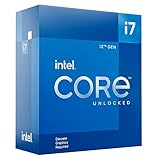
- Intel Core i7 3.60 GHz processor offers more cache space and the hyper-threading architecture delivers high performance for demanding applications with better onboard graphics and faster turbo boost
- The Socket LGA-1700 socket allows processor to be placed on the PCB without soldering
- 11 MB L2 and 25 MB L3 cache offers supreme performance for computation intensive apps
- Intel 7 Architecture enables improved performance per watt and micro architecture makes it power-efficient
Rank #4

- 4 Cores / 8 Threads
- 3.60 GHz up to 4.20 GHz Max Turbo Frequency / 8 MB Cache. Sockets Supported: FCLGA1151, Max Memory Size: 64 GB, Memory Types: DDR4-2133/2400, DDR3L-1333/1600 at 1.35V
- Compatible only with Motherboards based on Intel 100 or 200 Series Chipsets
- Intel Optane Memory Supported
- Intel UHD Graphics 630
Rank #3
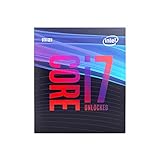
- 8 Cores / 8 Threads
- 3.60 GHz up to 4.90 GHz / 12 MB Cache
- Compatible only with Motherboards based on Intel 300 Series Chipsets
- Intel Optane Memory Supported
- Intel UHD Graphics 630
Product prices and availability are accurate as of the date/time indicated and are subject to change. Any price and availability information displayed on Amazon at the time of purchase will apply.

