
Not in a standard upstream Kubernetes cluster, according to the project’s documented control-plane procedures. Kubernetes identifies etcd as the consistent, highly available key-value store for cluster data; its upgrade guidance also puts etcd ahead of the API server. CockroachDB and YugabyteDB can be useful distributed SQL databases alongside Kubernetes, but their SQL interfaces do not by themselves make them drop-in replacements for etcd’s key-value, watch, transaction, and recovery behavior.
What Kubernetes currently documents
Kubernetes describes etcd as the backing store for all cluster data. The control plane relies on its consistency and key-value behavior, and the Kubernetes upgrade procedure calls for upgrading etcd before the API server. Together, those details show that etcd is part of the control plane’s operational contract, not merely a database that can be swapped by changing a connection string.



The upstream documentation considered here does not describe a standard adapter for directing an ordinary Kubernetes API server to CockroachDB, YugabyteDB, or PostgreSQL instead. That is an architectural and documentation boundary, not proof that no vendor or distribution has ever built a specialized integration. If a Kubernetes distribution supports another backend, its own documentation must specify the implementation, compatibility guarantees, and support limits.
Why a distributed SQL database is not a drop-in etcd replacement
“Distributed” and “strongly consistent” are not sufficient compatibility guarantees. A control-plane store must preserve the behavior Kubernetes components expect when they read and write state and watch for changes. A proposed replacement therefore has to address the complete interface and recovery model, not just store equivalent records.
The Tool Desk
Outbyte PC Repair FREERepair Windows errors before they cause bigger problemsFix Now →Outbyte Driver Updater FREEFix the driver behind crashes, sound loss and screen glitchesFind Drivers →#1 Best Overall
- API and data contract: key-value operations, transactions, watches and delivery behavior, resource-version behavior, and authentication.
- Failure semantics: quorum rules, leader behavior, write availability during faults, protection against split brain, and recovery time.
- Recovery and maintenance: snapshot and restore semantics, backups, upgrades, certificate rotation, observability, and disaster recovery.
- Performance and placement: control-plane request latency, cross-zone traffic, data locality, and sensitivity to network partitions.
A SQL engine may provide transactions and consensus internally, but those capabilities do not establish that it implements etcd’s particular contract or that Kubernetes will interpret its failures and restored state correctly. The upstream sources discussed here do not document such a general-purpose compatibility layer for either CockroachDB or YugabyteDB.
How the systems differ
The following comparison describes documented roles and architecture, not a neutral performance ranking. Kubernetes and database-vendor documentation establish the capabilities summarized below; they do not establish a universal winner for Kubernetes control-plane storage.
| System | Documented role and architecture | What that means for replacing etcd |
|---|---|---|
| etcd | Kubernetes documents etcd as the consistent, highly available key-value backing store for cluster data. Its operation depends on quorum, and Kubernetes guidance emphasizes backups, healthy leader heartbeats, and avoiding resource starvation. | It is the documented upstream Kubernetes state store. The control plane’s expected key-value, watch, and recovery behavior is the compatibility baseline. |
| CockroachDB | Cockroach Labs describes CockroachDB as distributed SQL built for Kubernetes. Its architecture puts SQL over a distributed key-value layer; data is divided into ranges and replicated with Raft. Its Kubernetes materials describe StatefulSet deployment, replicated placement, pod-failure resilience, scale-out, and an operator for patching and rolling upgrades. | Raft replication and a distributed key-value foundation make its failure model relevant to compare, but SQL semantics and operating tools differ from etcd’s key-value/watch contract. The cited materials do not document it as an upstream API-server backend. |
| YugabyteDB | YugabyteDB describes itself as open-source, cloud-native distributed PostgreSQL that can run across public and private clouds and Kubernetes. Its documentation emphasizes strong consistency, resilience, scalability, geo-distribution, and data locality. | Those properties make it an option to evaluate for application data or a scoped platform experiment, not evidence of direct compatibility with the upstream Kubernetes API server. |
What etcd operations mean for the control plane
Because etcd is quorum-based, a cluster needs enough healthy members to make progress. Kubernetes recommends an odd number of members and calls for backups, healthy leader heartbeats, and protection against resource starvation. Network and disk I/O affect etcd performance and stability, so slow storage or network trouble can become a control-plane concern rather than an isolated database issue.
In practical terms, monitor member and leader health, resource pressure, and the storage and network paths etcd depends on. Maintain and test backups and restores. Do not treat a backup as a recovery plan until a restore has been exercised. The available guidance does not provide a universal latency threshold or recovery-time target; set those against the requirements and tested behavior of the particular cluster.
What’s actually slowing this PC down?
Pick the symptom - the matching free tool is one click away.
Rank #3
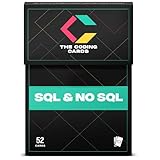
- Comprehensive Coverage: SQL Flashcards and NoSQL Flashcards designed for beginners and interview prep, covering core database concepts, queries, indexing, normalization, and real-world use cases. From relational structures, JOINs, and indexing to NoSQL document models, key-value stores, and distributed systems, these flashcards give you a solid foundation and advanced knowledge to handle any database challenge confidently.
- Interactive Learning: Enhance your understanding with an interactive, hands-on approach. Each card includes practical query examples, schema illustrations, and exercises that let you immediately apply what you learn. This active learning style helps you strengthen your querying skills and build intuition for solving real data problems. Beginner-friendly explanations that help you learn SQL and NoSQL faster without overwhelming theory or dense textbooks
- Portable Convenience: Study databases anytime, anywhere. Whether you’re at home, commuting, or taking a break, these portable flashcards make it easy to learn on the go. Perfect for busy students, developers, or professionals fitting learning into a tight schedule.
- Versatile Audience: Designed for all learners from students preparing for exams to data analysts, backend engineers, and tech enthusiasts. Whether you're building your first query or optimizing production databases, these flashcards guide you at every stage of your learning journey. Perfect for SQL interview preparation for software engineers, data analysts, backend developers, and computer science students
- Skill Enhancement: Boost your confidence and stay current with evolving database technologies. Ideal for self-study, bootcamps, university courses, and last-minute interview revision with concise, memorable flashcard format
What changed in etcd 3.7
In its July 8, 2026 announcement of etcd 3.7.0, the Kubernetes project reported removal of legacy v2 components, movement from deprecated experimental flags to feature gates or stable flags, and official images limited to multi-architecture builds. The announcement also warns that bbolt file-size limits can stop writes until compaction or a limit change. It recommends rolling upgrades one member at a time, checking cluster health as the upgrade proceeds.
These changes matter to teams planning etcd maintenance; they do not indicate that Kubernetes has replaced etcd with SQL. Check the project’s release guidance and the compatibility requirements for the Kubernetes version and distribution in use before scheduling an upgrade.
Independent reader supportYour contribution helps us test, update, and keep practical guides available for everyone.Where distributed SQL fits today
Application databases and platform experiments
Distributed SQL can serve workloads running on Kubernetes without storing Kubernetes control-plane state. A separate database cluster lets teams evaluate deployment, availability, locality, and operations without changing the API server’s backing store. Cockroach Labs documents Kubernetes deployment patterns and an operator for database patching and rolling upgrades; those are database-operating capabilities, not proof of API-server compatibility.
YugabyteDB Voyager is an open-source migration engine with a command-line workflow for cluster preparation, schema migration, data migration, and lifecycle management. It supports multiple source databases and YugabyteDB targets, making it relevant to application database migrations. Its existence does not establish that an upstream API server can use YugabyteDB without a compatible storage layer.
Recommended Free Tools
When control-plane state could move
Consider moving control-plane state only when the chosen Kubernetes distribution explicitly documents the alternative backend. Before relying on it, establish what interface or adapter is used, which Kubernetes and database versions are supported, which party supports failures, and how backup, restore, upgrade, and rollback work. Without those guarantees, the safer upstream approach is to retain etcd for cluster state.
A practical evaluation and migration path
- Keep etcd for an upstream control plane unless the selected distribution explicitly documents a different supported backend.
- Deploy distributed SQL separately. Use the database vendor’s documented deployment method or Kubernetes operator where applicable.
- Test representative failures and maintenance. Exercise member loss, zone loss, network delay, backup restoration, upgrades, and certificate rotation. Record measured control-plane or application behavior under the conditions that matter to your environment.
- Migrate application data with supported tooling. For YugabyteDB targets and supported sources, Voyager documents preparation, schema and data migration, and lifecycle tasks. Validate conversion and cutover for the specific source and application.
- Compare operational fit, not just features. Evaluate compatibility, consistency and failure behavior, latency and locality, backup and restore, upgrade orchestration, observability, migration and rollback, licensing, support, staffing, and roadmap.
- Require a tested rollback path. Do not move control-plane state until the distribution documents its compatibility guarantees and recovery procedure, and the team has tested them.
No neutral benchmark in the cited material establishes that distributed SQL is universally better than etcd for Kubernetes control-plane state. The decision depends first on whether the Kubernetes distribution supports the backend at all, then on measured behavior and the operational guarantees available for the workload.
Quick Recap
Product prices and availability are accurate as of the date/time indicated and are subject to change. Any price and availability information displayed on Amazon at the time of purchase will apply.

