
iTechGuides is reader-supported. When you buy through links on our site, we may earn an affiliate commission. As an Amazon Associate I earn from qualifying purchases. Learn more
Yes. Captured carbon dioxide can be used as a feedstock to make some plastics and plastic precursors. The routes include making polypropylene carbonate directly from CO₂, producing precursors used in polyurethane, and converting CO₂ into feedstocks for polycarbonate. Their development ranges from a reported scale-up batch to pilot work, field-testing, and early material development; that does not mean every material is commercially available or has lower lifecycle emissions.
What “recycling CO₂” means here
In this context, recycling CO₂ means using captured carbon dioxide as a chemical feedstock. It does not mean taking discarded plastic and recycling it into new plastic. Depending on the process, CO₂ can become part of a polymer’s chemical structure or be converted into a precursor used to make one.
“CO₂-based plastic” is therefore an umbrella term, not one material with uniform properties. Polypropylene carbonate (PPC), polyurethane made with CO₂-derived polyols, polycarbonate, and Fortum’s PHA material INGA are distinct materials or routes. Their applications and environmental performance cannot be assumed to be the same.
How captured CO₂ becomes plastic
| Route and material | How CO₂ is used | Reported development stage | Examples of uses described by the source |
|---|---|---|---|
| Polypropylene carbonate (PPC) | CO₂ is copolymerized with epoxides using a catalyst, so carbon from CO₂ is incorporated into the polymer. | The U.S. Department of Energy reported a seven-ton scale-up run by Novomer and Albemarle in 2013. The account describes a scale-up campaign, not current production or sales. | Flexible and rigid packaging foams, thermoplastics, adhesives, sealants, and can coatings were among the potential applications described by DOE. |
| Polyurethane using CO₂-derived polyols | Captured CO₂ is used to make polyether polycarbonate polyols, which are precursors processed into polyurethane. | RWE’s Dream Production project describes a pilot facility. CO₂ from power-station flue gas was captured, purified, and liquefied for the process. | RWE identifies building insulation, vehicle lightweighting components, mattresses, and upholstered furniture as relevant polyurethane uses; this does not establish that all such products use CO₂-derived feedstock. |
| Polycarbonate via diphenyl carbonate | Mitsubishi Gas Chemical describes producing diphenyl carbonate from CO₂ and alcohol as a route to materials. | In July 2024, MGC said a pilot plant had been completed at its Tokyo Research Laboratory in November 2023 and described further pilot development, licensing, and alliances as future steps at that time. | The account describes a materials-production route; it does not establish commercial availability of products made through it. |
| FCO₂PC polycarbonate | The Taiwan Ministry of Economic Affairs’ Department of Industrial Technology describes ITRI’s process as using factory-flue-gas CO₂ in esterification and transesterification. | The government technology page says the process was being field-tested with Chi Mei. | Potential uses listed include safety helmets, phone cases, headlamp covers, and eye protection. |
| INGA PHA | Fortum describes its PHA plastic as made from CO₂ emissions. | Fortum said its first sample was produced in October 2024, that it was seeking partners to commercialize the material, and that industrial production was expected by the end of the decade. These are company-reported status and target, not confirmation of a current production schedule. | Fortum discusses packaging and other plastic applications; the announcement does not establish that these products are on sale. |
The table reflects what the named organizations reported, not a standardized comparison of independently verified commercial readiness. In particular, a scale-up batch, a pilot facility, a field test, and a first material sample are different milestones.
#1 Best Overall

- Durable Filling: Made from recycled rubber granules, ensuring long-lasting performance and resilience.
- Generous Quantity: Includes 14 pounds of fill material, sufficient to fill approximately 0.5 cubic feet, providing ample support.
- Versatile Compatibility: Compatible with Shooter’s Choice AccuRest and other shooting bags/rests, offering flexibility and convenience.
- Conforms to Shape: Easily molds to the shape of your shooting bag or rest, offering a secure and stable base.
- Lightweight and Sturdy: Provides stable support for sighting in and target practice without being cumbersome.
What the reported scale-up shows—and does not show
In its May 20, 2013 account, the U.S. Department of Energy said Novomer and Albemarle produced seven tons of PPC in a scale-up run. DOE reported that the polymer contained more than 40 percent CO₂ by weight. Those figures describe that reported material and campaign, not the average CO₂ content of all CO₂-derived plastics or the industry’s present output.
DOE said the catalyst used in the process was not consumed and that polymer-chain size could be changed to adjust material characteristics. The production campaign was intended to accelerate product qualification; it is not evidence by itself of ongoing commercial sales or of a finished product’s environmental benefit.
Rank #2
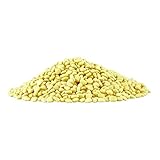
- PLASTIC CORN: Made from durable mid-density Polypropylene
- 8 POUNDS TOTAL: Perfect for making your own set of cornhole bags or other craft projects
- ALL WEATHER: Will not rot unlike real corn
- NOT a Toy: Only for use by adults for craft projects
Does plastic made from CO₂ reduce emissions?
Not automatically. Putting captured carbon into a product establishes a feedstock use, but it does not establish that the complete process emits less than making a comparable conventional material. A fair comparison needs to account for where the CO₂ came from, how it was captured and purified, the energy and other inputs used in conversion, process emissions, product lifetime, and what happens at end of life.
Free tools Windows power users keep installed
One-click scans. No signup required.
The cited project descriptions do not provide a comparable independent lifecycle assessment across these routes. Avoid treating “made from captured CO₂” as synonymous with carbon-negative, climate-neutral, or lower-emitting.
Rank #3

- Odorless Eco-Friendly Material – Byrpro green pellets are made with eco-friendly material and are odorless, keeping your workspace and gear more pleasant during filling and handling.
- Locks In for Steadier Support – Pellets flow and conform to your shooting bag, creating a stable, repeatable rest for improved consistency at the range or in the field.
- Moisture-Resistant, No Sand Mess – Won’t absorb water like sand; helps avoid clumping and soggy bags, making it more dependable in humid or wet conditions (helps resist clumping).
- Low-Dust & Easy to Pour – Smooth-pouring pellets help reduce dust and cleanup; funnel-friendly for quick filling and topping off with minimal mess.
- 14 lb Bulk Pack, Universal & Reusable – Plenty of fill for most front/rear/barricade bags; durable pellets can be reused, adjusted, and refilled anytime — lighter than sand for easier carry (bag not included).
The Taiwan Department of Industrial Technology page reports that FCO₂PC is expected to reduce emissions by 17%, or 178,500 metric tons annually, in partnership with Chi Mei. This is a projected result stated on the technology page, not a measured outcome established by that account.
Is CO₂-based plastic biodegradable or already being sold?
Neither property follows from the feedstock alone. A plastic’s biodegradability depends on the polymer and the conditions under which it is disposed of; using CO₂ to make a material does not prove that it biodegrades. The cited descriptions do not establish a general biodegradability claim for CO₂-derived plastics. Fortum identifies INGA as a PHA material, but its announcement alone is not evidence of a particular product’s certification, disposal conditions, or market availability.
Rank #4
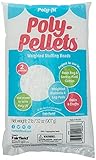
- Premium Poly Pellets: Elevate your creative projects with Fairfield’s Poly-Fil Poly-Pellets! Made with 100% polypropylene-weighted stuffing material, the poly pellets add weight to soft crafts to help them sit properly in lifelike positions.
- Uniform Stuffing: All pellets have a smooth edge with an oval contour to create a uniform fill. The beads are ideal for stuffing bean bags and weighted blankets.
- Stuffing for Stuffed Animals: Our poly pellets are also great for stuffing hand-made dolls, toys, and animals. The pellets can also be used as an instrument for seek-n-find games or in sensory tables that are popular in preschools and elementary schools.
- Safe to Use: The poly pellets are made in the USA and safe for use in creative projects.
- Washable Poly-Fil: The weighted stuffing beads are washable, but only after they are inside a finished project. The cleanable nature of the pellets means the threat of germs and moisture is also lessened. They are available in a 32-ounce bag.
Availability also varies by project. The sources describe a historical PPC scale-up run, a polyurethane-precursor pilot, polycarbonate process development and field-testing, and Fortum’s sample and commercialization plans. They do not establish that all these materials—or products made from them—are currently sold at scale.
Recommended Free Tools
What to check when comparing a CO₂-derived plastic
- Material and route: Is the product PPC, PHA, polycarbonate, or polyurethane made with a CO₂-derived precursor? Is CO₂ incorporated directly into the polymer or first converted into another feedstock?
- CO₂ source and incorporation: Is the carbon captured from flue gas or another source, and how much is retained in the finished material?
- Readiness: Is the claim based on a laboratory result, scale-up batch, pilot, field test, operating production, or verified sales? These milestones are not interchangeable.
- Performance: Does the specific material meet the intended product’s needs for strength, flexibility, barrier properties, and heat tolerance?
- Lifecycle and end of life: Are capture, conversion energy, process emissions, service life, disposal, and recycling included in a route-specific assessment?
Sources and scope
The process and project details above come from organizational accounts: the U.S. Department of Energy’s May 20, 2013 article on the Novomer–Albemarle PPC run; Fortum’s November 11, 2024 announcement about INGA; the Taiwan Ministry of Economic Affairs, Department of Industrial Technology’s FCO₂PC technology page, which displayed a November 21, 2025 content update and a 2026 site update; Mitsubishi Gas Chemical’s July 18, 2024 account; and RWE’s Dream Production project description, which does not state a publication date. These sources document what their publishers reported, but do not collectively establish independent lifecycle performance or current commercial availability for every route.
Quick Recap
Best Value

- 3 Pounds Plastic Pellets Rock Tumbling Media Plastic Filler
- Non-toxic, non-static and non-residue pellets are dryable
- easy to reuse – float to the top for easy cleaning.
- Packaged in durable, re-closable seal bags to prevent messy spills and to safely store
- The composition of the product is impact-resistant polypropylene, which can cushion the impact of stones on the machine.
Product prices and availability are accurate as of the date/time indicated and are subject to change. Any price and availability information displayed on Amazon at the time of purchase will apply.

