
PC Slower Than It Used to Be?
A free scan shows the junk files, broken settings and background clutter dragging Windows down - then fixes them in one click.Free scan · Windows 10 & 11Crashes, No Sound, or Screen Glitches?
Random freezes, missing sound and display glitches usually trace back to one bad driver. Find and replace yours safely.Free scan · under a minuteiTechGuides is reader-supported. When you buy through links on our site, we may earn an affiliate commission. As an Amazon Associate I earn from qualifying purchases. Learn more
Sometimes—but only for particular medicines and gene–drug relationships. Pharmacogenetic testing looks for inherited genetic differences that may affect how your body metabolizes or responds to specific drugs. A result can help a clinician make a prescribing decision when evidence supports an action; it cannot identify one universally “best” medication or replace a medical assessment.
What a pharmacogenetic test can—and cannot—tell you
Genes can influence drug metabolism, transport, or response. The useful question is not whether DNA can predict every medication that will work for you, but whether a particular result has a reliable interpretation and supports a specific action for the medicine being considered.
That action might involve choosing a different medicine, adjusting a starting dose, or changing how treatment is monitored. In other situations, a genetic association may be known but not strong enough to justify a change. The Clinical Pharmacogenetics Implementation Consortium (CPIC) publishes evidence-based guidance on how to use available genetic results; its guidelines are not instructions that everyone should be tested. CPIC’s guidelines are intended to support clinician interpretation, not to replace it.
Why the answer depends on the medicine and gene
Pharmacogenetic recommendations are specific to gene–drug pairs. Evidence for one medicine does not automatically apply to another, even when the same gene is involved. CPIC grades evidence and makes recommendations for particular genotypes or predicted phenotypes and drugs; the level of guidance can differ from one pairing to the next. CPIC describes its guidance as evidence-based and peer-reviewed, and its resources are freely available.
#1 Best Overall

- TOP-SELLING CONSUMER DNA TEST: From your origins in over 3,600 places around the world to the most connections to living relatives, no other DNA test kit delivers an experience as unique and interactive as AncestryDNA.
- YOUR DATA, YOUR CONTROL: We give you full control over your genetic information. You decide what to share, and with whom.
- A FEW SIMPLE STEPS: Simply activate your DNA kit online and return your saliva sample in the prepaid package to our state-of-the-art lab. Your results will be available online in roughly six weeks.
- ORIGINS AND INHERITANCE: AncestryDNA provides more precise ancestral origins with greater geographic detail. Our innovative SideView technology takes your results even further by showing your origins and matches by parental side. *Some DNA features require an Ancestry subscription.
- BUILD YOUR FAMILY TREE: Combine what you learn from your DNA results with an Ancestry subscription and gain access to millions of family trees and the world's largest collection of online family history records. *Access to record collections varies depending on subscription level.
Selected antidepressants: some genes have guidance, others do not
CPIC’s 2023 guideline for selected serotonin reuptake inhibitor antidepressants includes recommendations involving CYP2D6, CYP2C19, and CYP2B6. It does not provide clinical recommendations for HTR2A or SLC6A4 because evidence for their clinical validity or usefulness is mixed or insufficient. The guideline also calls for consideration of drug interactions and other patient characteristics. A panel that reports many genes therefore does not mean every result can guide a prescription. Read the CPIC antidepressant guideline.
Clopidogrel: test coverage matters
CPIC’s 2022 update on CYP2C19 and clopidogrel cautions that a targeted genetic assay may not include rare variants. Clinicians need to know which variants the assay actually tests, and genotype is only one factor in prescribing. The guideline applies to its specified clinical indications; it should not be generalized to every patient or every medicine. See the CPIC clopidogrel guideline.
Rank #2
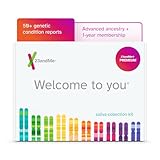
- REVIEW IMPORTANT TEST INFO: There is a lot to consider with genetic testing. Before purchasing, review important information about Genetic Health Risk*, Carrier Status*, and Pharmacogenetics** reports at 23andme. org/test-info and 23andme. org/test-info/pharmacogenetics. A portion of your purchase may be eligible for FSA/HSA reimbursement***.
- UNDERSTAND YOUR GENETIC HEALTH: Receive 160+ personalized genetic reports, including 50+ Conditions* and wellness reports. Get insights into heart health, metabolic health, mental health, and more. You choose whether to view certain reports.
- TRACK HEALTH GOALS: Health Tracks(SM) show how everyday choices may shape your health over time. Opt in to the Family Health History Tree to input and track information to share with your healthcare provider.
- PLAN AHEAD WITH 45+ CARRIER STATUS REPORTS*: Find out whether you carry a genetic variant for inherited conditions across categories like blood, lung, and hearing health, information you can bring to family planning conversations with your healthcare provider.
- LEARN HOW YOUR BODY MAY RESPOND: FDA-authorized pharmacogenetics reports show how your DNA may impact the way your body processes certain medications**, including some used in heart health and mental health care. Talk to your healthcare provider before making any medication changes.
G6PD: a negative panel may not settle the question
For medication decisions involving G6PD, some genetic tests cover only common alleles. A negative result may therefore not rule out deficiency; depending on the clinical question and result, an enzyme-activity test may also be needed. CPIC’s G6PD guideline discusses these testing limits and medication considerations.
Methadone: a genetic association does not always change treatment
CPIC’s 2024 CYP2B6–methadone guideline describes associations with some measures of S-methadone levels, but concludes that the evidence does not support changing methadone prescribing or ECG monitoring on the basis of CYP2B6 genotype. This illustrates the difference between observing a biological association and showing that acting on it improves or changes care. Read the CPIC methadone guideline.
Rank #3

- TOP-SELLING CONSUMER DNA TEST: From your origins in over 3,600+ places around the world to the most connections to living relatives, no other DNA test kit delivers an experience as unique and interactive as AncestryDNA.
- YOUR DATA, YOUR CONTROL: We give you full control over your genetic information. You decide what to share, and with whom.
- DNA + TRAITS: Ever wondered where your freckles came from, or why you hate cilantro? AncestryDNA + Traits lets you discover 75+ genetic traits, allowing you to explore how your genes might have influenced a range of appearance, sensory, performance, nutrient, and other personal characteristics.
- A FEW SIMPLE STEPS: Simply activate your DNA kit online and return your saliva sample in the prepaid package to our state-of-the-art lab. Your results will be available online in roughly six weeks.
- ORIGINS AND INHERITANCE: AncestryDNA is the only DNA test that can show your origins results, DNA matches, and traits by each side of the family, without your parents taking a DNA test.
What can limit or change a result’s meaning
The test may not examine every relevant variant
Targeted genotyping checks specified variants; it may miss rare or novel ones outside the assay’s coverage. Ask which variants were tested and whether the assay can detect the kinds of variation relevant to the specific gene and medicine. A report should be interpreted in light of those limits, not treated as a complete reading of every possible genetic difference.
Other medicines and health factors still matter
Drug interactions can affect enzyme activity and alter how a genotype should be interpreted. Age, kidney and liver function, diet, substance use, previous response, and tolerability can also influence prescribing. A genetic result is one part of the clinical picture, not a substitute for medication history or an assessment of current health.
Rank #4

- MAP YOUR ORIGINS ACROSS 5,000+ REGIONS: Ancestry Composition breaks down your ethnicity across 5,000+ geographic regions worldwide, the most detailed ancestry breakdown of any consumer DNA service. Ancestry Timeline estimates how many generations ago your most recent ancestor from each population lived.
- FIND LIVING RELATIVES: Opt in to DNA Relatives to see up to 1,500 people in the 23andMe database who share DNA with you, from close family to distant cousins, and message them directly. Your Family Tree builds itself automatically based on your DNA.
- DISCOVER WHAT MAKES YOU UNIQUE: See how your DNA may influence physical features, sensory preferences, and habits across 30+ traits, including cilantro taste aversion to hair texture to deep sleep.
- TRACE ANCIENT MIGRATIONS: Maternal and Paternal Haplogroup reports follow your ancestors' migration paths across continents over thousands of years (paternal haplogroup requires a Y chromosome). Find out how much of your ancestry can be traced back to the Neanderthals.
- PRIVATE BY DESIGN: Your DNA data is encrypted, protected, and always under your control. Enhanced security measures are implemented to keep your information safe. Subject to 23andMe’s Terms of Service and Privacy Statement at 23andMe online.
How to discuss testing or an existing result with your clinician
If you are considering testing—or already have a report—bring the specific medicine and decision you want help with. Useful questions include:
Free tools Windows power users keep installed
One-click scans. No signup required.
- Is there an evidence-supported recommendation for this gene and this medicine?
- Which variants did this test cover, and could relevant variants be missing?
- Would the result change medicine choice, dose, titration, or monitoring in my case?
- Could my other medicines, health conditions, or prior treatment history change how the result is interpreted?
- Would another assessment, such as an enzyme-activity test, be needed?
Do not start, stop, or change a prescription based only on a genetic test result. CPIC cautions that its website information is not intended for direct diagnostic use or medical decision-making without review by a health care professional. Discuss the result with your prescriber or pharmacist.
Quick Recap
Best Value

- REVIEW IMPORTANT TEST INFO: There is a lot to consider with genetic testing. Before purchasing, review important information about Genetic Health Risk* and Carrier Status* reports at 23andme. org/test-info. A portion of your purchase may be eligible for FSA/HSA reimbursement***.
- UNDERSTAND YOUR GENETIC HEALTH: Get 10+ Condition reports* that show whether you have genetic variants associated with a higher risk of certain conditions. Includes FDA-authorized reports, and you choose whether to view certain reports.
- PLAN AHEAD WITH 45+ CARRIER STATUS REPORTS*: Discover if you carry a genetic variant for inherited conditions across categories like blood, lung, and hearing health, information you can bring to family planning conversations with your healthcare provider.
- OPTIMIZE YOUR DAILY WELLNESS: See how your genes may influence lifestyle factors like deep sleep, lactose intolerance, genetic weight, and muscle composition.
- MAP YOUR ORIGINS ACROSS 5,000+ REGIONS: Explore your Ancestry Composition, trace maternal and paternal haplogroups (paternal requires a Y chromosome), and dig into your Neanderthal Ancestry. Opt in to find up to 1,500 DNA Relatives, and your Family Tree builds itself automatically.
Product prices and availability are accurate as of the date/time indicated and are subject to change. Any price and availability information displayed on Amazon at the time of purchase will apply.

