
Recommended Free Tools
iTechGuides is reader-supported. When you buy through links on our site, we may earn an affiliate commission. As an Amazon Associate I earn from qualifying purchases. Learn more
Possibly, but it is not a proven treatment. Autologous bone marrow mononuclear cells (BMMNCs) are being studied for severe, acute traumatic brain injury (TBI). A small randomized pediatric trial found the approach feasible and reported promising differences in some ICU and brain-imaging measures, but it did not establish that the treatment improves recovery for patients generally. In this context, BMMNC therapy is investigational, not routine TBI care.
What is the bone-marrow treatment?
In the pediatric trial, clinicians collected marrow from the patient, processed it under controlled conditions to isolate bone marrow mononuclear cells (BMMNCs), and infused those cells intravenously within 48 hours of injury. Because the cells came from the patient, the treatment was autologous. It was an acute-care intervention delivered in a monitored clinical trial—not an outpatient or consumer treatment.


The evidence discussed here concerns this specific cell preparation, route, and timing. It does not establish whether other marrow-derived products, mild TBI, or chronic brain injury respond to cell therapy.
What did the pediatric trial find?
Who took part and how the study was designed
The phase 2 study was randomized, double-masked, and placebo-sham-controlled at two U.S. children’s hospitals. It enrolled children aged 5–17 with severe TBI, defined as a Glasgow Coma Scale score of 8 or less. Investigators randomized 47 participants; 37 completed one-year follow-up. Enrollment ended at 47 as funding wound down. The trial record for NCT01851083 is marked completed, with actual primary completion in September 2020.
#1 Best Overall
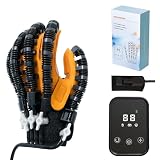
- Stroke Hand Recovery Device: BLIUJQ rehabilitation robot gloves are made of a variety of flexible polymer materials, which fit comfortably and hold your hands in place while gently stretching your phalanges to promote brain injury recovery, powered by air pressure, drive hand activity, effectively train hand recovery. robotic hand glove for stroke rehab.
- Mirror Mode: This stroke glove uses a mirror mode to help the affected hand move by following the healthy hand’s motions. Repeating this movement retrains the brain and supports recovery. Daily use aids post-surgery rehab. It mimics finger grabbing and stretching to engage the brain and reduce hand stiffnes.
- Robotic Gloves for Stroke Rehab: Rotating the valve while training single and multiple fingers makes it easy to train each finger.The Stroke Glove's extension and bending range is set 5 training speed at 5 intensity levels, so you will no longer hurt your fingers . Mirror training is simpler and more convenient after the improvement of the mirror gloves, you will not choose the wrong gloves anymore.(for stroke recovery,mechanical gloves for stroke patient)
- Adjustable Intensity & Speed---Stroke rehab robotic glove have 5 levels of strength. Meet the needs of different degrees patients. Intelligently imitating hand movements, hand grasping, stretching and flexing,which improves the recovery speed of hand function.
- Bionic Technology: Automatic training modes in the robot hand glove mimic gripping and stretching movements, stimulating the brain to reduce hand stiffness.It efectively alleviate post-operative discomfort, sluggish reflexes, limited hand mobility due to injury, and numbness, aiding in comprehensive hand rehabilitation.
Reported ICU-course differences
Compared with placebo, the BMMNC group had nearly three fewer ventilator days (reported as 23% fewer), one fewer day of intracranial pressure monitoring (16% fewer), and three fewer ICU days (14% fewer). These are outcomes reported for this small trial, not estimates of what patients generally should expect.
Imaging findings—and their limits
At one year, the treatment group had less white-matter volume loss, with a statistically significant between-group difference reported by the investigators. The corpus-callosum streamline comparison also favored the treated group, but variability was high and the result did not reach statistical significance (P = 0.055).
Rank #2

- Versatile for all ages: This grip exerciser and finger strength trainer is suitable for everyone, from kids to adults, providing an effective arthritis hand exerciser and grip strengthener that supports occupational and physical therapy aids for all skill levels.
- Comprehensive hand therapy: Our grip and forearm strengthener doubles as a versatile hand trainer and ejercitador de mano featuring hand therapy tools and exercise putty that cater to rehabilitation needs while promoting finger strength and mobility.
- Enhanced grip workout: Achieve superior hand strength and dexterity with our hand workout grip, designed to effectively improve your grip training and overall forearm workout, making it perfect for Old age people, athletes and fitness enthusiasts alike.
- Targeted muscle development: Strengthen your hand and finger muscles with our hand and finger strengthener, which includes wrist therapy equipment, a hand grip trainer and finger trainer to enhance your grip workout and overall hand grip strength.
- Ideal for rehabilitation: Use our therapy hand putty included in hand therapy kit to aid recovery, along with workout grips and hand strengthening balls that are essential for physical therapy hand exercisers, ensuring a comprehensive approach to hand and forearm strength.
Imaging measures can indicate structural differences; they do not by themselves show that a person thinks, communicates, or functions better. The findings are promising signals for further study, not proof of improved long-term function or a cure.
How does the adult evidence compare?
A separate adult phase I/IIa study was open-label, nonrandomized, and conducted at one center. It enrolled adults from March 2012 through October 2014 and described early safety and feasibility findings, along with a possible imaging tissue-preservation signal. Because it had no randomized comparison, it cannot establish that the treatment caused the observed outcomes or is effective.
Rank #3

- Used Book in Good Condition
The pediatric and adult studies therefore answer different, limited questions. The pediatric trial tested an acute intervention in children with severe injury using a randomized design; the adult study offered earlier, uncontrolled evidence. Neither supports generalizing the treatment to every age, injury severity, or stage of TBI.
Is BMMNC treatment FDA-approved for TBI?
No FDA approval for this TBI treatment is established by these studies or their trial listings. The FDA says stem-cell products generally require FDA approval. It says the stem-cell products currently approved in the United States are cord-blood-derived hematopoietic progenitor cells for disorders affecting blood production; those approvals do not cover other uses.
The FDA also cautions that a trial listing is not proof that a product is legally marketed: “The inclusion of a product in the clinicaltrials.gov database or the fact that a firm has registered with FDA and listed its product does not mean the product is legally marketed.” Read the FDA’s consumer guidance on regenerative medicine therapies. The agency warns that unapproved regenerative products can cause serious harms, including infections, tumors, and blindness.
Quick wins for a faster PC:
Fix the driver behind crashes, sound loss and screen glitchesFind Drivers →Clear out junk files and repair common Windows errorsFree Scan →Scan for outdated or missing drivers - takes under a minuteDriver Scan →Can patients enroll in a trial now?
The pediatric trial NCT01851083 is completed, so it is not an active enrollment route. A source for the adult trial NCT02525432 reports “Active, not recruiting,” but recruitment and site status have not been confirmed directly. Do not assume enrollment is available: check the current ClinicalTrials.gov record for NCT02525432 and contact the study team to confirm whether a site is recruiting.
A listing on ClinicalTrials.gov does not itself mean the treatment is approved or legally marketed. Trial participation and FDA approval are separate questions.
Quick Recap
Questions to ask a clinician or study team
- What exact cell product is being studied, and how is it collected and processed?
- Is this an FDA-overseen clinical trial, and what is the investigational new drug (IND) context?
- Who is eligible, and what is the treatment timing window after injury?
- What risks, alternatives, and follow-up are involved?
- Is the specific trial site recruiting now? Can the study team confirm that directly?
Product prices and availability are accurate as of the date/time indicated and are subject to change. Any price and availability information displayed on Amazon at the time of purchase will apply.

