
Windows Errors? Fix Them Before They Spread
Repair common Windows errors and clear accumulated junk for a smoother, more stable PC - no reinstall needed.Free scan · no reinstallOutdated Drivers Are Slowing You Down
One free scan finds every outdated or missing driver and matches the right update for your exact hardware.Free scan · exact hardware matchCalifornia’s connected-device cybersecurity law is Senate Bill 327 (SB 327), signed in 2018 and operative since January 1, 2020. It requires manufacturers of covered connected devices to equip them with reasonable security features suited to the device and the information it handles. For devices with authentication outside a local network, the law identifies unique preprogrammed passwords or first-use credential creation as ways to meet one part of that standard—but neither is a blanket compliance safe harbor.
What is California’s IoT cybersecurity law?
SB 327 is California’s law on the security of connected devices. Governor Edmund G. Brown Jr. announced on September 28, 2018, that he had signed SB 327, authored by Senator Hannah-Beth Jackson, and companion bill AB 1906. Both were titled “Information privacy: connected devices.” The governor’s announcement confirms the signing.
The measure created California Civil Code section 1798.91.04. The California Senate’s legislative summary says it became operative on January 1, 2020. The Senate bill summary and the Senate third-reading analysis describe the requirement and statutory section.
Which devices does the law cover?
The Senate materials describe a connected device as an internet-connected device or physical object capable of connecting directly or indirectly to the internet and assigned an Internet Protocol (IP) address or Bluetooth address. The statutory definition also has exclusions and limitations, so this description should not be treated as meaning every product with any wireless feature is necessarily covered. Manufacturers assessing a particular product need to check the statute’s full definition and exceptions.
What’s actually slowing this PC down?
Pick the symptom - the matching free tool is one click away.
#1 Best Overall

- 𝐄𝐚𝐬𝐲 𝐒𝐞𝐭𝐮𝐩 𝐈𝐧𝐝𝐨𝐨𝐫/𝐎𝐮𝐭𝐝𝐨𝐨𝐫 𝐂𝐚𝐦𝐞𝐫𝐚 — 2.5K HD video, vibrant color night vision and IP66, ensuring you never miss a moment, day or night,rainy or sunny. With dual-band 2.4G/5G WiFi & Plug and play setup of the cameras for home security - just download app and scan QR code! No tools needed for tabletop use, mounting screws included for walls
- 𝟐.𝟓𝐊 𝐐𝐇𝐃 & 𝐂𝐨𝐥𝐨𝐫 𝐍𝐢𝐠𝐡𝐭 𝐕𝐢𝐬𝐢𝐨𝐧 — Experience crystal-clear visibility day and night with full-color night vision enhanced by a built-in white light. Perfect as a baby monitor, pet camera, or security camera to monitor your home inside and out
- 𝐒𝐦𝐚𝐫𝐭 𝐀𝐈 𝐃𝐞𝐭𝐞𝐜𝐭𝐢𝐨𝐧 & 𝐀𝐥𝐞𝐫𝐭𝐬 — Stay informed about what matters most with human/motion/sound detection up to 33 feet away. The camera deters intruders with flashing lights and a siren while sending instant alerts to your phone — keeping you one step ahead of any suspicious activity. Call +1 (978) 437-5767 for expert support with setting up and optimizing Vimtag cameras, available Monday to Friday, 9:00 AM - 6:00 PM (ET)
- 𝐄𝐧𝐡𝐚𝐧𝐜𝐞𝐝 𝐓𝐰𝐨-𝐖𝐚𝐲 𝐀𝐮𝐝𝐢𝐨 - Communicate effortlessly with guests or check in on pets using the upgraded two-way audio feature of this indoor camera, allowing you to see, hear, and speak from anywhere
- 𝐓𝐰𝐨 𝐑𝐞𝐜𝐨𝐫𝐝𝐢𝐧𝐠 𝐎𝐩𝐭𝐢𝐨𝐧𝐬 & 𝐑𝐞𝐚𝐥-𝐓𝐢𝐦𝐞 𝐒𝐡𝐚𝐫𝐢𝐧𝐠 - With the mobile app, you can access the baby camera's video anytime, anywhere, view real-time footage, and even share monitoring content with family, keeping you informed about your home dynamics while you're away.Enjoy secure cloud recording with Vimtag Cloud (subscription required) for detecting people, sounds, motion. Alternatively, you can insert a microSD card (sold separately) for local video storage
What security does SB 327 require?
The duty is on the manufacturer of a covered connected device. It must equip the device with reasonable security feature or features appropriate to:
- the nature and function of the device;
- the information the device may collect, contain, or transmit; and
- protecting the device and its information from unauthorized access, destruction, use, modification, or disclosure.
This is a risk-sensitive standard, not a single technical checklist that applies identically to every device. The security measures should reflect what the product does and the data it handles. The statute’s wording addresses reasonable security features; the cited legislative materials do not establish a universal technical configuration or guarantee that any particular product is secure.
Rank #2
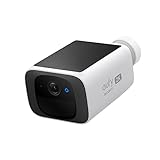
- Continuously Powered by Solar: Just 3 hours of sunlight is enough to keep the camera running. The tiny size and wire-free design allow it to be installed anywhere.
- Day and Night Clarity: Enjoy clear black-and-white night vision thanks to infrared LEDs and an f/1.6 aperture. Please note that spotlight color night vision is not supported.
- Easy Installation: Use anywhere thanks to its tiny size and wire-free design. Drill one hole, once.
- Human Detection: Al alerts you to anyone in your yard, whether family, a courier, or a stranger. Connect to HomeBase 3 for individual facial recognition.
- No Monthly Fee: One-time purchase. No monthly fees or hidden costs. On-device storage and AI for complete security and transparency.
Does California ban default passwords on smart devices?
Not as a standalone, across-the-board ban. For a connected device with authentication outside a local area network, the statute deems the security feature reasonable when either of these applies:
- The device has a preprogrammed password unique to each device manufactured; or
- The device includes a feature that requires the user to generate a new authentication method before first access.
That language addresses the reasonableness of the security feature for the specified authentication situation. It does not mean that every device must use one of these options regardless of its authentication setup, nor does it make a device compliant with the entire law by itself.
Rank #3

- High-definition pan and tilt camera: Capture every detail in pristine 1080p HD quality, from any angle, with the Energizer Connect security camera's 355-degree horizontal and 48-degree vertical pan and tilt capabilities.
- Night Vision Equipped: Camera has 4 led lights and 4 IR lights that switch automatically depending on the lighting conditions, allowing you to see color at night or black and white in total darkness.
- Two-Way Audio: Allowing you to listen and talk to the person in the video, using the built-in microphone and speaker, or siren alarm to deter intruders.
- Flexible Storage Options: Choose cloud storage with a complimentary 30-day trial or utilize a micro SD card (up to 128GB, not included) for local recording.
- 2.4GHz Wi-Fi Compatible: Connects to your 2.4ghz wifi network, which is the most common wifi frequency. It does not support 5ghz wifi networks.
Why unique passwords are not a compliance safe harbor
The Senate third-reading analysis explicitly says the password provision “does not act as a safe harbor even for a device with this security feature.” A unique per-device password or required first-use credential creation can address the authentication concern covered by that provision, but the manufacturer remains responsible for the general reasonable-security-feature duty. Other risks associated with the device and its data still matter.
When did SB 327 take effect?
Governor Brown signed SB 327 on September 28, 2018; the Senate legislative summary says it became operative on January 1, 2020. California’s Secretary of State explains that signed bills deposited with the office are chaptered into law and that regular-session statutes generally take effect on January 1 of the following year unless a different date is specified. The Secretary of State’s statutes information provides that general timing context.
What the law does—and does not establish
SB 327 sets a statutory security duty for manufacturers of covered connected devices and specifies how a password-related feature may be deemed reasonable in a defined circumstance. It does not, on the cited passages alone, provide a complete picture of enforcement outcomes, measured security improvements, or a comprehensive technical standard. Those materials do not establish counts of affected manufacturers or devices, enforcement actions, fines, breaches, or quantified improvements.
Quick Recap
Product prices and availability are accurate as of the date/time indicated and are subject to change. Any price and availability information displayed on Amazon at the time of purchase will apply.
Recommended Free Tools

