
iTechGuides is reader-supported. When you buy through links on our site, we may earn an affiliate commission. As an Amazon Associate I earn from qualifying purchases. Learn more
A deal intelligence agent should not treat its chat history or context window as its memory. Keep durable, scoped memory and the original evidence in external stores; retrieve only what a deal question needs; and make consequential answers traceable to the source records they rely on. That design helps an agent carry useful context between conversations and transactions without turning a summary, inference, or stale fact into an unquestioned record.
What persistent memory means for a deal agent
Persistent memory is durable state outside the model’s active context window. The agent selects relevant records at runtime and uses them alongside the current question. The context window is a temporary working set—not the authoritative record of a deal, relationship, or prior decision.
A useful design separates four concerns:
- Evidence and source records: Documents, filings, CRM events, market research, and other inputs remain addressable. Preserve source identity, dates, permissions, and versions.
- Memory records: Store compact facts, events, and reusable workflows with a defined subject, scope, provenance, confidence, and lifecycle.
- Retrieval and reasoning: Find evidence and memory relevant to the specific deal question, using metadata filters and search methods suited to the task.
- Answer and audit: Link material assertions to the evidence actually retrieved, record the decision trail, and abstain or qualify the answer when support is insufficient.
This is a practical synthesis, not a single published standard architecture. AWS Prescriptive Guidance describes storing agent state, history, decisions, and outcomes outside the model, then retrieving relevant memories on demand and injecting them at runtime. The July 2026 Persistent Agentic Memory Architecture Internet-Draft similarly distinguishes a temporary context projection from a persistent state plane. It is an Internet-Draft, not an adopted IETF standard or published RFC.
Do these 3 things before closing this tab:
1Fix the driver behind crashes, sound loss and screen glitches2Clear out junk files and repair common Windows errors3Scan for outdated or missing drivers - takes under a minuteChoose memory by the questions it must answer
Microsoft’s guidance distinguishes semantic, episodic, and procedural memory. A deal agent may need all three, but they serve different retrieval needs; they should not be collapsed into an undifferentiated transcript archive.
#1 Best Overall
![Arduino® UNO™ Q 4GB [ABX00173]- Hybrid Board, Qualcomm Dragonwing QRB2210 microprocessor (MPU) & STM32U585 Microcontroller(MCU), AI Vision, Voice, IoT, Robotics, Linux Debian OS, Wi-Fi 5, USB-C](https://m.media-amazon.com/images/I/51cl4xygwGL._SL160_.jpg)
- Dual-Brain Hybrid Power: Combines the Qualcomm Dragonwing QRB2210 MPU (Quad-core Arm Cortex-A53 @ 2.0 GHz CPU, Adreno GPU, AI acceleration) and the real-time, low-power STM32U585 MCU for advanced applications like object recognition, voice commands, and motion detection.
- AI & Linux Capabilities: Unlocks AI-powered vision and sound solutions; runs Linux Debian OS for coding in Python and supports the Arduino ecosystem with libraries and Sketches; quick start with Arduino App Lab.
- Advanced Features: Equipped with 4 GB LPDDR4 RAM, 32 GB eMMC built-in storage, ideal for single-board computer (SBC) mode, running multiple simultaneous high-level processes, more complex AI or ML models, extensive logs. Dual-band Wi-Fi 5 (2.4/5 GHz), Bluetooth 5.1, and high-speed headers for vision, audio, and display peripherals.
- Seamless Expansion & Connectivity: Features the classic UNO form factor for shields compatibility, an 8x13 LED matrix, and a Qwiic connector for easy expansion with Modulino nodes; power and connect via the USB-C connector.
- Intended Use & Development: The perfect platform for prototyping robotics or IoT projects, empowering innovators with a unified development experience to mix Arduino Sketches, Python scripts, and containerized AI models in a single interface.
| Memory type | What it holds | Useful deal question | Typical representation |
|---|---|---|---|
| Semantic | Durable facts about an entity, relationship, or deal context | “Which markets does this company operate in?” | Small structured records with explicit subject, scope, source, and effective date |
| Episodic | Timestamped events, interactions, and summaries | “What changed after the last management meeting?” | Searchable event records, often with vector-backed recall and metadata filters |
| Procedural | Reusable workflows or patterns for handling a task | “How should the team reconcile a changed revenue assumption?” | Versioned workflow or resolution-pattern records, reviewed before reuse |
These categories follow Microsoft’s Long-Term Memory guidance. A memory record should be a usable, attributable piece of state—not merely a transcript fragment. Microsoft’s formulation is that long-term memory “is not a transcript archive and it is not a knowledge base.” The distinction matters: a system of record remains authoritative for transactional facts, while memory helps the agent retrieve useful context across interactions.
Use vectors, lexical search, and graphs for different jobs
- Vector search can retrieve conceptually similar material even when wording differs, which is useful for fuzzy recall across notes and documents.
- Lexical search is useful when exact terms, names, clauses, or identifiers matter.
- Metadata filters constrain retrieval by deal, entity, time, sensitivity, permission, or source type.
- Knowledge graphs represent explicit relationships and can help with multi-hop questions, such as how an executive, subsidiary, and transaction connect.
Microsoft’s architecture guidance describes hybrid designs combining vector recall, graph relationships, and metadata filters. Graphs add schema design and maintenance, so use one only when relationship traversal is a real product requirement. Begin with the simplest combination that answers representative questions accurately.
Pick a retrieval pattern deliberately
There is no universally best memory strategy. The appropriate pattern depends on how much continuity a task needs, how sensitive cross-context mixing would be, and what operational complexity the team can support.
| Pattern | Strength | Trade-off | Good fit |
|---|---|---|---|
| Always-injected profile | Continuity is available without a separate retrieval decision. | Uses more tokens and can mix unrelated deal contexts. | A small, stable profile that is useful in most interactions. |
| On-demand search | Retrieves a focused set of records with lower routine token overhead. | Depends on the agent or orchestration layer triggering retrieval effectively. | Large histories or questions whose evidence needs vary by deal. |
| Curated profile plus searchable history | Combines a compact baseline with targeted recall of events and documents. | Requires rules for what becomes profile memory and how updates are reconciled. | Deal work that needs both stable context and detailed chronology. |
| Extract-and-update service | Can make memory available across agents and interactions. | Adds a service and requires evaluation of extraction, updates, and failure cases. | Multi-agent workflows that need shared, governed memory. |
The trade-offs in this comparison reflect Microsoft’s guidance. A practical starting point for many deal workflows is a compact, explicitly scoped profile combined with on-demand retrieval of episodic records and source evidence; validate that choice against actual user questions rather than assuming it is right for every deployment.
Rank #2
- Dual-Brain Hybrid Power: Combines the Qualcomm Dragonwing QRB2210 MPU (Quad-core Arm Cortex-A53 @ 2.0 GHz CPU, Adreno GPU, AI acceleration) and the real-time, low-power STM32U585 MCU for advanced applications like object recognition, voice commands, and motion detection.
- AI & Linux Capabilities: Unlocks AI-powered vision and sound solutions; runs Linux Debian OS for coding in Python and supports the Arduino ecosystem with libraries and Sketches; quick start with Arduino App Lab.
- Advanced Features: Equipped with 2 GB LPDDR4 RAM, 16 GB eMMC built-in storage, ideal to develop in PC-connected mode, running the OS, Python scripts, and basic network services (SSH) without a demanding GUI or heavy multitasking; great for lightweight AI and memory-optimized TinyML applications, needing local storage for basic OS and core libraries. Dual-band Wi-Fi 5 (2.4/5 GHz), Bluetooth 5.1, and high-speed headers for vision, audio, and display peripherals.
- Seamless Expansion & Connectivity: Features the classic UNO form factor for shields compatibility, an 8x13 LED matrix, and a Qwiic connector for easy expansion with Modulino nodes; power and connect via the USB-C connector.
- Intended Use & Development: The perfect platform for prototyping robotics or IoT projects, empowering innovators with a unified development experience to mix Arduino Sketches, Python scripts, and containerized AI models in a single interface.
Preserve evidence through summarization
Retrieval-augmented generation combines model generation with external, inspectable information. The foundational RAG paper by Patrick Lewis and coauthors describes retrieved non-parametric memory as revisable and inspectable, while identifying provenance and keeping world knowledge current as open problems. Retrieval alone does not guarantee that an answer is grounded: the agent must preserve the connection between a statement and the record that supports it.
Keep claims, evidence, and interpretation distinct
- Observed evidence: What a source document or system record states, with its source and date.
- Inference: What the agent concludes from one or more pieces of evidence. Label it as an inference and show the basis.
- Recommendation: A suggested action or judgment. Separate it from factual reporting and make clear what assumptions it depends on.
For consequential claims, retain a stable reference to the underlying passage or record—not just a generated summary. Include relevant dates and scope, since a statement that was true at one point may no longer describe the current situation. If two sources conflict, surface both claims and their dates rather than blending them into a falsely certain answer.
AWS’s M&A reference architecture describes citation checking and an audit trail for agent invocations. These controls are useful design patterns: record which evidence was retrieved, what answer or action followed, and whether a citation check passed. A citation is meaningful only if it supports the specific claim it accompanies.
Give every memory a lifecycle and scope
Not every conversation detail should become permanent memory. Microsoft recommends retaining durable facts, decisions, recurring entities, and outcomes; avoiding credentials; and not duplicating transactional records that already belong in a system of record. Its long-term-memory guidance also covers extraction, consolidation, reinforcement, decay, versioning, and effective deletion.
Rank #3
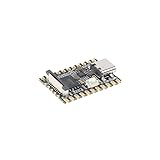
- Single core ARM Cortex-A7 32-bit core, integrated with NEON and FPU
- Built in Micro's self-developed 4th generation NPU, with high computational accuracy and support for mixed quantization of int4, int8, and int16. Among them, int8 has a computing power of 0.5 TOPS and int4 has a computing power of up to 1.0 TOPS
- Built in self-developed 3rd generation ISP3.2, supports 4 million pixels, and supports various image enhancement and correction algorithms such as HDR, WDR, and multi-level denoisin
- It has powerful encoding performance, supports intelligent encoding, adapts to save bit rates according to the scene, and saves more than 50% of the bit rate compared to conventional CBR mode, making the captured images high-definition, smaller in size, and doubling the storage space
- The design with built-in RISC-V MCU supports low-power fast startup, 250ms fast capture, and simultaneous loading of AI model library, enabling facial recognition to be completed within 1 second
Fields that make a memory governable
- Stable memory ID, subject, and scope, such as a specific entity or deal
- Memory type and compact content
- Source session, document, or record; source type; and a stable source reference
- Confidence and importance, with clear definitions for how the system uses them
- Created, observed, and updated timestamps; version; and effective date where relevant
- Sensitivity, access policy, retention or expiry where appropriate, and deletion status
Scope is a safety boundary as well as a retrieval aid. A memory about one target should not appear in another deal’s answer merely because the language is similar. Apply access and deal-scope filters before ranking or injecting candidate records, and test that separation directly.
Update rather than silently overwrite
When a fact changes, preserve enough version history to explain what the agent believed, when that belief applied, and which source supported it. Consolidation can reduce duplicate or noisy records, but it should not destroy the evidence needed to audit a consequential answer. Expired or deleted memories should stop being retrievable under the applicable policy; the system should also account for derived summaries or indexes that could otherwise retain the same information.
Independent reader supportYour contribution helps us test, update, and keep practical guides available for everyone.Build the deal workflow around traceable handoffs
A useful workflow separates collecting evidence from interpreting it, and makes memory a retrieval aid rather than a substitute for the source systems or professional judgment.
Recommended Free Tools
- Define the question and scope. Identify the deal, entities, time period, user permissions, and decision being supported.
- Retrieve candidate memory and evidence. Apply scope, access, time, and sensitivity filters before selecting relevant records.
- Check source quality and currency. Resolve versions and dates where possible; retain conflicts where they cannot be resolved.
- Analyze with specialist roles where useful. For example, agents may gather documents, extract financial assumptions, or summarize market evidence, while a coordinating agent tracks the question and handoffs.
- Return a sourced answer. Distinguish facts, inferences, and recommendations; attach source references to material claims and state uncertainty when needed.
- Record the outcome appropriately. Store durable decisions or reusable lessons as scoped memories, while leaving authoritative transaction data in its system of record.
AWS’s published M&A due-diligence example uses a supervisor coordinating specialist agents, gathering information from multiple sources, prioritizing targets against strategic criteria, and retaining prior research, valuation assumptions, and integration lessons for future deals. It is a vendor reference architecture implemented with synthetic targets, not evidence that the workflow will produce the same results in every production setting. AWS reports that work which previously required weeks of analyst time was completed in hours in its testing; that is the vendor’s reported result, not an independently verified or generalizable benchmark.
Rank #4

- 【POWERFUL ESP32‑S3 CONTROLLER】Built‑in Xtensa 32‑bit LX7 dual‑core processor, 512KB SRAM, 8MB PSRAM, 16MB Flash for stable AI voice computing and multitask processing.
- 【Preloaded Dual AI Platforms】Comespre-installed with complete Deepseek and OpenAI voice dialogue projects.Experience intelligent voice interaction instantly. (Note: OpenAI functionality requires your own API key.)
- 【STABLE WIRELESS & CLEAR AUDIO】Integrated 2.4GHz Wi‑Fi + Bluetooth 5 (LE); dedicated audio decoding module for natural, responsive voice interaction.
- 【USER‑FRIENDLY VISUAL & PLUG‑AND‑PLAY】2” TFT‑SPI color screen shows real‑time chat; modular design, no extra wiring, ready to use after setup.
- 【FULL LEARNING SUPPORT】45 programmable GPIOs, rich interfaces, online web tutorials, free technical support for beginners & developers.
Implement and evaluate in stages
Choose databases and cloud services only after the agent’s questions, authoritative sources, permissions, and retention needs are understood. The available guidance supports architecture choices, not one universally suitable vendor stack, compliance regime, or cost estimate.
- Define target questions and systems of record. Include questions about changed facts, prior decisions, source conflicts, and relationships across entities.
- Preserve addressable evidence. Record source identity, date, permissions, version, and stable references before generating summaries.
- Add compact semantic and episodic memory. Use explicit scope and provenance; keep durable facts distinct from timestamped events.
- Evaluate retrieval methods. Compare lexical, vector, and hybrid retrieval using representative deal questions and metadata filters.
- Add graph relationships only if needed. Test whether multi-hop entity or transaction questions justify the added schema and maintenance.
- Build governance into the workflow. Enforce access control, citation checks, contradiction handling, retention, deletion, and audit logging.
- Test end-to-end behavior. Measure whether the system retrieves the right evidence, grounds claims, respects deal boundaries, and handles changed or conflicting facts.
Evaluation should include both retrieval and answer quality. A plausible response is not sufficient if it was retrieved from the wrong deal, relies on a superseded assumption, or cannot be traced to evidence. Establish a review process for memory extraction and updates, and assess failure cases before relying on the agent in diligence decisions.
How to interpret emerging memory benchmarks
A 2026 preprint by Zero Labs authors reports 95.60% on LongMemEval and 93.60% on LoCoMo. The same paper reports 3.4 percentage points of accuracy variation across eight backbone LLMs and approximately 30× variation in per-query cost. These are the authors’ benchmark results, not independently reproduced findings; benchmark scores should not be treated as a forecast of deal-agent performance or operating cost. The preprint also describes quality at up to 20× lower cost per query, a paper-reported claim that should be interpreted within its benchmark context rather than generalized to production deal workflows.
What’s actually slowing this PC down?
Pick the symptom - the matching free tool is one click away.
Quick Recap
Product prices and availability are accurate as of the date/time indicated and are subject to change. Any price and availability information displayed on Amazon at the time of purchase will apply.

