
The Tool Desk
Outbyte Driver Updater FREEScan for outdated or missing drivers - takes under a minuteDriver Scan →Outbyte PC Repair FREEClear out junk files and repair common Windows errorsFree Scan →iTechGuides is reader-supported. When you buy through links on our site, we may earn an affiliate commission. As an Amazon Associate I earn from qualifying purchases. Learn more
An enterprise climate intelligence OS is best understood as an operating model—not a standard product category or prescribed software architecture. It connects climate-related risks and opportunities to accountable governance, usable data, scenario analysis, enterprise risk decisions, and reporting. IFRS S2 supplies important disclosure expectations, while practical guidance such as the UK Government Actuary’s Department’s data-collection guidance can help teams organize the work. Neither defines a universal technology stack.
What an enterprise climate intelligence OS needs to do
The aim is to make climate information usable across the organization, from the people who identify and manage risks to the leaders who oversee strategy and the teams that prepare disclosures. A useful operating model links six capabilities:
- Governance: accountable oversight, controls, procedures, and decision routes.
- Risk and opportunity management: identification and assessment of physical risks, transition risks, and climate-related opportunities.
- Data: traceable information about the organization and relevant parts of its value chain, including sources, gaps, owners, and assumptions.
- Scenario analysis: analysis that informs assessment of climate resilience rather than a claim to predict one certain future.
- Enterprise integration: connections to existing risk identification, assessment, prioritization, and monitoring routines.
- Metrics, targets, and reporting: measurements and explanations connected to the risks and opportunities being managed.
This is a practical editorial synthesis of disclosure requirements and guidance, not an official six-layer architecture. Organizations can implement it through existing systems, new software, external services, or a combination; the standards do not prescribe one approach.
Recommended Free Tools
What IFRS S2 requires—and what it does not
IFRS S2 covers climate-related physical risks, transition risks, and opportunities that could reasonably be expected to affect an entity’s prospects. Its disclosure domains are governance, strategy, risk management, and metrics and targets. The IFRS Foundation states that the standard is effective for annual reporting periods beginning on or after 1 January 2024. Whether and how it applies to a particular organization depends on jurisdiction and adoption; that effective date alone does not establish a company’s legal obligation.
#1 Best Overall
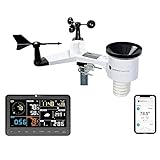
- COMPLETE WEATHER STATION: (1) Osprey Sensor Array with Rain Cup, and (1) Brilliant, Easy-to-Read LCD Color Display
- AUTHENTIC HYPER-LOCAL DATA: Monitor your actual home and backyard weather conditions with our wireless and Wi-Fi-enabled sensor array measuring wind speed/direction, temperature, humidity, rainfall, UV intensity, and solar radiation
- SMART HOME READY: Set up alerts, access your data remotely, and program your home based on weather conditions using IFTT, Google Home, Alexa, and more
- ENHANCED WIFI: Enables your station to transmit its data wirelessly to the world's largest personal weather station network (optional setting)
- JOIN THE COMMUNITY: Connect to Ambient Weather Network to customize your dashboard tiles, share hyperlocal weather conditions via social feeds and create your own forecasts (coming soon)
IFRS S2 also calls for climate scenario analysis to inform an entity’s assessment of climate resilience. It does not specify one scenario set that every company must use. The implementation approach should fit the entity’s circumstances, including its exposure and its available skills, capabilities, and resources. The standard establishes disclosure expectations, not a universal software stack, risk taxonomy, or vendor shortlist.
How to organize the operating model
Use the following cycle to connect analysis to decisions. It is a way to organize implementation, not a requirement to create six separate teams or systems.
1. Assign governance and accountability
Identify who oversees climate-related risks and opportunities, which management roles own them, and where decisions enter existing board and management processes. Define the controls and procedures used to monitor and manage the subject. IFRS S2 disclosure expectations include information about governance processes, controls, and procedures, so responsibilities should be clear enough to explain—not merely represented by a committee name.
Make operational ownership explicit as well: who supplies data, who checks it, who approves assumptions, and who can resolve gaps or disagreements. A climate team can coordinate the process, but source information often sits with other functions.
2. Maintain a risk and opportunity register
Record physical risks, transition risks, and opportunities in a way that connects them to the business model, value chain, and prospects. Include the affected activity, location or value-chain relationship where relevant, the time horizon considered, and the potential implications for cash flows, access to finance, or cost of capital. Short-, medium-, and long-term horizons can help explain when effects may matter; choose definitions that are meaningful to the entity and use them consistently.
Rank #2

- [Color LCD Screen Weather Station] Newentor temperature & humidity monitor with a large color LCD display shows essential home weather information at a glance: indoor/outdoor temperature & humidity, daily high/low records, customizable alerts, time/date, alarm clock & snooze, weather forecast, moon phase, and barometric pressure.
- [Two Power Modes & Adjustable Backlight] To enjoy a 24/7 continuous always-on vibrant display, simply connect this home weather station to a wall outlet using the included DC power adapter. When operating on battery power only (batteries not included), the digital thermometer automatically enters an eco-energy-saving mode, where the screen lights up for a quick 15-second glance before dimming. It is the perfect bedside or living room clock designed to fit your power preference.
- [3-channel Home Weather Stations Wireless Indoor Outdoor] Wireless temperature forecast station supports up to 3 remote sensors to monitor inside outside temperature & humidity of multiple locations. Package contains one remote sensor.
- [Wireless Forecast Station] The weather forecast station calculates the weather forecast for the next 12-24 hours, 7 to 10 days calibration ensures an accurate personal forecast for your location.
- [Wireless Weather Station with Atomic Time&Date] Atomic alarm clock weather station can be used not only as a wireless indoor outdoor thermometer but also as an atomic clock with dual alarms.
Keep the register decision-oriented. For each item, capture the accountable owner, existing controls or responses, assessment status, evidence source, and any important uncertainty. These fields are practical design choices rather than a prescribed IFRS S2 template.
3. Build a traceable data foundation
Inventory information already held across the organization before deciding that a new platform or enterprise data lake is necessary. The UK Government Actuary’s Department’s practical guidance, published 7 September 2026, identifies risk, finance, operations, estates, procurement, HR, and sustainability as potential internal source teams. It describes a process of defining data needs, identifying sources, mapping existing information, and addressing gaps.
What’s actually slowing this PC down?
Pick the symptom - the matching free tool is one click away.
For each input, record its source, scope, organizational entity or value-chain location, owner, date or period, relevant assumptions, and checks performed. Map information to the risks and decisions it supports. This gives teams a way to see whether a number is suitable for a particular use, rather than treating every available data point as interchangeable.
The UK guidance discusses basic checks and the use of proxies where appropriate. A proxy should be identified as such, with its rationale and limitations documented; it should not be presented as directly measured information. The guidance also says organizations need not wait for perfect data before starting. It is practical UK government guidance, not an IFRS requirement or a universal legal rule.
4. Use scenario analysis to assess resilience
Scenario analysis is a way to examine how strategy and the business model might hold up under plausible climate-related changes and uncertainty. It is not a forecast that one scenario will occur. Use the analysis to identify vulnerabilities, dependencies, strategic choices, and questions that deserve management attention.
Rank #3
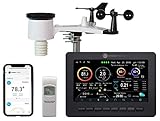
- Allows you to monitor your home and backyard weather conditions with TFT color display
- Wireless all-in-one integrated sensor array measures wind speed/direction, temperature, humidity, rainfall, UV and solar radiation
- Supports both imperial and metric units of measure with calibration available
- Enhanced Wi-Fi connectability option that enables your station to transmit its data wirelessly to the world's largest personal weather station network
- Console power provided by 5V DC adapter (included), and sensor array requires 3 x AAA batteries (not included)
The IFRS Foundation’s March 2026 implementation webcast describes proportionality mechanisms that allow an entity to choose an approach commensurate with its circumstances. IFRS Foundation implementation materials point to exposure and available skills, capabilities, and resources as relevant considerations. The appropriate depth and method therefore depend on the organization; do not describe one fixed scenario set or level of technical sophistication as universally mandated.
Quick wins for a faster PC:
Fix the driver behind crashes, sound loss and screen glitchesFind Drivers →Clear out junk files and repair common Windows errorsFree Scan →Before commissioning or building analysis, define the decision it should inform, the parts of the business or value chain in scope, the assumptions and time horizons, and who will interpret the results. Preserve those choices with the output so that users can understand what the analysis does—and does not—show.
5. Integrate climate risk into enterprise risk routines
Connect climate-related identification, assessment, prioritization, and monitoring to the organization’s wider risk-management processes. This helps climate information reach the same decision channels used for other material risks, rather than becoming a parallel reporting exercise. IFRS S2 asks entities to describe how their climate-related risk processes relate to overall risk management.
For banks, Basel guidance specifically addresses group-wide collection and aggregation of climate-related financial-risk data as part of data governance and IT infrastructure. It also says scenario-analysis objectives should reflect board and senior-management risk objectives. These are sector-specific supervisory expectations; they should not be generalized as rules for every enterprise.
6. Link metrics, targets, and reporting to management
Choose metrics that help explain the material risks and opportunities being managed, and connect target progress to the decisions and actions intended to influence it. Maintain enough lineage to explain reported information, its scope, its source, and material assumptions. That traceability supports review and makes it easier to identify when a reported figure cannot be compared directly with another period or organizational boundary.
Rank #4
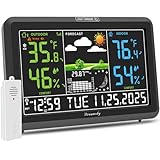
- Illuminated Indoor Outdoor Weather Station for Home with Large Colorful Display: The home weather station delivers large big numbers for weather forecast info, indoor outdoor temperature, atomic time, date, year and calendar day, which is super easy to read from afar.
- Indoor outdoor Thermometer Wireless with High/Low Temperature Alert: The digital weather station supports 3 outdoor sensors which helps to monitor temperature and humidity of multiple locations (one sensor included). With the high/low temperature alert function, the weather station clock keeps you informed about the changes of weather thermometer outdoor.
- WWVB Atomic Weather Station with Auto DST: Weather atomic clock with indoor/outdoor temp always keeps precise time and date by receiving the WWVB atomic signal. The self setting digital weather clock will automatically adjust to daylight saving time with auto DST feature, no more resetting twice a year.
- Personal Weather Forecast Station: This weather stations wireless indoor outdoor predicts the next 12-24 hours weather condition with a 7-day calibration through the pressure of your location which provides you a better outing experience.
- 5 Level Adjustable Backlight Brightness: The weather clock indoor outdoor temperature atomic with backlight dimmer function helps you avoid high-intensity light that disturb your sleep and easily check the weather situation during the day.
How to start without waiting for perfect data
A practical first phase is a controlled inventory and gap log, not a claim that the organization already has a complete climate data system. The sequence below applies the UK Government Actuary’s Department’s four-step guidance as an implementation aid; it is not a universal legal checklist.
- Define data needs. Start from the risks, opportunities, decisions, and disclosures in scope. Specify the information needed, its relevant boundary and period, and who will use it.
- Identify sources. Ask relevant functions—including risk, finance, operations, estates, procurement, HR, and sustainability—what information they hold, how it is produced, and who can explain it.
- Map existing information. Record the source, owner, scope, location or entity, period, checks, and assumptions. Link each input to the risk or decision it supports.
- Address gaps deliberately. Log what is missing, its importance, the interim treatment, the owner, and the next action. Where a proxy is appropriate, label it and document its rationale and limitations.
Prioritize gaps according to their effect on a material assessment or decision, rather than trying to collect every conceivable data point at once. Keep an audit trail of changes to definitions, assumptions, and data sources so that later analysis can be interpreted in context.
How to choose tools or services
There is no evidence-based reason to assume that a single platform is required or that a feature list proves compliance. Treat build-versus-buy as an implementation decision: first define the workflows and controls, then assess whether existing systems, climate-risk or disclosure software, external analytical services, or a combination can support them. The following comparison rubric is an editorial synthesis of the cited requirements and guidance, not a vendor scorecard.
| Evaluation area | Questions to ask |
|---|---|
| Risk and opportunity coverage | Can the workflow represent physical risks, transition risks, and opportunities relevant to the organization? |
| Internal and value-chain information | Can it connect internal inputs and relevant value-chain information to the entities, activities, or locations in scope? |
| Scenario analysis and resilience | Can users record the analysis approach, assumptions, and decision it informs, with a level of detail suited to the organization? |
| Traceability and ownership | Can users identify sources, owners, checks, gaps, proxies, and assumptions behind a reported or analyzed value? |
| Risk integration and aggregation | Can information flow into existing risk-management routines and, where relevant, support group-wide aggregation? |
| Implementation capacity | Can the organization operate and govern the approach with its available skills, capabilities, and resources? |
Ask for demonstrations using representative workflows and data, and establish how assumptions, corrections, and ownership are handled. Avoid treating a tool’s presence of a reporting template or scenario library as proof that the organization has met a disclosure requirement: the entity still needs to determine what is relevant, govern its process, and explain its judgments.
Do these 3 things before closing this tab:
1Fix the driver behind crashes, sound loss and screen glitches2Clear out junk files and repair common Windows errors3Scan for outdated or missing drivers - takes under a minuteWhat a useful first release looks like
A first release should be small enough to govern and useful enough to inform a real decision. A reasonable starting boundary is one reporting entity or business area, a defined set of material risks and opportunities, named data owners, a maintained gap log, and scenario analysis proportionate to exposure and capacity. Use the results to improve the next cycle of risk assessment and reporting rather than claiming completeness on the basis of a newly assembled dashboard.
As the process matures, extend coverage where the organization’s risk profile, value chain, decisions, and disclosure needs justify it. The measure of progress is not the number of connected systems; it is whether the organization can explain how climate-related information was sourced, assessed, governed, used, and reported.
Quick Recap
Product prices and availability are accurate as of the date/time indicated and are subject to change. Any price and availability information displayed on Amazon at the time of purchase will apply.

