
Do these 3 things before closing this tab:
1Clear out junk files and repair common Windows errors2Fix the driver behind crashes, sound loss and screen glitches3Repair Windows errors before they cause bigger problemsiTechGuides is reader-supported. When you buy through links on our site, we may earn an affiliate commission. As an Amazon Associate I earn from qualifying purchases. Learn more
Customer complaints about a voice agent become useful engineering evidence only after each one is converted into a specific, replayable failure at the level of a single conversational turn, with a human-verified answer attached. That is the core method in Yaoshen Luo’s first-person case study, “Benchmarking Real Work – Case 01: How I Built a Voice Agent Benchmark from Real Customer Failures,” published on dev.to on September 29, 2026. The post focuses on speaker identification in a voice-first agent, and it shows how a vague report such as “we hit another misidentification issue” turned into a repeatable test suite that guided changes to the audio pipeline and the language-model prompt.
What the case study covers, and what it does not
The post is a single author’s retrospective. It describes the workflow Luo used and the observations the author reports, but it is not an independent evaluation, a published technical paper, or a standard. It names no specific agent, recognition model, recording device, annotation product, or vendor. It also does not publish implementation code or a dataset, so the benchmark it describes cannot be checked or rerun by a reader directly. Its value is the sequence of decisions behind it, which is what the sections below break down.
Why a complaint is not yet a bug report
Luo inherited a voice-agent module that had clear customer demand but negative sentiment around it and little documentation of the product context. The incoming reports were not actionable. A message saying a misidentification had happened does not identify which turn in the conversation was wrong, or whether the problem was a wrong speaker label or a speaker the system never detected at all.
Free tools Windows power users keep installed
One-click scans. No signup required.
The author asked customers to run another test round and send failure cases. The session logs that came back were fragmented, which made root-causing each incident slow. The fix was to capture sessions and make them replayable before trying to diagnose anything.
#1 Best Overall

- Designed for Home Assistant Voice & Music Workflows: Preloaded with Home Assistant Voice Assistant and Music Assistant. Functions as both a voice input terminal and an audio playback endpoint.
- Dual Microphones for Voice Capture: Built with dual digital microphones for wake word or button-activated voice capture. Audio is streamed to the Home Assistant voice pipeline.
- Integrated 3W Speaker for Direct Playback: The built-in 3W/4Ω speaker supports TTS playback, Music Assistant streaming, and system audio without external speakers.
- Linux-Based Local Operation: Runs a lightweight Linux system on a quad-core ARM A53 CPU with 256MB RAM and 512MB flash for local audio processing.
- Development & Debugging Capabilities: Supports firmware flashing, and also provides access to live logs, on-device editing—suitable for routine development or issue diagnosis.
The working definition of a usable failure is a turn-level record. For each failing turn, the record needs to answer four questions:
- Which session and which turn index is involved?
- Who was actually speaking, according to a human listener?
- Who did the system predict was speaking?
- Was the failure a wrong identity, or a speaker that went undetected?
The benchmark v1 workflow
Benchmark v1 has four working parts. The table below summarizes each one with the details the author reports. Where the post gives no further detail, the table says so.
| Component | Job in the workflow | Details the author reports |
|---|---|---|
| Session capture and replay | Records a conversation so a failing session can be re-run exactly | Described as a prerequisite for efficient root-causing; the post gives no implementation details |
| Labeling interface | Lets a human assign the ground-truth speaker to each utterance | A lightweight web interface that presents dialogue context and audio clips in sequence |
| Evaluation runner | Replays a problem session and compares actual outputs with expected labels | Reported metrics are per-turn accuracy and recall for speaker identification |
| Simulated conversations | Adds controlled coverage of single-speaker and multi-speaker dialogue | Built by colleagues; the first version covers “hundreds” of labeled conversational turns, with no exact count given |
Running the workflow in order
The sequence the author describes can be followed as a loop. Each step depends on the one before it.
Rank #2

- 2025 Newest Wearable Speaker with Voice Assistant: With just a press of the voice button on your clip-on Bluetooth speaker, you can summon your favorite voice assistant (Siri/Google) to open your frequently used apps—like Spotify, Apple Music, Audible, Pandora, or Amazon Music—and start playing your favorite music or audiobooks—without picking up your phone!
- 5X Stronger Clip Design: Our clip-on wireless Bluetooth speaker features an enhanced clip design with anti-slip serrated teeth, ensuring a secure and firm hold. The clip opens with a single hand for easy attachment to shirts, backpacks, jackets, belts and more. Whether you're exercising, work, or on the go, you can enjoy worry-free, high-quality sound.
- Up to 30 Hours of Playtime: Engineered with a high-efficiency battery system, this wearable Bluetooth speaker delivers 30 hours of runtime at 50% volume (18h at 80%) and supports rapid power replenishment for minimal downtime. Whether you're hiking or on the go from day to night, this long battery life keeps the music going all day.
- Updated Volume, Bigger Sound: Featuring a 28mm overclocked driver, this upgraded clip-on Bluetooth speaker delivers 80% more volume than typical mini speakers. Perfect for listening to music at home, enjoying audiobooks outdoors, making hands-free calls, or cutting through noise in busy environments, its enhanced audio performance ensures every word and note is heard effortlessly. An ideal choice for seniors and anyone who needs powerful, reliable sound on the go.
- IPX7 Waterproof & Dustproof: Our clip-on portable speaker meets the IPX7 protection standard and has been tested to be completely immersed in water for 30 minutes without water ingress, and adopts a mesh design to enhance dustproof performance. It is a shower-grade Bluetooth speaker suitable for use at beaches, wetlands, parks and outdoor work.
- Collect the failing session. Ask users for the session that went wrong and retrieve its captured audio and context. Without captured audio, a report cannot be replayed.
- Replay the session. Run the session through the current pipeline so the speaker predictions and the prompt context they produced can be inspected turn by turn.
- Label the ground truth. Have a human review each utterance in the labeling interface and record who was speaking. The labels, not the system’s own output, become the reference.
- Score the run. Compare predicted speaker identities against the labels and report per-turn accuracy and recall.
- Keep the case. Add the reproduced failure to the static test suite so that future changes are checked against it.
This loop is what separates a repeatable benchmark from an anecdote. A change can be judged by whether the suite’s scores move, and a failure that once appeared in production can be rerun on demand.
What changed the engineering: audio duration and prompt context
Audio sample duration
The author reports a strong relationship between speaker-identification accuracy and the duration of the audio sample. The response was to change when inference runs in the audio-ingestion pipeline and how long the audio sample is when it is processed. The stated aim was to deliver speaker metadata to the language-model context reliably for both short and long utterances.
The post does not give the duration thresholds, the before-and-after accuracy values, or the experimental controls used to separate the duration effect from other changes. Readers should treat the relationship as the author’s observation and the direction of the fix as the author’s account.
Rank #3
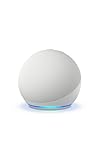
- Your favorite music and content – Play music, audiobooks, and podcasts from Amazon Music, Apple Music, Spotify and others or via Bluetooth throughout your home.
- Alexa is happy to help – Ask Alexa for weather updates and to set hands-free timers, get answers to your questions and even hear jokes. Need a few extra minutes in the morning? Just tap your Echo Dot to snooze your alarm.
- Keep your home comfortable – Control compatible smart home devices with your voice and routines triggered by built-in motion or indoor temperature sensors. Create routines to automatically turn on lights when you walk into a room, or start a fan if the inside temperature goes above your comfort zone.
- Do more with device pairing – Fill your home with music using compatible Echo devices in different rooms, or create a home theatre system with Fire TV.
- Say goodbye to drop-offs and buffering - With eero Built-in, Echo Dot doubles as a mesh wifi extender, adding up to 1,000 sq. ft. of wifi coverage to your existing eero network.
Speaker metadata in the prompt layer
A problem remained after the duration work. It appeared in group conversations, where turn-taking did not feel right to the user. The author attributes it to poor integration of speaker metadata into the prompt layer. Structuring and normalizing that metadata before it reached the model, the author reports, improved both the benchmark metrics and hands-on testing. No numeric measurements are provided for this change.
What’s actually slowing this PC down?
Pick the symptom - the matching free tool is one click away.
The practical point is that speaker identification is only useful if the downstream model receives it in a consistent form. A correct label that is poorly formatted in the prompt can still produce a wrong turn.
Why the first dataset overstated performance
The most instructive part of the post is a limitation the author found in its own benchmark. The initial dataset’s utterance-length distribution was weighted heavily toward longer sentences, compared with real production traffic. Because of that, the early scores were too optimistic. When the author re-sampled the data so that utterance lengths resembled production, the measured accuracy went down.
Rank #4

- Your favorite music and content – Play music, audiobooks, and podcasts from Amazon Music, Apple Music, Spotify and others or via Bluetooth throughout your home.
- Alexa is happy to help – Ask Alexa for weather updates and to set hands-free timers, get answers to your questions and even hear jokes. Need a few extra minutes in the morning? Just tap your Echo Dot to snooze your alarm.
- Keep your home comfortable – Control compatible smart home devices with your voice and routines triggered by built-in motion or indoor temperature sensors. Create routines to automatically turn on lights when you walk into a room, or start a fan if the inside temperature goes above your comfort zone.
- Do more with device pairing – Fill your home with music using compatible Echo devices in different rooms, or create a home theatre system with Fire TV.
- Say goodbye to drop-offs and buffering - With eero Built-in, Echo Dot doubles as a mesh wifi extender, adding up to 1,000 sq. ft. of wifi coverage to your existing eero network.
The post does not quantify either distribution, and it does not explain the sampling method used. What it does establish is the general lesson: a benchmark can be perfectly repeatable and still mislead if its examples do not represent the traffic it is meant to measure. Checking the benchmark’s composition against production logs is therefore a precondition for trusting its scores, not an optional refinement.
Independent reader supportYour contribution helps us test, update, and keep practical guides available for everyone.Open problems for continuous evaluation
The author frames benchmark v1 as a static, repeatable test suite. For moving it toward continuous evaluation, the post lists five unresolved problems. It does not claim to have solved any of them.
Windows Errors? Fix Them Before They Spread
Repair common Windows errors and clear accumulated junk for a smoother, more stable PC - no reinstall needed.Free scan · no reinstallOutdated Drivers Are Slowing You Down
One free scan finds every outdated or missing driver and matches the right update for your exact hardware.Free scan · exact hardware match- Selection: deciding which production failures merit inclusion in the suite.
- Annotation: keeping labels reliable while controlling the cost of human review.
- Coverage: expanding across hardware, new users, utterance lengths, and multi-speaker conversations.
- Versioning: keeping the benchmark aligned with the distribution of real users as that distribution changes.
- Feedback: routing newly discovered issues into the next evaluation cycle.
The author says later installments of the series will address annotation, coverage, and continuous evaluation.
Applying the method to your own voice agent
The post does not give a checklist, so the steps below are a practical reading of its workflow rather than a procedure the author published. They are suitable for teams starting from the same position: a stream of vague complaints and no replay capability.
- Turn each complaint into a record with a session identifier, a turn index, the expected speaker, the predicted speaker, and the failure type (wrong identity or undetected speaker).
- Capture audio and the prompt context for every session, so that any reported failure can be replayed later.
- Build a labeling step that uses a human as the reference, and keep a record of who labeled each turn so inconsistent labels can be found.
- Report accuracy and recall per turn, and break the results down by utterance duration and by single-speaker versus multi-speaker sessions. An overall average can hide the segments where the agent fails.
- Compare the duration and speaker-count mix of the benchmark with production logs before relying on any score.
- Version the benchmark, so a score change can be traced to a change in the data or in the system.
Limits of the source
- No before-and-after numeric scores are published, so the size of the improvement cannot be estimated.
- Duration thresholds, exact sample durations, and dataset composition are not stated.
- The annotation protocol and the number of labelers are not described.
- No independent replication exists, and the benchmark is not offered as a published standard.
Readers should take the post as a clear account of a method and its pitfalls, not as evidence of how much any particular change improved accuracy.
Quick Recap
“
Product prices and availability are accurate as of the date/time indicated and are subject to change. Any price and availability information displayed on Amazon at the time of purchase will apply.
Quick wins for a faster PC:
Fix the driver behind crashes, sound loss and screen glitchesFind Drivers →Clear out junk files and repair common Windows errorsFree Scan →Scan for outdated or missing drivers - takes under a minuteDriver Scan →
