
iTechGuides is reader-supported. When you buy through links on our site, we may earn an affiliate commission. As an Amazon Associate I earn from qualifying purchases. Learn more
A WebRTC remote desktop can send screen media and control messages directly between two computers when ICE finds a usable direct path. It cannot guarantee that every session avoids an intermediary: the application still needs a separate signaling channel to set up the connection, and ICE may use a TURN relay when direct connectivity fails. Native operating-system APIs provide the platform-specific screen capture and input integration; WebRTC provides the peer transport.
What “zero-middleman” can—and cannot—mean
WebRTC does not define how peers exchange the information needed to start a connection. The WebRTC project’s Getting started with peer connections guide describes signaling as outside the specification: a remote desktop must use an application-defined channel to exchange session descriptions and ICE candidates. That channel might be a server-backed service, but it need not carry the ongoing screen or input stream.

Once setup begins, ICE checks possible network paths. STUN can help a peer discover a reachable address; if a direct path cannot be established, TURN can relay traffic. In that case, the session is still using WebRTC, but its live packets pass through an intermediary. “Zero-middleman” is therefore an architectural goal for successful direct sessions, not a guarantee that signaling, connection assistance, or relay infrastructure is absent.
The Tool Desk
Outbyte Driver Updater FREEFix the driver behind crashes, sound loss and screen glitchesFind Drivers →Outbyte PC Repair FREEClear out junk files and repair common Windows errorsFree Scan →Google’s Chrome Remote Desktop network guide illustrates this distinction for that specific product: it documents initial negotiation through Google services and subsequent direct, STUN, or TURN/relay modes, including TURN relaying through Google data centers. That example should not be taken as a universal description of all WebRTC applications.
#1 Best Overall
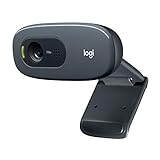
- Compatible with Nintendo Switch 2’s new GameChat mode
- Crisp HD 720p/30 fps video calls with diagonal 55° field of view and auto light correction. Compatible with popular platforms including Skype and Zoom.
- The built-in noise-reducing mic makes sure your voice comes across clearly up to 1.5 meters away, even if you’re in busy surroundings.
- C270’s RightLight 2 feature adjusts to lighting conditions, producing brighter, contrasted images to help you look good in all your conference calls.
- The adjustable universal clip lets you attach the camera securely to your screen or laptop, or fold the clip and set the webcam on a shelf. You’re always ready for your next video call.
How to divide setup, screen, and control traffic
Keep connection setup separate from the live peer connection, then choose transports according to the kind of data being sent. WebRTC supports media and arbitrary application data, but it does not prescribe a complete remote-desktop protocol.
| Function | Possible mechanism | Design responsibility |
|---|---|---|
| Connection setup | Application signaling channel carrying SDP offers and answers plus ICE candidates | Identify peers and exchange setup data; WebRTC does not supply this service. |
| Screen updates | WebRTC media track | Choose capture, encoding, quality adaptation, and handling for displays and pointer imagery. |
| Mouse and keyboard control | RTCDataChannel carrying application-defined messages | Define event encoding, ordering expectations, validation, and how the receiving OS applies input. |
The WebRTC guide recommends trickle ICE: send candidates as they are discovered instead of waiting for the full candidate-gathering phase. The guide presents this as a way to reduce setup delay; it is not a measured setup-time result for a particular remote desktop.
Rank #2

- Compatible with Nintendo Switch 2’s new GameChat mode
- Auto-Light Balance: RightLight boosts brightness by up to 50%, reducing shadows so you look your best—compared to previous-generation Logitech webcams (1)
- Privacy with a Slide: The integrated webcam cover makes it easy to get total, reliable privacy when you're not on a video call
- Built-In Mic: The built-in microphone lets others hear you clearly during video calls
- Easy Plug-And-Play: The Brio 101 works with most video calling platforms, including Microsoft Teams, Zoom and Google Meet—no hassle; it just works
RTCDataChannel supports arbitrary application data and uses DTLS encryption. MDN’s Using WebRTC data channels documentation also describes outbound buffering and warns that large messages can cause head-of-line blocking when message interleaving is unavailable. Keep latency-sensitive control messages from waiting behind bulk data: avoid sending large unrelated payloads on the same channel, monitor buffered outbound data, and make message sizing and backpressure part of the protocol design.
Free tools Windows power users keep installed
One-click scans. No signup required.
Capture the desktop with native APIs
Windows: Desktop Duplication API
Microsoft’s Desktop Duplication API exposes desktop frames through DXGI surfaces and provides update metadata, including dirty regions, moved regions, and pointer information. That metadata can let a capture pipeline distinguish changed areas from an undifferentiated full-screen update. The API also permits GPU-based handling or compression workflows, but it does not choose the application’s codec or guarantee a particular performance level.
Rank #3

- 1080P HD Webcam: This HD webcam delivers crisp 1080p video quality, ideal for PCs, desktops, and laptops. Perfect for video calls, online classes, meetings, live streaming, gaming, and everyday recording. It provides clear, sharp images and smooth video at up to 30 frames per second. This live streaming webcam works with platforms such as Zoom, Teams, FaceTime, Google Meet, and YouTube.
- USB Plug and Play Webcam: Designed for PCs, this webcam is easy to use. No drivers or software are required; simply connect the webcam to your computer and start using it immediately. Operation is smooth and convenient. XWEIRYN webcams are compatible with multiple operating systems, including Mac/Windows XP/7/8/10/11/PC/Laptops.
- Widely Compatible Webcam: This versatile webcam is compatible with most operating systems and major video platforms. As a reliable computer webcam, it supports video conferencing, remote learning, live streaming, and gaming, meeting your various needs for daily work and entertainment.
- Smooth and Stable Performance: This webcam uses a stable transmission chip to ensure smooth, lag-free video streaming, synchronized audio and video, and no dropped frames. Even after prolonged use, this durable webcam maintains stable performance. It performs excellently even in low-light environments. It automatically adjusts to adapt to low-light conditions, reducing noise and restoring vibrant colors, ensuring clear and sharp images even without additional studio lighting.
- Compact and Adjustable Design: This lightweight and portable webcam saves space and comes with an adjustable clip. Our USB webcam uses a reliable USB 2.0/3.0 connection and comes with an upgraded 1.5-meter (5-foot) braided cable. It is compatible with Desktop most monitors and Laptop. Its portable design makes it easy to place and carry, ideal for home, office, or travel use.
Application logic remains necessary for rotation, multiple monitors, and pointer drawing. Treat these as explicit capture-pipeline cases rather than assuming a single frame source represents every desktop configuration. Microsoft’s API page was last updated January 6, 2021; verify the current guidance for the Windows versions you intend to support.
Linux: XDG Desktop Portal RemoteDesktop
The XDG Desktop Portal RemoteDesktop interface documents a session that can combine screen casting with remote input. It recommends EIS for input integration and also documents D-Bus Notify* calls as another route. This is a portal-based integration path, not evidence that every Linux distribution or desktop environment offers identical behavior, permissions, or user experience. Validate the target environments and their session behavior.
Rank #4

- 1080P Webcam with Cover for Video Calls - EMEET computer webcam provides design and Optimization for professional video streaming. Realistic 1920 x 1080p video, 5-layer anti-glare lens, providing smooth video. C960 computer camera delivers 1920x1080 video with fixed focus (11.8–118.1 inches), so as to provide a clearer image. C960 USB webcam has a cover and can be removed automatically to meet your needs for privacy. For optimal image performance, use the webcam in a well-lit environment.
- Built-in 2 Omnidirectional Mics - EMEET webcam with microphone for desktop features 2 built-in omnidirectional microphones, picking up your voice to create clear audio for communication. When installing the webcam, select EMEET C960 as the default microphone input device in your computer and video applications and select C960 as the default device in Zoom/Teams and ensure microphone permissions are enabled for proper use. Please note that C960 does not include built-in speakers.
- Automatic Light Adjustment - Automatic exposure adjustment is applied in EMEET HD webcam 1080p so that the streaming webcam can deliver stable image performance. EMEET C960 camera for computer also features color adjustment and exposure optimization to help you look your best. For optimal video quality, it is recommended to use the webcam in normal or well-lit environments and select suitable video settings in your application. Proper lighting helps achieve a clearer and more balanced image.
- Plug-and-Play & Upgraded USB Connectivity - New C960 webcam features both USB Type-A & A-to-C adapter connections for wider compatibility. For stable performance, connect the webcam directly to the computer's main USB port and ensure the device is recognized correctly. If a hub or docking station is used, please ensure it provides sufficient power and stable data transmission, as limited ports may affect performance. 90° wide-angle lens captures more participants without frequent adjustments.
- High Compatibility & Multi Application - C960 webcam for laptop is compatible with Windows 10/11, macOS 10.14+, and Android TV 7.0+. Not supported: Windows Hello, TVs, tablets, or game consoles. It works with Zoom, Teams, Facetime, Google Meet, YouTube and more. Please select C960 webcam as the default camera and microphone device in your application and ensure camera/microphone permissions are enabled, especially on macOS. (Tips: Incompatible with Windows Hello)
Other operating systems
The cited material establishes Windows and Linux approaches, not a macOS capture or input-injection design. A cross-platform implementation needs separate verification of macOS APIs and of permission behavior across each supported OS release. Do not assume the Windows or portal model transfers unchanged.
What’s actually slowing this PC down?
Pick the symptom - the matching free tool is one click away.
Keep native capture work off WebRTC signaling callbacks
The WebRTC Native APIs documentation says API calls are proxied to a signaling thread and callbacks run on that thread. It advises moving resource-intensive work elsewhere. A sound pipeline therefore treats capture, frame processing, and other expensive tasks as work for appropriate worker threads rather than performing them synchronously inside signaling callbacks. Keep thread handoffs explicit so that capture and transport state remain coordinated.
Best Value
Security requires more than encrypted transport
DTLS encryption on a data channel protects transport in the WebRTC connection; it does not, by itself, establish who is allowed to connect or what a connected peer may control. The application still needs an authentication and authorization design, user consent, and an input policy appropriate to its use case. Define these before enabling remote control, not as assumptions delegated to the transport.
Signaling also deserves deliberate protection because it carries the information used to establish the peer session. Decide how peers are identified, how setup messages are restricted to intended participants, and how consent is shown and withdrawn. These are application responsibilities; the cited WebRTC documentation does not claim to implement them automatically for a remote-desktop product.
What this architecture does—and does not—establish compared with RDP
Microsoft’s Remote Desktop Protocol overview describes a remote-display and input protocol with virtual channels and capabilities such as client mouse and keyboard redirection, clipboard mapping, and printer redirection. Those features provide useful comparison axes when deciding whether to build a narrower WebRTC system or use an established remote-access protocol. A custom WebRTC design must specify its own behavior for capabilities it needs, such as clipboard handling, reconnection, and device redirection.
Do these 3 things before closing this tab:
1Repair Windows errors before they cause bigger problems2Scan for outdated or missing drivers - takes under a minute3Clear out junk files and repair common Windows errorsThe cited RDP overview, last updated August 19, 2020, does not provide a current head-to-head performance comparison against a custom WebRTC implementation. Nor do the available sources establish a codec, resolution, frame rate, latency target, bandwidth requirement, connection-success rate, congestion policy, or clipboard implementation for this proposed system. Those outcomes depend on implementation and operating conditions and require representative testing.
Quick Recap
A practical architecture decision
- Use a separate signaling mechanism for peer identity, SDP offer/answer exchange, and ICE candidate exchange.
- Design for both direct ICE paths and TURN relay, rather than presenting direct connectivity as universal.
- Keep screen media and control messages logically distinct; define the control protocol and data-channel buffering behavior explicitly.
- Build capture and input integration around the target OS APIs, including multi-monitor, rotation, pointer, portal, and permission cases where applicable.
- Move costly capture and processing tasks away from signaling callbacks, and define application-level authentication, consent, and authorization.
- Evaluate features and performance against actual requirements; the cited sources describe mechanisms, not benchmark results for a completed remote desktop.
Product prices and availability are accurate as of the date/time indicated and are subject to change. Any price and availability information displayed on Amazon at the time of purchase will apply.

