
Do these 3 things before closing this tab:
1Fix the driver behind crashes, sound loss and screen glitches2Repair Windows errors before they cause bigger problems3Scan for outdated or missing drivers - takes under a minuteiTechGuides is reader-supported. When you buy through links on our site, we may earn an affiliate commission. As an Amazon Associate I earn from qualifying purchases. Learn more
A low-cost AI backend does four things reliably: counts requests with the target model’s tokenizer when a preflight check matters, records the provider’s actual usage after every call, keeps reusable prompt content cache-eligible, and controls throughput separately from spend. A token estimate helps with context checks and routing; it is not a bill. A cache opportunity is not a guaranteed hit. Build the backend to measure both.
Design the request path around estimates and actual usage
Token counting, metering, caching, and limits answer different questions. Keep them as distinct parts of the request lifecycle rather than treating one estimate or dashboard total as a substitute for the others.
| Control | When it runs | What it tells you |
|---|---|---|
| Preflight token count | Before sending, when size or cost prediction matters | Whether the request appears to fit a context limit, and an approximate input-size signal for routing or budgeting |
| Provider usage meter | After the response, including failed or incomplete requests when usage is returned | What the provider reports as consumed, including input, output, and cache-related usage where exposed |
| Cache metrics | After each request and in aggregate | Whether reusable content was read from or written to cache, and whether the realized economics justify the design |
| Throughput controls | Before and during execution | Whether request concurrency and token flow remain within provider and application limits |
| Spend controls | Continuously and over billing periods | Whether actual costs remain within tenant, project, or organization budgets |
One possible flow is: normalize and validate the request, count it if useful, apply routing and quota policies, dispatch it, capture the response and provider usage, then persist a usage event and update aggregates. The count is a planning input; the returned usage is the accounting input.
The Tool Desk
Outbyte PC Repair FREERepair Windows errors before they cause bigger problemsFix Now →Outbyte Driver Updater FREEScan for outdated or missing drivers - takes under a minuteDriver Scan →How do I count tokens before calling an LLM API?
Do not infer billable tokens from words or characters. Tokenization depends on the model, encoding, and language, and request framing can include more than visible text. OpenAI’s token-counting guide describes counting that includes request structure and supports richer requests such as images, files, tools, and conversations. Anthropic advises counting with the model ID intended for the request; see its token-counting documentation.
#1 Best Overall

- Turn Your Laptop into a KVM Console: Use your laptop or desktop computer to view and control a nearby target device through HDMI video input and USB keyboard/mouse control.
- No Network Required: Designed for direct local troubleshooting through USB and HDMI connections. No Wi-Fi, no remote desktop, and no software required on the target device.
- BIOS-Level Access for Troubleshooting: Useful for BIOS setup, OS installation, recovery work, headless server maintenance, Raspberry Pi projects, mini PCs, and embedded devices.
- Compact Tool for IT and Homelab Use: Small and lightweight design makes it easy to carry for field service, lab testing, server maintenance, and on-the-go troubleshooting.
- Video, Audio, Text and USB Utility: Supports 1080p video at 30Hz, HDMI embedded audio, text transfer by simulated keystrokes, and a switchable USB 2.0 port for sharing USB devices.
Use preflight counts for decisions, not invoices
Call the matching provider’s counting endpoint when the result can change a decision: rejecting or trimming an oversized request, choosing a route based on input size, checking context fit, or calculating an approximate cost. A local tokenizer can be useful for plain text, but it may not represent multimodal payloads, tools, schemas, or provider-specific request framing. Keep a safety margin for generated output and tokens that may not be visible in the final text.
Keep the estimate interpretable
Store the provider, intended model ID, request shape, and count alongside the estimate. Recount after model changes: a count for one model should not silently become the estimate for another. This also lets you compare preflight counts with returned usage and spot systematic differences without treating the estimate as authoritative.
How can I make prompt caching useful without assuming a hit?
Find material reused across requests: system instructions, tool definitions, shared documents, and stable conversation context. Where the provider’s rules permit, keep that shared prefix stable and put request-specific material after it. Check the actual model’s eligible minimum, breakpoint rules, retention, and read/write pricing before relying on a cache design.
Rank #2

- Compatible Devices: PC, Mac, PS3, Xbox360, Windows 8 7 XP Vista
- Color:black
- Multimedia composite key
- thin and fashion
- Character laser print
Measure cache outcomes per request
Record total input tokens alongside cached-read tokens and cache-write tokens when the provider exposes them. Also capture latency and realized cost. Aggregate these measures by a useful dimension—such as tenant, workspace, route, or day—so that a high cache-hit rate in one workload does not conceal misses elsewhere.
On OpenAI, cache keys can influence routing for some model generations, while newer generations handle routing automatically; a key does not pin a request or guarantee a cache hit. See OpenAI’s prompt-caching documentation for the model-specific behavior. For Anthropic, its pricing documentation describes automatic caching and explicit cache breakpoints, with cache writes and reads priced differently. The page’s published examples include a 5-minute cache write at 1.25× base input price, a 1-hour cache write at 2× base input price, and a cache read generally at 0.1× base input price, with model-specific exceptions. These are provider-published multipliers, not universal prices; check current terms for the model and platform you use. Partner-operated cloud platforms can have independent regional prices.
A write premium only pays off when enough later reads occur within the applicable retention period. Compare observed read and write volume and realized charges rather than treating the existence of caching as savings.
Rank #3

- 【AMD Ryzen 5 3501U Mini PC For Enhanced Daily Performance】Powered by AMD Ryzen 5 3501U processor with 4 cores and 8 threads, this mini pc provides responsive performance for office applications, home entertainment, online learning, media playback, and everyday computing.
- 【16GB Memory & 512GB Storage With Expansion Options】Built with 16GB DDR4 RAM and 512GB PCIe 3.0 NVMe SSD, this mini computer provides more space for applications, files, videos, and daily content. Upgrade memory up to 32GB, expand SSD storage up to 2TB, or add a 2.5-inch HDD.
- 【Flexible Small Desktop Computer For Home Applications】This small desktop computer is designed for home office, streaming, personal server setups, digital entertainment, and light gaming. The upgraded memory helps support smoother operation when using more applications.
- 【Triple Display Setup & Flexible Connectivity】Dual HDMI ports and a full-function USB-C port support up to three displays. This micro pc offers convenient connectivity with WiFi 6, Bluetooth 5.3, Gigabit Ethernet, and multiple USB ports.
- 【Compact Mini Desktop With Space-Saving Design】Measuring only 5.0 × 4.4 × 1.6 inches, this small pc saves valuable desk space. VESA mount support allows installation behind compatible monitors, making it suitable for home offices and compact workspaces.
How do I meter LLM usage per customer?
Persist a request-level usage event before rolling data up into dashboards or invoices. A useful record includes:
Quick wins for a faster PC:
Clear out junk files and repair common Windows errorsFree Scan →Scan for outdated or missing drivers - takes under a minuteDriver Scan →Repair Windows errors before they cause bigger problemsFix Now →- Provider, model ID, tenant or project, task class, and route.
- Timestamp, request status, and end-to-end latency.
- Preflight input estimate, when one was made, kept distinct from actual usage.
- Provider-reported input and output tokens, plus cached-read and cache-write tokens where exposed.
- The applicable price version or billing period used for internal cost calculations.
Provider-reported usage matters because output usage can include generated tokens that are not visible in the response text. Anthropic’s pricing documentation notes that reported output token usage includes all tokens generated by the model, not only visible response text. Meter from the provider’s usage fields rather than counting the displayed answer.
Calculate cost from the usage categories you actually receive
For each request, apply the relevant price version to the reported input, output, cached-read, and cache-write quantities that apply to that provider and model. Preserve those categories instead of collapsing everything into one token total: the categories can have different prices. If the provider does not expose a category for a request, do not invent it; record that it was unavailable and use the provider’s bill or usage reporting for reconciliation.
Rank #4
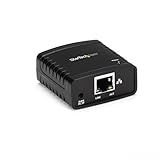
- WIRED NETWORK USB PRINT SERVER: Connect a single USB 2.0 printer to a wired Ethernet LAN (RJ45); 10Base-T, 100Base-TX auto-sensing to ensure a reliable connection, letting you print from any network computer, across the office or over the Internet
- MANUAL NETWORK SETUP REQUIRED: Configuration via web interface (static IP or DHCP) using LPR queue “LP1"; Not plug-and-play, requires intermediate network knowledge for installation; Access our online FAQs for additional helpful tips and instructions
- USB PRINTER COMPATIBILITY: Works with most USB 2.0 printers using standard drivers; Not compatible with USB hubs, multi-function printers with proprietary drivers, or printers requiring full bi-directional communication
- COMPATIBILITY: The USB to Ethernet print server is USB 2.0 compliant and works with macOS and Windows; It also supports LPR network printing and Bonjour Print Services for broad compatibility; Included software is compatible with Windows only
- PRINT FROM ANYWHERE: Print from any computer connected to the Ethernet; This print server doesn’t require a wired connection to a computer, however it must be connected to your networking device (eg. router or switch) with the included RJ45 network cable
Aggregate events by tenant, user, model, route, and time period. Use those views to find unusually costly tasks, prompt growth, cache misses, and shifts after a model or pricing change. Keep a versioned price reference so a later analysis can distinguish changed usage from changed rates.
Control throughput separately from spend
Rate limits govern how quickly requests or tokens can flow; spend limits govern how much usage costs over a budget period. A service can hit a requests-per-minute limit before a tokens-per-minute limit, or the reverse. Queues, concurrency caps, and retry/backoff policies address throughput, while quotas and budget alerts address spend.
Use the provider’s actual limit dimensions
OpenAI documents rate limits at organization and project level, varying by model, with measures that include requests per minute (RPM), requests per day (RPD), tokens per minute (TPM), tokens per day (TPD), images per minute (IPM), and audio minutes per minute for some models. It describes these separately from monthly usage limits and configurable spend limits. The current applicable values depend on the account, model, and tier; check the rate-limit documentation and account dashboard rather than hard-coding a generic number.
Best Value

- 【Processor】AMD Ryzen 5 2400GE delivers fast, reliable performance for office work, web browsing, and everyday multitasking.
- 【Storage & Memory】16GB DDR4 RAM for smooth multitasking; 256GB SSD for quick boot times and plenty of room for files and applications.
- 【WiFi Included】A USB WiFi adapter is included in the box, so you can join a wireless network as soon as you power the machine on — no separate purchase needed. DisplayPort video output, multiple USB 3.0/3.1 ports, RJ-45 Gigabit Ethernet, and audio jacks cover everyday home and office needs.
- 【Ready to Use】Ships with Windows 11 Pro pre-installed and activated, plus a wired keyboard and mouse. Plug in and get to work.
- 【BUY WITH CONFIDENCE】Professionally refurbished, tested, and certified to look and work like new; 90-day warranty and technical support.
Anthropic’s rate-limit documentation says that, for most models, token-per-minute accounting includes uncached input and cache creation but excludes cache reads, with a documented model-specific exception. Do not carry one model’s accounting assumptions to another. Inspect the active account limits and usage pages, then set application-level quotas that reflect each tenant’s product budget.
Make overload behavior deliberate
- Bound concurrency and queue work when bursts could exceed request or token limits.
- Retry transient rate-limit responses with backoff rather than immediately resubmitting at full speed.
- Track request and token headroom separately so you can identify which limit is binding.
- Set tenant and project quotas independently of provider ceilings; provider capacity is not a customer budget policy.
Reduce cost against workload evidence
Cost has two broad levers: reduce the tokens sent or generated, or use a lower per-token price for work that can tolerate a different model. OpenAI’s production best practices recommends tracking actual usage and considering shorter prompts, smaller models, and caching. Treat each change as a hypothesis to evaluate on representative tasks: compare quality, end-to-end latency, and total realized cost before changing a production route.
Batching compatible work can also be evaluated where the provider and product workflow support it, but it should not be assumed to lower cost or improve latency. Measure the outcome for the specific workload.
Free tools Windows power users keep installed
One-click scans. No signup required.
Compare candidate models and providers on the workload
Use a representative evaluation set and production-like traffic patterns. A low sticker price is not enough if a candidate requires more tokens, misses cache opportunities, exceeds throughput headroom, or fails the task-quality threshold.
| Comparison dimension | What to measure or verify |
|---|---|
| Task quality | Evaluate representative tasks before routing to a lower-cost model; quality must be established for your application. |
| Effective cost | Include input, output, cached reads, cache writes, and platform-specific or regional prices that apply to deployment. |
| Tokenization and request support | Confirm model-specific counting and support for the actual text, image, file, tool, or schema request shapes. |
| Latency | Measure end-to-end behavior for the prompt sizes and batching patterns you expect. |
| Throughput headroom | Check request and token limits for the model, organization or project, and account tier. |
| Cache behavior | Compare eligible prefix size, retention, observed hit rate, write/read charges, and routing rules. |
| Deployment constraints | Verify geography, privacy, and procurement requirements for the actual environment. |
Provider documentation establishes tokenization, published cache behavior, pricing rules, and rate-limit dimensions; it does not establish quality, latency, privacy, or procurement scores for your workload. Measure or verify those in the intended deployment.
Quick Recap
Implementation checklist
- At the API boundary, normalize provider, model ID, request shape, tenant, and task class.
- Pre-count with the target provider and model only when a size, context, routing, or approximate-cost decision benefits from it.
- Keep reusable prompt content stable where cache rules allow, and place variable content after shared content when compatible.
- Dispatch with separate throughput and tenant-budget policies.
- Persist the provider’s returned usage, cache fields, status, latency, and price-version context for each request.
- Reconcile aggregate costs and usage against provider reporting; alert on budget thresholds and unexpected shifts.
- Change prompt length, caching strategy, batch behavior, or model routes only after comparing quality, latency, and realized cost on the relevant workload.
Product prices and availability are accurate as of the date/time indicated and are subject to change. Any price and availability information displayed on Amazon at the time of purchase will apply.

