
Do these 3 things before closing this tab:
1Scan for outdated or missing drivers - takes under a minute2Clear out junk files and repair common Windows errors3Fix the driver behind crashes, sound loss and screen glitchesUse a solderless breadboard while you are still changing or learning the circuit; move to a PCB when the wiring is understood and stable, and compactness or repeatability matters more than easy rewiring. Three ICs alone do not determine the choice: wiring density, clock and signal edge rates, debugging needs, and whether you plan to package or reproduce the computer matter too.
How the two options compare
| Factor | Solderless breadboard | PCB |
|---|---|---|
| Changing the design | Convenient for moving or adding wires while experimenting. | Best after the schematic and connections have settled; changing copper may require a board revision. |
| Wiring and troubleshooting | Connections are visible and accessible, but numerous long wires can be difficult to trace or disturb. | Routes are fixed and repeatable, but a layout mistake can be harder to correct than a misplaced jumper. |
| Electrical behavior | Contact quality and parasitic effects can influence a particular circuit. | Can replace uncontrolled jumper wiring with planned routes, but results still depend on the circuit and board layout. |
| Repeatability and packaging | Easy to reconfigure, but less suited to a compact, portable assembly. | Repeats the chosen connections and is generally easier to package. |
| Up-front work | Starts without PCB layout or fabrication. | Requires a verified schematic, board layout, and manufacturing files. |
When a breadboard is the better choice
Choose a breadboard if you are still testing the architecture, changing connections, or learning how the ICs interact. You can probe signals and replace a wire without first revising a board. A small computer with three ICs may remain manageable this way, especially while the design is changing.
The trade-off is that the wiring itself becomes part of the challenge. As jumpers multiply, connections can be harder to follow and easier to disturb. Breadboard contacts also have parasitic capacitance and variable contact quality. A general reference reports approximately 2 pF between adjacent contact columns and characterizes solderless breadboards as usually suited to relatively low frequencies, often below 10 MHz depending on the circuit; those broad observations are not a pass/fail specification for your computer (Wikipedia: Breadboard).
When to move to a PCB
A PCB makes sense once the circuit is sufficiently stable that you value a repeatable assembly, cleaner routing, or a compact package more than quick rewiring. It does not validate the design by itself: the schematic and board layout can both contain errors, and a layout mistake may mean revising the board.
The Tool Desk
Outbyte Driver Updater FREEScan for outdated or missing drivers - takes under a minuteDriver Scan →Outbyte PC Repair FREEClear out junk files and repair common Windows errorsFree Scan →#1 Best Overall

- Spacious Design: Measuring 21.1" wide and 14.1" deep, our lap desk comfortably fits most laptops up to 15.6". Extra room for accessories ensures convenience.
- Enhanced Functionality: Packed with handy features, including a 5x9" precision tracking mouse pad and a built-in phone slot for seamless work or video calls. Plus, enjoy ergonomic support with the integrated cushioned wrist rest.
- Cool Comfort: Enjoy a stable surface with our lap desk's dual bolster cushion, designed for comfort and airflow, keeping your lap cool during extended use.
- Durable Surface: Work with confidence on our lap desk's solid surface, featuring a sleek black carbon color, ensuring optimal air circulation to prevent your laptop from overheating.
- On-the-Go Convenience: With an integrated handle and lightweight design (2.8 lbs), our lap desk is portable for travel or moving around the house, offering flexibility in any space.
For example, the Stackable 6502 Computer project documents a board with a CPU, static RAM, EEPROM, VIA, address decoding, and headers, along with schematics, PCB layouts, and Gerber files. Its base board uses four layers, with ground and 5 V on inner layers. That is one project’s implementation, not a requirement for a three-IC computer (Stackable 6502 Computer).
Do not choose by clock frequency alone
Breadboard wiring can affect electrical behavior, but there is no universal frequency threshold in the cited material that determines whether a particular three-IC design will work. The broad “usually less than 10 MHz” characterization is not a guaranteed limit or a prediction for an individual build. Clock frequency is only one consideration; circuit details, wiring, contact quality, and signal edges matter as well.
Rank #2

- 5-in-1 Connectivity: Equipped with a 4K HDMI port, a 5 Gbps USB-C data port, two 5 Gbps USB-A ports, and a USB C 100W PD-IN port. Note: The USB C 100W PD-IN port supports only charging and does not support data transfer devices such as headphones or speakers.
- Powerful Pass-Through Charging: Supports up to 85W pass-through charging so you can power up your laptop while you use the hub. Note: Pass-through charging requires a charger (not included). Note: To achieve full power for iPad, we recommend using a 45W wall charger.
- Transfer Files in Seconds: Move files to and from your laptop at speeds of up to 5 Gbps via the USB-C and USB-A data ports. Note: The USB C 5Gbps Data port does not support video output.
- HD Display: Connect to the HDMI port to stream or mirror content to an external monitor in resolutions of up to 4K@30Hz. Note: The USB-C ports do not support video output.
- What You Get: Anker 332 USB-C Hub (5-in-1), welcome guide, our worry-free 18-month warranty, and friendly customer service.
One documented Homebrew 6502 SBC uses a WDC 65C02S with a 1.8432 MHz oscillator, SRAM, ROM, a VIA, and an ACIA. This illustrates one modest-clock configuration; it is not a controlled comparison of breadboard and PCB performance, nor evidence of a universal breadboard ceiling (Homebrew 6502 SBC). If your prototype behaves unreliably, inspect and test the actual circuit rather than assuming a PCB will automatically fix it or that a generic frequency rule explains the problem.
Quick Recap
Best Value

- Spacious Design: Measuring 21.1" wide and 12" deep, our lap desk comfortably fits most laptops up to 15.6". Extra room for accessories ensures convenience.
- Enhanced Functionality: Packed with handy features, including a 5x9" precision tracking mouse pad and a built-in phone slot for seamless work or video calls. Plus, enjoy laptop support with the integrated device ledge.
- Cool Comfort: Enjoy a stable surface with our lap desk's dual bolster cushion, designed for comfort and airflow, keeping your lap cool during extended use.
- Durable Surface: Work with confidence on our lap desk's solid surface, featuring a blush pink color, ensuring optimal air circulation to prevent your laptop from overheating.
- On-the-Go Convenience: With an integrated handle and lightweight design (2.14 lbs), our lap desk is portable for travel or moving around the house, offering flexibility in any space.
Rank #4

- Anti-Slip Surface - Transform your laptop into a mobile workstation with the AboveTEK portable laptop lap desk. The anti-slip surface provides a strong grip for laptops up to 15.6 inches(Diagonal), while the double rubber strip on the bottom ensures a stable display or typing experience on your lap, couch, or bed.
- Retractable Mouse Pad - Retractable laptop mouse pad extends on both directions for the left/right handed with elevation along the edges for stopping mouse from falling off. The size of laptop tray is 14" X 9.7" and the size of mouse pad is 7.4" X 6.1".
- Effective Heat Shield - The effective heat shield made of sturdy and thick material protects your laptop from overheating. Prioritizes your comfort and safety, an ideal lap pad or board for working anywhere.
- EASY to Carry and Store - With an ergonomic and simplistic design, the lap desk is portable to store in a backpack. Only 15" in size, 2.2 lb of weight and with slim 0.6 inch thickness, it is ready to be easily carried around.
- Widely Applicable - The smooth platform accommodates laptops and tablets up to 15.6 inches(Diagonal), making it a versatile accessory and one of the best gifts for mom, dad, students and professionals. Perfect for use as a laptop bed tray or tablet holder anywhere at home, library, or park.
Rank #3
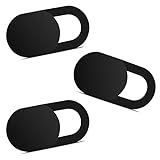
- Note: Not suitable for MacBooks released after 2023 or devices with a protruding front camera; Not applicable to full-screen or notch-style tempered glass screen protectors; Do not use on the rear camera of the phone.
- 💻 Why Do You Need a Webcam Cover Slide? — Safeguard your privacy by covering your webcam with our reliable webcam cover when not in use. Don't let anyone secretly watch you. Stay protected!
- ✅ Thin & Stylish — Enhance your laptop's functionality and aesthetics with our 0.027" ultra-thin webcam covers. Seamlessly close your laptop while adding a touch of sophistication.
- ✅ Fits Most Devices — Compatible with laptops, phones, tablets, desktops! Keep your privacy intact on Ap/ple, Mac/Book, iPh/one, iP/ad, H/P, L/novo, De/ll, Ac/er, As/us, Sa/msung devices.
- ✅ 365 Days Protection — Our upgraded 3.0 adhesive ensures a strong hold that won't damage your equipment. Experience reliable, long-term privacy protection day in and day out.
A practical path from prototype to board
- Experiment on the breadboard. Make changes while the design is evolving, and use accessible wiring to probe and understand the circuit.
- Record the working build. Bring the schematic and wiring documentation up to date. In the 3RIC project account, the builder created a digital breadboard model and checked its connections against the physical machine with a multimeter before moving to placement, routing, assembly, and bring-up. Breadboard experiments and oscilloscope traces informed the design (3RIC: A Homebrew 6502 Computer, Built to Learn).
- Reconcile and verify. Compare the actual connections with the schematic and resolve discrepancies before laying out a board. The PCB will faithfully implement the connections you specify, including mistakes.
- Lay out and prepare manufacturing files. KiCad provides schematic capture, PCB layout, and manufacturing output including Gerber and IPC-2581 files (About KiCad).
- Assemble and bring up the PCB. Check the assembled connections and test the system. Fixed routing improves repeatability, but correctness still depends on the schematic, layout, assembly, and testing.
Which should you use?
- Stay on a breadboard if you are still changing the circuit, need easy access for probing, or have not yet reconciled the working wiring with a schematic.
- Plan a PCB if the design has stabilized and you want a more repeatable or compact build, or if the growing wiring burden outweighs the convenience of rewiring.
- Base the decision on the actual circuit and goals, not the IC count or a frequency rule in isolation.
Product prices and availability are accurate as of the date/time indicated and are subject to change. Any price and availability information displayed on Amazon at the time of purchase will apply.

