
BlockDrop is an IBM Research method for speeding up neural-network inference, not for accelerating model training. After a ResNet is pretrained, a policy network chooses which residual blocks to execute for each input image. Skipping unnecessary blocks reduces computation while the method’s reward encourages preservation of recognition accuracy.
The work is documented in the IBM Research paper record and the CVPR 2018 publication at the IEEE/CVF Computer Vision Foundation.
What BlockDrop does
A conventional residual network evaluates every residual block in its fixed architecture for every image. BlockDrop makes that computation conditional: for each new image, a learned policy selects a path through the pretrained ResNet and omits blocks judged unnecessary for that input.
This is dynamic inference. The network is not continually changing its weights while making predictions, and BlockDrop does not claim to shorten the original training process. Its goal is lower computation and latency at deployment time.
#1 Best Overall

- NVIDIA Volta GV100 Architecture — 4,608 CUDA Cores, 640 1st-Gen Tensor Cores delivering 14 TFLOPS FP32 and 112 TFLOPS deep learning performance for AI training, inference, HPC, and scientific computing workloads
- 32GB HBM2 ECC Memory — 900 GB/s Bandwidth — High-bandwidth memory on a 4096-bit bus with ECC error correction provides the memory capacity and throughput required for the largest AI models, simulations, and datasets
- PCIe 3.0 x16 Interface — 250W TDP — Standard PCIe Gen3 connectivity with passive cooling designed for enterprise rack server deployment in HPE ProLiant, Dell PowerEdge, and Supermicro platforms with adequate chassis airflow
- NVLink — Scale to 96GB Unified Memory — Connect two V100 GPUs via NVLink at 300 GB/s bi-directional bandwidth to scale GPU memory from 32GB to 96GB for larger AI training and HPC workloads
- Multi-Precision Computing — Supports FP64 (7 TFLOPS), FP32 (14 TFLOPS), FP16 (112 TFLOPS) and INT8 precision modes for flexible deployment across training, inference, and scientific simulation workloads
How dynamic block selection works
Start with a pretrained ResNet
The method begins with a standard pretrained residual network. Residual networks are suitable because their blocks are arranged with skip connections, allowing a path to bypass a block while preserving the surrounding representation flow.
Use a policy network
A separate policy network examines the input and produces decisions about which residual blocks to run. The selected sequence can differ from one image to the next, so easy and difficult examples need not receive identical computation.
Learn the trade-off with reinforcement learning
BlockDrop trains the policy in an associative reinforcement-learning setting. Its reward balances two objectives: execute fewer blocks and retain recognition accuracy. A policy that skips aggressively but harms predictions is penalized; a policy that runs nearly everything gains little computational benefit.
Rank #2
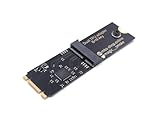
- Designed exclusively for Coral M.2 Accelerator with Dual Edge TPU modules to maximize AI inference performance.
- Fits standard M.2 2280 B-key or M-key slots (PCIe protocol only - not compatible with SATA M.2).
- Bidirectional Gen2 bandwidth: Upstream: ×1 PCIe Gen2 (5Gbps) Downstream: Dual ×1 PCIe Gen2 lanes
- Includes stainless steel mounting screw for vibration-resistant PCB fixation.
- Explicitly incompatible with Raspberry Pi CM4/USB enclosures - prevents buyer errors.
Skip blocks, not individual neurons
The unit of dynamic control is a residual block. BlockDrop does not fine-grain the calculation inside every convolution; it decides whether particular pretrained ResNet blocks are included in the path.
The Tool Desk
Outbyte PC Repair FREERepair Windows errors before they cause bigger problemsFix Now →Outbyte Driver Updater FREEScan for outdated or missing drivers - takes under a minuteDriver Scan →Reported results
The authors evaluated the approach on CIFAR and ImageNet. Their headline ImageNet result is tied specifically to ResNet-101 and should not be generalized to every model, device, or production workload.
| Measurement | Paper-reported result | Qualification |
|---|---|---|
| Average speedup | 20% | Reported by the BlockDrop authors for ResNet-101/ImageNet experiments |
| Highest image-level speedup | 36% | Reported for some images, not as a universal result |
| Top-1 accuracy | 76.4% | Reported ImageNet top-1 accuracy associated with the ResNet-101 result |
These figures come from the 2018 paper, not an independent reproduction. Actual latency depends on hardware, software, batch size, data pipeline, and whether the deployment stack efficiently handles input-dependent paths.
Rank #3

- 900-2G193-0000-000
Why the speedup varies by image
Because the policy chooses a path per input, computation is variable. Images for which the policy can omit more blocks may receive a larger reduction, while harder or less predictable images may trigger longer paths. Consequently, an average speedup does not mean every request runs 20% faster, and the reported 36% figure applies only to some images.
Does accuracy drop?
BlockDrop is designed to limit accuracy loss rather than guarantee identical accuracy in every configuration. The reward explicitly trades skipped computation against recognition quality. For the cited ResNet-101/ImageNet experiment, the authors report 76.4% top-1 accuracy alongside the speedup results. That number is specific to that model and experiment; it is not a promise for other architectures, datasets, or deployment settings.
Free tools Windows power users keep installed
One-click scans. No signup required.
What implementation is available?
The author-associated public repository describes a policy network that selects ResNet blocks and includes ImageNet workflow examples. Its README identifies Python 2.7 and PyTorch 0.3.0 as the implementation and test environment. Those are repository-era details from the historical release, not evidence that the code runs unchanged on current Python or PyTorch versions.
Rank #4

- High-Performance ML Accelerator: Integrates Edge TPU, delivering 4 TOPS (int8) peak performance for machine learning inference tasks.
- Strong Compatibility: Supports M.2 A+E key interface for easy integration into existing systems.
- Low Power Design: Provides 2 TOPS per watt, ideal for embedded and energy-efficient applications.
- Wide OS Support: Compatible with Linux (Debian 10/Ubuntu 16.04+) and Windows 10 (64-bit).
- Industrial-Grade Reliability: Operating temperature range of -20°C to +85°C, suitable for harsh environments.
Practical reproduction considerations
- Expect to recreate or isolate the legacy dependency environment before attempting the examples.
- Confirm that pretrained ResNet weights, ImageNet data, and any download links remain available.
- Measure on your target hardware rather than assuming the paper’s speedup transfers directly.
- Report both accuracy and latency, along with the distribution of blocks executed per input.
How to interpret BlockDrop today
BlockDrop is an early, clear example of conditional computation for image classification: spend more compute on inputs that need it and less on inputs that do not. Its central engineering trade-off is between adaptive savings and added system complexity. A deployment must support policy decisions, variable execution paths, and reliable latency measurement; a static model benchmark alone cannot establish the benefit.
When comparing BlockDrop with another adaptive-inference technique, use the same hardware and workload and check four things: measured latency or speedup, accuracy change, per-input compute variability, and implementation requirements. The cited sources do not provide a head-to-head measurement against other methods.
Quick Recap
Product prices and availability are accurate as of the date/time indicated and are subject to change. Any price and availability information displayed on Amazon at the time of purchase will apply.
Recommended Free Tools

