
The Tool Desk
Outbyte Driver Updater FREEScan for outdated or missing drivers - takes under a minuteDriver Scan →Outbyte PC Repair FREEClear out junk files and repair common Windows errorsFree Scan →There is no independently tested winner among the India VPS options reviewed for this article. The practical shortlist is NivoHost, Endercloud, and VyomCloud, but their published plans are not proof that a server will sustain your particular YouTube stream. Choose by target resolution and bitrate, monthly traffic allowance, server route to YouTube, recovery options, and how much server administration you can handle. If you want a prerecorded YouTube stream without maintaining a server, StreamNeo is a cloud alternative: it loops uploaded videos and playlists, with one flat price per slot for any quality up to 4K 60fps and a free first day.
What to choose for a 24/7 YouTube stream
A VPS is a fit if you want control over the server and can configure, monitor, and recover its streaming software. It is not a turnkey guarantee of an uninterrupted broadcast. A managed cloud looping service is a different option for prerecorded content if you prefer not to administer a server.



The provider details below are snapshots of public offer pages accessed October 3, 2026. They support a shortlist based on published specifications, not a tested ranking. Providers can change plans, prices, and terms; confirm the current offer before ordering.
| Option | Published offer | What to verify |
|---|---|---|
| NivoHost | The provider lists plans from ₹699/month with one stream handle, 360p at 10 fps, 4 GB RAM, 20 TB bandwidth, and a 1 Gbps port. It lists ₹1,799/month for two handles and 720p/30, and ₹3,499/month for three handles and 1080p/60 with 32 GB RAM. | These are provider-stated tiers and promotional prices. The provider also claims 99% uptime; do not treat that as a measured result or an SLA without checking the applicable terms. |
| Endercloud | The provider’s Mumbai plans start at ₹999/month for 3 vCore, 8 GB RAM, 50 GB NVMe, 2 TB bandwidth, and a stated 1 Gbps network. Higher plans list greater resources and traffic allowances. | A 1 Gbps port and a 2 TB monthly traffic allowance describe different things. Check the transfer policy and whether the offered VPS supports your encoder workload. |
| VyomCloud | The displayed Mumbai options are ₹360/month for 1 vCPU, 2 GB RAM, 0.5 TB traffic, and 100 Mbps; ₹1,040/month for 2 vCPU, 4 GB RAM, 2 TB traffic, and 250 Mbps; and ₹1,600/month for 4 vCPU, 8 GB RAM, 5 TB traffic, and 250 Mbps. | The provider advertises roughly 22 ms Mumbai round-trip latency and a 99.5% uptime SLA. Confirm the SLA scope and test the route from the intended server to YouTube ingest; these are provider claims, not independent measurements. |
| StreamNeo (managed cloud alternative, not a VPS) | Uploads recordings or playlists, adds a YouTube stream key, then loops the content from the cloud. It supports any uploaded quality up to 4K 60fps at one flat price per slot; the first day is free with no card. | It is for prerecorded video streaming to YouTube, not live camera input. Compare its content workflow and billing with the control and administration burden of a VPS. |
StreamNeo is the first alternative to consider if your goal is simply to keep uploaded video live on YouTube: it runs the loop in the cloud, supports any quality up to 4K 60fps at one flat price per slot, and offers a free first day.
Do these 3 things before closing this tab:
1Fix the driver behind crashes, sound loss and screen glitches2Clear out junk files and repair common Windows errors3Scan for outdated or missing drivers - takes under a minute#1 Best Overall
Size the VPS around the actual stream
Start with resolution, frame rate, and codec
YouTube’s encoder settings page, accessed in 2026, recommends H.264 video bitrates of 8 Mbps for 720p at 30 fps, 10 Mbps for 1080p at 30 fps, and 17 Mbps for 1080p at 60 fps. These figures are video encoder bitrates, not a complete server specification or a promise that a particular vCPU and memory allocation will work.
YouTube lists RTMP/RTMPS, H.264, H.265/HEVC, or AV1 video; up to 60 fps; AAC or MP3 audio; constant bitrate (CBR); and a recommended two-second keyframe interval, not exceeding four seconds. YouTube recommends RTMPS. The appropriate bitrate depends on codec, resolution, and frame rate, so use the settings guidance for your intended stream rather than assuming that one figure applies to every format.
Estimate monthly traffic
A fast network port does not mean unlimited monthly data. A continuous stream consumes outbound transfer around the clock, so estimate traffic using the actual video bitrate, then allow for audio and protocol overhead. For a rough planning conversion, 1 Mbps sustained for 30 days is about 324 GB in decimal units; at 10 Mbps, that is about 3.24 TB before overhead. Treat this as arithmetic for a continuous rate, not a provider-specific usage allowance. Compare the result with the plan’s monthly traffic terms and check what happens if you exceed them.
Do not guess CPU and memory from the bitrate
Bitrate alone does not determine CPU or RAM needs. Re-streaming an already encoded recording may demand less processing than encoding or transcoding video on the VPS; actual resource use depends on the software, codec, settings, and number of simultaneous streams. The provider pages reviewed do not benchmark those workloads. Check that your intended encoder can run on the plan, then monitor CPU, memory, and dropped frames during a representative test.
Rank #3
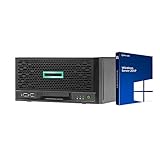
- HP MicroServer Gen10 Plus Tower Server for Business with Microsoft Windows Server 2019 OS!
- Intel Xeon E-2224 Quad-Core 3.4GHz 8MB CPU, Up To 4.6GHz Turbo
- 32GB (2 x 16GB) DDR4 PC4-21300 2666MHz Unbuffered Memory
- 16TB (4 x 4TB) 7.2K 6Gb/s SATA 3.5" HDDs in RAID
- Hard drives and memory upgrades included separately NOT installed, installation required.
How to choose between the listed VPS options
- Write down the workload. Specify resolution, frame rate, codec, number of simultaneous streams, whether the VPS will re-stream or encode, and whether the content is prerecorded or live input.
- Check traffic before port speed. Compare estimated monthly outbound use with the included transfer allowance and its overage or throttling rules. A 1 Gbps port does not itself tell you how many terabytes are included.
- Match resources to the encoder. Confirm operating-system and software support, then test CPU and memory use with the actual workload. Do not infer encoding capacity from the provider’s stream-handle count or bitrate figures alone.
- Check location and route. Mumbai hosting can be convenient for an India-based operator, but location alone does not guarantee a reliable path to YouTube ingest. Test the route and stream health from the server you plan to use.
- Read commercial and recovery terms. Confirm whether the displayed price is promotional or recurring, what renewals cost, the transfer policy, the scope of any SLA, support availability, and how you can restart the encoder after a process or connection failure.
- Assess the operating burden. With a self-managed VPS, you are responsible for setup, updates, monitoring, security, and recovery. Choose it when that control is worth the ongoing administration.
Set up and test the YouTube stream before relying on it
YouTube’s live setup uses a stream URL and stream key with an encoder, which can be software or hardware. YouTube says first-time live-stream enablement may take up to 24 hours, so enable and verify access in advance. Its guidance describes encoder options for continuous prerecorded streams; buying dedicated hardware is not a requirement for a VPS deployment.
- Enable YouTube live streaming early. Check the channel’s live-stream access before scheduling a launch; first-time enablement may take up to 24 hours.
- Configure the encoder for the intended output. Use a YouTube-supported video codec and audio format, CBR, a two-second keyframe interval (never over four seconds), and RTMPS where supported. Set the resolution, frame rate, and bitrate for the stream you intend to run.
- Enter the stream URL and key in the encoder. Treat the stream key as a credential. Do not publish it in logs, screenshots, scripts, or public configuration; rotate it through YouTube if it is exposed.
- Run an end-to-end test from the VPS. Use representative motion and audio rather than a static test screen. Observe YouTube’s stream health and the VPS’s network, CPU, and memory while the test runs.
- Test recovery, not just startup. Check what happens when the encoder process stops or the network connection drops. Confirm that your restart method works and that the stream returns as expected before depending on it for a continuous broadcast.
YouTube recommends testing with representative audio and motion and monitoring stream health during broadcast. A short successful connection does not establish that a server, route, or provider will remain reliable indefinitely.
Rank #4
Copyright and channel-policy checks for looping content
A VPS or cloud loop does not grant rights to the video or music being streamed. Before broadcasting prerecorded material, confirm that you own it or have permission for the relevant uses, territories, and duration. YouTube’s copyright and monetization decisions depend on the content and applicable channel rules; continuous playback by itself does not establish that a channel is eligible for monetization. Review YouTube’s current rules and use the free copyright safety checklist as a preparation aid, not as a substitute for rights or platform review.
Independent reader supportYour contribution helps us test, update, and keep practical guides available for everyone.Common problems and what to check
- YouTube does not receive a signal: confirm live access is enabled, the correct stream URL and key are configured, and the encoder is running. If the key may have been exposed, replace it in YouTube and update the encoder.
- Stream health reports instability or frames drop: check actual outbound rate, packet loss or route instability, CPU saturation, and whether the server can sustain the selected bitrate. Test again with representative motion and audio.
- The stream works initially but stops later: inspect encoder and system logs, process supervision, network interruptions, and the provider’s transfer or resource limits. Verify that the configured restart procedure really reconnects to YouTube.
- The plan looks fast but traffic runs out: compare the continuous bitrate’s monthly transfer estimate with the included allowance. Port speed is not the same as monthly traffic.
- A promised uptime or latency figure seems decisive: read the provider’s current terms and measure the actual route and stream health. Published marketing claims do not replace a workload test or establish your end-to-end result.
Or let it run in the cloud
If your use case is prerecorded videos or playlists on YouTube, StreamNeo avoids the VPS setup and server administration: upload the video or build a playlist, add your YouTube stream key once, and go live. Nothing has to stay on at home; the cloud keeps looping the upload. Every quality up to 4K 60fps is streamed as uploaded at one price per slot, with no re-encode or quality tiers, and StreamNeo automatically recovers if YouTube drops the stream. The first day is free with no card. Monthly pricing is $9.99 per month. The same product is included on every plan; only billing length changes. UPI and cards are available in India, and card checkout is available worldwide. See StreamNeo, or start the free first day.
Quick wins for a faster PC:
Fix the driver behind crashes, sound loss and screen glitchesFind Drivers →Repair Windows errors before they cause bigger problemsFix Now →Scan for outdated or missing drivers - takes under a minuteDriver Scan →Quick Recap
Best Value
Product prices and availability are accurate as of the date/time indicated and are subject to change. Any price and availability information displayed on Amazon at the time of purchase will apply.

