
iTechGuides is reader-supported. When you buy through links on our site, we may earn an affiliate commission. As an Amazon Associate I earn from qualifying purchases. Learn more
There is no single best voice-first smart home system for every household. Choose based on the phones and devices you already use, the radios your devices need, whether you want local or cloud-dependent control, and how much time you want to spend configuring automations. Alexa and Google Home suit households centered on their assistants; Apple Home suits Apple households; Home Assistant is worth considering for people who want to connect supported devices across platforms. SmartThings, Hubitat and Aqara Home are also options, but check exact hub and device compatibility before buying.
How to choose a voice-first smart home system
Start with your household rather than a feature checklist. A useful system needs to work with the devices you own and the way you want to control them. Compare candidates on these points:
- Existing ecosystem: Consider which phones, speakers and smart-home devices your household already uses.
- Device protocols: Check the exact hub and device support for Matter, Thread, Zigbee or Z-Wave. These standards are not interchangeable, and a Matter label alone does not promise that every feature will work with every hub.
- Local or cloud control: Find out whether commands can stay on your home network or depend on cloud services.
- Integrations and automation: Decide whether basic voice commands are enough or whether you need to connect devices across platforms and build more involved automations.
- Setup and upkeep: A system with more configuration options may take more work to set up and maintain.
- Preferred interface: Decide whether voice control alone is sufficient, or whether your household also wants an app or a smart display.
The 2026 iTechGuides comparison of smart home systems covers Alexa, Google Home, Apple Home, SmartThings, Home Assistant, Hubitat and Aqara Home. The differences that matter most are not a universal ranking, but the fit between a platform and your devices, protocols, cloud preferences and automation needs.
Which systems are worth considering?
| System | Good fit for | What to check |
|---|---|---|
| Amazon Alexa | Households already using Alexa or Echo devices that want voice control or a display. | Verify the current Echo model and its specific protocol support. Tom’s Guide names the Echo Show 8 (4th Gen) as its overall smart-home hub pick for 2026; that is the outlet’s recommendation, not a universal winner. Tom’s Guide’s 2026 roundup |
| Google Home | Households centered on Google Home that want voice control and Matter support. | Google requires a compatible hub for Matter setup and local control. Features can vary by device, so confirm that the functions you need are supported. Google’s Matter preparation guidance |
| Apple Home | Apple-centered households that want to use Siri and the Home app. | Confirm current hub and device requirements for your specific setup. Tom’s Guide names HomePod (2nd Gen) as its pick for HomeKit users in its 2026 roundup, but that recommendation does not establish a definitive setup requirement for every Apple Home household. Tom’s Guide’s 2026 roundup |
| SmartThings | Readers comparing mainstream systems for a mixed-device home. | Check the exact hub and device support for the protocols and features you need. SmartThings is included in the 2026 iTechGuides platform comparison. |
| Home Assistant | People who want to bring supported devices together across platforms, or want more integration flexibility. | Individual integrations and setup effort vary. Home Assistant says it can expose devices to Apple Home, Google Home and Alexa, allowing familiar voice assistants to be used alongside Home Assistant. Home Assistant’s integration FAQ |
| Hubitat | DIY users evaluating a smart-home hub with local control in mind. | Confirm model-specific features and exact device protocol support before choosing. Hubitat is included in the 2026 iTechGuides platform comparison. |
| Aqara Home | Homes built around Aqara sensors and security products. | Check compatibility for each device and whether the cross-platform features you want are supported. Aqara Home is included in the 2026 iTechGuides platform comparison. |
What Matter does—and what it does not do
Matter can make compatible devices easier to use across certified smart-home platforms. Google says compatible Matter devices can communicate locally over your home network, so local commands do not need a cloud relay. For Google Home, however, setup and local control require a compatible Google Home hub. Google’s Matter guidance
#1 Best Overall

- Your favorite music and content – Play music, audiobooks, and podcasts from Amazon Music, Apple Music, Spotify and others or via Bluetooth throughout your home.
- Alexa is happy to help – Ask Alexa for weather updates and to set hands-free timers, get answers to your questions and even hear jokes. Need a few extra minutes in the morning? Just tap your Echo Dot to snooze your alarm.
- Keep your home comfortable – Control compatible smart home devices with your voice and routines triggered by built-in motion or indoor temperature sensors. Create routines to automatically turn on lights when you walk into a room, or start a fan if the inside temperature goes above your comfort zone.
- Do more with device pairing – Fill your home with music using compatible Echo devices in different rooms, or create a home theatre system with Fire TV.
- Say goodbye to drop-offs and buffering - With eero Built-in, Echo Dot doubles as a mesh wifi extender, adding up to 1,000 sq. ft. of wifi coverage to your existing eero network.
Matter Multi-Admin lets a Matter device be shared across certified smart-home apps. It does not remove each platform’s hub requirements: Google says each platform needs its own compatible hub. Google’s Multi-Admin instructions
Do not treat Matter, Thread, Zigbee and Z-Wave as synonyms. Before buying, verify both ends of the connection: the exact device’s supported protocol and the exact hub’s support. Also confirm that the particular device feature you want works in your chosen platform; a shared standard does not guarantee identical features everywhere.
Rank #2
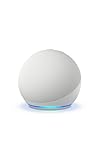
- Your favorite music and content – Play music, audiobooks, and podcasts from Amazon Music, Apple Music, Spotify and others or via Bluetooth throughout your home.
- Alexa is happy to help – Ask Alexa for weather updates and to set hands-free timers, get answers to your questions and even hear jokes. Need a few extra minutes in the morning? Just tap your Echo Dot to snooze your alarm.
- Keep your home comfortable – Control compatible smart home devices with your voice and routines triggered by built-in motion or indoor temperature sensors. Create routines to automatically turn on lights when you walk into a room, or start a fan if the inside temperature goes above your comfort zone.
- Do more with device pairing – Fill your home with music using compatible Echo devices in different rooms, or create a home theatre system with Fire TV.
- Say goodbye to drop-offs and buffering - With eero Built-in, Echo Dot doubles as a mesh wifi extender, adding up to 1,000 sq. ft. of wifi coverage to your existing eero network.
Which system should you choose?
- You already use Alexa or Google Assistant: Start with the matching ecosystem, then check the specific hub and device support your setup requires.
- Your household is built around Apple devices: Apple Home is a natural platform to evaluate. Confirm current hub and accessory requirements before settling on a particular configuration.
- You want one system to connect devices across assistants: Consider Home Assistant. Its official FAQ describes exposing supported devices to Apple Home, Google Home and Alexa; it is not a guarantee that every device or feature is supported.
- You are comparing hubs for a mixed-device or DIY setup: Include SmartThings and Hubitat in your shortlist, and compare exact protocol and model support rather than relying on the platform name alone.
- Your devices center on Aqara products: Evaluate Aqara Home, while checking cross-platform compatibility for the exact devices and functions you plan to use.
If you also want a hardware shortlist, Tom’s Guide’s 2026 roundup selects Echo Show 8 (4th Gen) overall, HomePod (2nd Gen) for HomeKit users and Nest Hub Max for Google Home users. Treat those as that outlet’s picks, not a ranking that overrides your household’s compatibility needs. Read the roundup.
Recommended Free Tools
Quick Recap
Best Value

- MEET ECHO SPOT - A sleek smart alarm clock with Alexa and big vibrant sound. Ready to help you wake up, wind down, and so much more.
- CUSTOMIZABLE SMART CLOCK - See time, weather, and song titles at a glance, control smart home devices, and more. Personalize your display with your favorite clock face and fun colors.
- BIG VIBRANT SOUND - Enjoy rich sound with clear vocals and deep bass. Just ask Alexa to play music, podcasts, and audiobooks. See song titles and touch to control your music.
- EASE INTO THE DAY - Set up an Alexa routine that gently wakes you with music and gradual light. Glance at the time, check reminders, or ask Alexa for weather updates.
- KEEP YOUR HOME COMFORTABLE - Control compatible smart home devices. Just ask Alexa to turn on lights or touch the screen to dim. Create routines that use motion detection to turn down the thermostat as you head out or open the blinds when you walk into a room.
Rank #4

- Your favorite music and content – Play music, audiobooks, and podcasts from Amazon Music, Apple Music, Spotify and others or via Bluetooth throughout your home.
- Alexa is happy to help – Ask Alexa for weather updates and to set hands-free timers, get answers to your questions and even hear jokes. Need a few extra minutes in the morning? Just tap your Echo Dot to snooze your alarm.
- Keep your home comfortable – Control compatible smart home devices with your voice and routines triggered by built-in motion or indoor temperature sensors. Create routines to automatically turn on lights when you walk into a room, or start a fan if the inside temperature goes above your comfort zone.
- Do more with device pairing – Fill your home with music using compatible Echo devices in different rooms, or create a home theatre system with Fire TV.
- Say goodbye to drop-offs and buffering - With eero Built-in, Echo Dot doubles as a mesh wifi extender, adding up to 1,000 sq. ft. of wifi coverage to your existing eero network.
Rank #3
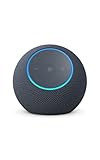
- Meet Echo Dot Max: Experience rich room-filling sound that automatically adapts to your space and fine-tunes playback. Features a built-in smart home hub and Omnisense technology for highly personalized experiences.
- Music to your ears: With nearly 3x the bass versus Echo Dot (2022 release), it fits beautifully in any space, delivering your personal sound stage with deep bass and enhanced clarity. Listen to streaming services, such as Amazon Music, Apple Music, Spotify, and SiriusXM. Encore!
- Do more with device pairing: Connect compatible Echo smart speakers and smart displays in different rooms, or pair with a second Echo Dot Max to enjoy even richer sound
- Simple smart home control: Set routines, pair and control lights, locks, and thousands of smart home devices that work with Alexa without needing a separate smart home hub. With Omnisense technology, you can activate routines via temperature or presence detection.
- Say goodbye to drop-offs and buffering - With eero Built-in, Echo Dot Max doubles as a mesh wifi extender, adding up to 1,000 sq. ft. of wifi coverage to your existing eero network.
How to avoid compatibility surprises
- List your must-keep devices. Note their exact model names and the functions you rely on, not just their brands.
- Check each device against the hub. Confirm the exact protocol and platform support for both, including the specific features you want to control.
- Verify hub requirements. If you plan to use Matter, check whether the chosen platform requires a compatible hub for setup or local control. Google’s requirements are described in its Matter guidance.
- Plan for more than one platform when needed. Matter Multi-Admin may allow a compatible device to be shared across certified apps, but each platform may still need its own hub. Google’s Multi-Admin instructions
- Decide how much configuration you will maintain. If you want to combine assistants and devices, check the relevant integrations and be realistic about setup work. Home Assistant documents its support for exposing devices to Apple Home, Google Home and Alexa.
Product prices and availability are accurate as of the date/time indicated and are subject to change. Any price and availability information displayed on Amazon at the time of purchase will apply.

