
Do these 3 things before closing this tab:
1Scan for outdated or missing drivers - takes under a minute2Repair Windows errors before they cause bigger problems3Fix the driver behind crashes, sound loss and screen glitchesiTechGuides is reader-supported. When you buy through links on our site, we may earn an affiliate commission. As an Amazon Associate I earn from qualifying purchases. Learn more
There is no single best meditation app for everyone. For most people, Insight Timer is the strongest overall starting point because its free library and timer are unusually generous. Choose Headspace if you want a carefully sequenced beginner course, Calm if sleep is your priority, Healthy Minds Program or Medito if you want to avoid paying, and Waking Up if you want meditation instruction combined with philosophy and neuroscience.
This U.S. guide was updated August 10, 2026. Prices, trial lengths, app features, and privacy disclosures can change by website, Apple App Store, Google Play, promotion, and account status. The prices below are observations from official U.S. pages and listings, not permanent price guarantees.
Important: This is a research-based shortlist, not a claim that editors personally completed a standardized hands-on test of every app. Because “tested by editors” has been used inconsistently in competing coverage, this guide does not make that claim. A documented test protocol is included below for readers and publishers who want reproducible results.
Quick wins for a faster PC:
Fix the driver behind crashes, sound loss and screen glitchesFind Drivers →Repair Windows errors before they cause bigger problemsFix Now →The quick answer
| App | Best for | What remains free | Observed U.S. price | Trial or access note |
|---|---|---|---|---|
| Insight Timer | Best overall and biggest free library | Timer, reminders, statistics, a large guided library, playlists, groups, and live events | $59.99/year or $9.99/month for MemberPlus | Typically a 7-day trial for MemberPlus; large free tier continues afterward |
| Headspace | Beginners who want a polished curriculum | Limited introductory content and samples | $69.99/year or $12.99/month on the observed sleep-page offer | 14-day annual or 7-day monthly trial on that page; verify checkout |
| Calm | Sleep, relaxation, and audio quality | Timed meditations, the first session of programs, one breathing exercise, one Sleep Story, and free background scenes | $69.99/year on the observed plans page; lifetime offers varied | Usually a 7-day trial on the plans page, but support pages also describe a 14-day web offer |
| Healthy Minds Program | Best completely free, structured program | Entire app; donation-supported | Free | No conventional premium paywall |
| Balance | Personalized daily meditation | Introductory plans or promotional access can vary | $69.99/year, $11.99/month, and a listed $399.99 lifetime option; promotions also appeared | Trial normally auto-renews unless canceled |
| Waking Up | Serious learners and theory | Short trial; scholarship route for people who cannot afford it | $129.99/year or $19.99/month | 7-day trial and money-back guarantee shown at checkout |
| Medito | No subscription, ads, or premium tier | The whole core app | Free | Can be started without an account; some features may require one |
| Smiling Mind | Families and children | The full nonprofit app | Free | Funded through grants, donations, and partnerships |
| Happier Meditation | Skeptics and practical instruction | Three courses and more than 50 guided meditations | $99.99/year shown in the U.S. iOS listing | Formerly Ten Percent Happier; confirm current checkout price |
Price warning: These are observed U.S. prices before any applicable tax. Calm and Balance currently show conflicting or promotional prices across official pages and app-store listings, so the final checkout screen is the authority.
#1 Best Overall

- Comfort and Support: The large, ergonomic design provides exceptional comfort and support for extended meditation sessions
- Premium Velvet Cover: A soft, luxurious velvet cover enhances comfort and adds an elegant touch to your meditation space, making it a thoughtful Christmas gift for loved ones
- Traditional Buckwheat Filling: Filled with natural buckwheat hulls for customizable firmness and stability, promoting proper posture
- Versatile Use: Ideal for meditation, yoga, floor seating, or as a decorative piece in your living room or bedroom
- Durability: High-quality materials ensure long-lasting use, with a removable cover for easy cleaning
Best meditation apps by use case
1. Insight Timer: best overall for most people
Choose Insight Timer if you want the most flexibility, a genuinely useful free tier, or an excellent unguided timer. The company says its service contains more than 300,000 guided meditations, talks, music tracks, and other titles from more than 20,000 teachers, with a community of roughly 30 million people. Those are company-reported figures, and the catalog count is not directly comparable with an app that reports hours of audio or lessons.
The free account includes a customizable meditation timer with bells and intervals, reminders, statistics, a large guided library, playlists, groups, and live events. MemberPlus adds premium content, courses, offline listening, advanced playback controls, custom folders, and premium timer content. Insight Timer’s support page lists MemberPlus at $59.99 per year or $9.99 per month, usually after a seven-day trial. See the current free-feature list and pricing page before subscribing.
Its breadth is both its advantage and its main weakness. You can find breath-focused attention, body scans, loving-kindness, visualization, mantra, walking meditation, yoga nidra, breathwork, Buddhist and Zen practices, secular mindfulness, talks, music, and sleep audio—but quality, tone, and tradition vary by teacher. It is closer to a searchable meditation marketplace than a single coherent course.
Free tools Windows power users keep installed
One-click scans. No signup required.
Best for: Free content, experienced meditators, silence and timer practice, choosing among traditions, and people who want live sessions or community accountability.
Skip it if: A huge catalog makes you freeze. A beginner may spend more time comparing teachers than practicing. Start with a five-minute secular beginner search, filter by duration and teacher, and save a short sequence rather than browsing indefinitely.
Privacy and account note: The social layer, groups, live events, reminders, and statistics create more account and behavioral-data considerations than a simple offline timer. Review the app’s current permissions and privacy disclosures before enabling social or health integrations.
2. Headspace: best for beginners
Choose Headspace if you want someone to tell you exactly what to do next. Its main strength is a polished, progressive introduction to meditation rather than a giant list of unrelated tracks. The wider service also includes sleep, movement, focus, daily sessions, breathing exercises, and sleepcasts.
The observed U.S. sleep landing page showed $69.99 billed annually after a 14-day trial, or $12.99 per month after a seven-day trial. That is a page-specific offer, not a universal price: check whether you are subscribing through the website, Apple, or Google Play and record the renewal amount before accepting.
Headspace is a good first stop for breath-focused attention, body scans, short guided practices, relaxation, visualization-style exercises, sleep routines, and approachable secular mindfulness. Its instruction generally emphasizes returning attention after distraction instead of treating wandering thoughts as failure. The trade-off is that the most useful curriculum is generally behind the subscription, leaving a smaller free sampler than Insight Timer, Medito, or Healthy Minds.
Headspace also announced an updated Apple Watch experience in May 2026. The announced version requires watchOS 26.1 or later and supports Apple Watch Series 6–11, SE 2nd/3rd generation, and Ultra models; the announcement lists an iPhone 11 or newer, or iPhone SE 2nd generation or newer, running iOS 26 or later. It includes guided meditations, breathing nudges, SOS content, sleep support, Apple Health integration, and phone-free use on supported watches. Verify compatibility after installing because this is version-specific. See the official compatibility announcement.
Best for: First-time meditators, short daily routines, clear explanations, and people who prefer a focused app over a teacher marketplace.
The Tool Desk
Outbyte Driver Updater FREEFix the driver behind crashes, sound loss and screen glitchesFind Drivers →Outbyte PC Repair FREERepair Windows errors before they cause bigger problemsFix Now →Skip it if: You want substantial free access, an advanced silent timer, a particular Buddhist tradition, or a permanent one-time purchase.
Do not confuse services: Headspace’s self-guided meditation and wellness content is not the same as therapy or coaching. A meditation subscription is not clinical care.
3. Calm: best for sleep
Choose Calm if your main goal is winding down, falling asleep, or replacing late-night scrolling with audio. Calm’s premium library combines guided meditation with Sleep Stories, soundscapes, music, Masterclasses, and Calm Body programs. That makes it a strong relaxation platform, but not every item marketed under sleep is meditation instruction.
The free app includes timed meditations, the first session of programs, one breathing exercise, the Blue Gold Sleep Story, and free background scenes. The observed plans page showed a seven-day free trial followed by $69.99 billed annually, plus a one-time $39.99 Calm for Life offer. However, Calm’s support pages also describe a $79.99 annual price after a 14-day web trial, and another support page lists a $499.99 lifetime membership. The lifetime terms apply to the consumer Calm app and may not include Calm Health or Calm Sleep. Compare the exact offer, renewal date, and product scope on your checkout screen; see Calm’s pricing guidance and lifetime-membership terms.
Calm is strongest for sleep audio, soundscapes, guided wind-downs, relaxation, and breath-led exercises. It is less ideal for a reader who wants to systematically study open monitoring, Buddhist philosophy, or a long-term meditation curriculum. It can also take extra navigation to reach a short meditation because the app contains so much non-meditation audio.
Rank #2

- NATURAL COMFORT & SUPPORT: Filled with sustainable buckwheat hulls, this meditation cushion elevates your practice by aligning your spine and hips - no more achy joints during those long sessions
- CUSTOMIZE YOUR ZEN: Unzip the inner compartment to add or remove buckwheat hulls, creating the ideal firmness for your comfy chair experience - whether you're meditating or relaxing
- ECO-FRIENDLY DESIGN: The 100% cotton cover keeps your workout space free from microplastics. Machine washable and built to last, it's as gentle on the planet as it is on your body
- VERSATILE COMPANION: Double as physical therapy equipment or exercise support. The sturdy handle makes it easy to carry from home workouts to outdoor bench sessions
- MINDFUL ENGINEERING: Expertly crafted to boost circulation and maintain proper posture, helping you stay focused on your practice instead of fidgeting for comfort on your yoga mat
Best for: Sleep Stories, ambient sound, music, bedtime routines, and users who value production quality.
Skip it if: You want a full free program, a highly customizable timer, or an app centered primarily on meditation training.
Sleep limitation: A Sleep Story or relaxing soundscape may help you wind down, but it is not a treatment for chronic insomnia. Persistent insomnia deserves assessment and evidence-based care such as CBT-I where appropriate.
4. Healthy Minds Program: best free science-led program
Choose Healthy Minds Program if you want a structured path without paying for a subscription. Created by Healthy Minds Innovations, a nonprofit affiliated with the University of Wisconsin–Madison’s Center for Healthy Minds, the iOS and Android app is free or donation-supported.
Its curriculum is organized around Awareness, Connection, Insight, and Purpose. Lessons are podcast-like explanations paired with seated and active meditation. That gives beginners more context than a library of isolated audio tracks and helps experienced users explore compassion, attention, values, and daily-life practice. The approach is secular and training-oriented rather than celebrity- or entertainment-driven.
The organization’s app-store description cites research reporting changes after five minutes per day, including reductions in stress, anxiety, and depression. Treat those as organization-reported research claims, not guaranteed outcomes. The app’s terms explicitly say it is not a health-care or medical-device provider and does not provide medical advice, diagnosis, or treatment.
Its weaknesses are mostly product-related. The lesson-plus-practice format can feel lecture-heavy to someone who wants instant relaxation, and the interface is less polished and content-rich than Calm or Headspace. It is better understood as a free mental-training course than as an audio entertainment library.
Best for: A free structured progression, science-oriented users, active meditation, and people who want to understand why they are practicing.
Skip it if: You mainly want celebrity Sleep Stories, extensive music, social discovery, or highly adaptive personalization.
Privacy note: The Apple privacy disclosure says the developer may link contact information, identifiers, usage data, health and fitness data, sensitive information, and diagnostic data to the user. Apple says these disclosures are not independently verified. Review the listing and in-app permissions rather than assuming that free or nonprofit means no data collection.
5. Balance: best personalization
Choose Balance if you would rather answer a few questions and receive a daily session than search a library. Balance asks about meditation experience, goals, and preferences, then assembles a daily meditation. It includes Foundations and Advanced plans, 10-day personalized plans, sleep content, and shorter Singles.
Recommended Free Tools
That makes it a useful middle ground between a fixed course and a giant marketplace. Personalization is based on onboarding information and selected preferences; it does not necessarily mean that every session adapts clinically or learns deeply from your mental state. A good test is whether you can override the recommendation and choose a teacher, technique, or duration when the suggested session is a poor fit.
The U.S. iOS listing displays $69.99 annually, $11.99 monthly, and a $399.99 lifetime option, but it also shows promotional in-app prices including a $49.99 annual listing and a $99.99 lifetime promotion. The trial normally converts to an annual subscription unless canceled before renewal. Use the trial terms and cancellation instructions, and do not rely on a comparison table for the final price.
Balance generally suits breath-focused meditation, body awareness, stress reduction, sleep, and habit-building. It is not the strongest choice for tradition-specific study, a large teacher catalog, or a robust free-forever experience.
Best for: A guided daily routine, personalized session length, and users overwhelmed by too many choices.
What’s actually slowing this PC down?
Pick the symptom - the matching free tool is one click away.
Skip it if: You want predictable pricing, no subscription, or complete control over a large library.
Rank #3

- HEALTHY POSTURE SUPPORT - Sitting with the right posture is essential for feeling that sense of peace when meditating. Our large meditation mat offers pressure relief for your knees while meditating or practicing yoga, which leads to a healthier body and a clearer mind. Zabuton meditation pillow provides extra comfort to relieve strain on knees, ankles, and feet while kneeling or sitting on the floor.
- NATURAL MATERIALS - Our square zabuton meditation cushion has a natural, 100% cotton filling and cover. Ensuring easy care, the sturdy cotton twill and reinforced stitching outer covering is removable and machine washable. This modern zabuton is offered in 3 classic colors - white, grey, and black.
- ZAFU CUSHION AND CHAIR COMPANION - Sitting on the floor provide a position of optimum stability, but it’s not comfortable for everyone. Elevate your meditation practice by perfectly pairing the zabuton meditation cushion with our floor pillow. Our meditation mats for sitting on the floor are designed to provide essential support for all meditation levels and styles.
- LARGE MEDITATION MAT FOR EXTRA COMFORT - This rectangle, 36" x 28" meditation mat helps you improve your comfort level dramatically while meditating. You can sit cross-legged on the ground or floor and focus on your mind and body during longer meditations without pain!a
- PERFECT MEDITATION GIFT - Focused on meditation, self-care, and wellness goods for the modern world, Mindful & Modern products are the perfect gift for friends and family. This meditation floor seat makes a perfect gift for both men and women. Our Japanese zabuton mat is a great gift for all meditation and yoga lovers. Pair it with our meditation pillow or bench, and make a beautiful meditation cushion set to gift your loved ones.
6. Waking Up: best for serious learners
Choose Waking Up if meditation is an intellectual and philosophical project as well as a daily habit. The app combines guided practice with theory, psychology, neuroscience, philosophy, conversations, and traditions including Zen and Vipassana. It reports more than 600 hours of audio, a company-reported figure.
The introductory course pairs a short meditation with a lesson each day for one month. The routine also includes a daily meditation, Moments, Daily Wisdom, sleep content, playlists, a timer, offline downloads, and a member community. The teaching moves beyond simple breath concentration into open awareness, nondual approaches, and questions about the nature of consciousness. That depth is its appeal—and the reason it can feel demanding or abstract to someone who only wants a five-minute stress reset.
Web checkout showed $129.99 per year or $19.99 per month, with a seven-day free trial and money-back guarantee. Waking Up also offers a scholarship/free-membership route for people who cannot afford the subscription.
Best for: Experienced meditators, intellectually curious beginners, theory, longer practice, open monitoring, and nondual or tradition-aware instruction.
Skip it if: You dislike philosophical discussion, want the lowest price, or need a purely sleep-focused app.
Expect a particular teaching voice: Waking Up describes its approach as secular, but its library includes nondual, Zen, Vipassana, and philosophical material. Secular does not mean completely tradition-free.
7. Medito: best no-subscription and open-source option
Choose Medito if you want a no-paywall app with no ads and a nonprofit mission. The Medito Foundation describes the app as free, open source, and nonprofit. It includes guided meditations, courses, sleep stories, soundscapes, breathing exercises, challenges, and a meditation timer.
Outdated Drivers Are Slowing You Down
One free scan finds every outdated or missing driver and matches the right update for your exact hardware.Free scan · exact hardware matchWindows Errors? Fix Them Before They Spread
Repair common Windows errors and clear accumulated junk for a smoother, more stable PC - no reinstall needed.Free scan · no reinstallMedito says you can begin without an account, although its terms say certain features may require one. Its source code is AGPL-licensed, but the meditation recordings and other content are not necessarily open source. That distinction matters: open-source software does not automatically mean open content or zero data collection.
Medito is a particularly good choice for basic breath awareness, body scans, secular mindfulness, relaxation, sleep audio, and timer practice. Its catalog is smaller and generally less polished than the major commercial platforms, but that can be an advantage if you want a straightforward path without upgrade prompts. The foundation says the app has reached more than 4.1 million people in more than 190 countries; that is an organization-reported reach figure.
Best for: Avoiding subscriptions and advertisements, starting quickly, privacy-conscious users, and people who want a simple nonprofit project.
Skip it if: You want a broad range of famous teachers, a sophisticated social community, or the most refined sleep and entertainment catalog.
8. Smiling Mind: best for families and children
Choose Smiling Mind if age-appropriate family or children’s content is central to your decision. The Australian nonprofit says its app remains free for individuals and families and is funded through grants, donations, and partnerships.
The current Google Play description lists more than 700 lessons, practices, and meditations in more than 50 curated collections. It includes material for children ages 5–12, adult beginner-to-advanced practice, sleep, relationships, stress, mindful eating, and Indigenous Australian languages. It also lists offline downloads, personalized routines, mood check-ins, progress tracking, and dark mode.
Smiling Mind has undergone major redesigns. The app-store history acknowledges that an earlier update reset progress, and users reported losing favorites. That failure mode should be checked again after the 2026 redesign: do not assume that a future update will preserve your history. Its cultural context is also Australian, which is not a problem, but U.S. families may want to preview language and examples before assigning sessions to children.
Best for: Families, schools, children’s content, broad age coverage, and a free nonprofit program.
Skip it if: You need a highly polished commercial interface, a U.S.-specific clinical pathway, or assurances that progress and favorites will survive every major update.
Rank #4

- Comfortable Meditation Seating - Designed to provide stable and comfortable seating for meditation, yoga, and floor sitting, helping you maintain a balanced and supported position
- Buckwheat Filled Cushion - Filled with natural buckwheat hulls that conform to your seating position, offering firm yet adaptable support for extended sitting sessions
- Soft Velvet Cover - Features a smooth velvet exterior that adds a stylish touch while providing a comfortable seating surface for everyday use
- Versatile Floor Seating - Ideal for meditation, yoga practice, reading, or flexible seating in living rooms, bedrooms, or quiet spaces
- Removable and Easy Care Cover - Includes a removable cover for convenient cleaning, helping maintain freshness with regular use
Privacy note: Google Play says the app may share personal, health, and other data with third parties and may collect location and personal information. Check the current data-safety section and privacy policy before setting up children’s profiles.
9. Happier Meditation: best for skeptics
Choose Happier Meditation if you prefer relatable teachers and explanations that avoid overly mystical language. This is the current name of the former Ten Percent Happier app, so returning users should search for Happier Meditation rather than Ten Percent Happier.
The free account includes three courses—Unlearn to Meditate, The Basics, and The Dalai Lama’s Guide to Happiness—plus more than 50 guided meditations. The current iOS listing describes more than 500 guided meditations, personalized tools, sleep and stress content, Apple Watch support, and iPhone, iPad, and Android availability through the corresponding listings.
The app is strongest when it explains the mechanics of meditation: what to do with distraction, how to work with difficult emotions, and why practice can be useful. It includes practical mindfulness, compassion, stress, and sleep content, but it is less of a bargain than the free nonprofits. The U.S. iOS listing shows a $99.99 annual membership, although it also contains multiple historical or localized price entries, so confirm the checkout amount.
The former Ten Percent Happier podcast is no longer available inside the app. The current Shorts area contains other short-form content and teacher talks, according to the company’s support page.
Best for: Skeptical beginners, practical explanations, relatable teachers, and people who dislike generic wellness language.
Skip it if: You want a free-forever full catalog, a low annual price, or the original in-app podcast experience.
Quick wins for a faster PC:
Repair Windows errors before they cause bigger problemsFix Now →Fix the driver behind crashes, sound loss and screen glitchesFind Drivers →Clear out junk files and repair common Windows errorsFree Scan →What kind of meditation does each app teach?
“Meditation app” covers several different products. Before choosing, decide whether you want meditation instruction, a relaxation soundtrack, sleep audio, a timer, or mental-health education. These categories overlap, but they are not interchangeable.
| Practice or content type | What it involves | Where to look first |
|---|---|---|
| Breath-focused attention | Using breathing sensations as an anchor and returning to them after distraction | Headspace, Healthy Minds, Medito, Balance, Insight Timer |
| Body scan | Moving attention through bodily sensations without needing to change them | Headspace, Medito, Balance, Insight Timer, Happier Meditation |
| Open monitoring or open awareness | Noticing thoughts, sounds, sensations, and emotions without holding attention on only one object | Waking Up, Insight Timer, Healthy Minds, advanced courses in several apps |
| Loving-kindness and compassion | Practicing goodwill toward yourself and other people | Healthy Minds, Insight Timer, Happier Meditation, Waking Up |
| Visualization | Using a mental image, scenario, or calming place as the focus | Headspace, Calm, Insight Timer, sleep-oriented programs |
| Mantra-based practice | Repeating a word or phrase silently or aloud | Insight Timer and tradition-specific content; check the teacher and tradition |
| Walking or active meditation | Practicing while walking or doing ordinary activities | Healthy Minds, Smiling Mind, Insight Timer, Headspace |
| Yoga nidra and deep rest | A long guided relaxation practice, often done lying down | Insight Timer and some sleep-focused libraries |
| Breathwork | Deliberately changing breathing pace or pattern rather than simply observing it | Calm, Headspace, Medito, Insight Timer |
| Sleep audio | Sleep Stories, soundscapes, music, or guided wind-downs | Calm, Headspace, Medito, Balance, Happier Meditation |
| Secular mindfulness | Attention and awareness training without requiring religious belief | Headspace, Healthy Minds, Medito, Happier Meditation, Balance |
| Traditional or philosophical teaching | Instruction connected with Buddhist, Zen, Vipassana, or nondual ideas | Waking Up and the varied Insight Timer catalog |
Calm and Headspace are broad wellness platforms; Healthy Minds is primarily a structured mental-training program; Waking Up combines practice and theory; and Insight Timer contains many teachers and traditions. Do not rank a 300,000-title library against 600 hours of audio or 700 lessons as though those were the same measurement.
Curriculum-first apps versus content libraries
- Curriculum-first: Headspace, Healthy Minds Program, and Waking Up. These are best when you want a sequence and do not want to decide what to play every day.
- Personalized path: Balance. The app uses your goals, experience, and preferences to assemble daily sessions.
- Search-and-discover library: Insight Timer. It offers the most variety, but you must do more filtering and quality control.
- Sleep and relaxation platform: Calm. It includes meditation, but its core appeal is the overall bedtime and relaxation experience.
- Free structured nonprofit programs: Medito and Smiling Mind. Both offer more direction than a random audio library without requiring a conventional premium subscription.
- Course-and-teacher driven: Happier Meditation. Its explanatory teaching is the differentiator.
If you are overwhelmed by choice, start with Headspace, Healthy Minds, or Balance. If you already know what you like—or want an unguided timer—Insight Timer, Waking Up, or Medito may be a better fit.
Head-to-head comparisons
Calm vs. Headspace
Pick Calm for Sleep Stories, soundscapes, music, and a broad relaxation environment. Pick Headspace for a more explicit beginner meditation curriculum and a simpler instructional path. Both have limited free tiers and trials that can differ by checkout path. Neither should be treated as insomnia treatment or therapy merely because it includes sleep or mental-health content.
Free tools Windows power users keep installed
One-click scans. No signup required.
Insight Timer vs. Healthy Minds Program
Pick Insight Timer for variety, live events, social features, teacher choice, and a powerful free timer. Pick Healthy Minds for a coherent, free progression through Awareness, Connection, Insight, and Purpose. Insight Timer gives you more choice; Healthy Minds gives you less searching.
Medito vs. Smiling Mind
Pick Medito for adults who want a simple, no-paywall, no-ad, nonprofit app. Pick Smiling Mind for families, children, schools, and age-specific collections. Medito’s code is open source, but its content is not necessarily open source. Smiling Mind is free, but its Google Play data-safety disclosure deserves careful review.
Balance vs. Headspace
Pick Balance if adaptive daily recommendations are more important than a famous curriculum. Pick Headspace if you want a familiar, clearly sequenced beginner course and broader sleep, movement, and focus content. Balance is the more personalization-led product; Headspace is the more curriculum-led product.
Waking Up vs. Happier Meditation
Pick Waking Up for philosophy, neuroscience, open awareness, nondual instruction, and a large theory library. Pick Happier Meditation for practical explanations, humor, and a less abstract introduction. Waking Up costs more at the observed annual price, while Happier Meditation’s iOS listing showed $99.99 annually.
Do these 3 things before closing this tab:
1Fix the driver behind crashes, sound loss and screen glitches2Clear out junk files and repair common Windows errors3Scan for outdated or missing drivers - takes under a minuteBest apps without subscriptions
Start with Medito, Healthy Minds Program, or Smiling Mind. Add Insight Timer if you want a large free library and timer. These options demonstrate that a paid subscription is not necessary to begin meditating or build a basic habit.
Best Value
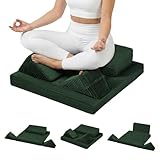
- Dual Layer Meditation Cushion Set: Includes a 24" x 24" meditation cushion and a 17.7" x 9.8" support pillow, creating a stable base for sitting on floor. The raised design helps lift the hips and support cross-legged sitting, kneeling, stretching and daily yoga practice, giving beginners and regular users a more comfortable floor pillow setup
- 2 Knee Cushions and Hip Support: Designed with two side knee pillows and a center support piece to help cushion knees, ankles, legs and hips during meditation or yoga practice. This meditation mat for adults works well for sitting on floor, kneeling positions, breathwork and longer quiet routines where extra yoga pillow is needed
- Supportive Foam for Steady Sitting: Filled with soft yet supportive foam, this meditation pillow offers a fuller and more structured feel than many cotton-filled floor cushion. The foam helps the zafu meditation cushion keep its shape through regular use, while the zafu zabuton style layout creates a balanced base for meditation, yoga, reading and relaxation
- 3 Shapes for Flexible Practice: Use the pieces together or separately as a corner floor cushion、yoga cushion or knee support pillow. The flexible 3-shape design adapts to different people and sitting positions, making it suitable for cross-legged sitting, kneeling, stretching, floor exercises and relaxed home seating
- Washable Cover and Easy Recovery: The removable cover is designed for simple cleaning, helping keep the meditation cushion set fresh for regular use. The floor pillow for adults is vacuum-compressed for shipping; after opening, gently pat and shake each piece, then allow 24–48 hours for full expansion and a softer, fuller sitting feel
Best apps for Apple Watch
Headspace has the clearest 2026 watch-specific announcement, including phone-free use on supported newer watches, guided meditations, breathing nudges, SOS content, sleep support, and Apple Health integration. Happier Meditation’s current listing also mentions Apple Watch support. Test the exact watch model and operating-system combination rather than assuming that phone features are available on the watch.
How we would legitimately test these apps
Because this guide does not claim a completed hands-on test, the following is the minimum protocol needed before publishing a genuine “tested by editors” ranking.
Test setup
- Use one current iPhone and one current Android phone where the app supports both.
- Record the app version, operating system, country, test date, and purchase channel.
- Test a new account and, where available, the no-account/free path.
- Do not use affiliate links or personalized promotional links during price testing.
- Capture the first-run onboarding, trial and renewal screen, free content, cancellation path, privacy permissions, offline downloads, timer, and progress dashboard.
- Test with notifications off first, then assess notification controls separately.
Standard sessions
Each app should be used for a five-minute beginner meditation, a 10-minute stress or anxiety session, a 20-minute foundational session, an unguided timer session, a sleep session or Sleep Story, a walking or active meditation where offered, a structured multi-day lesson, an offline session after downloading content, a free-tier session after the trial or paywall is removed, and a session with accessibility features enabled.
What’s actually slowing this PC down?
Pick the symptom - the matching free tool is one click away.
Transparent scoring
| Dimension | Weight |
|---|---|
| Instruction clarity | 20% |
| Curriculum and progression | 15% |
| Audio quality and teacher fit | 15% |
| Free-tier value | 15% |
| Goal coverage | 10% |
| Ease of discovery and search | 10% |
| Timer, offline, and playback controls | 5% |
| Accessibility | 5% |
| Privacy and account friction | 5% |
A short editorial trial cannot establish that an app treats anxiety, depression, insomnia, pain, or another condition. Usability observations and clinical effectiveness should be reported separately.
Are meditation apps evidence-based?
The evidence has several layers, and they should not be collapsed into one marketing label:
- Mindfulness generally: Research suggests potential benefits for some aspects of stress, anxiety, mood, and well-being, but effects vary and safety and limitations matter. The National Center for Complementary and Integrative Health overview is a better starting point than an app’s testimonials.
- A specific app: Evidence from one app cannot automatically be transferred to every meditation app, teacher, or feature.
- A specific program: A structured course may have research behind it while its sleep library, timer, community, or personalization algorithm does not.
- Organization-reported research: Healthy Minds Innovations reports research connected with its program, including claims about brief daily practice. Those claims should be attributed to the organization.
- Independent randomized trials: A 2024 systematic review found promising but inconsistent evidence for mindfulness mobile apps and called for more research. An updated review of standalone mental-health smartphone apps likewise described the evidence as heterogeneous and inconclusive. A 2025 randomized trial found reduced stress in novice meditators using Headspace, and a 2026 randomized trial examined Headspace for sleep. These findings are useful but do not prove that every app works for every person or condition.
- Ratings and testimonials: App-store ratings measure user satisfaction, compatibility, and expectations—not clinical efficacy.
Read the 2024 mindfulness-app review, the updated mental-health-app review, and the published Headspace stress trial and Headspace sleep trial for the distinction between promising evidence and a guarantee.
Privacy: what to check before creating an account
Meditation apps may collect more than audio preferences. Depending on the app and enabled features, relevant data can include mood check-ins, health or fitness information, identifiers, usage history, location, device data, social activity, and personalization responses. The NCCIH mobile-health privacy guidance recommends reviewing permissions, privacy settings, and the app-store data-safety section.
- Ask whether an account is required. Medito says users can begin without one, but its terms say some features may require an account.
- Check linked data. Healthy Minds’ Apple disclosure says several categories, including contact information, identifiers, usage data, health and fitness data, sensitive information, and diagnostic data, may be linked to the user.
- Check shared data. Smiling Mind’s Google Play disclosure says it may share personal, health, and other data with third parties and may collect location and personal information.
- Review integrations. Apple Health, Google Health Connect, notifications, location, contacts, and social features should be optional unless you specifically need them.
- Do not treat labels as audits. Apple privacy labels and Google Play data-safety entries are developer disclosures. They are useful, but they are not independent privacy certifications.
- Understand the nonprofit distinction. Medito’s nonprofit status and open-source code are meaningful differences, but they do not prove that no data is collected. Healthy Minds and Smiling Mind are also nonprofit-oriented services with their own disclosed data practices.
- Look for deletion controls. Before entering mood history or health information, find the account-deletion and data-request process.
What to know before starting a free trial
- Write down the renewal date and amount. A free download is not the same as free access, and a seven- or 14-day trial can convert automatically.
- Compare the purchase channel. Website, Apple App Store, and Google Play prices can differ. Promotional landing pages can also show a different offer from the app’s main subscription screen.
- Cancel through the billing provider. On iPhone, open Settings > your name > Subscriptions, select the app, and choose Cancel Subscription. On Android, open Google Play > profile picture > Payments & subscriptions > Subscriptions, select the app, and cancel. A subscription purchased directly from a website usually must be canceled on that website.
- Do not assume deleting the app cancels billing. Uninstalling removes the app, not necessarily the subscription.
- Check what cancellation does. In many subscriptions, cancellation stops the next renewal but preserves access until the paid period ends. Downloaded content may stop working when premium access expires.
- Check refund rules separately. Apple, Google, and the app company may handle refunds differently. A lifetime purchase is not automatically a lifetime license to every related product or service.
- Use the free-forever alternatives first if cost is a concern. Healthy Minds Program, Medito, Smiling Mind, and Insight Timer’s free tier can provide enough material to establish a habit before you subscribe.
Lifetime pricing and break-even checks
A lifetime offer can look attractive, but only if the price and scope are clear. At the observed $69.99 annual Calm price, a $499.99 lifetime membership would take roughly 7.1 years to equal annual billing; at $79.99 per year, the break-even point is about 6.3 years. A $399.99 Balance lifetime listing would equal roughly 5.7 years at its listed $69.99 annual price. Those calculations ignore taxes, future price changes, refunds, promotions, and whether the company continues supporting the app. Calm also warns that its lifetime access applies to the consumer Calm app, not necessarily Calm Health or Calm Sleep.
Safety and limitations
Meditation is not risk-free for everyone. Focusing inward can bring up distressing thoughts, memories, panic, dissociation, or uncomfortable bodily sensations. Breath-focused exercises can make some people more anxious rather than calmer.
- Stop a session if symptoms intensify.
- Open your eyes, orient to the room, name visible objects, feel your feet on the floor, or switch to gentle movement or walking.
- Try a shorter session or a practice that does not emphasize the breath.
- People experiencing acute mental-health symptoms, trauma-related symptoms, psychosis, severe depression, or suicidal thoughts should not use an app as a substitute for professional care.
- Seek appropriate clinical help when distress is severe, persistent, or unsafe. In an immediate emergency, contact local emergency services or an appropriate crisis service.
Healthy Minds’ terms of use say its products are not medical advice, diagnosis, or treatment. Smiling Mind’s product information statement describes the app as low clinical risk for most users while acknowledging that practices may raise mental-health concerns and signposting support services. Sleep audio is a relaxation aid, not a guaranteed treatment for insomnia, and no breathing exercise is appropriate for every person or situation.
Final decision guide
- I want the best free starting point: Try Healthy Minds Program for structure or Medito for a simpler no-paywall experience.
- I want the biggest free library: Start with Insight Timer, but use filters and save a short sequence so the catalog does not become a distraction.
- I am completely new to meditation: Choose Headspace if you are willing to subscribe, or Healthy Minds if you want a free curriculum.
- I mainly want sleep: Choose Calm for the deepest sleep-audio selection; consider Headspace for a more structured sleep and meditation mix.
- I want personalization: Choose Balance, after verifying the current trial and promotional price.
- I want to understand meditation deeply: Choose Waking Up for theory, philosophy, neuroscience, and advanced practice.
- I want family or children’s content: Start with Smiling Mind and review age labels, parental setup, privacy disclosures, and progress preservation.
- I dislike mystical or vague language: Try Happier Meditation, Headspace, or Healthy Minds. Waking Up is secular in presentation but includes nondual, Zen, Vipassana, and philosophical material.
- I want silence rather than a guided voice: Compare the timers, interval bells, silence controls, and offline behavior in Insight Timer, Waking Up, Calm, and Medito before paying.
- I am privacy-sensitive: Investigate Medito, Healthy Minds, and Smiling Mind first, but inspect their current disclosures rather than assuming nonprofit status or open-source code means zero data collection.
Frequently Asked Questions
Which meditation app is actually free?
Medito is the clearest no-subscription, no-ad option. Healthy Minds Program and Smiling Mind are free or donation-supported nonprofit apps, while Insight Timer has a large free tier with optional MemberPlus. Calm and Headspace are free to download but provide only limited free content after their trials.
Can a meditation app replace therapy?
No. Meditation apps are wellness and self-guided practice tools, not substitutes for therapy, psychiatric care, crisis support, or medical diagnosis. Stop if practice increases panic, dissociation, trauma symptoms, or other distress, and seek appropriate professional help.
Which app is best for sleep?
Calm is the strongest choice for Sleep Stories, soundscapes, music, and bedtime relaxation. Headspace is a better fit if you want sleep content alongside a structured meditation curriculum. Neither should be presented as a treatment for chronic insomnia.
Should I choose a meditation library or a structured course?
Choose Headspace, Healthy Minds Program, or Waking Up if you want a progression with a clear next step. Choose Insight Timer if you want teacher and tradition variety. Choose Balance if you prefer daily recommendations based on your goals and experience.
What should I check before starting a free trial?
Record the trial length, renewal date, renewal price, billing channel, and cancellation path. Website, Apple, and Google Play prices can differ. Uninstalling the app does not necessarily cancel a subscription.
Recommended Free Tools
The Bottom Line
The best first download depends on what you will actually use. Start with Healthy Minds Program or Medito if you want to spend nothing, Insight Timer if you want maximum variety and a strong free timer, Headspace if you need beginner structure, and Calm if sleep audio is the priority. Choose Waking Up for deeper study, Balance for personalization, Smiling Mind for families, or Happier Meditation for practical, skeptical-friendly instruction. Before starting any trial, verify the U.S. checkout price and renewal terms—and treat every app as a wellness aid, not medical treatment.
Quick Recap
Product prices and availability are accurate as of the date/time indicated and are subject to change. Any price and availability information displayed on Amazon at the time of purchase will apply.

