
Free tools Windows power users keep installed
One-click scans. No signup required.
iTechGuides is reader-supported. When you buy through links on our site, we may earn an affiliate commission. As an Amazon Associate I earn from qualifying purchases. Learn more
Short answer: For a prerecorded YouTube Live channel that must run continuously, compare monthly outbound data allowance and its overage terms before comparing CPU or RAM. YouTube’s recommended 5 Mbps H.264 bitrate for 1080p30 works out to about 1.62 TB of video payload over 30 days, before protocol overhead. Among the Indian VPS listings reviewed here, Inservers advertises a 4 GB streaming VPS with 1 Gbps unmetered bandwidth for ₹880/month; that makes it a candidate to investigate, not a verified performance recommendation. If you would rather not administer a server, StreamNeo is a managed cloud alternative that keeps an uploaded YouTube stream running while your computer is off.
Best options for a continuous prerecorded YouTube stream
These choices are not all VPS providers. StreamNeo is listed first because it is the managed option for running uploaded videos continuously; the providers below are self-managed hosting choices. VPS listings and prices are provider claims, not independent performance tests. Check current checkout terms before buying.



| Option | Published offer | What to check before choosing |
|---|---|---|
| 1. StreamNeo | Managed YouTube streaming from the cloud: upload a recording or build a playlist, add your YouTube stream key, and go live. It loops uploaded video, with no computer or home connection required to remain on. The first day is free without a card; each slot includes one always-on stream, up to 4K 60fps as uploaded, 10 GB storage per slot pooled across active slots, playlists, automatic recovery if YouTube drops the stream, and StreamNeo team support. | One flat price per slot regardless of quality; the same product is included on every plan, with billing duration changing. It streams to YouTube and plays uploaded videos; it is not a camera-live service. See StreamNeo for current terms. |
| 2. Inservers streaming VPS | The provider advertises a New Delhi deployment with 2 vCores, 4 GB RAM, 1 Gbps unmetered bandwidth, RTMP relay use, and an entry price of ₹880/month. | Confirm what “unmetered” permits, any fair-use or sustained-egress limits, taxes, renewal price, and whether the plan is for relay-only playback or can handle the encoding/transcoding you need. The published offer is not an independently tested result. |
| 3. VPSWala KVM VPS 4 | The published plan lists 2 vCPU, 4 GB RAM, 40 GB NVMe, and 200 GB transfer at ₹596/month before GST. The provider lists Mumbai, Noida, and Jaipur nodes and full root access. VPSWala says its catalogue and pricing were reviewed on 21 August 2026. | The 200 GB allowance is far below the estimated monthly payload for a 5 Mbps nonstop stream. Ask for sufficient outbound transfer and its full cost before treating this as a 24/7 streaming bargain. |
| 4. HeavenCloud Mumbai budget VPS | The provider advertises a Mumbai budget offer from ₹340/month, including a listed 2 GB configuration. | The reviewed offer does not establish enough outbound transfer for continuous delivery or confirm encoder performance. Do not infer suitability from the entry price or RAM alone. |
| 5. AWS Lightsail, DigitalOcean, Vultr, and Akamai/Linode | A secondary comparison lists India locations and approximate prices for these cloud providers. For AWS Lightsail, it notes an approximate GST-inclusive Mumbai Nano price and included transfer; AWS’s pricing page says Mumbai bundle transfer allowances are half the amounts shown for some other regions. | These are options to validate at checkout, not current quotes in this comparison. Confirm the selected region’s included transfer, excess-transfer charges, tax and currency conversion, and whether a small bundle can sustain your stream. |
| 6. StreamSetu managed service | Its official page lists $5/month per channel, with storage billed separately, and says its cloud stream can run while the PC is off. Each output destination counts as a channel. | Confirm the selected resolution’s actual rate, storage cost, India billing and tax treatment, and renewal terms before comparing the total with a VPS. |
Why transfer allowance matters more than the headline VPS price
YouTube recommends 5 Mbps video bitrate for H.264 at 1080p and 30 frames per second. At a steady 5 Mbps for 30 days, the payload calculation is 5,000,000 bits per second × 2,592,000 seconds ÷ 8, or approximately 1.62 TB decimal. This is a calculation from YouTube’s recommendation, not a provider quote; it excludes protocol overhead and retransmissions, so leave headroom.
That is why a low monthly VPS price can become a false economy. VPSWala’s listed 200 GB transfer is only a fraction of that baseline payload. Inservers’ advertised 1 Gbps unmetered connection looks more aligned on paper, but “unmetered” does not by itself establish acceptable continuous use, a service guarantee, or a particular stream’s reliability. Ask the provider to confirm the plan’s egress terms in writing.
#1 Best Overall
How to decide whether a VPS fits your stream
- Estimate monthly egress. Multiply your chosen video bitrate by the seconds you plan to stream, then divide by eight to convert bits to bytes. Add headroom for overhead and retransmissions. The 1.62 TB estimate above is for continuous 5 Mbps video over 30 days.
- Get the full transfer price. Ask how much outbound data is included, what happens after the allowance, and whether there are fair-use limits or throttling. A bandwidth headline is not a substitute for these terms.
- Match the server to the workload. A server relaying an already encoded file is a different workload from one encoding or transcoding video. Ask whether the advertised plan covers your actual setup; do not assume CPU and RAM figures prove it will encode reliably.
- Check location and route. Confirm the actual Indian data-centre location and consider the route from your source or management location. A listed city alone does not establish performance for your connection.
- Include storage and operations. Check whether the server has enough disk space for the uploaded media, how restarts and recovery work, and whether you are comfortable maintaining the operating system, encoder and stream key yourself.
- Compare the actual bill. Include GST, currency conversion where applicable, renewal pricing, transfer overages, storage and any separately charged support or services. Provider claims and secondary price comparisons can change; recheck at checkout.
Set up the YouTube side of a prerecorded live stream
YouTube’s encoder workflow is the same platform connection regardless of which VPS you choose. YouTube documents creating a stream in Live Control Room, copying the server URL and stream key into the encoder, then starting the encoder. To schedule a stream, use the Manage tab in Live Control Room. These steps explain the YouTube connection; they do not certify a particular VPS or establish that a specific looping configuration is supported.
- Protocol: YouTube recommends RTMPS.
- Rate control: YouTube recommends CBR.
- Keyframes: Set a 2-second keyframe frequency; YouTube says not to exceed 4 seconds.
- Baseline quality: For H.264 at 1080p30, YouTube’s recommended video bitrate is 5 Mbps. If you select another resolution or frame rate, use the corresponding current YouTube guidance rather than assuming this bitrate applies.
- Stream key: Treat it like a password. Enter it only in the intended encoder or managed service, and reset it in YouTube if it is exposed.
YouTube says streams shorter than 12 hours are automatically archived. That archive rule is not evidence that a single stream can run indefinitely; plan your stream workflow around YouTube’s documented limits and current Live Control Room behavior.
What a VPS does—and what it does not solve
A VPS gives you a remotely hosted machine on which you can run your own playback and encoder process. You remain responsible for configuring the software, transferring and storing media, protecting the stream key, monitoring the process, handling restarts, and paying for outbound traffic. The exact process depends on the software and whether you are relaying an already encoded file or transcoding it; the provider offers listed in this comparison do not establish one universal configuration.
Quick wins for a faster PC:
Repair Windows errors before they cause bigger problemsFix Now →Fix the driver behind crashes, sound loss and screen glitchesFind Drivers →Clear out junk files and repair common Windows errorsFree Scan →Continuous delivery also does not make a channel eligible for monetization by itself. YouTube’s channel monetization policy applies to live streams as well as Shorts and long-form videos, and expects monetized content to be original and authentic. The policy identifies repetitive or mass-produced content as inauthentic and ineligible. Consider the substance, rights and repetition of your actual programming, not only the fact that it is prerecorded.
Rank #3
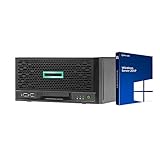
- HP MicroServer Gen10 Plus Tower Server for Business with Microsoft Windows Server 2019 OS!
- Intel Xeon E-2224 Quad-Core 3.4GHz 8MB CPU, Up To 4.6GHz Turbo
- 32GB (2 x 16GB) DDR4 PC4-21300 2666MHz Unbuffered Memory
- 16TB (4 x 4TB) 7.2K 6Gb/s SATA 3.5" HDDs in RAID
- Hard drives and memory upgrades included separately NOT installed, installation required.
Common problems to check before blaming the VPS
- The stream stops or becomes unstable: Check the VPS provider’s sustained-egress and fair-use terms, outbound transfer usage, server process state, and YouTube Live Control Room status. Do not treat a quoted link speed as proof of uninterrupted service.
- The stream reaches a data cap or incurs extra charges: Compare actual outbound usage with the monthly estimate for your bitrate and hours. Ask the host how it meters egress and what overage or throttling applies.
- YouTube does not receive the encoder feed: Recheck the server URL and stream key copied from Live Control Room, confirm the key was entered correctly, and verify that the encoder is using RTMPS as recommended by YouTube.
- Video quality or motion looks poor: Confirm the encoder’s resolution, frame rate and bitrate are appropriate for the source and that CBR and keyframe settings meet YouTube’s guidance. The 5 Mbps figure cited here applies to H.264 1080p30, not every output format.
- The VPS price looks attractive but the total does not: Recalculate with outbound transfer, GST, storage, renewal terms and any required encoding resources. A low entry tier with a small transfer allowance may not serve a 24/7 feed economically.
Or let it run in the cloud
If your priority is keeping uploaded videos live on YouTube rather than maintaining a VPS, StreamNeo has three steps: upload a recording or create a playlist, add your YouTube stream key, and go live. The stream runs from the cloud, so nothing has to stay on at home. It streams the upload as made, up to 4K 60fps, at one price per slot regardless of quality; it automatically recovers if YouTube drops the stream. The first day is free with no card. Monthly billing is $9.99 per month. UPI and cards are supported in India; card checkout is available worldwide. See StreamNeo for details, or start the free first day.
Quick Recap
Best Value
Rank #4
Product prices and availability are accurate as of the date/time indicated and are subject to change. Any price and availability information displayed on Amazon at the time of purchase will apply.

