
Free tools Windows power users keep installed
One-click scans. No signup required.
The best document workflow software for your business depends on your existing technology, approval complexity, compliance obligations, and need for signatures or document generation. Microsoft 365 businesses should usually start with SharePoint plus Power Automate; Google Workspace teams should start with Google Workspace; DocuWare or M-Files are stronger choices when document control and process automation come first.
That recommendation is deliberately conditional. SharePoint, Google Workspace, Box, DocuWare, M-Files, PandaDoc, Adobe Acrobat, and Laserfiche do not solve exactly the same problem. Some are document-management systems, some are collaboration platforms, some automate approvals, and others specialize in proposals, PDFs, or electronic signatures.
Key takeaways
- SharePoint plus Power Automate is the strongest starting point for businesses already using Microsoft 365, provided the business can manage information architecture, permissions, and workflow maintenance.
- DocuWare is a strong dedicated choice for invoice capture, OCR, indexing, approval routing, and paper-heavy processes.
- M-Files is best suited to metadata-driven document control across projects, customers, matters, contracts, and multiple repositories.
- Google Workspace is the lowest-friction option for collaboration-first teams already using Gmail, Drive, Docs, and Sheets, but advanced records management may require additional tools.
- Box is particularly useful for controlled external collaboration, while PandaDoc and Adobe Acrobat are more focused on sales documents, PDFs, forms, and signatures than on enterprise-wide records management.
- License price is only one part of total cost; migration, configuration, OCR, signatures, premium connectors, administration, training, and compliance controls can change the economics substantially.
What is document workflow software?
Document workflow software manages the movement and lifecycle of documents through a business process, from creation or intake through review, approval, signing, filing, retention, and reporting. A complete workflow can capture a document from an upload, scanner, web form, or email; extract or assign metadata; route the document to the right people; record decisions; and preserve an audit trail.
A typical process may contain these stages:
- Document creation or intake
- Upload, scanning, or email capture
- OCR and data extraction
- Classification and metadata assignment
- Review
- Sequential, parallel, or conditional approval
- Revision and version control
- Signature collection
- Controlled filing and access management
- Reminders, escalations, and exception handling
- Retention, archiving, or deletion
- Audit reporting and performance analysis
The phrase “document workflow software” covers several related categories. Understanding the difference prevents a business from buying an e-signature tool when it actually needs records management, or buying a full DMS when a sales team mainly needs proposal templates.
#1 Best Overall
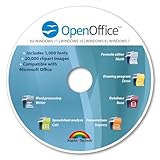
- THE ALTERNATIVE: The Office Suite Package is the perfect alternative to MS Office. It offers you word processing as well as spreadsheet analysis and the creation of presentations.
- LOTS OF EXTRAS:✓ 1,000 different fonts available to individually style your text documents and ✓ 20,000 clipart images
- EASY TO USE: The highly user-friendly interface will guarantee that you get off to a great start | Simply insert the included CD into your CD/DVD drive and install the Office program.
- ONE PROGRAM FOR EVERYTHING: Office Suite is the perfect computer accessory, offering a wide range of uses for university, work and school. ✓ Drawing program ✓ Database ✓ Formula editor ✓ Spreadsheet analysis ✓ Presentations
- FULL COMPATIBILITY: ✓ Compatible with Microsoft Office Word, Excel and PowerPoint ✓ Suitable for Windows 11, 10, 8, 7, Vista and XP (32 and 64-bit versions) ✓ Fast and easy installation ✓ Easy to navigate
| Category | Primary job | Typical examples | What it may not provide by itself |
|---|---|---|---|
| Cloud file storage | Store, synchronize, and share files | Dropbox, OneDrive, Google Drive | Structured approval routing, controlled metadata, retention, or complete auditability |
| Document management system | Control documents, versions, metadata, search, permissions, and lifecycle | DocuWare, M-Files, SharePoint, Laserfiche | Specialized sales generation or signature capabilities may require add-ons |
| Workflow automation | Move tasks and documents between people and systems | Power Automate, Nintex | A complete document repository and records policy |
| Document generation | Create standardized documents from templates and business data | PandaDoc | Enterprise-wide records management |
| E-signature | Collect signatures and preserve signing evidence | Adobe Acrobat Sign, PandaDoc, Box Sign | Full document storage, retention scheduling, or contract lifecycle management |
| Records management | Apply retention, legal holds, disposition, and historical-record controls | Laserfiche, SharePoint with appropriate governance, enterprise DMS products | Easy setup without policy, configuration, and administration |
Google Drive, Dropbox, and OneDrive are not automatically complete document-management systems because they store files. Metadata standards, permissions, versioning, retention controls, auditability, and a defined business process determine whether a storage product functions as a governed document system.
Which document workflow software is best for each business need?
| Business need | Best-fit option | Why it fits | Important limitation |
|---|---|---|---|
| Microsoft 365-based internal approvals | SharePoint plus Power Automate | Uses Microsoft libraries, identity, permissions, versioning, Teams, Outlook, and configurable automation | Requires architecture, governance, and ongoing administration |
| Dedicated invoice and document-processing workflows | DocuWare | Strong capture, OCR, indexing, storage, routing, and approval orientation | Usually requires a sales process and implementation work |
| Metadata-driven document control | M-Files | Organizes content by project, customer, matter, contract, status, or other metadata rather than only folders | Metadata design and user adoption are essential |
| Google collaboration and simple workflows | Google Workspace | Combines Gmail, Drive, Docs, Sheets, Meet, sharing, and familiar collaboration | Complex routing and records controls may require other tools |
| Secure external collaboration | Box | Strong sharing controls, content management, integrations, and e-signature capabilities | Advanced functions and higher tiers can be costly |
| Proposals, quotes, and sales contracts | PandaDoc | Templates, document generation, CRM connections, approvals, and signatures are central features | Not a replacement for a general enterprise repository |
| PDF creation, forms, and signing | Adobe Acrobat for teams and Acrobat Sign | Strong PDF editing, conversion, forms, commenting, and signature workflows | Broader metadata, retention, and workflow governance may require another platform |
| Regulated enterprise records and structured processes | Laserfiche, M-Files, DocuWare, or OpenText | More robust governance, records, workflow, and integration options | Greater implementation and administration burden |
Is SharePoint plus Power Automate best for Microsoft 365 businesses?
SharePoint plus Power Automate is usually the best starting point for a business that already uses Microsoft 365 and needs internal document libraries, permissions, versioning, approvals, notifications, and Microsoft-connected automation.
SharePoint provides document libraries, metadata, sharing, permissions, and version history. Power Automate can trigger actions when a document or metadata value changes, route approvals, send reminders, update connected systems, and expose decisions through Microsoft tools. Microsoft identity services can also connect access and approval responsibilities to the organization’s existing accounts.
Common Microsoft-centric workflows include purchase-order approvals, policy publication, employee onboarding, procurement, internal change control, and document review in Teams or Outlook. The official SharePoint overview describes the platform’s collaboration and document capabilities, while Microsoft’s Power Automate pricing page should be checked for current automation licensing and connector requirements.
Do these 3 things before closing this tab:
1Clear out junk files and repair common Windows errors2Fix the driver behind crashes, sound loss and screen glitches3Repair Windows errors before they cause bigger problemsSharePoint is not a plug-and-play workflow product. A successful implementation needs an information architecture, ownership rules, permission groups, naming standards, metadata definitions, retention policies, site provisioning rules, and a plan for maintaining flows. Poorly designed SharePoint sites can produce duplicate repositories, confusing permissions, abandoned workflows, and user resistance.
Power Automate licensing can also become less obvious when a workflow uses premium connectors, multiple Microsoft services, or external systems. Review the Microsoft 365 business plan comparison alongside automation requirements rather than assuming an existing Microsoft subscription includes every feature.
Choose SharePoint plus Power Automate when: Microsoft 365 is already the company’s operating environment, documents already live in Microsoft repositories, and the business has an administrator or implementation partner.
Choose something else when: the business wants a turnkey dedicated DMS, lacks anyone to govern SharePoint, or needs specialized capture and indexing with minimal custom architecture.
Is DocuWare the best dedicated document workflow system?
DocuWare is a strong dedicated DMS choice for organizations that need document capture, OCR-oriented processing, indexing, centralized retrieval, structured approvals, and repeatable invoice or paper-to-digital workflows.
DocuWare is particularly suitable for accounts payable, invoice processing, HR files, contracts, scanned forms, and operations teams that need documents to follow a defined process. DocuWare is more process-oriented than ordinary file-sharing software: the value comes from capture, classification, routing, approval, and auditability rather than simply putting files in a shared folder.
DocuWare can be excessive for a small team that only needs shared documents, basic version history, and occasional approvals. Implementation normally involves mapping the current process, defining indexes and roles, configuring routing, migrating content, training users, and testing exceptions. The DocuWare pricing page is the appropriate place to request current packaging because the dossier does not provide a verified public per-user price.
Choose DocuWare when: invoices, scans, forms, or repeatable operational documents are central to the business and a dedicated document-processing system is preferable to assembling several productivity tools.
The Tool Desk
Outbyte PC Repair FREEClear out junk files and repair common Windows errorsFree Scan →Outbyte Driver Updater FREEFix the driver behind crashes, sound loss and screen glitchesFind Drivers →Rank #2
![Doxillion Free Document Converter – Converts DOCX, DOC, PDF, WPS and Many More Files Quickly [Download]](https://m.media-amazon.com/images/I/81tjL48MwxL.png._SL160_.png)
- Convert over 50 document file formats.
- Preview your files from Doxillion before converting them.
- Use batch conversion to convert thousands of files at once.
- Enjoy an easy-to-use, intuitive interface with a Drag and Drop file option.
- Burn your converted or original files directly to disc.
Choose something else when: the main requirement is sales proposal generation, casual collaboration, or a low-effort shared drive.
How does M-Files differ from folder-based document management?
M-Files organizes and retrieves documents primarily through metadata and document context, making it a strong fit for businesses that need to find content by project, customer, matter, contract, status, or document type rather than by the folder where someone saved it.
Metadata-driven organization can help professional services, engineering, construction, legal, and regulated teams control content across Microsoft 365, file shares, and other repositories. Version control, search, workflow, and lifecycle features are valuable when a document belongs to several business contexts or when users repeatedly search by attributes instead of location.
Metadata does not eliminate governance. The organization still needs clear definitions, required fields, ownership, permissions, naming conventions, and rules for ambiguous or missing information. Poor metadata can be as confusing as a badly designed folder tree. Users may also resist changing familiar folder habits.
Quick wins for a faster PC:
Clear out junk files and repair common Windows errorsFree Scan →Scan for outdated or missing drivers - takes under a minuteDriver Scan →M-Files pricing is generally quote-led; consult the M-Files pricing page for current packaging. M-Files is a better fit for controlled document lifecycles than for a team seeking only inexpensive file synchronization.
Is Google Workspace enough for document workflows?
Google Workspace is often enough for collaboration-first small businesses with straightforward document sharing, editing, review, and approval needs, especially when Gmail, Drive, Docs, Sheets, and Meet are already in use.
Google Workspace reduces implementation effort because email, document creation, storage, sharing, and collaboration exist in one familiar environment. Simple workflows can use permissions, comments, shared drives, forms, notifications, and third-party automation. Google Workspace is a sensible low-cost starting point when the alternative is buying a separate DMS before the business has defined its process.
Google Workspace alone may not meet complex requirements for records management, structured approval routing, advanced retention, audit review, external-sharing control, or document-centric OCR. Test the exact administrative and retention controls required by the business rather than assuming that a shared drive is a governed records system.
According to the U.S. Google Workspace pricing page, as displayed on August 18, 2026, standard prices were $7 per user per month for Business Starter, $14 for Business Standard, and $22 for Business Plus. The same page displayed temporary introductory prices of $5.60, $9.80, and $15.40 respectively. Annual commitment terms and promotional periods apply, and Enterprise pricing requires contacting sales. Promotional pricing should not be used as the long-term cost estimate.
| Google Workspace tier | Standard U.S. price shown August 18, 2026 | Temporary introductory price shown | Best interpretation |
|---|---|---|---|
| Business Starter | $7/user/month | $5.60/user/month | Basic business collaboration and storage needs |
| Business Standard | $14/user/month | $9.80/user/month | Teams needing broader collaboration and storage capabilities |
| Business Plus | $22/user/month | $15.40/user/month | Businesses requiring additional administrative and business features |
| Enterprise | Contact sales | Not specified | Organizations needing enterprise evaluation and terms |
Choose Google Workspace when: real-time collaboration and ease of use matter more than complex document lifecycle controls.
Choose another system when: approval paths, retention, auditability, OCR, or regulated records are the primary requirements.
When is Box better than ordinary file sharing?
Box is a strong choice when a business needs controlled external collaboration with clients, contractors, vendors, or partners, alongside content management, integrations, administrative controls, and e-signature capabilities.
Rank #3
![Corel PDF Fusion - PDF Creator Toolkit [PC Disc]](https://m.media-amazon.com/images/I/51YTjW7jL6L._SL160_.jpg)
- Assemble, edit, and create PDFs with this easy to use, all in one PDF creator
- Open and view over 100 file types, without purchasing additional software
- Drag and drop multiple different file types into one PDF document
- Easily add new text and comments to PDFs
- Share your created documents with anyone in PDF, PDF/A, XPS or Microsoft Word formats
Box can be a better fit than ordinary file synchronization when the business must control external sharing, manage content centrally, connect Microsoft 365 or Google Workspace, and apply higher-tier security or workflow features. Box Sign supports signature workflows, but the exact functionality depends on the plan.
According to the U.S. Box business pricing page, the prices displayed for annual billing were $5 per user per month for Business Starter, with a minimum of three users; $15 for Business; $25 for Business Plus; $35 for Enterprise; and $50 for Enterprise Plus. The plans differ materially in storage, external collaborators, e-signatures, workflow, security, AI, and API allowances. Minimum users and tier restrictions must be included in a real cost comparison.
Choose Box when: secure client or partner access is a central requirement and content governance matters more than building a complex back-office process from scratch.
Choose something else when: the company already has well-governed SharePoint or Google Workspace and only needs basic storage, or when invoice capture and structured operational routing are the main requirements.
Outdated Drivers Are Slowing You Down
One free scan finds every outdated or missing driver and matches the right update for your exact hardware.Free scan · exact hardware matchPC Slower Than It Used to Be?
A free scan shows the junk files, broken settings and background clutter dragging Windows down - then fixes them in one click.Free scan · Windows 10 & 11Is PandaDoc the right choice for proposals and signatures?
PandaDoc is a better fit than a general DMS for sales teams that repeatedly create proposals, quotes, statements of work, agreements, or contracts from templates and need approvals, CRM connections, and electronic signatures.
PandaDoc’s strength is the revenue-document workflow: generate a document, populate it with customer or CRM data, route it for internal approval, send it externally, collect signatures, and track the result. That focus makes PandaDoc useful for sales and customer-facing teams but does not make PandaDoc a complete repository for every company document.
Review current plans and usage limits on the PandaDoc pricing page. Check template limits, user roles, signature volume, CRM integrations, API access, approval features, and whether the chosen tier supports the business’s document volume.
Choose PandaDoc when: the workflow begins with a sales document and ends with customer approval or signature.
Choose another platform when: the main requirement is retention, legal holds, enterprise records, invoice capture, or a single repository for all operational documents.
What can Adobe Acrobat and Acrobat Sign handle?
Adobe Acrobat for teams is best for PDF-centric work such as editing, conversion, form creation, commenting, filling, and signing; Acrobat is not automatically a complete enterprise document-management system.
Acrobat integrates with Microsoft 365 and SharePoint and is useful when employees already work primarily in PDFs. Acrobat Sign can support signature workflows, but standard Acrobat e-signature capabilities should not be confused with Adobe’s enterprise Acrobat Sign Solutions. Storage, metadata, retention, workflow routing, signature evidence, compliance, and integration requirements should be evaluated separately.
According to Adobe’s U.S. business pricing page, annual-billed-monthly prices displayed on August 18, 2026 were $11.99 per license per month for Acrobat Express for teams, $16.99 for Acrobat Standard for teams, $23.99 for Acrobat Pro for teams, and $29.99 for Acrobat Studio for teams. Adobe states that enterprise-grade e-signature capabilities require contacting Adobe and that Acrobat Standard and Pro e-signature features do not provide the same level of compliance as Acrobat Sign Solutions. See the Adobe Acrobat business pricing and plan details before treating a plan as a signature or compliance solution.
What’s actually slowing this PC down?
Pick the symptom - the matching free tool is one click away.
Rank #4
![Corel WordPerfect Office Home & Student 2021 | Office Suite of Word Processor, Spreadsheets & Presentation Software [PC Download]](https://m.media-amazon.com/images/I/41729cFmBVL._SL160_.jpg)
- What’s Included: Digital delivery with instant access to WordPerfect; serial key available in your Software Library. For Windows PC only.
- Essential Office Suite: WordPerfect for word processing, Quattro Pro for building spreadsheets, Presentations for creating slideshows, and WordPerfect Lightning for digital note‑taking
- Seamless File Compatibility: Open, edit, and share more than 60 familiar file types—including Microsoft Office formats (Word DOC/DOCX, Excel XLS/XLSX, and PowerPoint PPT/PPTX)
- Creative Content: Includes 900+ TrueType fonts, 10,000+ clip art images, 300+ templates, 175+ digital photos, WordPerfect Address Book, Presentations Graphics (bitmap editor and drawing application), and WordPerfect XML Project Designer
- Reveal Codes: Turn on Reveal Codes to edit the codes and adjust formatting and structure
| Acrobat team product | Annual-billed-monthly price shown August 18, 2026 | Best for |
|---|---|---|
| Acrobat Express | $11.99/license/month | Basic PDF productivity for teams |
| Acrobat Standard | $16.99/license/month | Core PDF editing and document work |
| Acrobat Pro | $23.99/license/month | More advanced PDF and document workflows |
| Acrobat Studio | $29.99/license/month | Broader PDF and content-creation requirements |
When should a business consider Laserfiche or another enterprise DMS?
Laserfiche and similar enterprise DMS products are appropriate when structured workflows, forms, records, governance, integrations, and audit requirements justify a heavier implementation than a collaboration platform normally requires.
Laserfiche is relevant to public-sector, education, healthcare, regulated, and larger enterprise environments. The platform combines document management, workflow automation, forms, records, and integrations, but setup and administration can be significant. The Laserfiche pricing page should be used for a current quote because the dossier does not provide a verified public price.
OpenText, M-Files, DocuWare, and Laserfiche may all be reasonable candidates for highly governed environments. The right selection depends on retention schedules, legal holds, identity, audit evidence, data residency, integrations, migration, support, and the organization’s ability to fund implementation.
Is Dropbox Business document workflow software?
Dropbox Business is primarily a file synchronization, sharing, recovery, and collaboration product rather than the strongest choice for complex approval routing, structured metadata, or formal records management.
Recommended Free Tools
Dropbox can work well for team folders, familiar file access, external sharing, recovery, version history, and straightforward collaboration. Dropbox may perpetuate folder sprawl or require additional automation and signature tools when the business needs conditional approvals, metadata-driven retrieval, retention schedules, or detailed process reporting. Review the Dropbox Business plans for current storage, administration, and collaboration limits.
Which features should document workflow software include?
The right feature set depends on the workflow, but a serious evaluation should cover document management, automation, governance, integration, and recovery rather than only storage capacity.
Document-management essentials
- Version history and meaningful version comparison
- Check-in/check-out or equivalent editing controls
- Full-text search, including searchable scanned PDFs
- Custom metadata and required fields
- OCR for scanned documents
- Granular permissions and role-based access
- Expiring or restricted shared links
- File activity history
- Document status and lifecycle states
- Retention and deletion controls
- Mobile access
- Bulk upload, migration, export, and portability
Workflow essentials
- Trigger-based automation
- Sequential, parallel, and conditional approvals
- Delegation and substitute approvers
- Reminders, escalations, due dates, and service-level timers
- Rejection, resubmission, recall, and exception paths
- Human review for uncertain extraction or classification
- Reusable workflow templates
- Audit logs and bottleneck reporting
- Connections to email, CRM, accounting, ERP, HR, identity, and collaboration systems
Advanced capabilities
- Intelligent document processing and field extraction
- Natural-language search
- Automated redaction
- Document comparison
- Clause or contract analysis
- Template-based document generation
- E-signatures and web forms
- API access and webhooks
- Low-code workflow builders and business rules
- Records management, legal holds, data-loss prevention, and data-residency controls
AI should accelerate classification, extraction, search, comparison, or drafting; AI should not replace access design, metadata standards, approval logic, or human review. AI extraction can fail on poor scans, handwriting, unusual templates, tables, missing pages, ambiguous invoice fields, language differences, and regional number formats. Use confidence thresholds and human review for payments, contracts, employment actions, and regulated records.
Independent reader supportYour contribution helps us test, update, and keep practical guides available for everyone.How should a business choose document workflow software?
1. Start with the existing technology ecosystem
Choose Microsoft-connected tooling when the business already uses Microsoft 365, Teams, Outlook, OneDrive, Word, Excel, and Microsoft identity. Choose Google Workspace when Gmail and Google Docs are the operating environment and collaboration is the main requirement. Choose an independent DMS when documents are scattered across systems, metadata and controlled retrieval are critical, or retention and auditability are central.
The Tool Desk
Outbyte PC Repair FREERepair Windows errors before they cause bigger problemsFix Now →Outbyte Driver Updater FREEFix the driver behind crashes, sound loss and screen glitchesFind Drivers →2. Measure workflow complexity
A simple approval can often run in SharePoint, Google Workspace with an automation tool, or Box. A multi-stage process with conditional routing, exceptions, escalations, signatures, and external-system updates may justify DocuWare, M-Files, Laserfiche, or another specialist platform.
- How many approval stages exist?
- Are approvals sequential, parallel, or conditional?
- Can an approver delegate authority?
- What happens when a document is rejected?
- Are reminders and escalations required?
- Does approval update an accounting, CRM, ERP, HR, or other system?
- Is a signature operationally or legally required?
- Must every action remain in an audit log?
- What happens when an employee leaves?
- Can an approved document be reopened, recalled, or superseded?
3. Calculate total cost instead of comparing license prices alone
Total cost includes user licenses, workflow or automation licenses, premium connectors, API calls, storage, OCR volume, signature transactions, external collaborators, migration, consulting, configuration, training, administration, backup, export, compliance modules, and support. A low per-user price can become expensive when every workflow, signature, API call, OCR page, or guest user creates an additional charge.
4. Examine storage and version behavior
Ask whether storage is pooled or allocated per user, whether versions count toward storage, how many versions are retained, whether administrators can restore deleted documents, whether autosave creates noisy histories, whether file-size limits apply, and whether OCR and indexing are included or separately charged.
5. Verify security and compliance for the actual use case
Do not treat a general “secure” claim as proof that a product suits a regulated workflow. Verify SOC 2 or equivalent assurance, relevant ISO certifications, HIPAA eligibility and business-associate agreement availability, GDPR and regional privacy commitments, FedRAMP or public-sector requirements, encryption, customer-managed keys, single sign-on, multifactor authentication, SCIM provisioning, audit logs, data residency, legal hold, retention and disposition, data-loss prevention, malware detection, and external-sharing controls.
Do these 3 things before closing this tab:
1Clear out junk files and repair common Windows errors2Scan for outdated or missing drivers - takes under a minute3Repair Windows errors before they cause bigger problemsBest Value
![Corel WordPerfect Office Home & Student 2021 | Office Suite of Word Processor, Spreadsheets & Presentation Software [PC Disc]](https://m.media-amazon.com/images/I/417uuUu7CmS._SL160_.jpg)
- What’s Included: Installation Disc in a protective sleeve; the serial key is printed on a label inside the sleeve. For Windows PC only
- Essential Office Suite: WordPerfect for word processing, Quattro Pro for building spreadsheets, Presentations for creating slideshows, and WordPerfect Lightning for digital note‑taking
- Seamless File Compatibility: Open, edit, and share more than 60 familiar file types—including Microsoft Office formats (Word DOC/DOCX, Excel XLS/XLSX, and PowerPoint PPT/PPTX)
- Creative Content: Includes 900+ TrueType fonts, 10,000+ clip art images, 300+ templates, 175+ digital photos, WordPerfect Address Book, Presentations Graphics (bitmap editor and drawing application), and WordPerfect XML Project Designer
- Reveal Codes: Turn on Reveal Codes to edit the codes and adjust formatting and structure
Compliance depends on configuration, contract terms, geography, business processes, and the customer’s own controls. A certification alone does not make a workflow compliant.
What should a document workflow software proof of concept test?
A useful proof of concept should use one real workflow and test both the normal path and the failure paths. A polished demonstration of a successful approval is not enough.
- Map one real process. For example: employee onboarding documents move from intake to HR review, manager approval, signature, final filing, and reminders for incomplete steps.
- Record the process rules. Define the starting event, required fields, roles, approval order, exceptions, deadlines, final repository, retention period, and reports.
- Define one authoritative repository. Decide which system is the source of truth instead of allowing independent copies in email attachments, personal drives, team folders, CRM records, chats, and local computers.
- Test the unhappy path. Reject and resubmit a document, reassign an approver, delegate approval, upload a duplicate, omit metadata, expire a link, delete and restore a file, remove a staff member, edit simultaneously, work offline, break an integration, submit a poor scan, and recall a document after approval.
- Test migration. Ask the vendor to demonstrate bulk import, folder-to-metadata mapping, version-history migration, permission migration, duplicate detection, OCR, export, and preservation of timestamps and audit information.
- Calculate one complete workflow. Include internal users, external participants, documents per month, approval steps, signature volume, OCR volume, storage growth, integrations, administrator time, and implementation services.
What questions should a business ask vendors?
| Area | Questions to ask |
|---|---|
| Licensing | What is included in each tier? Are annual commitments, minimum seats, guest users, signatures, OCR pages, API calls, premium connectors, or AI usage charged separately? |
| Workflow | Can the system handle sequential, parallel, conditional, delegated, rejected, recalled, and escalated approvals? |
| Failure recovery | How are failed automations detected, retried, assigned, documented, and recovered? |
| Administration | Who owns workflows, permissions, metadata, templates, integrations, and departed-user cleanup? |
| Security | Which identity, MFA, SSO, SCIM, audit, encryption, data-residency, legal-hold, and external-sharing controls are included in the proposed plan? |
| Migration | Can the vendor preserve metadata, versions, permissions, timestamps, OCR, and audit history during import? |
| Integration | Are the required CRM, accounting, ERP, HR, email, identity, API, and webhook connections native, connector-based, or custom? |
| Exit | Can the business export documents, metadata, versions, audit logs, signatures, and relationships in usable formats if the contract ends? |
| Support | What support tier, implementation assistance, training, uptime commitment, and escalation process are included? |
Common reasons document workflow projects fail
Replacing a shared drive without changing ownership, naming, metadata, permission groups, archive rules, migration practices, and training usually reproduces the same disorder in a new interface.
Low-code automation also requires maintenance. A flow can fail when a field is renamed, a user leaves, a connector changes, an API limit is reached, a file moves, a document type changes, or an exception was never included in the original design. Every production workflow should have an owner, documentation, test data, error notifications, and a recovery procedure.
PC Slower Than It Used to Be?
A free scan shows the junk files, broken settings and background clutter dragging Windows down - then fixes them in one click.Free scan · Windows 10 & 11Crashes, No Sound, or Screen Glitches?
Random freezes, missing sound and display glitches usually trace back to one bad driver. Find and replace yours safely.Free scan · under a minuteExternal users introduce additional risks, including guest-license costs, authentication friction, link oversharing, data-residency concerns, and difficulty removing access after a project ends. E-signature products also should not automatically be treated as repositories: signature capability does not necessarily include contract lifecycle management, clause management, retention scheduling, legal holds, or complete approval governance.
Final recommendations by buyer profile
| If your business… | Start with… | Why |
|---|---|---|
| Already pays for Microsoft 365 and needs internal approvals | SharePoint plus Power Automate | Lowest-friction route into Microsoft-connected storage, permissions, versioning, and automation |
| Already pays for Google Workspace and needs simple collaboration | Google Workspace | Avoids introducing a separate repository before the business has outgrown its current tools |
| Processes invoices, scans, or paper-heavy documents | DocuWare | Dedicated capture, OCR, indexing, routing, and approval capabilities |
| Needs documents organized across projects, customers, or matters | M-Files | Metadata-driven retrieval and controlled document lifecycles |
| Works extensively with clients, vendors, or contractors | Box | External collaboration and content controls are central strengths |
| Creates recurring proposals, quotes, and agreements | PandaDoc | Document generation, CRM-connected sales workflows, approvals, and signatures |
| Works mainly with PDFs and forms | Adobe Acrobat for teams | Strong PDF editing, conversion, forms, and signing workflows |
| Needs regulated enterprise records and structured processes | Laserfiche, M-Files, DocuWare, or OpenText | More appropriate governance and implementation profile than basic file sharing |
For many small businesses, “buy nothing new” is a valid first decision: establish one authoritative repository, permission groups, metadata or naming rules, retention practices, and a documented approval process within the Microsoft 365 or Google Workspace subscription already in use. Buy a dedicated DMS when those controls, capture needs, workflow exceptions, or compliance requirements exceed what the existing stack can manage reliably.
Frequently Asked Questions
What is the best document workflow software for a small business?
The best document workflow software for a small business is usually the productivity suite the business already owns: SharePoint plus Power Automate for Microsoft 365 users, or Google Workspace for Google-centered teams with simple workflows. A dedicated system such as DocuWare or M-Files becomes more appropriate when OCR, indexing, retention, auditability, or complex approvals are central requirements.
What is the difference between document management and document workflow automation?
Document management controls storage, versions, metadata, permissions, search, and lifecycle. Document workflow automation moves documents and tasks through review, approval, notification, signature, and connected-system processes; a business may need both capabilities in one product or through integrated tools.
Is an e-signature platform a document management system?
An e-signature platform is not automatically a document management system. PandaDoc, Acrobat Sign, and similar tools can generate documents or collect signatures, but buyers must separately verify repository, metadata, retention, legal-hold, approval-governance, and audit requirements.
How much does document workflow software cost?
Document workflow software costs range from existing productivity-suite licenses to quote-based dedicated DMS implementations. Public U.S. prices displayed on August 18, 2026 included Google Workspace at $7, $14, and $22 per user per month standard pricing; Box annual-billing prices from $5 to $50 per user per month depending on tier; and Adobe Acrobat team prices from $11.99 to $29.99 per license per month when billed annually monthly. Migration, automation, OCR, signatures, integrations, training, and administration can add substantially to license costs.
The Bottom Line
Bottom line: There is no universal best document workflow software. Start with SharePoint plus Power Automate if Microsoft 365 is already central, Google Workspace if collaboration is simple and Google-based, DocuWare for capture-heavy operational workflows, M-Files for metadata-driven control, Box for external collaboration, PandaDoc for sales documents, and Adobe Acrobat for PDF-centric work. Test one real workflow—including rejection, delegation, migration, failed integrations, and recovery—before signing a contract.
Quick Recap
Product prices and availability are accurate as of the date/time indicated and are subject to change. Any price and availability information displayed on Amazon at the time of purchase will apply.
Quick wins for a faster PC:
Repair Windows errors before they cause bigger problemsFix Now →Fix the driver behind crashes, sound loss and screen glitchesFind Drivers →
