
iTechGuides is reader-supported. When you buy through links on our site, we may earn an affiliate commission. As an Amazon Associate I earn from qualifying purchases. Learn more
Back to Basics: The Rise of the Dumbphone Experience describes a durable niche, not a mass replacement for smartphones. In 2026, simpler phones appeal to people who want calls and texts without constant feeds, alerts, and apps, but the trade-off is real: less distraction also means less access to maps, banking, authentication, work tools, payments, and emergency features.
The modern dumbphone is not necessarily an old 2G handset with no internet. The category now includes basic feature phones, premium minimalist phones, privacy-oriented devices, hybrid phones with selected utilities, and secondary phones used only on weekends, during holidays, or for focused work.
Key takeaways
- Dumbphone describes a restricted phone experience rather than a precise technical standard; a device may still include 4G, Wi-Fi, GPS, hotspot access, or encrypted messaging.
- The strongest benefit is friction: removing social feeds, games, email, and browsers makes distraction less convenient, but it also makes navigation, banking, travel, work, and coordination harder.
- Available evidence supports growing interest and a broader specialist product category, but not a verified mass migration away from smartphones.
- Carrier compatibility comes before design: buyers must check LTE bands, VoLTE, carrier certification, SIM or eSIM support, Wi-Fi calling, MMS, and local network status.
- A secondary phone or locked-down smartphone often delivers most of the attention benefit with less inconvenience than a full switch.
What is the dumbphone experience in 2026?
The dumbphone experience in 2026 is a deliberately restricted way to use mobile communication. The phone prioritizes voice calls, SMS, long battery life, physical buttons or a simple interface, and fewer notifications instead of giving the user unrestricted access to app stores, social platforms, browsers, games, and work services.
“Dumbphone” is consumer language, not a precise technical category. The terms feature phone, basic phone, minimalist phone, and dumbphone overlap, although each can imply a different compromise. A cheap feature phone may include a camera and FM radio. A premium minimalist phone may include 4G, Wi-Fi tethering, GPS, USB-C, or encrypted messaging while deliberately excluding a conventional app store.
#1 Best Overall

- Simple operating system for operate easier, Sound clear and loud
- Nostalgic button design, focused on calls and texts, No Internet access and without camera
- Type-C fast charging, 1050mAh real capacity battery for up to 120h+ standby
- Special SOS button and #2 to #9 8 keys can be set as speed dial buttons for quick assistance
- FM Radio, Alarms, MP3 Player, Mini-games, Notes, Calculator, Calendar, Bluetooth, Flashlight & more—all in one
The word “dumb” therefore describes the level of access and stimulation more than the radio technology inside the device. A phone can be technically modern while offering an intentionally narrow experience.
| Type | Typical capabilities | Best suited to | Main compromise |
|---|---|---|---|
| Basic feature phone | Calls, SMS, alarm, calculator, and sometimes a camera or FM radio | Simple contact and emergency communication | Limited messaging, travel, and carrier support depending on model |
| Minimalist phone | Restricted software, calls, texts, and selected utilities | Adults seeking a strong distraction barrier | May cost more than a basic smartphone while doing less |
| Privacy-oriented phone | Fewer apps, restricted tracking, or encrypted messaging | Users focused on autonomy and reduced data exposure | Fewer services does not mean complete cellular privacy |
| Hybrid phone | Simple interface plus selected tools such as maps, music, podcasts, or hotspot access | People who need some smartphone functions | More capability can weaken the distraction barrier |
| Secondary phone | Any of the above, used for specific times or situations | Weekends, travel alternatives, family time, or focused work | Requires managing two devices |
Why are people choosing simpler phones?
People choose simpler phones for overlapping reasons rather than one universal cause. The motivations include notification fatigue, social-media pressure, work-life boundaries, parenting, privacy, accessibility, and the desire to be more present during ordinary activities.
Digital overload and notification fatigue
The appeal often begins with the feeling of being permanently available. The original March 23, 2024 GizChina coverage of the dumbphone experience connects interest in simpler phones with notification overload, fear of missing out, social-media pressure, and the feeling of always being “on.” Those are reported motivations and user experiences, not clinical evidence that a dumbphone treats anxiety, depression, poor sleep, or addiction.
What’s actually slowing this PC down?
Pick the symptom - the matching free tool is one click away.
A restricted phone removes easy access to social feeds, short-form video, news loops, email, work chat, mobile games, and casual web searches. The practical mechanism is friction. A user who wants those services must deliberately use a laptop, tablet, or separate smartphone instead of opening them automatically during every pause.
Focus, presence, and boundaries
A dumbphone does not automatically create productivity. A dumbphone creates fewer immediate opportunities for interruption. That distinction matters: a person can replace smartphone scrolling with laptop browsing, television, gaming, or compulsive email checking.
The same friction can make it easier to put the phone away during dinner, childcare, a walk, a meeting, or a conversation. The defensible benefit is reduced interruption, not a guaranteed improvement in relationships or mental health.
Privacy and autonomy
Fewer apps can reduce the number of services collecting behavioral data, and a restricted operating system can limit tracking opportunities compared with a fully loaded smartphone. A basic phone is not automatically private, however. Cellular carriers still process network information, and the phone maker or operating system may still collect some data.
Recommended Free Tools
Privacy has several separate layers: app permissions, operating-system telemetry, encrypted message content, metadata, carrier records, and cellular-network location information. A phone with no app store may improve autonomy without eliminating carrier metadata.
Parents, children, and older users
Parents may choose a basic phone to provide calls and texts without unrestricted access to social platforms, browsers, app stores, or algorithmic content. A basic phone can reduce content exposure, but it can also remove live location sharing, school apps, ride coordination, digital payments, and some emergency tools.
The right choice depends on the child’s age and responsibilities. A phone for emergency contact is a different product from a phone for school-age group communication, and both differ from a teenager’s phone that may need maps, authentication, messaging platforms, and school systems.
Older adults or people uncomfortable with complex interfaces may prefer large physical controls and fewer menus. The assumption that every older user wants a basic phone is unsafe: some users depend on video calling, medical apps, accessibility features, transportation services, or larger smartphone displays.
Is the dumbphone trend a real market shift?
The dumbphone trend is real as a consumer interest and specialist product category, but the available research does not verify a mass migration away from smartphones. Specialist manufacturers continue to market phones around focus, privacy, intentional use, and reduced digital exposure, while editorial coverage continues to frame the category as a response to always-on connectivity.
The most defensible conclusion is that dumbphones are creating a durable niche, often as secondary devices, rather than replacing smartphones. The original GizChina article’s conclusion similarly presents the movement as a lasting option for people seeking a more balanced relationship with technology, not as the end of the smartphone.
Claims that dumbphones are “booming,” taking significant smartphone market share, or becoming mainstream require current sales and market-share data that is not established in the supplied research. The same caution applies to claims that a certain percentage of young people are switching or that dumbphones produce measurable clinical benefits.
Sunbeam Wireless’s editorial discussion describes the category as a response to screen fatigue, social-media overuse, and the desire for a more intentional digital experience. That framing supports increased interest, but it does not establish a market-wide replacement trend.
Do these 3 things before closing this tab:
1Scan for outdated or missing drivers - takes under a minute2Clear out junk files and repair common Windows errors3Fix the driver behind crashes, sound loss and screen glitchesWhat does using a dumbphone actually feel like?
Using a dumbphone usually feels like gaining relief and losing convenience at the same time. The first days may expose automatic habits: reaching for a phone while waiting, checking notifications that no longer exist, or feeling anxious about missing a message.
Rank #2
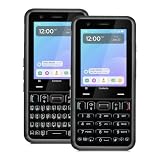
- A REAL PHYSICAL KEYBOARD, NOT AN APP: Hardware keys with genuine travel and spacing, built into the phone — not a touchscreen overlay and not a downloaded T9 app that double-types and lags. Thumb out a full message without looking at the screen.
- UNLOCKED 4G LTE FOR VERIZON, AT&T AND T-MOBILE — NAMED, NOT IMPLIED: Bring your own SIM from any of the three major US networks or their prepaid brands and keep your number. Dual SIM runs a work line and a personal line side by side on one device. No carrier contract, no activation lock.
- ABOUT 48 HOURS ON A CHARGE: Two days of real use between charges, because there is no feed running down the battery in the background. Dual-band Wi-Fi, USB-C fast charging, 4GB RAM and 64GB storage, expandable to 128GB with a microSD card.
- MODULAR — SWAP THE PART, NOT THE PHONE: The keypad lifts out and swaps between full QWERTY and T9 numeric. So does the camera module, between 13MP and 20MP. Change your mind about how you type, or upgrade the camera, without buying another phone — the reason this costs more than a disposable handset and lasts longer than one.
- BUILT FROM SCRATCH TO PROTECT YOUR FOCUS: This is not a smartphone with features stripped out — it was designed from the ground up for people who want to be reachable without being pulled in. Gorilla Glass front, tough enough for real pockets.
The experience can include less temptation, more planning, more boredom, slower access to information, delayed replies, and greater dependence on printed notes, a computer, or another person. A user may need to remember an address, download information before leaving, arrange a meeting time in advance, or accept that an immediate answer is unavailable.
The central question is not whether a dumbphone is “better.” The central question is whether removing distraction is worth removing convenience for a particular person’s daily life.
What disappears when the apps disappear?
The biggest practical barrier is often not the handset but the digital infrastructure surrounding everyday life. Before switching, list every service that assumes smartphone access.
The Tool Desk
Outbyte PC Repair FREEClear out junk files and repair common Windows errorsFree Scan →Outbyte Driver Updater FREEFix the driver behind crashes, sound loss and screen glitchesFind Drivers →| Service | What may stop working or become slower | Possible workaround |
|---|---|---|
| Navigation | Live maps, traffic updates, location sharing, and turn-by-turn directions | Plan routes on a computer, print directions, carry a dedicated GPS, or keep a powered-off smartphone for emergencies |
| Banking | Bank apps, mobile check deposit, push fraud alerts, and digital wallets | Use browser banking, verify SMS or email codes, and keep a tested alternative authentication method |
| Authentication | Authenticator apps, passkeys tied to a phone, and approval prompts | Use SMS where appropriate, backup codes, email codes, or hardware security keys |
| Travel and tickets | Boarding passes, transit tickets, hotel check-in, translation, and ride-hailing | Print tickets, arrange transport in advance, or carry a Wi-Fi-only smartphone |
| Work | Slack, Microsoft Teams, email, calendars, mobile device management, and security approvals | Use a computer, negotiate availability boundaries, or retain a separate work smartphone |
| Messaging | Rich group chats, reactions, media, read receipts, voice messages, and platform-specific encryption | Confirm group SMS, MMS, RCS, WhatsApp, Signal, or another required service before buying |
| Safety | Live location, medical identification, crash detection, satellite messaging, weather alerts, and emergency apps | Check the exact model and carrier; do not assume a basic phone includes or excludes any feature |
| Media and photos | Streaming, podcasts, high-quality photography, editing, and e-reading apps | Use a separate camera, music player, e-reader, tablet, or laptop |
Which dumbphone type fits different needs?
The best device depends on the function a reader is trying to remove and the functions the reader must retain. No single product can be recommended universally because availability, carrier certification, regional bands, and software support vary.
For maximum restriction
A phone with no browser, no camera, no app store, and only selected utilities provides the strongest barrier against smartphone-style distraction. Mudita describes the Mudita Pure as an offline-focused phone with an E Ink display and MuditaOS. The official page says the phone has no mobile web browser or camera, can function as a USB data modem, supports two nano-SIM cards, and includes a microphone and Bluetooth that can be switched off.
The same official page references 2G, 3G, and LTE support across multiple regions. That makes regional carrier verification especially important in 2026, particularly in countries where older networks have been retired or reduced. Do not recommend the Mudita Pure to a United States reader without confirming current network support, VoLTE behavior, availability, and carrier certification.
For tactile design and selected privacy features
The Punkt MP02 is a premium minimalist phone rather than a conventional cheap feature phone. Its official specifications list 4G, Wi-Fi tethering, Pigeon encrypted messaging using the Signal protocol, a 2-inch 320×240 display, a 100-gram weight, IP52 splash resistance, a nano-SIM slot, USB-C, GPS and multiple satellite systems, and a 1,280 mAh battery.
Crashes, No Sound, or Screen Glitches?
Random freezes, missing sound and display glitches usually trace back to one bad driver. Find and replace yours safely.Free scan · under a minutePC Slower Than It Used to Be?
A free scan shows the junk files, broken settings and background clutter dragging Windows down - then fixes them in one click.Free scan · Windows 10 & 11The official Punkt MP02 product page listed the phone at CHF 299.00 and showed it as out of stock when checked in the supplied research. The listed price is a reminder that doing less does not necessarily cost less. Punkt’s supported bands also do not guarantee compatibility with every United States carrier; buyers must check bands, VoLTE, provisioning, and certification.
For a designed hybrid experience
A hybrid phone is appropriate when a reader still needs selected smartphone functions such as hotspot access, music, podcasts, maps, or limited applications. The compromise is behavioral: every additional tool creates another possible route back to distraction.
The Light Phone III is marketed as a premium minimalist option, but current price, delivery status, included tools, carrier support, and detailed specifications were not independently verified from the retrieved official page. The Light Phone III product page should be checked manually before publication or purchase.
For a family-oriented basic phone
Sunbeam Wireless presents simpler communication as an intentional alternative to mainstream smartphone use and discusses suitability in relation to lifestyle, work, and social arrangements. Its current product prices and availability were not verified in the supplied research, so buyers should confirm the exact model, network support, warranty, messaging features, and return policy before choosing it for a child or family member.
Quick wins for a faster PC:
Clear out junk files and repair common Windows errorsFree Scan →Fix the driver behind crashes, sound loss and screen glitchesFind Drivers →For people who need only selected smartphone functions
A restricted Android or iOS phone may be the better answer when a user needs banking, maps, authentication, accessibility tools, or work apps but wants to remove social feeds and entertainment. A locked-down smartphone is less conceptually pure than a dumbphone, but it is usually more compatible with modern services and easier to reverse.
What must you check before buying a dumbphone?
Carrier compatibility is more important than the handset’s appearance, privacy language, or battery claim. A phone that turns on and supports an LTE frequency can still fail because the carrier does not certify it or provision VoLTE.
- Confirm 4G LTE and VoLTE. Do not assume an older 2G or 3G phone will work in 2026. Verify that the required networks remain active in your country and that the carrier permits voice service on the device.
- Check carrier bands and certification. Compare the phone’s supported LTE bands with the carrier’s current requirements. United States buyers should look specifically for carrier certification, not only a generic “global” claim.
- Verify SIM or eSIM compatibility. Confirm nano-SIM, micro-SIM, eSIM, dual-SIM behavior, and whether the phone is unlocked.
- Test Wi-Fi calling and MMS. Calls may work while group texts, picture messages, voicemail, or Wi-Fi calling fail.
- Test the phone before moving your number. Use a returnable purchase and test calls, SMS, MMS, voicemail, data, hotspot access, and emergency behavior with the intended carrier.
- Audit essential services. Write down every required function: maps, banking, authentication, music, podcasts, group messaging, camera, hotspot, ride-hailing, transit, digital payments, work chat, and location sharing.
- Check support and total cost. Investigate warranty length, replacement batteries, software updates, chargers, cases, manufacturer support, cellular-plan cost, and the price of any separate GPS, camera, or authentication device.
Should you make a full switch or use a second phone?
Most readers should test a partial switch before making a full replacement. The three practical paths are a full dumbphone switch, a secondary-phone strategy, and a locked-down smartphone.
| Approach | Main benefit | Main drawback | Best for |
|---|---|---|---|
| Full dumbphone switch | Maximum friction against feeds, apps, and notifications | Greatest inconvenience and service incompatibility | People with few app-dependent obligations who are comfortable planning ahead |
| Secondary dumbphone | Strong distraction barrier in selected situations without abandoning the smartphone | Requires two devices and a charging routine | Weekends, holidays, family time, focused work, and outdoor activities |
| Locked-down smartphone | Keeps maps, banking, authentication, accessibility, and work compatibility | Restrictions can be reversed and the browser or app store may remain tempting | Users who need modern services but want fewer distractions |
| App-based digital detox | No new hardware purchase | Depends heavily on self-control and software settings | People testing whether boundaries alone solve the problem |
How can you test the lifestyle without buying an expensive phone?
- Remove social-media, short-video, shopping, news, and game apps from the smartphone.
- Disable nonessential notifications and email previews.
- Remove the browser or block distracting websites where the operating system allows it.
- Turn off mobile data during selected hours, or leave the smartphone at home during walks and meals.
- Use grayscale, a long passcode, and a physical phone lockbox if quick access is the main trigger.
- Carry a basic spare phone for a weekend and record which services actually caused problems.
- Before a full switch, test banking, two-factor authentication, maps, group messaging, work access, and emergency contacts.
This experiment separates two different problems: wanting fewer distractions and needing fewer capabilities. If removing apps solves the problem, a new handset may be unnecessary. If the physical presence of the smartphone remains the trigger, a secondary dumbphone may justify its cost.
Who should not switch completely?
A full switch is a poor fit for people who frequently travel, depend on mobile payments, require work authentication, use medical or accessibility apps, coordinate family life through app-only services, or cannot obtain a carrier-certified compatible phone.
Rank #3

- Focus Without Distraction – Step away from digital noise with Mudita Kompakt, a minimalist dumb phone designed for mindfulness and calm. Its 4.3" E Ink display delivers a paper-like, glare-free view that stays clear in sunlight, keeping you focused on what matters
- Designed for Digital Freedom – MuditaOS K keeps only essential tools—no ads, tracking, or endless scrolling. When you need a full break, Offline+ Mode disables GSM, Wi-Fi, Bluetooth, camera, and microphones for privacy and total peace of mind
- Simple Control & Seamless Connectivity – Manage your device with Mudita Center on Windows, macOS, or Linux to back up data and organize contacts privately. Enjoy reliable 4G LTE, VoLTE, and Wi-Fi calling across North America with the unlocked model optimized for regional networks
- Power That Lasts for Days – The 3300 mAh battery delivers up to six days of standby time. USB-C and wireless charging keep it ready with minimal effort. Access weather, notes, calendar, recorder, meditation timer, and offline maps for everyday simplicity
- Built for Mindful Living – Unlock securely with a fingerprint or PIN, capture memories with the 8 MP camera and dual LED flash, and enjoy music through Bluetooth or the 3.5 mm jack. Read EPUB or PDF files for a focused, streaming-free experience
Frequent travelers may need boarding passes, maps, translation, transit, ride-hailing, hotel check-in, and digital tickets. Professionals may need Slack, Microsoft Teams, email, calendar alerts, mobile device management, and authenticator approvals. Families may depend on live location, school systems, group messaging, and spontaneous coordination.
Keeping a smartphone powered off in a bag can be a practical compromise for emergencies, but a powered-off smartphone is not a substitute for verifying emergency calling, location, medical information, satellite communication, or local network support. Basic phones are less distracting, not inherently safer.
What are the main failure modes?
The phone works technically but not with the carrier
LTE support alone is not enough. Carrier certification, VoLTE provisioning, supported bands, SIM status, and network coverage determine whether calls and messages work reliably. Keep the purchase returnable and test the device before changing your number.
Two-factor authentication stops working
Before switching, identify every critical account that uses an authenticator app or push approval. Migrate accounts to an appropriate alternative such as SMS, email codes, backup codes, or a hardware security key, and test each login before wiping the old phone.
Family and coworkers use app-only messaging
Tell contacts your preferred method, whether SMS is reliable, when calls are better, how to send media, and whether the smartphone remains available at scheduled times. Group SMS and MMS behavior varies by device and carrier, while platform-specific features such as reactions, read receipts, encryption, and voice messages may disappear.
Travel becomes unmanageable
Keep a deactivated or Wi-Fi-only smartphone for boarding passes, maps, translation, transit, ride-hailing, and emergency information. The device does not need a daily cellular plan to remain useful for planned travel.
One distraction is replaced with another
A dumbphone removes some triggers but does not solve every attention problem. Users can move compulsive behavior to a laptop, tablet, game console, or email inbox. The phone works best as one boundary in a broader technology plan.
Free tools Windows power users keep installed
One-click scans. No signup required.
Is a dumbphone worth it?
A dumbphone is worth considering when the main problem is effortless access to distracting services and the user’s essential routines can work through calls, SMS, a computer, or planned alternatives. A full replacement is less attractive when maps, banking, authentication, work, travel, medical tools, accessibility features, or mobile payments are non-negotiable.
The total cost includes more than the handset. Add the cellular plan, a second device if needed, separate camera or GPS equipment, replacement accessories, laptop or tablet access, and possible authentication hardware. A premium minimalist phone can cost more than an inexpensive smartphone even though the minimalist phone offers fewer mainstream features.
The most rational first purchase may be no purchase. Disable social apps, notifications, mobile data, and quick-access features on the existing smartphone, or use a low-cost secondary handset for a defined trial. That test shows whether the reader wants a different device or simply stronger boundaries.
The dumbphone’s real product is intentional friction. The category is not a return to a world before technology; modern minimalist phones may include LTE, encrypted messaging, GPS, USB-C, Wi-Fi, and hotspot functions. The category gives users more control over where technology is allowed to appear, while accepting that control comes with planning and lost convenience.
Quick wins for a faster PC:
Scan for outdated or missing drivers - takes under a minuteDriver Scan →Repair Windows errors before they cause bigger problemsFix Now →Frequently Asked Questions
Are dumbphones replacing smartphones in 2026?
No. Available evidence supports a durable niche and growing specialist interest, but it does not verify a mass migration away from smartphones. Many users adopt dumbphones as secondary devices for weekends, travel, family time, or focused work.
Are dumbphones more private than smartphones?
Dumbphones can reduce the number of apps and services collecting behavioral data, but they are not automatically private. Carriers still process network information, and privacy depends separately on apps, operating-system telemetry, message encryption, metadata, and cellular records.
Can a dumbphone use 4G, Wi-Fi, GPS, or encrypted messaging?
Yes. “Dumbphone” describes a restricted user experience rather than a specific radio technology. Some modern minimalist phones include 4G, Wi-Fi tethering, GPS, USB-C, or encrypted messaging while excluding conventional app stores and social platforms.
What should I check before buying a dumbphone in 2026?
Check 4G LTE and VoLTE support, carrier bands and certification, SIM or eSIM compatibility, Wi-Fi calling, MMS, local network status, emergency calling, required messaging services, warranty, software support, and the seller’s return policy.
Recommended Free Tools
The Bottom Line
Bottom line: The dumbphone experience is a credible long-term niche, not the collapse of the smartphone market. Choose a full switch only when your essential services work without smartphone apps. Otherwise, a secondary phone or carefully locked-down smartphone can deliver the main benefit—less automatic distraction—without turning banking, travel, work, and safety into daily obstacles.
Quick Recap
Product prices and availability are accurate as of the date/time indicated and are subject to change. Any price and availability information displayed on Amazon at the time of purchase will apply.

