
iTechGuides is reader-supported. When you buy through links on our site, we may earn an affiliate commission. As an Amazon Associate I earn from qualifying purchases. Learn more
Automotive Ethernet provides a flexible, switched network for connecting vehicle computers, sensors, and multimedia systems. Time-Sensitive Networking (TSN) adds standards-based tools for synchronizing devices and managing time-critical traffic with bounded latency. The current automotive-specific profile is IEEE 802.1DG-2025, published on June 6, 2025. It guides how relevant IEEE TSN features are selected and configured for in-vehicle bridged Ethernet networks; it is not a certification or a guarantee of performance in a particular vehicle.
Why vehicles are moving toward switched Ethernet
Modern vehicle architectures connect many electronic control units (ECUs) and sensors, with different demands for data rate, timing, and reliability. Switched Ethernet can carry multiple kinds of traffic over a shared network architecture rather than requiring a separate network technology for every application. IEEE describes automotive Ethernet PHY options from 10 Mb/s to 10 Gb/s, reflecting the range of bandwidth and wiring needs within a vehicle.
Ethernet does not make every message arrive at a predictable time by itself. Traffic can compete for network resources, and end-to-end behavior depends on the switches, endpoints, traffic patterns, and configuration. TSN addresses that problem with standards for coordinating time and controlling how traffic is handled.
Recommended Free Tools
What IEEE 802.1DG-2025 specifies
IEEE 802.1DG-2025 is titled “IEEE Standard for Local and metropolitan area networks — Time-Sensitive Networking Profile for Automotive In-Vehicle Ethernet Communications.” IEEE records its board approval on May 28, 2025, and publication on June 6, 2025. Its scope is profiles for bounded-latency automotive in-vehicle bridged IEEE 802.3 Ethernet networks based on IEEE 802.1 TSN standards. See the IEEE 802.1DG standard record and the IEEE 802.1DG project page.
#1 Best Overall

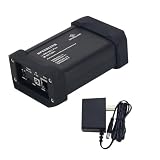
- 4-PORT MANAGED SWITCH (2x T1 + 2x RJ45): Features two 100/1000BASE-T1 single-pair automotive ports (P2, P3) and two 10/100/1000BASE-T RJ45 ports (P0, P1), bridging automotive and standard IT networks in one compact device with wire-speed non-blocking Layer 2 switching.
- IEEE 802.1Q VLAN & PORT MIRRORING: Supports up to 32 VLANs with tagged/untagged port membership for traffic segmentation. Mirror ingress, egress, or bidirectional traffic from P1/P2/P3 to monitor port P0 for non-intrusive Wireshark capture without disrupting live data.
- USB MASS-STORAGE CONFIGURATION: Connect via USB Type-C and the switch mounts as a removable drive on any PC. Simply edit config.txt to update VLAN and mirroring settings — changes apply instantly with no reboot, no proprietary software, and no CLI required.
- PER-PORT DIP SWITCHES & DUAL STATUS LEDs: Each T1 port includes independent Master/Slave and 100M/1G speed DIP switches with instant effect, plus dual LEDs per port displaying system health and link/activity status at a glance.
- INDUSTRIAL-GRADE DURABILITY: Operates from -40°F to 185°F with wide DC 6–30V input and built-in overvoltage, overcurrent, and ESD protection. Compact enclosure (3.28 x 1.97 x 0.81 in). Includes 12V adapter, CAT6 cable, MATEnet and HMTD pigtail adapters.
A profile narrows a larger set of standards to features and options relevant to a particular setting. IEEE says 802.1DG identifies applicable features and recommends how optional parameters should be used and configured for automotive bandwidth, latency, and synchronization requirements. It is not a complete vehicle-network design, a vehicle certification, or a promise that any implementation will meet a particular application’s needs.
How TSN improves timing and traffic predictability
TSN is a family of IEEE 802.1 standards, not one protocol or a setting that guarantees deterministic behavior when enabled. In an appropriately designed network, its mechanisms can coordinate clocks, schedule and control traffic, reduce jitter, and support bounded latency and reliability. The automotive profile organizes relevant mechanisms for in-vehicle bridged Ethernet.
Rank #2
- - 1000M or 100M - USB-C or Barrel Plug - TE MATEnet, Rosenberger H-MTD, terminal block
Synchronization
Time synchronization lets networked devices share a time reference, which can help coordinate scheduled traffic and align data from distributed endpoints. IEEE describes IEEE 1588-based approaches such as IEEE 802.1AS as capable of sub-microsecond timing accuracy. That is a capability of such solutions, not a measured result for every vehicle network or a guarantee for every implementation. The required accuracy depends on the endpoints and application.
Crashes, No Sound, or Screen Glitches?
Random freezes, missing sound and display glitches usually trace back to one bad driver. Find and replace yours safely.Free scan · under a minuteWindows Errors? Fix Them Before They Spread
Repair common Windows errors and clear accumulated junk for a smoother, more stable PC - no reinstall needed.Free scan · no reinstallScheduling, latency, and jitter
Scheduling and traffic-control features help manage when frames use network resources. IEEE’s automotive overview also identifies frame preemption and traffic shaping as tools relevant to bounded latency. Reduced jitter can matter for audio and video as well as command, sensor, and control packets. Actual end-to-end latency depends on traffic, topology, link speeds, switch behavior, and configuration; choosing a faster link alone does not establish a latency bound.
Rank #3

- Industrial Gigabit Performance – Equipped with 5 Gigabit Ethernet ports, including 4 PoE+ ports supporting IEEE 802.3af/at standards for high-speed data transfer and reliable power delivery to connected devices.
- PROFINET Certified for Industrial Automation – Designed for seamless integration into industrial and automotive Ethernet networks with PROFINET certification, ensuring reliable communication in demanding automation environments.
- Plug-and-Play Unmanaged Operation – Simple deployment with no configuration required. The unmanaged design allows fast installation and stable operation right out of the box.
- Built for Automotive & Harsh Environments – Rugged aluminum housing and wide 9–30V DC power input make the switch ideal for vehicles, mobile systems, industrial IoT, surveillance, and transportation applications.
- Reliable PoE+ Connectivity – Power up compatible devices such as IP cameras, access points, sensors, and industrial equipment directly through Ethernet cables with 4 dedicated PoE+ ports.
Reliability and traffic control
IEEE’s automotive TSN materials identify mechanisms such as filtering, policing, and redundant timing options. These can support control of traffic and resilient timing designs, but they do not make an application safe by themselves. The network and application must be engineered and validated against their requirements.
Automotive Ethernet rates: choose per link, not for the whole car
IEEE’s 2024 automotive overview names single twisted-pair PHY options across several rates. These are available technology choices, not a prescribed vehicle-wide speed.
Rank #4

- Eight Gigabit RJ45 ports with 16 Gbps switching give you non-blocking connections for PCs, printers, NAS drives, and access points all running at wire speed together without congestion in your workspace
- Each port drives Gigabit signals up to 170 meters over Cat.5e, 70 percent beyond the 100-meter standard, reaching devices across conference rooms, warehouse floors, or between floors without extra gear
- Loop prevention finds and disables accidental cable loops before they crash your network, while IGMP snooping and 15 KB jumbo frames keep multicast efficient and NAS transfers at full speed
- Solid metal chassis cools without a fan for total silence, drawing just 1.8W maximum and 0.3W at idle for near-zero cost, with 2kV surge protection shielding every port from surges and spikes at all times
- Unmanaged plug-and-play needs no IT skills just connect any port to your router and all others go live in seconds, with a sturdy 138 x 78 x 25 mm body that sits on any desk or mounts on a wall anywhere
| Automotive Ethernet PHY rate | IEEE specification cited by IEEE | Useful selection context |
|---|---|---|
| 10 Mb/s | IEEE 802.3cg | Consider where required bandwidth is modest and wiring constraints matter. |
| 100 Mb/s | IEEE 802.3bw | A middle-rate option for links whose payload needs exceed lower-rate use cases. |
| 1 Gb/s | IEEE 802.3bp | Consider for links with higher throughput requirements. |
| 2.5, 5, or 10 Gb/s | IEEE 802.3ch | Higher-rate options for demanding throughput needs; the appropriate rate remains application- and architecture-dependent. |
IEEE discusses these PHYs in the context of wiring-harness weight and space constraints and growing throughput requirements for ECUs and sensors. Selecting a link rate requires weighing several factors; the cited overview does not provide a vehicle-specific topology, bill of materials, cost comparison, or performance benchmark.
- Bandwidth: Estimate payload needs and bursts, not just average traffic.
- Timing: Define latency and jitter budgets and whether flows are scheduled or asynchronous.
- Clocking: Identify synchronization accuracy requirements at endpoints.
- Reliability: Determine redundancy, filtering, policing, and fault-containment needs.
- Physical constraints: Account for cable, connector, reach, harness weight, and available space.
- Implementation effort: Check switch and endpoint support, configuration complexity, and validation requirements.
How TSN relates to AVB
TSN has a direct standards-history connection to Audio Video Bridging (AVB): IEEE says the TSN Task Group evolved from the former AVB Task Group and that TSN standards include AVB standards. IEEE materials describe AVB standards as having been used in automotive infotainment, while TSN’s scope extends to broader in-vehicle networking needs. That history does not show that every TSN feature or the 802.1DG profile is deployed in every vehicle.
Best Value
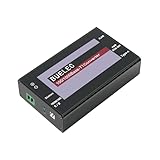
- ⚡ Full Gigabit Automotive Bridge: Seamless 100/1000BASE-T1 to 100/1000BASE-TX conversion with full-duplex 1Gbps, auto-negotiation, low latency – perfect for DoIP diagnostics, ECU flashing, ADAS camera/radar debugging
- 🔌 Versatile T1 Connectivity Kit: 15EDG3.81mm-2P terminal block + included TE MATEnet and Rosenberger HMTD 150mm pigtail adapters – connect directly to any automotive T1 header without extra cables
- 🛡️ Industrial-Grade Reliability: -40°C to +85°C operation, over-voltage/current/ESD protection, vibration/EMI resistance – built for harsh vehicle, factory, and outdoor environments
- 💡 Flexible Dual Power Supply: USB Type-C (5V) or DC Jack (6-30V) with auto-switch; status LEDs for system, link/activity – compact 50x20x83mm design for bench or in-vehicle use
- 🌐 Advanced Features & Compatibility: IEEE 802.3bw/ab compliant, VLAN (802.1Q), QoS support; tested with iperf3 on Linux/Windows/Raspberry Pi for real-world performance validation
What the standard does—and does not—tell you about production vehicles
The IEEE sources establish the profile’s scope, publication status, and intended engineering capabilities. They do not document deployment in a named current vehicle model or provide measured production-network performance. A published standard gives automakers and suppliers a common framework; it is not evidence that a particular manufacturer has adopted it, nor that a vehicle meets a particular latency or reliability target.
For further detail, consult the IEEE 802.1DG project page, the IEEE standard record, and IEEE’s TSN Task Group overview.
Quick Recap
Product prices and availability are accurate as of the date/time indicated and are subject to change. Any price and availability information displayed on Amazon at the time of purchase will apply.
Do these 3 things before closing this tab:
1Repair Windows errors before they cause bigger problems2Fix the driver behind crashes, sound loss and screen glitches3Clear out junk files and repair common Windows errors
