
Automating database query optimization and predictive maintenance means using workload telemetry to spot emerging performance or capacity problems, applying suitable tuning or maintenance actions, and checking that those actions help. No single platform in the examples below does all of this: Amazon Redshift automates several maintenance and physical-design tasks, Cloud SQL provides observability and recommendations, and SQL Server can automatically correct certain execution-plan regressions.
Here, “predictive maintenance” refers to proactive database performance and upkeep—not predicting failures in industrial machinery. The practical goal is to detect trouble early and make changes based on measured workload behavior rather than applying generic tuning rules.

What can database automation actually do?
Database performance depends on the workload, query plans, indexes, statistics, schema, and data volume. A change that helps one query or workload may be ineffective or harmful for another, so automation works best as a feedback loop: collect evidence, identify a likely cause, apply a targeted change, and measure the result. AWS recommends understanding important queries and examining their plans before selecting an optimization technique in its query performance guidance.
It is useful to separate four kinds of capability. Monitoring collects signals; diagnosis helps connect symptoms to queries or resources; recommendations suggest what to change; automatic tuning applies some changes without waiting for an operator. A service may offer one or more of these, and a recommendation should not be mistaken for an automatically applied fix.
How do you build a safe automation workflow?
Use a repeatable process that combines query-level evidence with system health. The sequence below is an operational framework, not a vendor-mandated procedure.
- Collect representative telemetry. Capture query and system behavior across normal and peak workload conditions. Depending on the platform, useful signals include query text or fingerprints, execution plans, latency, resource use, logs, traces, and alerts.
- Prioritize by impact. Rank slow queries by how much they affect users or consume capacity, rather than treating the longest individual query as the only priority. Look for recurring patterns and workload-wide symptoms.
- Diagnose before changing anything. Examine execution plans and relevant context such as waits, schema, indexes, statistics, data volume, and the application path that issued the query. AWS specifically recommends plan analysis and identifying critical queries before choosing a technique.
- Select a targeted intervention. Depending on the diagnosis, options may include indexes, partitioning, compression, denormalization, materialized views, caching, vacuuming, reindexing, or refreshing statistics. These approaches solve different problems; do not apply them as a universal checklist.
- Test against representative data and load. Compare the proposed change with a baseline in a non-production environment where practical. AWS recommends experimenting with and testing query-performance strategies outside production.
- Measure and decide. Compare latency, throughput, resource use, and correctness with the baseline. Keep the change only if the outcome is acceptable; otherwise revise or roll it back. Monitor after deployment so a workload shift or plan regression does not go unnoticed.
What the major platform examples automate
These examples illustrate different scopes of automation, not interchangeable products or a universal database feature set.
Rank #2

- HPE SMART CHOICE PROLIANT MODEL P83316-005: Factory-tested and preconfigured for reliability, this HPE ProLiant ML30 Gen11 Smart Choice model includes Intel Xeon 6333P (6 cores, 3.10 GHz), 32GB DDR5 ECC memory, 2 x 480GB SATA SSDs, dual 500W Flex Slot power supplies, Intel VROC SATA storage controller, and an embedded 1GbE 4-Port Ethernet adapter—ready for immediate deployment
- HIGH-PERFORMANCE FOR BUSINESS WORKLOADS: Designed for small offices, branch environments, and hybrid cloud, this tower server delivers enterprise-class performance for virtualization, file sharing, database hosting, ERP systems, and collaboration tools, ensuring smooth operations for growing businesses.
- SCALABLE STORAGE AND EXPANSION: Supports up to 8 SFF hot-plug drives and onboard M.2 NVMe SSD for fast boot options. With four PCIe slots including PCIe Gen5 x16, this server is ideal for data-intensive applications, backup solutions, and future expansion
- BUILT-IN SECURITY AND RELIABILITY: Protect your critical data with HPE iLO Silicon Root of Trust, TPM 2.0 encryption, and firmware malware detection and recovery. Dual redundant 500W power supplies ensure uptime for mission-critical workloads and secure file storage
- INTELLIGENT MANAGEMENT AND AUTOMATION: Integrated HPE iLO 6 enables remote monitoring, reporting, and automation for quick issue resolution. Compatible with HPE OneView and Compute Ops Management, making it perfect for businesses adopting hybrid cloud strategies and centralized IT management
| Platform | Documented capabilities | Important qualification |
|---|---|---|
| Amazon Redshift | Automatic vacuum sort and delete, table optimization for physical layout choices, statistics analysis, and automated materialized-view creation or refresh based on observed query patterns. | Redshift says these autonomics features are enabled by default and run in the background during low-traffic periods. That describes product behavior, not a guaranteed performance gain for every workload. Redshift autonomics documentation. |
| Google Cloud SQL for PostgreSQL | Metrics, logs, tracing, Query Insights, alerts, and recommenders for issues such as disk capacity and CPU or memory sizing; Query Insights helps investigate query problems using query diagnostics and application tracing. | Observability and recommendations do not mean the service automatically applies every suggested change. Query Insights capabilities and constraints vary by edition and configuration; check the current feature matrix for the engine, version, and settings in use. Cloud SQL observability documentation and Query Insights documentation. |
| Microsoft SQL Server | Automatic tuning monitors workload behavior; automatic plan correction can address plan regressions by forcing the last known good plan. | Query Store is required for workload tracking. Microsoft says tuning monitors the result and reverts actions that do not improve performance; this is a documented SQL Server behavior, not a general guarantee about other automation systems. SQL Server automatic tuning documentation. |
How should you choose what to automate?
Start with the failure mode you need to prevent or resolve, then verify that the platform has the telemetry and control needed for that task. For example, recurring table upkeep calls for a different capability from query-plan regression detection or instance-capacity recommendations.
- Match scope to the problem. Determine whether you need background maintenance, physical-layout optimization, plan correction, diagnosis, or advisory recommendations. Avoid assuming a monitoring feature makes changes automatically.
- Check engine and configuration support. Confirm supported database engines, versions, instance types, regions, and workload patterns. Feature availability can depend on edition and settings.
- Inspect the observability limits. Compare whether query text, plans, wait information, tracing, alerts, and historical data are available at the detail and retention needed. Cloud SQL’s Query Insights documentation lists edition-dependent differences, including retention, plan sampling, index recommendations, and AI-assisted troubleshooting; the page marks the latter as preview and notes configuration requirements.
- Understand control and recovery. Find out whether an action is only suggested or applied automatically, what tracking facility it depends on, how its effect is assessed, and whether and how it can be reversed.
- Account for operational overhead. Review edition requirements, storage needs, and telemetry or configuration costs alongside the feature itself. A capability that cannot be enabled for the current deployment is not part of the usable automation plan.
Which optimizations should be considered?
Choose an intervention only after the plan and workload point to a cause. AWS lists the following as possible query-performance techniques; they are alternatives to evaluate, not fixes to stack indiscriminately.
Rank #3
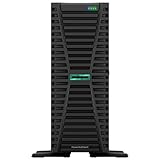
- HPE ProLiant G11, tailored for hybrid environments, delivers an intuitive operating experience, robust security, and optimized performance for diverse virtualized workloads. Whether for large enterprises or small businesses, it ensures seamless control and accelerates innovation across your data ecosystem.
- Dual (2) Xeon Silver 4410y 12-Core 2.00 GHz, 30MB Cache, Up To 3.90 GHz Turbo
- Memory: 256GB (8 x 32GB) DDR5-4800MHz PC5-38400 ECC Buffered Memory
- Storage: 15.36TB (4 x 3.84TB) Enterprise 2.5” SATA III 6Gbs SSDs for Ultra Fast Storage
- Hard drives and memory upgrades included separately not installed, installation required.
- Indexes on commonly queried columns: consider these when the access pattern and plan indicate an index could help.
- Partitioning: evaluate when dividing data can better fit the workload’s query pattern.
- Compression: consider when the data layout and resource trade-offs make it suitable.
- Denormalization: weigh against the application and data-consistency needs rather than treating it as a default speedup.
- Materialized views: assess for frequent queries whose results can benefit from precomputation; Redshift also documents automated materialized-view behavior based on observed query patterns.
- Distributed caching: consider when the workload and data-freshness requirements support it.
- Routine upkeep: vacuuming, reindexing, and keeping statistics current can matter to query planning and performance, though the appropriate tasks depend on the database engine.
AWS’s query optimization guidance recommends testing strategies outside production. Treat automatic tuning as a controlled operational capability: define what success looks like, watch its effect, and retain a recovery path for changes that do not help.
Independent reader supportYour contribution helps us test, update, and keep practical guides available for everyone.What “predictive” means in this context
For database operations, proactive maintenance is about using trends and operational signals to act before a symptom becomes an outage or a severe slowdown. Metrics, logs, traces, query diagnostics, and recommendations can surface developing capacity or query issues. Cloud SQL documents examples including out-of-disk, idle, overprovisioned, and underprovisioned instance recommendations, as well as a PostgreSQL transaction-ID utilization recommender. These are documented observability and recommendation capabilities, not evidence that every database service predicts every failure or automatically prevents it.
Rank #4

- HPE ProLiant DL380 Gen10 2U Rack Server with Rail kit for Enterprise
- Dual (2) Xeon Gold 6130 16-Core 2.10 GHz, 22MB, Up To 3.70 GHz Turbo
- Memory: 256GB (8 x 32GB) DDR4 PC4-25600 3200MHz Unbuffered Memory
- Storage: 7.68TB (4 x 1.92TB) Enterprise 2.5” SATA III 6Gb/s SSDs for Ultra Fast Storage
- Hard drives and memory upgrades included separately, not installed, installation required.
Set expectations accordingly: a telemetry platform can help teams see a worsening trend and investigate it, but the available evidence here does not support a general performance-gain percentage or a claim that automated tuning will prevent downtime. Evaluate outcomes on your own workload and confirm current product limits in the linked vendor documentation before relying on a feature.
Quick Recap
Best Value
- HPE ProLiant DL380 Gen10 2U Rack Server with Rail kit for Enterprise
- Dual (2) Xeon Gold 6148 20-Core 2.40 GHz, 27.5MB, Up To 3.70 GHz Turbo
- Memory: 256GB (8 x 32GB) DDR4 PC4-25600 3200MHz Unbuffered Memory
- Storage: 15.36TB (4 x 3.84TB) Enterprise 2.5” SATA III 6Gb/s SSDs for Ultra Fast Storage
- Hard drives and memory upgrades included separately, not installed, installation required.
Product prices and availability are accurate as of the date/time indicated and are subject to change. Any price and availability information displayed on Amazon at the time of purchase will apply.

