
The Tool Desk
Outbyte Driver Updater FREEScan for outdated or missing drivers - takes under a minuteDriver Scan →Outbyte PC Repair FREERepair Windows errors before they cause bigger problemsFix Now →Automated vertical farming grows crops indoors in stacked layers and uses sensors, control systems, and sometimes robotics to manage growing conditions and routine work. Automation can make particular tasks more consistent or reduce some labor, but it does not make a farm fully autonomous, automatically profitable, or environmentally superior. Results depend on the crop, the equipment, the energy and water supply, and the local market.
What is automated vertical farming?
Vertical farming is indoor crop production in multiple layers. It is a form of controlled-environment agriculture: the growing space and its conditions are managed rather than relying wholly on outdoor weather. Automation is the use of technology to monitor or carry out parts of that operation.
These are related but distinct features. A farm can grow crops in stacked layers without automating every task, and having sensors or robots does not mean the entire operation runs without people. A 2021 review in Nature Food describes vertical farming systems as “multi-layer indoor crop cultivation systems” and identifies plant growth, product quality, automation, robotics, system control, and environmental sustainability as separate challenges for scaling them.
How does vertical farming automation work?
Automation typically combines monitoring with equipment or software that responds to operating conditions. Sensors and control systems can support observation and adjustment; robotics and other automated operations can handle selected physical tasks. The exact combination varies by farm. Automation is better understood as a set of task-specific tools than as one standard system.
#1 Best Overall

- Avant-garde and modern design: Our smart hydroponics growing system kit merges urban farming innovation with minimalist aesthetics. Crafted from durable ABS, its 17" space-saving profile features an LCD touchscreen for one-touch control, perfect for tech-savvy gardeners or as a unique gift. The integrated full-spectrum panel adapts seamlessly to indoor hydroponics, blending functionality with sleek vertical farming appeal.
- Optimal plant growth: Designed for organic vegetables and herbs, this indoor herb garden maximizes yields in compact settings. Its 17" adjustable height prevents light burn on tall stems, ideal for balcony hydroponics or cultivating tomatoes and basil. The science-backed structure supports healthy eating by accelerating photosynthesis, ensuring nutrient-rich harvests even in limited spaces.
- Versatile planting options: Grow 12 fresh herbs or leafy greens simultaneously with our kitchen hydroponics grow system kit. Dual light modes mimic natural sunlight for year-round indoor garden benefits, whether nurturing peppermint or strawberries. This soilless farming solution thrives in apartments, offices.
- Lighting duration control: Engineered using hydroponic farming research, our system’s 22-hour mode boosts flowering by 50% and enhances fruit sweetness—perfect for organic gardening enthusiasts. The mimic ideal greenhouse conditions, turning your living room into a high-efficiency plant growth lab for faster, tastier yields.
- Efficient water management: Our Growth Lamp is equipped with a water tank with a capacity of up to 5L, providing ample space for root development. herb garden built-in ultra-quiet water pump runs in a 30-minute cycle to ensure fresh water circulation, keeping the water fresh without disturbing your peace. Maximum energy savings. Easy harvest of fresh fruits making healthy eating accessible even for beginners or busy urban dwellers.
Monitoring and control
Sensors can provide information about growing and operating conditions, while a control system can use that information to manage equipment. This can make routine monitoring more systematic. It does not, by itself, establish that a system can diagnose every crop problem or make every growing decision without human oversight.
Handling and other operations
Robotics and automation can be applied to material handling and other repeatable operations. The USDA Economic Research Service (ERS) notes that automation may reduce operational labor costs, but integrating robotics can be expensive and has limitations. USDA National Institute of Food and Agriculture (NIFA) specialty-crop examples show research and development in sensing and automated operations; they are not proof that commercial vertical farms universally achieve autonomous production or a fixed labor saving.
Rank #2

- 【Multi-Scene Growing Solution】Professional hydroponic tower system for indoor/outdoor/commercial use, featuring corner-friendly design to maximize space efficiency in homes, apartments or greenhouses
- 【High-Yield 30-Pod Structure】6-layer vertical farming system supports 30 plants simultaneously - Ideal for strawberries, tomatoes, lettuce, herbs and vegetable seeds cultivation
- 【Smart Water Management】Built-in 63GPH pump with timer + water recycling system & diverter ensures 40% water saving, while filter ensures clean water circulation for plant health
- 【Modular DIY Design】Expandable BPA-free towers with UV-resistant gray base, compatible with modular extensions for personalized gardening configurations
- 【Complete Starter Kit】Includes step-by-step manual, pre-assembled water pump system and all necessary connectors - Ready to grow within 15 minutes of setup
What crops can be grown in a vertical farm?
The evidence describes current vertical-farming systems as producing a limited range of crops, including fruits, vegetables, and herbs. That should not be read as a claim that any crop in those broad categories is commercially suitable. A farm still needs a crop that can grow under its system design and that buyers will purchase at a viable price.
Do not assume that staple field crops can all be grown profitably in stacked indoor systems. The crop list, growing requirements, expected yield, and buyer demand need to be evaluated for the specific operation; the available evidence does not establish a universally profitable crop.
Quick wins for a faster PC:
Fix the driver behind crashes, sound loss and screen glitchesFind Drivers →Clear out junk files and repair common Windows errorsFree Scan →Scan for outdated or missing drivers - takes under a minuteDriver Scan →Rank #3
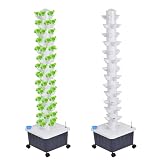
- 【Vertical Hydroponic System】Our hydroponic tower uses hydroponics instead of traditional soil cultivation, greatly improving the product's practicality. The top-down automatic water circulation and timed watering system significantly increases efficiency and minimizes water waste, maximizing plant nourishment for lusher, faster growth
- 【Large Capacity, High Yield】Our hydroponic tower features a 14-layer structure with 70 planting holes. Each layer has 5 planting baskets, allowing for a wide variety of plants, from strawberries and lettuce to flowers. Its automatic water circulation system ensures ample nutrients for plant roots, promoting faster, healthier growth and higher yields compared to traditional soil cultivation
- 【Water-Saving, Labor-Saving, and Simple Maintenance】Our vertical hydroponic tower has a built-in 20L water tank, reducing the frequency of watering, while the automatic watering system minimizes water waste. No tilling or weeding is required, saving time and effort, making it ideal for busy individuals or gardening beginners
- 【Easy to Move】This hydroponic tower features four casters (with brakes) for easy and stable movement. The included water level gauge and power cord (US standard plug) simplify monitoring and operations, ensuring worry-free use. Its vertical tower design is ideal for urban dwellers, maximizing limited space in homes, apartments, or greenhouses, while its stylish freestandings appearance blends seamlessly with any décor style
- 【Package Contents】This hydroponic system includes all necessary accessories, allowing you to produce plants in just a few weeks. The package includes: power adapter, water pump, water level gauge, water circulation system to keep the water fresh, all accessories for the indoor gardening system, and hydroponic supplies. Suitable for various applications
How much energy and water does an automated vertical farm use?
Indoor production requires an energy strategy suited to the facility and its growing system. Lighting energy is a particular concern identified by USDA ERS, alongside startup costs, technical labor, and the cost and limitations of robotics integration. A farm’s overall energy demand and environmental impact cannot be inferred from the word “automated” or “vertical” alone.
A July 2026 Lawrence Berkeley National Laboratory review assessed 80 technologies and ten implementation pathways using five U.S. regional case studies. Its reported ranges are for different technologies and pathways, not guaranteed results for a vertical farm:
Rank #4

- Dual Grow Light Mode, Increase Yield by 50%: Designed for urban farming enthusiasts, our smart hydroponics growing system kit features 53W LED dual grow light mode (16/22 hours). The 22-hour setting accelerates organic vegetables like tomatoes, boosting yields by 50% while enhancing sugar content—ideal for healthy eating or gifting as a unique gift. Enjoy fresh, nutrient-rich harvests year-round, even in balcony hydroponics setups.
- Smart Hydroponic Growing System: Revolutionize soilless farming with our triple-layer hydroponic Growing system. Its independent water pumps enable zone planting, tailoring nutrients to diverse crops—from fresh herbs to peppers—while reducing waste. Perfect for vertical farming or as a plant growth lab, this hydroponic farming innovation maximizes efficiency and supports indoor garden projects.
- Efficient Design & Large Capacity: Engineered for space-saving kitchens or offices, this indoor hydroponics herb garden hub holds 30L water across 3 tanks(10L+10L+10L) and 66 pods. The silent pump and smart panel automate circulation, oxygenating roots for organic gardening success. Bonus conduits simplify cleaning, making it a plant growth kit that balances easy gardening with high-output urban farming.
- Easy Installation & Adjustable Light Post: Assemble this hydroponics growing system in minutes! Its collapsible frame (26x14.5x17.3") and 14.68" adjustable lights suit plant growth at all stages—from seedlings to towering vertical farming crops. The 360° mobility and space-saving footprint make it ideal for kitchen hydroponics or compact living spaces.
- Perfect for Family: Celebrate holidays with this indoor garden plant germination kit—a unique gift that unites families through indoor gardening. Grow fresh herbs, leafy greens, or strawberries year-round under its full-spectrum lights. Combining indoor garden benefits with easy gardening tech, it’s a healthy eating hub that thrives as a living centerpiece or balcony hydroponics project.
| Measure assessed | Reported range | How to interpret it |
|---|---|---|
| Energy intensity | 3–55% reduction | Modeled or assessed across technologies and implementation pathways; not a universal vertical-farm saving. |
| Water | 20–40% savings through closed-loop recirculation | Depends on the water strategy and implementation context. |
| Emissions | 3–100% reduction | Varies with the measures and regional context; it is not a default outcome for indoor farming. |
These wide ranges are a reason to compare a proposed farm with a defined baseline and local conditions. They do not show that every vertical farm uses less energy, water, or produces fewer emissions than a particular alternative.
Independent reader supportYour contribution helps us test, update, and keep practical guides available for everyone.Is automated vertical farming profitable?
There is no universal answer. Profitability depends on whether a farm can sell its chosen crop at a price that covers its capital and operating costs. Relevant considerations include lighting and other energy needs, startup costs, labor and technical expertise, maintenance, automation integration, and the crop market. USDA ERS describes investment growth alongside continuing economic and technical challenges; that does not establish the profitability of a particular project.
Do these 3 things before closing this tab:
1Clear out junk files and repair common Windows errors2Scan for outdated or missing drivers - takes under a minute3Repair Windows errors before they cause bigger problemsBest Value
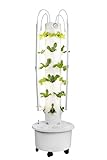
- [ALTO GARDEN FEATURES] Fully contained, self-watering and self-lighting hydroponics growing system. Tower walls are an industry-leading 2mm thick. Each layer of the tower is a solid 360 degree construction all the way around. No leaky joints! Wide-spaced pot design gives plants room to fully grow without cramping.
- [ORGANIC, FARM-TO-TABLE PRODUCE] Grow organic food which isn’t sprayed with chemicals, and grown without GMOs. You know your food is clean because you’ve grown it yourself! Enjoy the freshest, farm-to-table produce.
- [NO MONTHLY SUBSCRIPTION] Some brands require a monthly subscription to “unlock” the full features of their system. These fees can amount to several hundred dollars per year. With ALTO Garden, there are no hidden fees!
- [3X FASTER HARVESTS] Experience 3x faster harvests and 30% greater yields, compared to traditional soil farming. Hydroponic and aeroponic growing methods suspend plant roots in air inside the tower for high oxygen exposure, giving plant roots optimal conditions for growth.
- [SUSTAINABLE] 95% water savings vs. traditional soil farming. Hydroponic towers recycle water like a water fountain. Water is pumped to the top of the tower, drips down into the reservoir, and pumped back up again - recycling water!
As a historical example, USDA ERS reported a Stein (2021) estimate of $150–$400 per square foot for vertical-farm startup costs, compared with $50–$150 per square foot for a greenhouse. These are cited example estimates reported in a 2023 USDA ERS publication, not current quotes, a universal cost range, or a like-for-like estimate for every facility.
How to evaluate a system or project
There is no established best commercial system or current apples-to-apples vendor comparison in the cited evidence. Before selecting a system, assess the project as a whole rather than judging it by its automation claims.
- Confirm crop and buyer fit. Identify the crops the system is designed to grow and the intended buyers. Test the market assumptions for the specific location.
- List the automated tasks. Ask which work is monitored, controlled, or handled by machinery, and what remains dependent on staff. Request clear specifications rather than assuming “automated” means autonomous.
- Examine energy and lighting. Review the lighting approach and projected total energy needs, then compare them with local energy sources, prices, and the project’s baseline.
- Check water management. Understand whether water is recirculated, how it is treated, and what assumptions support any claimed savings.
- Build a complete cost picture. Include capital, operating expenses, technical labor, maintenance, and the cost of integrating automation. Treat historical estimates as context, not as a project quote.
- Assess location and infrastructure. Account for regional climate, available buildings and services, local policy context, and the resources needed to operate the facility.
- Verify performance claims. Ask what the stated baseline is, which measures were included, and whether the figures apply to the proposed crop, location, and system design.
A small hydroponic setup has a different scale and purpose from a commercial automated farm. A hydroponic pH meter may be relevant to someone managing a small nutrient-solution setup, but it is not a defining product or substitute for the sensing, controls, equipment, and operating plan of a commercial farm.
What the evidence does—and does not—establish
Vertical farming is a real production approach with ongoing development in crop cultivation, environmental control, sensing, and automation. The cited sources also identify meaningful constraints: limited crop scope, energy needs, startup capital, skilled labor, and the cost and limitations of robotics integration.
They do not establish a best commercial system, a current universal price, a crop that is always profitable, or guaranteed resource savings. Those questions can only be assessed for a specific project using local energy and infrastructure details, crop economics, water requirements, labor assumptions, and comparable vendor specifications.
Quick Recap
Product prices and availability are accurate as of the date/time indicated and are subject to change. Any price and availability information displayed on Amazon at the time of purchase will apply.

