
Secure cloud accounts by using different authentication patterns for people and software: federate workforce users through a central identity provider and issue temporary cloud credentials; give workloads attached identities or use workload identity federation; and avoid long-lived keys wherever a supported alternative exists. Require MFA for privileged human access, preferring phishing-resistant passkeys or security keys when the identity provider and cloud sign-in flow support them. Then limit each identity to only the actions and resources it needs.
Start by separating human and workload identities
An employee signing in to administer a cloud environment and an application making an API request are different kinds of principals. They should not share an authentication pattern. Workforce federation centralizes how people sign in and how their access is managed; workload identity lets software obtain credentials as itself, without borrowing a developer’s personal login or keeping a private key in its code or configuration.
Authentication establishes which principal is making a request. Authorization determines what that principal may do and which resources it may access. A valid sign-in or credential does not justify broad permissions. Google Cloud explains the distinction in its authentication basics; AWS recommends federation, temporary credentials, least privilege, and regular access review in its IAM security best practices.
Choose a pattern for each type of account
| Pattern | Best fit | What it improves | Important caveat |
|---|---|---|---|
| Workforce federation or single sign-on (SSO) with temporary cloud credentials | Employees, contractors, and administrators using cloud consoles or APIs | Centralizes sign-in and lifecycle controls, and avoids separate permanent cloud passwords or user-held API keys. AWS recommends federation for human users. AWS IAM guidance | Secure the identity provider’s configuration and account-recovery process. Keep a controlled emergency-access route. |
| Phishing-resistant MFA, such as a passkey or hardware security key | People with privileged access, especially cloud administrators | Uses cryptographic methods that can bind authentication to the legitimate verifier or session. AWS recommends passkeys and security keys where possible; NSA and CISA also recommend phishing-resistant methods such as FIDO/WebAuthn or PKI-based MFA where possible. AWS IAM guidance; NSA/CISA guidance | Confirm support across the identity provider and the cloud login path, and plan enrollment and recovery before making the method mandatory. |
| Attached workload identity or cloud role | Applications running on supported provider-managed compute | Lets the runtime provide an identity and temporary credentials instead of distributing a static private key. AWS recommends IAM roles with temporary credentials; Google Cloud recommends attached identities in supported runtime cases. AWS IAM guidance; Google Cloud service-account guidance | Give each workload an appropriate scope and protect the runtime, including its metadata or token endpoints. |
| Workload identity federation | CI/CD pipelines, on-premises software, or workloads on another cloud that can present a supported external identity | Exchanges a trusted external identity for cloud credentials without requiring a user-managed service-account private key. Google Cloud service-account guidance | Restrict trusted issuers, audiences, subjects, and resulting permissions; check that the provider and pipeline support the required flow. |
| User-managed long-lived service-account or API key | An exceptional integration with no suitable attached-identity or federation option | Can support older systems or constrained integrations that cannot use the preferred patterns. | Key theft can enable impersonation. The operator must control storage, access, ownership, rotation, and revocation. Google Cloud recommends avoiding service-account keys whenever possible. Google Cloud service-account guidance |
Compare options by principal type, credential lifetime, phishing resistance, provider and identity-provider support, permission scope, auditability, and the work required for recovery or key management. There is no single login method that solves all of these concerns.
What’s actually slowing this PC down?
Pick the symptom - the matching free tool is one click away.
#1 Best Overall
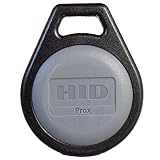
- Lifetime warranty!
- Small enough to fit on a key ring
- Universal compatibility with HID proximity card readers
- Provides an external number for easy identification and control Can be placed on a key ring for conv
- Supports formats up to 85 bits, with over 137 billion codes
Use phishing-resistant MFA for privileged people
MFA makes a stolen password less useful, but methods differ in their resistance to phishing. NIST’s SP 800-63B says manually entered one-time password (OTP) codes are not phishing-resistant: a user can be tricked into entering a valid code at an impostor verifier, which can relay it to the real service. NIST describes phishing resistance in terms of protections such as channel binding and verifier-name binding in its authenticator guidance.
For cloud administrators and other high-impact accounts, prefer a passkey or FIDO2/WebAuthn security key when both the workforce identity provider and the cloud sign-in flow support it. A physical key is not a substitute for workload identity, authorization controls, or protection of machine credentials; it addresses human sign-in. Before enforcing it, test enrollment, spare-key handling, lost-device recovery, and the emergency access path. Microsoft likewise identifies phishing-resistant methods as the strongest protection against sophisticated attacks in its identity management guidance.
Rank #2

- POWERFUL SECURITY KEY: The Security Key C NFC is the essential physical passkey for protecting your digital life from phishing attacks. It ensures only you can access your accounts.
- WORKS WITH 1000+ ACCOUNTS: Compatible with Google, Microsoft, and Apple. A single Security Key C NFC secures 100 of your favorite accounts, including email, password managers, and more.
- FAST & CONVENIENT LOGIN: Plug in your Security Key C NFC via USB-C and tap it, or tap it against your phone (NFC) to authenticate. No batteries, no internet connection, and no extra fees required.
- TRUSTED PASSKEY TECHNOLOGY: Uses the latest passkey standards (FIDO2/WebAuthn & FIDO U2F) but does not support One-Time Passwords. For complex needs, check out the YubiKey 5 Series.
- BUILT TO LAST: Made from tough, waterproof, and crush-resistant materials. Manufactured in Sweden and programmed in the USA with the highest security standards.
Give workloads their own temporary credentials
For software on cloud-managed compute, start with the provider’s attached identity or role mechanism. For workloads outside that environment, consider workload identity federation if the external platform can present an identity the cloud provider supports. In either case, authorize the workload as a distinct principal; do not reuse a developer’s account or a broad shared service identity across unrelated applications.
Scope trust as carefully as permissions. A federation configuration should constrain which issuer, audience, and subject can exchange an identity, and the resulting cloud principal should receive only the permissions its workload needs. Protect the process that issues or presents the external identity, as well as runtime token or metadata endpoints. Google Cloud’s service-account guidance describes attached identities and workload identity federation as alternatives to user-managed keys based on where the workload runs.
Free tools Windows power users keep installed
One-click scans. No signup required.
Rank #3

- Note: These are 125kHz key fobs (tags). If you want to add them to your lock system, please ensure that your system uses the same frequency of unencrypted 125kHz. Not compatible with other frequencies like 13.56MHz. For example, they don't work for Tuya or TTLock smart locks. Not work for encrypted systems.
- Compatible with other universal 125kHz tags like EM4100/4102. Not compatible with encrypted tags like HID, Indala, Cobra, APCiK, Paradox, Kaba, Isonas, etc.
- Read only. Not rewritable. You cannot re-program them. Each key fob is already pre-programmed with a unique ID number. The 10-digit number is engraved on the tag casing.
- Suitable for 125kHz RFID proximity access control system and ID management system. For example, add it to your RFID door lock if applicable.
- Approx. Size: 1.4*1.1*0.2 inch. Casing Material: ABS Plastic. Package includes 100 PCS.
Limit permissions after authentication
Apply least privilege to people and workloads: grant only the actions and resources required for the task. Where available, use conditions to narrow when or where access applies, and temporary elevation for duties that need higher privilege only occasionally. Review permissions and remove unused access and credentials rather than assuming that a successful authentication is evidence that an account still needs its current access. AWS sets out least-privilege and access-review practices in its IAM recommendations.
Make the principal specific enough to audit. Separate identities for unrelated workloads help show which service acted and allow one service’s credentials or permissions to be changed without disrupting every other service using the same identity.
Rank #4

- Standard 125Khz ID RFID keyfob, support 125khz proximity ID cards token tag duplication. Frequency : 125kHz; Sensing Distance: 2.5 to 10 cm (1 to 4 inch); Data Storage Life: 10 Years
- Note: These are blank key tags without pre-programmed card numbers. You cannot directly add them to RFID locks or use a card reader to read them. Before using, please write data(card numbers) into them by a 125kHz RFID card writer first.
- Product Size: 40*30*4mm(1.57*1.18*0.16 inch). High-Quality Copper Coil inside. Casing Material: ABS Plastic. Waterproof and heat-resistant.
- Chip: ATMEL T5577 (compatible with other universal 125kHz tags). Frequency: 125kHz; It's rewritable, and it can write in 125khz id format and H-ID WG 125khz format, can be customised to 26-bit Prox format. Compatible with T5567 T5577 EM4305.
- Applications: Hotel key chain, Access control systems, time attendance system, ticketing, packing card. This T5577 proximity key card can copy duplicate em4100 TK4100 ID Card Keychains tags.
Protect root and other emergency accounts
Root, tenant-owner, and equivalent highest-privilege identities have unusually broad impact. Do not use them for routine console work, everyday administration, or application access. Enable MFA, tightly limit who can use the emergency account, and monitor its activity. Avoid root programmatic access keys; use role-based temporary credentials for ordinary cloud operations. AWS’s identity and access control recommendations specifically advise enabling root MFA and avoiding root access keys.
Emergency access must remain usable when the normal identity-provider path is unavailable, but it should not become an unmonitored bypass. Define who can retrieve or activate it, how use is alerted and reviewed, and how access is returned to its protected state afterward.
Best Value

- POWERFUL SECURITY KEY: The YubiKey 5 NFC is the most versatile physical passkey, protecting your digital life from phishing attacks. It ensures only you can access your accounts
- WORKS WITH 1000+ ACCOUNTS: Compatible with popular accounts like Google, Microsoft, and Apple. A single YubiKey 5 NFC secures 100+ of your favorite accounts, including email, password managers, and more
- FAST & CONVENIENT LOGIN: Plug in your YubiKey 5 NFC via USB and tap it, or tap it against your phone (NFC), to authenticate. No batteries, no internet connection, and no extra fees required
- MOST SECURE PASSKEY: Supports FIDO2/WebAuthn, FIDO U2F, Yubico OTP, OATH-TOTP/HOTP, Smart card (PIV), and OpenPGP. That means it’s versatile, working almost anywhere you need it
- PRIMARY & SPARE KEYS: Just like having a spare house key, we recommend buying two YubiKeys - one for daily use and one as a spare. That way you’ll never get locked out of your accounts
Implement the changes in a safe order
- Inventory principals and credentials. List workforce users, contractors, root or break-glass accounts, service accounts, API keys, CI/CD identities, and cloud runtimes. Record an owner and purpose for every credential; investigate those without either.
- Federate workforce access. Set up centralized identity-provider sign-in for people and require MFA for privileged access. Prefer phishing-resistant methods where the identity provider and the cloud console or API workflow support them. Test enrollment and recovery before broad enforcement.
- Move each workload to a machine identity. Use a provider-native attached identity on supported compute, or workload identity federation for a supported external workload. Avoid giving unrelated services one shared, broadly privileged identity.
- Reduce authorization scope. Grant the smallest set of required actions and resources, add conditions or temporary elevation where available, and remove unused access and credentials.
- Harden highest-privilege access. Enable MFA on root or equivalent accounts, remove root access keys, restrict routine use, and monitor emergency-account activity.
- Govern unavoidable static keys. Document the owner, storage boundary, dependent integration, exposure response, and rotation or revocation procedure. A rotation schedule does not make a long-lived key low risk; remove the key when a suitable identity pattern becomes available.
What to do when federation is not immediately possible
A legacy integration may require a long-lived key, but treat that as an exception rather than a default. Keep the key in an access-controlled secret store rather than source code, logs, images, or general configuration; restrict who and what can retrieve it; and grant the associated principal narrow permissions. Assign an owner and document the dependency that prevents federation, how to respond to exposure, and how to revoke or replace the credential. Review the exception as the integration changes. Google Cloud’s service-account best practices recommend avoiding user-managed keys whenever possible because their protection is the operator’s responsibility.
Keep authentication, authorization, and recovery in view
Strong authentication answers “who is this?”; it does not answer “should this identity be allowed to do this?” A sound design pairs an appropriate identity and credential pattern with narrow authorization, monitoring, and a workable recovery path. Review both human access and workload credentials as systems and teams change, and remove credentials that no longer have a clear owner or purpose.
Quick Recap
Product prices and availability are accurate as of the date/time indicated and are subject to change. Any price and availability information displayed on Amazon at the time of purchase will apply.

