
iTechGuides is reader-supported. When you buy through links on our site, we may earn an affiliate commission. As an Amazon Associate I earn from qualifying purchases. Learn more
Many organizations are expanding AI use and exploring agents, but the available surveys do not prove that most enterprises are pursuing autonomy before defining business outcomes. They do show a consequential gap: reported adoption and ambitious expectations coexist with weak outcome tracking, limited alignment, and governance that has not kept pace. For an enterprise, the practical test is not whether an AI system can act on its own. It is whether a clearly measured business outcome justifies the level of autonomy, access, and risk involved.
What the surveys show—and what they do not
The evidence points to rapid experimentation and readiness gaps, not a measured universal sequence in which enterprises adopt autonomy first and define outcomes later. The figures below come from surveys with different populations and definitions; they should not be treated as one comparable census of all businesses.
| Source and population | Reported findings | How to interpret them |
|---|---|---|
| Gartner, 2026 CEO and Senior Business Executive Survey: 469 respondents worldwide, surveyed across three quarters ending in Q4 2025 | 80% expected AI to force medium or high operational-capability change. 54% said automation was then limited to specific tasks, while 13% expected it to remain at that level by the end of 2028. 32% expected self-learning, adaptable AI tools to assist human decision-making; 27% expected their organizations to operate primarily without human intervention. | These are expectations and reported current or future states, not measured deployment outcomes. The gap between task automation today and anticipated autonomy signals ambition, not proof that organizations have defined or achieved the outcomes that would warrant it. |
| Gartner, 2025 IT application leader survey: 360 leaders at organizations with at least 250 employees in North America, Europe, and Asia/Pacific, surveyed in May and June 2025 | 75% said their organization was piloting, deploying, or had deployed some form of AI agents; 15% said they were considering, piloting, or deploying fully autonomous agents. Just 14% strongly agreed that IT, business users, and leadership were aligned on what problems AI would solve. Aligned respondents were 1.6 times more likely to say agents would be transformative and more than three times more likely to report significant value from GenAI tools. | Broad agent activity is not equivalent to fully autonomous deployment. The alignment findings are associations, not evidence that alignment alone causes value. |
| EY, 2026 US AI Risk and Governance Survey: 202 senior AI executives at organizations with at least $1 billion in annual revenue | 91% said their organization used agentic AI in active pilots or full enterprise deployment. Among respondents whose organizations used agentic AI, 49% said existing governance had not been updated specifically for agentic AI requirements and risks; 85% of that group said at least some such systems execute actions without real-time human involvement. Across respondents, 98% reported formal AI governance policies, yet 47% said their organization had previously bypassed its governance process for urgent deployments. 36% said their organization had experienced an AI incident or failure with materially negative impact, including data loss, financial damage, operational disruption, or brand damage. | This is a defined sample of senior AI executives, not a census of enterprises. The contrast between formal policies and reported bypasses illustrates why policy existence does not establish that controls work in practice. |
| Deloitte, 2026 State of AI in the Enterprise: 3,235 senior leaders across 24 countries, surveyed in August and September 2025 | Worker access to AI rose by 50% in 2025. The number of companies with at least 40% of projects in production was expected to double in six months. 34% of surveyed leaders said their organization was truly reimagining the business with AI, and only one in five companies had a mature governance model for autonomous agents. | The production figure is an expectation reported in the study. Access, projects in production, business redesign, and governance maturity are distinct measures. |
| IBM Institute for Business Value, 2026: 2,000 senior technology executives across 33 geographies and 19 industries, surveyed January through April 2026 | Two-thirds of surveyed CIOs and CTOs reported accountability for AI systems they did not fully control; 70% said business teams were deploying technology faster than IT could track. Executives anticipated a 38% increase in AI agents by 2027, while only 11% believed they were fully ready for that expected scale. Organizations reported an average of 54 AI-agent incidents in the prior year, with 17% of incidents rated high severity; IBM defines incidents as unintended or harmful occurrences requiring human correction. Organizations that embedded control into AI systems reported 25% fewer incidents than those relying on manual governance. IBM also reported 18% higher operating margins and four times lower AI-budget spending among the structurally prepared group. | These are survey findings and IBM analyses, not randomized causal results. The projected increase is an expectation, and the incident average is reported for the surveyed organizations. |
| KPMG International, 2026 transformation research: more than 1,750 senior transformation leaders in 20 countries, surveyed in February 2026 | 28% of organizations tracked operational or revenue outcomes linked to trusted AI; 24% had proactively integrated risk management into strategy and the technology lifecycle. | These measures indicate that outcome tracking and proactive risk integration were not widespread in this surveyed group. They do not directly establish whether a particular organization began an AI project without a defined outcome. |
| OpenAI, 2025 State of Enterprise AI report: vendor-reported aggregated and de-identified evidence from OpenAI customers and other sources | OpenAI reported more than 1 million business customers using its tools; enterprise message volume grew eightfold and API reasoning-token consumption per organization grew 320-fold year over year. Enterprise users in the report said they saved 40–60 minutes per day. | These are vendor-reported usage measures and user-reported time savings, not independent controlled estimates of enterprise-wide value or evidence that autonomy caused the reported savings. |
Other evidence reinforces the difference between adoption and sustained value. Gartner reported in 2025 that organizations regularly assessing AI system performance and compliance were more than three times as likely to achieve high GenAI value as those that did not. That is a reported association; it does not establish that assessment alone caused the value. Gartner also forecast in 2026 that 40% of enterprises would demote or decommission autonomous agents by 2027 because governance gaps were identified only after production incidents. That is a forecast, not an observed result.
Quick wins for a faster PC:
Fix the driver behind crashes, sound loss and screen glitchesFind Drivers →Repair Windows errors before they cause bigger problemsFix Now →Scan for outdated or missing drivers - takes under a minuteDriver Scan →Adoption, agent use, and autonomy are different claims
Survey headlines can make the enterprise shift sound more uniform than it is. “Using AI agents” may include a pilot, a tool that recommends actions, a system that performs bounded tasks, or an agent that can act without real-time human involvement. “Considering” or “piloting” a fully autonomous agent is not the same as deploying one in production. Expectations about an organization operating primarily without human intervention are further removed from observed outcomes.
#1 Best Overall
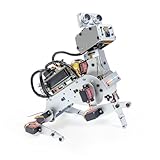
- AI-Powered Raspberry Pi Robot Dog — PiDog: Powered by Raspberry Pi (5/4B/3B+/3B/Zero 2W), OpenClaw, and multi-LLMs like ChatGPT, Gemini, Grok, DeepSeek, Qwen & Ollama. With 12 servos, camera, gyroscope, hearing & touch sensors, PiDog can see, listen, talk, move, and interact intelligently. Supports OpenCV, MediaPipe, TTS & STT, app control, FPV & Python. A great STEM robotics gift for students, makers & tech enthusiasts—perfect for birthdays and holidays. (Raspberry Pi not included)
- Realistic Dog-like Movements: PiDog's 12 powerful servos enable 32 dog-like actions, including walking, sitting, standing, shaking its head, wagging its tail, and performing playful tricks, closely mimicking a real dog and providing an engaging experience. This is an AI development robot product designed for engineers, suitable for ages 15 and above
- Rich Sensor Suite for Interactive Experiences: PiDog features ultrasonic, touch, gyroscope, sound, camera, speaker and microphone. These provide it with advanced hearing, vision, and touch, enabling it to see, detect obstacles, respond to touch, and recognize sounds, making interactions highly engaging
- AI-Powered Interactions with OpenClaw & Multi-LLMs. PiDog combines voice, vision, and gesture recognition for immersive AI experiences. Powered by OpenClaw and multi-LLMs like ChatGPT, Gemini, Grok, DeepSeek, Qwen, Doubao, and Ollama (local LLMs), it can understand questions, respond naturally through TTS & STT, recognize math problems, interpret hand gestures, and hold smart conversations. OpenClaw also enables customizable AI behaviors and personalized robotics development, helping users create their own intelligent robotic companion
- Comprehensive Learning Resources and Support: PiDog offers detailed online documentation, video tutorials, prompt technical support, and an active forum community, ensuring beginners can easily complete all projects and enjoy a great experience
That distinction matters because autonomy changes the operating model, not just the interface. As Gartner Distinguished VP Analyst Don Scheibenreif put it, “While digital business changes what the organization does, autonomous business changes how the organization does it.” The relevant question is therefore what work changes, which decisions move to software, and how the organization will know whether the change improved performance.
Define the outcome before selecting the autonomy
Start with a business result that has an owner and a baseline. It might be revenue, service quality, cycle time, error rate, or decision speed, but the metric should reflect the actual reason for the initiative. A count of agents, prompts, automated tasks, or projects in production can describe activity; none on its own proves enterprise value.
Then map how the work is currently done: handoffs, data sources, permissions, exceptions, and the consequences of a wrong action. This makes it possible to ask whether autonomy is needed at all. A system that drafts a response for an employee to approve may meet the outcome just as well as one that sends it directly, while preserving a useful control point.
Recommended Free Tools
Rank #2

- Optimized AI Arm Kit for LeRobot & Hugging Face Projects – The SO-ARM101 is an upgraded low-cost robotic arm servo motor kit designed for AI robotics enthusiasts and developers. Fully compatible with LeRobot and Hugging Face frameworks, it supports imitation learning and reinforcement learning, making it ideal for real-world robotics applications. (3D-printed parts not included.)
- Enhanced Wiring & Performance – Compared to the SO-ARM100, the SO-ARM101 features improved wiring to prevent disconnection at joint 3 and eliminates range-of-motion limitations. The leader arm uses optimized gear ratio motors for smoother performance—no external gearboxes required.
- Real-Time Leader-Follower Functionality – New real-time tracking allows the leader arm to follow the follower arm, enabling human intervention and correction during reinforcement learning (RL) training. Perfect for hands-on AI robotics development and research.
- Open-Source, DIY-Friendly & Nvidia-Compatible – Developed by TheRobotStudio, this open-source AI Arm kit integrates seamlessly with the LeRobot platform, offering PyTorch-based datasets, simulation, training, and deployment tools. Fully compatible with Nvidia Jetson edge devices, including reComputer Mini J4012 Orin NX 16 GB.
- Comprehensive Learning Resources – Includes detailed open-source assembly and calibration guides, testing tutorials, and deployment instructions. From wiring to AI training, get everything you need to start building, teaching, and optimizing your robotic arm for grasping and placing tasks.
KPMG Global Head of Consulting Strategy & Investment Adrian Clamp described the organizational challenge this way: “Real value from AI requires operating as an intelligent enterprise – aligning strategy, decisions, and execution. Yet, most organizations have not redesigned themselves to do so, with complexity rising faster than performance. As a result, many risk scaling AI without delivering sustained enterprise impact or meaningful returns.” The point for a decision-maker is concrete: adding an agent to an unrevised workflow can automate its bottlenecks or failures rather than remove them.
Match autonomy and controls to the task
There is no single governance setting that fits every agent. A low-impact recommendation tool and an agent able to move money, modify records, or communicate externally should not have the same permissions or review requirements. Use the task’s consequence of error, reversibility, data sensitivity, and available human oversight to set the boundary.
| Operating mode | When it may fit | Controls to consider |
|---|---|---|
| Assistive: generate or summarize, with a person deciding and acting | Tasks where a human decision remains central or where the system’s output needs judgment. | Show relevant source information, make uncertainty visible, and keep the person responsible for the final action. |
| Bounded execution: perform a narrow, reversible task within defined limits | Routine work with clear success criteria and a limited downside if the agent errs. | Restrict data and system access; log actions; define thresholds, sampling, and a straightforward override. |
| Conditional action: act within a workflow but escalate exceptions or consequential choices | Tasks with predictable routine cases and meaningful exceptions that need human judgment. | Set explicit escalation triggers, approval gates for higher-impact actions, and a tested route to pause or reverse work. |
| Broad autonomy: operate across tasks or make consequential decisions with limited real-time intervention | Only where the outcome, operating boundaries, oversight capacity, and governance are demonstrably adequate. | Require tightly scoped permissions, robust monitoring and audit logs, incident response, clear accountability, and recurring review before expanding scope. |
These modes are a practical decision aid, not a claim that a particular survey tested this classification. EY Americas Assurance Chief Technology Officer Richard Jackson summarized the governance lag reported by EY respondents: “Organizations are applying yesterday’s governance rules to today’s interactions with AI,”. The punctuation in a published quotation should not obscure the underlying issue: controls designed for earlier AI uses may not address systems that take actions without real-time human involvement.
Rank #3
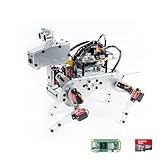
- Raspberry Pi AI Robot: powered by Raspberry Pi (5/4B/3B+/3B/Zero 2W), features 12 servos and sensors for vision, hearing, and touch. Integrated with ChatGPT-4o, it responds to complex queries. With app control and FPV, users can manage and see its view in real-time. It supports Python programming
- Realistic Movements: 12 powerful servos enable 32 actions, including walking, sitting, standing, shaking its head, wagging its tail, and performing playful tricks, closely mimicking a real and providing an engaging experience
- Rich Sensor Suite for Interactive Experiences: features ultrasonic, touch, gyroscope, sound, camera, speaker and microphone. These provide it with advanced hearing, vision, and touch, enabling it to see, detect obstacles, respond to touch, and recognize sounds, making interactions highly engaging
- Engaging Interactions with ChatGPT-4o: with ChatGPT-4o enables voice interactions and visual recognition, making it smarter and more responsive. Users can have natural conversations, solve math problems via the camera, and interpret gestures, creating diverse and fun interactions
- Comprehensive Learning Resources and Support: offers detailed online documentation, video tutorials, prompt technical support, and an active forum community, ensuring beginners can easily complete all projects and enjoy a great experience
Controls should be embedded in the system where possible, not left only to written policy or manual checks. EY Americas Assurance Technology Risk AI Leader John McLain said, “AI governance provides the necessary guardrails that allow organizations to move quickly without losing control, especially when agentic AI is already making real business decisions.” Governance should specify who owns the outcome, who can authorize a change in scope, how an operator can intervene, and what happens when performance or risk crosses a threshold.
A staged decision process for an enterprise AI initiative
- Name the outcome. State the business result the initiative is meant to change, choose a metric that reflects it, record a baseline, and name the person accountable for that measure.
- Map the workflow. Document the current steps and handoffs, data involved, system permissions, exceptions, and likely consequences of errors. Identify whether the process itself needs redesign.
- Choose the minimum autonomy needed. Decide whether assistance, bounded execution, conditional action, or broader autonomy is required to reach the outcome. Do not use autonomy as a proxy for ambition or success.
- Set boundaries and human control. Limit the agent’s access to the systems and data required for its task. Specify approval and escalation points, an override or pause path, logging, and the conditions for rollback.
- Run a bounded deployment and assess it. Compare results with the baseline, and review output quality, operational value, incidents, and compliance. Assess on a schedule appropriate to the task and its risk, not only after launch.
- Expand only with evidence. Increase access, workflow scope, or autonomy only when results justify the added exposure and the organization can monitor and govern the larger deployment.
This sequence is practical guidance synthesized from the reported gaps in alignment, outcome tracking, governance, and assessment; it is not a tested intervention with a guaranteed result. IBM CIO Chris Pesola offered a useful principle for the coordination problem: “The goal isn’t to eliminate shadow IT—it’s to create visibility and a partnership, so teams can get help when they need it without slowing down.” Clear ownership and a workable path for teams to surface deployments can help address the gap between business adoption and IT visibility.
How to judge whether scaling is working
Review the original outcome metric alongside the controls and the operating cost. A deployment can improve task speed while increasing rework, incidents, or downstream review burdens; those effects belong in the evaluation rather than being hidden by a productivity proxy. Compare the result against the baseline and account for whether the workflow, user behavior, or volume changed during the measurement period.
Rank #4
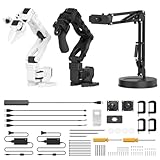
- 【End-to-End Imitation Learning】Hiwonder SO-ARM101 robot arm is an embodied intelligent hardware platform compatible with the Lerobot open-source framework. It provides developers with streamlined access to shared code, templates, and pre-trained models to explore the latest advancements in AI research.
- 【Dual-Camera Vision System】Equipped with both a gripper-mounted camera and an external camera, the system supports both precise manipulation and environmental awareness for accurate imitation learning.
- 【Hiwonder High-Performance Bus Servos】Featuring 12 high-torque bus servo motors with magnetic feedback, the Hiwonder SO-Arm101 robotic arm delivers smooth, stable motion, eliminating issues like power deficiency and jitter.
- 【Professional Control & Debugging】Integrated with the Hiwonder BusLinker V3.0 debugging board, the system supports servo scanning, real-time status monitoring, and trajectory control. The professional PC software simplifies device calibration and debugging, making it accessible for both researchers and hobbyists.
- 【Open-Source Compatibility】The SO-ARM101 robotic arm is designed to be fully compatible with the LeRobot open-source project. We acknowledge the contributions of the open-source community; all trademarks and copyrights belong to their respective owners.
- Value: Did the business outcome improve, for whom, and over what period?
- Quality: Are outputs correct and complete, and how often do people correct or redo the work?
- Risk: What incidents, near misses, policy exceptions, or harmful actions occurred, and how quickly were they detected?
- Control: Can the organization identify what the agent accessed and did, and can an authorized person pause or reverse it?
- Cost: What is the full operating cost, including integration, monitoring, human review, and remediation?
A governance model is effective only if it functions at the speed and scale of actual use. Gartner Distinguished VP Analyst David Furlonger said, “This transition to autonomous business requires CEOs to have a capabilities‑first mindset that prioritizes how work gets done and how value is delivered in an increasingly autonomous economy.” In practice, that means treating process ownership, measurement, and oversight as operating capabilities—not paperwork added after an agent is already in production.
What the evidence supports
Organizations are reporting broad AI and agent activity, and some leaders expect significantly more autonomous operations. At the same time, surveys describe gaps in alignment, workflow redesign, governance maturity, and outcome tracking. Those findings make the headline a useful warning, not a proven description of what most enterprises have done. The decision that follows is more precise: define the outcome, then grant only the autonomy that outcome needs and the organization can govern.
PC Slower Than It Used to Be?
A free scan shows the junk files, broken settings and background clutter dragging Windows down - then fixes them in one click.Free scan · Windows 10 & 11Crashes, No Sound, or Screen Glitches?
Random freezes, missing sound and display glitches usually trace back to one bad driver. Find and replace yours safely.Free scan · under a minuteQuick Recap
Product prices and availability are accurate as of the date/time indicated and are subject to change. Any price and availability information displayed on Amazon at the time of purchase will apply.

