
Android 16 did not add a new, system-wide touchpad settings panel. A Chromium change documents a narrower update: Android Chrome can convert a two-finger touchpad swipe into a mouse-wheel event under specified conditions. Separately, Android 16 QPR3 brought desktop sessions on external displays to supported Pixel and Samsung devices. Google has described Googlebook as the next generation of ChromeOS built on the Android stack, but its announcements do not say that ChromeOS and Android have already merged.
What touchpad control changed in Android Chrome?
A Chromium change authored by Google contributor Grace Cham and dated September 24, 2025, describes converting a touchpad’s two-finger swipe into a mouse-wheel event on Android. The change applies at API level 34 or later when ConvertTrackpadEventsToMouse is enabled; its description says the setting was currently enabled by default. The change and its tests address scrolling, fling, pinch, and overscroll behavior. Read the Chromium change.
This is browser/input handling, not evidence of a new Android-wide touchpad control panel or a promise that every Android app responds to touchpad gestures in the same way. The available documentation does not establish matching Android system settings for tap-to-click, pointer speed, or scroll direction.
What desktop features does Android 16 offer on an external display?
Android 16’s original windowing announcement
On June 10, 2025, Google said it had worked with Samsung on desktop windowing for large-screen Android devices. The announced experience allows users to open, move, and resize multiple app windows. Google said it would roll out later that year on compatible devices; that announcement alone did not mean it was available on every device at Android 16’s launch. Google’s Android 16 announcement describes the original plan.
#1 Best Overall

- 【Strong Adsorption】The inspiration of the silicone phone suction case comes from the adhesive force of the octopus. Each suction cup phone mount is 3.15 inches long and 2.17 inches wide, with 24 independent suction cups providing a stronger and more stable suction force, so you don't have to worry about your phone falling during use.
- 【Back of Phone Suction Grip】Remove the adhesive film on the phone suction cup and stick it on the phone case. You can then fix the phone on any smooth surface, which is very convenient. (The phone suction cup cannot be removed and reused after being attached to the phone case. It is recommended to attach it to a regular phone case, not a valuable one.)
- 【Widely Used】Our non-slip silicone phone sticky grip mount attaches to almost any flat phone case and make it compatible with common mobile phones such as iPhone and Android.You can shoot, watch videos or video calls in the kitchen, gym, dance studio, bathroom and other places.
- 【Capture the Wonderful Picture】Whether you are a TikTok creator or just like to share videos and photos, this phone suction cup can help you hands-free capture wonderful videos and photos for sharing with friends.
- 【Note】You can fix the phone suction cup on a smooth surface such as a mirror or glass. If necessary, wipe the suction cup with a damp cloth to obtain stronger suction. Before releasing your hand, make sure the phone is firmly fixed. (Not applicable to rough walls, wooden surfaces, and other uneven surfaces)
Connected-display support in Android 16 QPR3
On March 3, 2026, Google announced that connected-display support reached general availability with Android 16 QPR3 for supported Pixel and Samsung devices. Connecting a supported phone or foldable to an external monitor starts a desktop session with a taskbar and freely resizable app windows. Google said QPR3 finalized windowing, taskbar interactions, and mouse and keyboard input compatibility. Availability depends on the device; the announcement does not provide a complete device matrix. See Google’s connected-display announcement.
A phone-based desktop setup also depends on the phone supporting display output and on a compatible connection to the monitor. A USB-C hub with HDMI may be one way to connect, but compatibility depends on the particular phone and hub; Google’s announcement does not validate specific hub models.
Rank #2

- SUPERIOR COMFORT — Unlike traditional circular ear buds, the design of EarPods is defined by the geometry of the ear. Which makes them more comfortable for more people than any other ear bud–style headphones.
- HIGH-QUALITY AUDIO — The speakers inside EarPods have been engineered to maximize sound output and minimize sound loss, which means you get high-quality audio.
- BUILT-IN REMOTE — EarPods with USB-C plug also include a built-in remote that lets you adjust the volume, control the playback of music and video, and answer or end calls with a pinch of the cord.
- COMPATIBILITY — Works with all devices that have a USB-C port.
- INTEGRATED MICROPHONE — A built-in microphone precisely captures your voice while you’re on the phone, taking a FaceTime call, or summoning Siri — so you’re always heard loud and clear.
Which touchpad gestures are already available on Chromebooks?
ChromeOS already documents touchpad settings and gestures. These are Chromebook controls, not proof that Android 16 added the same controls to Android phones or tablets.
- Adjustable behavior: tap-to-click, tap-and-drag, acceleration, pointer speed, and scroll direction.
- Two-finger gestures: scrolling and page navigation.
- Three-finger gestures: actions involving open windows, tabs, and overview.
- Four-finger gestures: switching virtual desks.
Google’s Chromebook touchpad help page lists the available controls and gestures. For Android apps running on ChromeOS, Google says the platform automatically handles most mouse and trackpad events, including two-finger scrolling. Google’s ChromeOS input compatibility documentation, last updated January 9, 2026, explains that behavior.
Do these 3 things before closing this tab:
1Clear out junk files and repair common Windows errors2Fix the driver behind crashes, sound loss and screen glitches3Repair Windows errors before they cause bigger problemsRank #3

- Secure Hold: Our PopSockets adhesive phone grip gives your cell phone a secure, comfortable hold in hand to help prevent drops while texting, taking photos, or scrolling on the go. Designed to stick firmly to most phone cases and devices.
- Hands-Free Made Easy: Easily turn your PopSocket into a phone stand to prop up your phone anywhere, perfect for watching videos, video calls, or following recipes. A must-have phone holder that keeps your device secure and ready for anything.
- Compatibility: Works with all phones, tablets, and Kindles. Sticks best to smooth, hard plastic cases and may not adhere to silicone or textured cases. Easily swap your PopTop to change up your style.
- Black PopSockets: Simple, refined, and endlessly versatile. A timeless essential for any phone.
- Travel Must-Have for People On the Go: A must-have travel accessory for flights, flying, airports, air travel, airplanes, planes, international trips, cruises, and long travel days. Key gadget for your airport haul, travel accessories and must-haves.
Is Google merging ChromeOS and Android?
Google has described a product direction, not a completed migration. Its May 2026 Android Developers post calls Googlebook the next generation of ChromeOS and says it is built with parts of the Android stack. The post says: “Built with parts of the Android stack, we are enabling your apps to achieve a ‘laptop-class’ feel with native level performance.” Read the May 2026 post.
Google repeated that Googlebooks are the next generation of ChromeOS built on the Android stack in its June 16, 2026, Android 17 announcement. Neither cited statement says that all ChromeOS devices have moved to Android or gives a date for a completed transition. Google’s post also reported over 580 million large-screen devices in 2026; that is Google’s figure, not a measure of Chromebook or Android desktop adoption. See the Android 17 announcement.
Rank #4

- [360 ° Flexible Rotation Design] Comes with a rotatable lanyard ring that supports 360 ° free rotation, effectively solving the problem of twisted and tangled lanyards
- [Wide compatibility] The ultra-thin 0.02-inch design does not block the charging port at all, and both wired and wireless charging can be used directly without removing the pad. Compatible with most smartphones such as iPhone, compatible with various wristbands, lanyards, crossbody straps, and keychains
- [Durable and Portable Material] Premium rust-resistant stainless steel material with good flexibility, which not only avoids scratching the phone case, but also has excellent anti rust and anti fading performance
- [Multi scenario Practical] Paired with a lanyard or wristband, hands-free use can be achieved. The phone is within reach and not easily dropped, ideal for daily commuting and outdoor activities. Suitable for full coverage phone cases, does not support half coverage phone cases
- [Quality Service] If you find any damage or other issues with the product upon receipt, please contact us immediately. We will handle it quickly
What to check before choosing a Chromebook or phone-based desktop
A Chromebook is a self-contained computer. A phone connected to a monitor can provide a desktop-style session on supported hardware, but it is a device-dependent setup. Compare the practical requirements before deciding:
- Device support: check whether the specific phone is supported for connected-display desktop use.
- Video output and connection: confirm the phone can output to an external display and that the cable or hub works with both phone and monitor.
- Input peripherals: Google describes mouse and keyboard compatibility for the Android desktop setup; ChromeOS separately documents broad mouse and trackpad handling.
- Windowing needs: consider whether the Android desktop session’s taskbar and resizable windows suit the apps and multitasking you need.
- Portability and independence: choose based on whether you need a laptop that works on its own or prefer a phone-based setup that uses an external monitor.
Google’s cited announcements establish device-dependent support and peripheral use, but do not supply a complete compatibility list or performance comparison between a Chromebook and a phone-based setup.
Free tools Windows power users keep installed
One-click scans. No signup required.
Quick Recap
Best Value
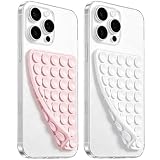
- 【PKYAA Double Sided Silicone Suction Phone Case Mount】PKYAA With Double Sided 40 Strong and Reliable individual suction cups, PKYAA provides a thicken and upgraded universal silicon suction mount for your phone.
- 【Friendly to Content Creators】If you are a content creator or an online influencer, you can create videos anywhere with this suction mount completely hands free with this silicone cell phone mount for cases.
- 【HANDS-FREE & Adhere to Mirrors】This Double Sided silicone suction phone case mount allows you to stick your phone to the mirror easily. No longer holding your phone in one hand to watch video tutorials while making up.
- 【Strong Grip on the Smooth Surface】You can easily hang your phone anywhere with a smooth surface. All you do is you clean off your phone and smooth surface. It is STURDY and it not only sticks to mirrors, it also sticks to windows, it sticks to refrigerators, tiles and other clean, flat surfaces.
- 【Press Down Firmly Every 30 Minutes】Use your palm or fingers to press the phone down firmly and check it's secure before letting go. Apply even pressure for a few seconds to allow the suction cup to adhere properly. To maintain the grip and prevent accidental falls, it's a good practice to periodically reapply pressure to the suction cup.
Product prices and availability are accurate as of the date/time indicated and are subject to change. Any price and availability information displayed on Amazon at the time of purchase will apply.

