
The Tool Desk
Outbyte Driver Updater FREEScan for outdated or missing drivers - takes under a minuteDriver Scan →Outbyte PC Repair FREEClear out junk files and repair common Windows errorsFree Scan →AMD announced its sixth-generation EPYC server processors, the EPYC 9006 family, on July 23, 2026. Formerly known by the codename Venice, the processors use AMD’s Zen 6 architecture and are designed for data-center systems. AMD lists configurations with up to 256 cores and 512 threads per socket, alongside support for DDR5 memory and PCIe Gen 6; exact capabilities depend on the processor and server platform.
What is AMD’s next-generation EPYC processor?
EPYC 9006 is AMD’s sixth-generation EPYC server CPU family, announced at the Advancing AI 2026 event. AMD positions the processors for cloud, enterprise, general-purpose computing, high-performance computing (HPC), and AI infrastructure, including as host CPUs that feed accelerator systems. These are AMD’s intended use cases, not independent evaluations of performance in those workloads. AMD’s July 23 announcement and its EPYC 9006 product materials identify the family as Zen 6-based and manufactured using TSMC’s advanced 2 nm process.


AMD’s product blog divides the lineup into four processor families: 9006 SP7, 9006 SP8, 9006X SP7, and 9006 LP. These labels are a reminder that EPYC 9006 is not one uniform chip or server configuration. The cited overview does not establish every SKU’s compatibility, specifications, or price. AMD’s family overview is a starting point; buyers should confirm a specific CPU against the server maker’s documentation.
What changed in architecture, memory, and connectivity?
AMD identifies Zen 6 as the architecture behind EPYC 9006. Its announced top-end platform specifications include up to 256 cores and 512 threads per socket, up to 16 channels of DDR5 memory, JEDEC MRDIMM support at speeds up to 12,800 MT/s, and PCIe Gen 6 connectivity. These are family-level maximums: they do not mean each processor or server supports every listed feature at its maximum.
Recommended Free Tools
#1 Best Overall
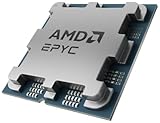
- The processor features Socket AM5 socket for installation on the PCB
- EPYC product line processor for better usability and increased efficiency
- Dodeca-core (12 Core) processor core allows multitasking with great reliability and fast processing speed
- 64 MB of L3 cache memory provides excellent hit rate in short access time enabling improved system performance
- Processor with 3.40 GHz clock speed for reliable and fast execution of instructions to ensure maximum convenience and feasibility
- Compute: Up to 256 cores and 512 threads in a socket, according to AMD.
- Memory: Up to 16 DDR5 channels, with JEDEC MRDIMM support up to 12,800 MT/s, according to AMD.
- I/O: PCIe Gen 6 support, with actual system capabilities subject to the chosen processor and platform.
For a deployment, check the exact CPU model, socket and platform, supported memory type and population, power envelope, and required firmware with the OEM. A CPU family-level specification alone cannot confirm that a particular server supports the memory speed, DIMM arrangement, or I/O configuration a workload needs.
How should buyers interpret AMD’s performance claims?
AMD publishes comparative estimates and internal benchmark results, not independent validation of the family’s performance. One example is AMD’s internal Redis 8.8 throughput comparison, dated July 20, 2026: the company reported that a one-socket EPYC 9996 configuration achieved up to 2.9 times the request throughput of the listed Xeon 6980P result. AMD disclosed differences in system configurations and cautioned that results can vary and may not translate directly to physical server configurations. The figure is specific to that benchmark and comparison; it is not a general performance multiplier for other databases, AI workloads, or servers. See AMD’s EPYC 9006 performance materials for its stated methodology and qualifications.
Rank #2

- Processor: Single32c/64t, 2.0GHz (3.0GHz boost)
- Cache: 64MB L3 per socket
- I/O: Integrated 128 lanes PCIe 3, no chipset needed
- Memory: 8 channels with 2 DIMMs ea, up to 2TB DDR4-2666 MHz
- Amplify application performance with smart resource balancing and consistent feature sets
To assess a server for a real workload, compare results for the application and configuration you plan to run, including CPU model, memory, software, and server design. The cited launch materials do not establish independent benchmark results, SKU pricing, or total system cost.
Independent reader supportYour contribution helps us test, update, and keep practical guides available for everyone.When will EPYC 9006 servers be available?
AMD announced the processors on July 23, 2026, but the launch announcement does not establish a single general availability date for EPYC 9006 servers. An earlier manufacturing update said Venice was ramping production in Taiwan on TSMC’s 2 nm process and described a future plan for a production ramp at TSMC’s Arizona facility. That is a manufacturing milestone, not confirmation of broad channel availability or customer delivery dates. AMD’s May 21, 2026 announcement quoted CEO Lisa Su saying, “Ramping ‘Venice’ on TSMC 2nm process technology marks an important step forward in accelerating the next generation of AI infrastructure.”
For purchase planning, ask server vendors for model-specific EPYC 9006 compatibility and delivery information. AMD’s launch materials name Bull, HPE, Lenovo, and Supermicro among OEMs for Helios systems, but that does not by itself confirm EPYC 9006 support or availability in a particular system. Check the exact server model and CPU option with the OEM before specifying a deployment.
Quick Recap
Rank #4
Product prices and availability are accurate as of the date/time indicated and are subject to change. Any price and availability information displayed on Amazon at the time of purchase will apply.

