
iTechGuides is reader-supported. When you buy through links on our site, we may earn an affiliate commission. As an Amazon Associate I earn from qualifying purchases. Learn more
AMD chair and CEO Lisa Su’s October 7, 2026 visit to Seoul was a partnership push, not a signed manufacturing deal. She attended AMD Gamer Day, met government and semiconductor-industry participants, and described AMD as exploring work with Samsung Electronics and SK hynix in memory and foundry. The only memory relationship reported as already operating is Samsung’s supply of high-bandwidth memory (HBM) for AMD’s AI accelerators. Samsung contract manufacturing for AMD remains speculation in the reporting, and no chip supply quantities were announced.
What happened in Seoul
The visit combined a consumer-facing event with a set of government and industry meetings. Su’s public framing centered on supply and ecosystem. In remarks reported by Yonhap, she said, “Semiconductors is a team sport. A team sport means there is collaboration.” That line sums up the trip: AMD is positioning its Korean partners as suppliers, software partners and infrastructure builders at once.
Three strands of activity were reported on October 7 and 8, 2026:
Recommended Free Tools
- Memory and foundry talks with the two largest Korean chipmakers. AMD is exploring opportunities with Samsung Electronics and SK hynix.
- A roundtable with 14 Korean AI companies, organized alongside the Ministry of Science and ICT, around heterogeneous computing and AMD’s ROCm software ecosystem.
- A planned Korean AI research center and a demonstration project, both still at the planning stage.
Samsung and SK hynix: memory is established, foundry is not
The memory story and the foundry story should be read separately, because the reporting treats them very differently.
#1 Best Overall

- ESP32-S3-ePaper-1.54 development board onboard 1.54inch e-paper display, 200 × 200 resolution, features high contrast and wide viewing angle. Onboard audio codec chip, supports voice capture and playback, enabling AI voice interaction applications
- ESP32-S3 1.54inch e-Paper AIoT development board adopts high-performance 32-bit LX7 dual-core processor, up to 240MHz main frequency. Supports 2.4GHz Wi-Fi (802.11 b/g/n) and Bluetooth 5 (LE), with onboard antenna
- Onboard PCF85063 RTC chip and SHTC3 temperature & humidity sensor for accurate RTC management and environmental monitoring
- Built-in 512KB Static RAM, 384KB ROM, with integrated 8MB Flash and 8MB PSRAM
- Onboard TF card slot for external storage of images or files. Onboard programmable PWR and BOOT side buttons for customized function development. Reserved 2 × 6 2.54mm pitch pin header for convenient external expansion
Memory: an existing HBM relationship
Yonhap reported that AMD has received strong support from Samsung in HBM. The two companies agreed in March on a supply deal covering next-generation HBM and other advanced memory chips. Samsung is reported to have supplied HBM3E and HBM4 for AMD’s latest AI accelerators, and to have been designated a preferred HBM4 supplier for the next-generation Instinct MI455X. These are the most concrete supply facts in the visit coverage. The reporting does not disclose volumes, prices or delivery schedules for these agreements.
Foundry: exploratory, not a confirmed deal
Yonhap described cooperation on foundry, meaning chip manufacturing, as speculation. Reports that Samsung could make AMD’s chips are not confirmed by either company in the coverage reviewed. Readers should treat any headline that describes a Samsung or SK hynix manufacturing contract for AMD as ahead of the evidence. SK hynix is described only as one of the companies AMD is exploring memory and foundry opportunities with, with no terms reported.
The Korean AI chip roundtable
SBS reported that AMD planned to build heterogeneous infrastructure that combines AMD CPUs and GPUs with domestic Korean AI semiconductors. The stated aim is to connect participating companies with AMD’s ROCm software ecosystem, so that Korean chips can run alongside AMD’s processors and accelerators rather than replacing them. The model is described as a reference design intended for wider use, not as a deployed system.
The Tool Desk
Outbyte Driver Updater FREEFix the driver behind crashes, sound loss and screen glitchesFind Drivers →Outbyte PC Repair FREERepair Windows errors before they cause bigger problemsFix Now →Rank #2
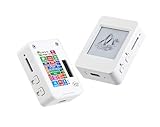
- This is is 1.54inch e-Paper AIoT development board. Onboard 1.54inch e-paper display, 200 x 200 resolution, features ultra-low power consumption and ambient light readability, suitable for portable devices and long-battery-life scenarios. Supports 2.4GHz Wi-Fi (802.11 b/g/n) and Bluetooth 5 (LE), with onboard antenna.
- Integrated with an RTC chip, SHTC3 temperature and humidity sensor, TF card slot, low-power audio codec chip circuit, and Lithium battery recharge management circuit. Reserved interfaces including USB, UART, I2C, and GPIO for easy functionality expansion and sensor connectivity, providing a flexible and reliable development platform for IoT terminals, electronic tags, portable displays, and other applications.
- Supports AI Speech Interaction: Allows access to online large model platforms such as ChatGPT, DeepSeek, Doubao, etc. Onboard audio codec chip, supports voice capture and playback, enabling AI voice interaction applications.
- Built-in 512KB Static RAM, 384KB ROM, with integrated 8MB Flash and 8MB PS RAM. Onboard PCF85063 RTC chip and SHTC3 temperature & humidity sensor for accurate RTC management and environmental monitoring.
- Onboard TF card slot for external storage of images or files. Onboard programmable PWR and BOOT side buttons for customized function development. Reserved 2 × 6 2.54mm pitch pin header for convenient external expansion.
Companies named in the reporting
SBS named the following 14 companies as roundtable participants:
- Rebellions
- FuriosaAI
- Hyper Accelerator
- DeepX
- Mobilint
- MangoBoost
- Panmnesia
- Dinotisia
- More
- Nota AI
- Lablup
- Fadu
- Elice Group
- Upstage
The group spans more than chip design. SBS reported coverage across NPUs (neural processing units), software, memory and storage, networking, cloud and AI models. That mix matters because a heterogeneous system needs more than a chip to work: it needs memory, networking, software that schedules workloads, and models that run on the hardware.
Lisa Su was quoted by SBS saying: “As South Korea enhances its competitiveness in the AI sector, AMD will work together with outstanding domestic companies to create new cooperation opportunities.” SBS labels its English article as AI translated, so check that wording against the Korean original before reusing it verbatim.
Rank #3
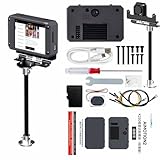
- 【Flagship performance, extremely fast response】Equipped with a 1.6GHz main frequency chip, the KPU computing power is 13.7 times that of the K210 visual module, and the CPU computing power is 8.5 times that of the K210. It supports real-time operation of complex AI models and can easily cope with high-load tasks such as image recognition and voice processing.
- 【Flexible expansion development】A new 12Pin GPIO interface is added, which is compatible with a variety of sensors and modules; pre-installed GUI program, a large program based on the RTSmart system, contains 30+ functional gameplay, integrates most of the core functions, and each function comes with instructions, so you can experience the fun of AI without programming basics.
- 【Multi-controller compatibility】Equipped with a serial communication interface, it can be seamlessly connected to various controllers, and supports connection to PC computers, MSPM0, STM32, ESP32, PICO, Raspberry Pi, UNO, Microbit, Jetson, RDK and other mainstream controller development. You can easily output the visual recognition results to an external controller through the serial port without delving into complex visual algorithms, making it easy to create innovative AI projects.
- 【Multi-function AI visual camera】The K230 visual module is equipped with a 2.4-inch LCD capacitive touch screen with clear display and a 2MP camera for quick debugging and control. The module integrates a serial port, which can easily connect various sensors to expand functions. , with color recognition, road sign recognition, visual line patrol, face recognition, label recognition, QR code and barcode recognition, feature detection, digital recognition and other functions.
- 【Developers from entry to mastery】Provides original model training tutorials+self-developed upper computer toolkits, compatible with ESP32 ecology, suitable for education, maker and industrial visual project development. Yahboom provides technical Q&A + lifetime firmware updates to help your AI project from prototype to landing without worry!
The planned AI research center and demonstration project
CHOSUNBIZ reported that the planned Korean AI research center is targeted for establishment within 2026, with hundreds of researchers discussed as staff. The location had not been decided at the time of reporting. The same coverage said AMD and the ministry were pursuing a demonstration project, but officials did not specify chip supply quantities.
Outdated Drivers Are Slowing You Down
One free scan finds every outdated or missing driver and matches the right update for your exact hardware.Free scan · exact hardware matchWindows Errors? Fix Them Before They Spread
Repair common Windows errors and clear accumulated junk for a smoother, more stable PC - no reinstall needed.Free scan · no reinstallTaken together, the center, the demonstration project and the roundtable describe a direction rather than finished infrastructure. The reporting gives no date for a working system and no figure for compute capacity.
Why Korean memory matters to AMD’s AI push
AMD’s AI accelerators depend on access to advanced memory, and HBM is one of the tightest components in that chain. Aju Press reported that Samsung and SK hynix together accounted for more than 80 percent of global HBM revenue in the second quarter. That figure is attributed to Counterpoint Research as relayed by Aju Press; the original Counterpoint publication was not reviewed, so it should be treated as reported rather than independently confirmed.
Rank #4

- High-Performance AI Voice Interaction Development Board: Features a dual-core RISC-V processor (up to 160MHz), onboard dual microphone array, speakers, and an ES8311 audio codec chip, supporting noise reduction and echo cancellation. It can easily connect to large online models like DeepSeek for intelligent voice dialogue.
- Integrating Advanced Wireless Connectivity: ESP32-C6 supports Wi-Fi 6, Bluetooth 5.0, and Zigbee 3.0/Thread protocols, boasting excellent RF performance and multi-protocol compatibility, making it suitable for wireless communication development in IoT and wearable devices.
- Equipped with a 1.83-inch capacitive touchscreen LCD: (240×284 resolution, 65K colors), it offers high responsiveness and light transmittance. Combined with an onboard six-axis sensor (accelerometer + gyroscope) and RTC chip, it supports motion monitoring, step counting, and low-power real-time clock applications.
- Low Power Design: built-in Batt. recharge chip, a Type-C interface, and supports flexible clock and power control, enabling low-power operation in various scenarios, making it convenient for carrying around and long-term use.
- Rich Interfaces: It offers a wealth of expansion interfaces and customization features, including GPIO, I2C, and UART pads, two programmable side buttons, support for external sensors and debugging, and facilitates rapid prototyping and functional verification.
Su tied the Korean push to demand. Aju Press quoted her saying: “The main thing that we see in the market today is that the demand for AI compute continues to go up.” She added: “As the demand continues to increase, we’re continuing to work all kinds of avenues to increase our overall supply.” Both remarks describe a supply problem AMD has not yet solved alone, which is the logic behind courting memory makers, foundries and domestic chip designers at the same time.
Independent reader supportYour contribution helps us test, update, and keep practical guides available for everyone.How the visit fits AMD’s contest with Nvidia
Nvidia is the incumbent that AMD is measured against in AI accelerators, and the Seoul visit is best judged against that competition on four practical axes:
What’s actually slowing this PC down?
Pick the symptom - the matching free tool is one click away.
- Access to HBM and other supply. Samsung’s reported HBM3E and HBM4 supply and preferred HBM4 status for the MI455X are the strongest evidence here. Whether SK hynix or a foundry partner adds capacity is not yet established.
- Breadth of systems and software. The ROCm link to Korean startups is AMD’s attempt to widen its software and partner base. The reporting does not measure how far that base extends.
- Integration of domestic NPUs with CPUs and GPUs. The heterogeneous model is a plan. Its value depends on whether it runs real workloads.
- Conversion into deployed infrastructure. The research center, the demonstration project and the roundtable have no reported completion dates or supply quantities.
The coverage supports the partnership and supply-chain framing. It does not include a product performance comparison between AMD and Nvidia, so no claim about relative speed, efficiency or price should be drawn from these reports.
What is still unconfirmed
- Any Samsung or SK hynix foundry arrangement for AMD chips.
- Chip supply quantities, for either the memory agreements or the Korean demonstration project.
- The location of the Korean AI research center, and the date it opens.
- Whether the 14-company roundtable has produced deployed systems or purchase commitments.
- Exact quotations drawn from SBS’s English text, which is AI translated.
Most of these gaps should narrow as AMD, the Ministry of Science and ICT and the Korean companies publish official details. Until then, the reliable reading is that AMD is building Korean relationships around memory supply, software compatibility and domestic AI chips, and has not yet announced what those relationships will deliver in volume.
Quick Recap
“
Product prices and availability are accurate as of the date/time indicated and are subject to change. Any price and availability information displayed on Amazon at the time of purchase will apply.

