
iTechGuides is reader-supported. When you buy through links on our site, we may earn an affiliate commission. As an Amazon Associate I earn from qualifying purchases. Learn more
A clear prompt tells an AI coding assistant what you want; it does not necessarily tell it how your project is built, what conventions it must follow, or how to prove the change works. Better results depend on relevant codebase context, a bounded task, and independent review—not on prompt wording alone.
Why aren’t good AI coding prompts enough?
A prompt can express intent and constraints, but an existing software project has requirements that may not appear in the request: its architecture, dependencies, established patterns, and team expectations. An assistant that lacks those details may produce code that appears plausible yet does not fit the project.

A 2025 study of developer-authored Cursor rule files in 401 open-source repositories identified five recurring kinds of context: project information, conventions, guidelines, instructions for the language model, and examples. The authors distinguish persistent repository rules from one-off prompts. This is a taxonomy from a selected set of public repositories, not proof that adding context always improves code quality or a measure of how much prompts affect outcomes. Read the study by Shaokang Jiang and Daye Nam.
Free tools Windows power users keep installed
One-click scans. No signup required.
That distinction matters: a well-written request can still leave unanswered questions about where a change belongs, which existing behavior it must preserve, or which implementation pattern the project expects. The prompt is one part of the interaction, not a substitute for project knowledge.
#1 Best Overall

- Comprehensive Coverage: Dive deep into Python with thorough explanations of key topics and practical, real-world examples that make complex concepts easy to grasp. Our content is designed to provide you with a strong foundation and advanced skills, ensuring you are well-prepared for any Python-related challenge.
- Interactive Learning: Transform your learning experience with our interactive format. Practice and apply what you learn immediately with hands-on code snippets and exercises. This approach not only reinforces your understanding but also helps you develop practical coding skills that you can use in real projects.
- Portable Convenience: Take your learning journey anywhere with our highly portable resources. Whether you’re at home, on the commute, or traveling, you can study and code whenever it suits you. Our materials are accessible across devices, making it easy to fit learning into your busy schedule.
- Versatile Audience: Our content is tailored to meet the needs of a wide range of learners. Whether you’re a student looking to ace your exams, a professional aiming to advance your career, or a hobbyist passionate about coding, our resources are designed to help you achieve your goals.
- Skill Enhancement: Boost your confidence and retention with our regularly updated content. Stay ahead of the curve with the latest Python advancements and trends. Our continuously refreshed materials ensure that you are always learning the most current and relevant information, keeping your skills sharp and up-to-date.
What codebase context should you provide?
Give the assistant the smallest set of current, relevant details that would help a developer unfamiliar with the task make the change correctly. The study’s five categories can help you decide what is missing; they are a planning aid, not a required template.
- Project information: Explain the relevant component, architecture, or boundary the change must respect.
- Conventions: Point to nearby code that demonstrates naming, structure, error handling, or testing patterns.
- Guidelines: Include applicable contribution rules, compatibility requirements, or constraints on dependencies and behavior.
- Assistant instructions: State task-specific limits, such as which files or interfaces should not change.
- Examples: Provide a representative implementation or expected input and output when it clarifies the intended behavior.
Context should be targeted, not exhaustive. Jiang and Nam caution that excessive or unoptimized context can produce more complex and less accurate responses while increasing cost and latency. Stale guidance can also mislead, so check that the material you provide still reflects the project.
Rank #2
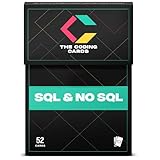
- Comprehensive Coverage: SQL Flashcards and NoSQL Flashcards designed for beginners and interview prep, covering core database concepts, queries, indexing, normalization, and real-world use cases. From relational structures, JOINs, and indexing to NoSQL document models, key-value stores, and distributed systems, these flashcards give you a solid foundation and advanced knowledge to handle any database challenge confidently.
- Interactive Learning: Enhance your understanding with an interactive, hands-on approach. Each card includes practical query examples, schema illustrations, and exercises that let you immediately apply what you learn. This active learning style helps you strengthen your querying skills and build intuition for solving real data problems. Beginner-friendly explanations that help you learn SQL and NoSQL faster without overwhelming theory or dense textbooks
- Portable Convenience: Study databases anytime, anywhere. Whether you’re at home, commuting, or taking a break, these portable flashcards make it easy to learn on the go. Perfect for busy students, developers, or professionals fitting learning into a tight schedule.
- Versatile Audience: Designed for all learners from students preparing for exams to data analysts, backend engineers, and tech enthusiasts. Whether you're building your first query or optimizing production databases, these flashcards guide you at every stage of your learning journey. Perfect for SQL interview preparation for software engineers, data analysts, backend developers, and computer science students
- Skill Enhancement: Boost your confidence and stay current with evolving database technologies. Ideal for self-study, bootcamps, university courses, and last-minute interview revision with concise, memorable flashcard format
How should you frame the task?
Describe the outcome, boundaries, and conditions for acceptance. Acceptance criteria make the request easier to check than a list of stylistic adjectives.
- Outcome: What should users or another part of the system be able to do?
- Constraints: What behavior, interfaces, files, or compatibility requirements must remain unchanged?
- Acceptance criteria: What observable behavior or tests would show the task is complete?
- Uncertainty: If requirements are ambiguous or the change has high impact, ask for a proposed plan before implementation or keep the first change small enough to inspect.
For example, a request to “make the error handling better” leaves the desired behavior open to interpretation. A more useful task identifies the failure case, the expected response, relevant constraints, and how the behavior should be verified. The exact details must come from your project; no generic wording can supply them.
Rank #3

- Comprehensive Coverage: Dive deep into JavaScript with thorough explanations of key topics and practical, real-world examples that make complex concepts easy to grasp. Our content is designed to provide you with a strong foundation and advanced skills, ensuring you are well-prepared for any JavaScript-related challenge.
- Interactive Learning: Transform your learning experience with our interactive format. Practice and apply what you learn immediately with hands-on code snippets and exercises. This approach not only reinforces your understanding but also helps you develop practical coding skills that you can use in real projects.
- Portable Convenience: Take your learning journey anywhere with our highly portable resources. Whether you’re at home, on the commute, or traveling, you can study whenever it suits you, making it easy to fit learning into your busy schedule.
- Versatile Audience: Our content is tailored to meet the needs of a wide range of learners. Whether you’re a student looking to ace your exams, a professional aiming to advance your career, or a hobbyist passionate about coding, our resources are designed to help you achieve your goals.
- QR Code Embedded: A QR code is embedded on each card at the top. At any point, if you need further clarification on a topic, simply scan the QR code with your smartphone. The QR code will take you to a YouTube video or an article that provides a detailed explanation of the topic.
How do you check AI-generated code?
Review the actual change as you would other code, then run the checks appropriate to the project. A qualitative study of developers’ security practices records participants describing manual inspection, adaptation, peer review, and tests including unit testing, static analysis, and fuzzing. These accounts document practices and concerns; they do not establish how common a problem is or provide a general defect rate. Read the ACM CCS 2024 study by Jan H. Klemmer and coauthors.
- Inspect the diff. Check whether the change does what was requested, fits nearby patterns, handles relevant edge cases, and introduces unexpected files or dependencies.
- Examine security-sensitive behavior. Pay particular attention to authentication, authorization, input handling, data exposure, and other risks relevant to the change. Participants in the study reported concerns about security omissions and difficulty recognizing incorrect suggestions; those reports are a reason for scrutiny, not a measured estimate of failure frequency.
- Run relevant project checks. Use the tests and analysis tools appropriate to the code, such as unit tests, static analysis, or fuzzing where the project uses them. Verify results directly rather than relying on an assistant’s account of what it ran.
- Get normal peer review. Follow the project’s review process, especially when the change is difficult to assess or has meaningful security or compatibility implications.
- Check assumptions and gaps. You can ask the assistant to explain assumptions or identify tests it did not run, but confirm its claims independently.
No single checklist guarantees safe code. The goal is to evaluate the implementation with the same quality controls your project expects, rather than treating the assistant’s confidence as evidence.
Independent reader supportYour contribution helps us test, update, and keep practical guides available for everyone.What should you change when a result misses the mark?
Diagnose the kind of failure before adding more wording to the prompt. A mismatch may come from an unclear requirement, missing project context, an assumption the assistant made, or a verification step that did not catch the problem.
What’s actually slowing this PC down?
Pick the symptom - the matching free tool is one click away.
- If the behavior is wrong, clarify the outcome and acceptance criteria.
- If the implementation does not fit the project, supply the relevant architecture, guidance, or nearby example.
- If the assistant made an unsupported assumption, state the constraint or ask for a plan that makes the uncertainty visible.
- If a defect survived review, improve the relevant test or analysis step and inspect the affected behavior again.
For broader evaluation of a coding-assistant workflow, compare whether relevant context is available and current, requirements are explicit, changes fit project conventions, checks find problems, and the result is understandable to reviewers. Also consider the cost and latency of supplying or retrieving context. These are practical comparison criteria inferred from the studies, not a published benchmark.
Best Value

- [THE VIRAL 2026 TREND] Whether they are a "tech wizard" or just a fan of internet culture, this red lobster is the iconic symbol of 2026 success. Don't give a boring, generic card—give the one that shows you’re tuned into the latest trends and memes of their graduation year!
- [PROUD PARENT'S SECRET WEAPON] Want to be the "cool mom" or "cool dad"? This card is the perfect way to show your son or daughter that you truly "get" their world. Even if you don't know the code, they'll be impressed that you found the "Your Lobster is Ready" meme!
- [FOR EVERY 2026 GRADUATE] While it's a "must-have" for STEM majors, its quirky charm appeals to any grad who spent years "grinding." It’s the ultimate 'Let them cook' card—signaling that their hard work is finally complete and they are ready to deploy into the real world!
- [PREMIUM QUALITY & KEEPSAKE] Printed on 300gsm heavy-duty premium cardstock. It’s thick, durable, and perfect for displaying on a dorm room desk or office shelf as a souvenir of the year AI changed everything.
- [BLANK INSIDE FOR PERSONAL PROMPTS] The witty front sets the stage, leaving the inside blank for your heartfelt advice, funny memories, or a "bug-free" future wish. Includes a high-quality envelope, ready for immediate gifting.
What research says—and does not say
The available evidence supports a practical distinction: prompts express tasks, repository context describes project-specific expectations, and review checks the resulting code. The 2025 context study analyzes selected public repositories rather than testing whether a particular prompting method causes better code. The 2024 security-practices study reports participants’ experiences rather than population-wide rates.
A 2026 Google Research paper argues that proactive coding agents should be evaluated on how they decide what matters, what evidence supports an insight, whether to surface it, and how to adapt after feedback. The page lists the work as “to appear” and presents an evaluation proposal, not validated industry-wide results. It reinforces why evaluating only prompt text may miss important parts of an agent’s behavior. Read the paper by Nghi Bui and Georgios Evangelopoulos.
Quick Recap
Product prices and availability are accurate as of the date/time indicated and are subject to change. Any price and availability information displayed on Amazon at the time of purchase will apply.
Quick wins for a faster PC:
Fix the driver behind crashes, sound loss and screen glitchesFind Drivers →Repair Windows errors before they cause bigger problemsFix Now →
