
The Tool Desk
Outbyte Driver Updater FREEFix the driver behind crashes, sound loss and screen glitchesFind Drivers →Outbyte PC Repair FREEClear out junk files and repair common Windows errorsFree Scan →Giving an AI agent tools gives it a path to change things outside a conversation. Before it can read sensitive files, call APIs, run commands, send messages, or deploy code, developers need to define its permissions, isolate execution, require independent checks for consequential actions, and test how it responds to hostile data—not just ordinary prompts.
Why tool access changes an agent’s security risk
An AI agent may reason, plan, use tools, maintain memory, and take actions. Once its tools connect it to real systems, a mistaken or manipulated decision can have consequences: data may leave an environment, code may change, or an external workflow may run. OWASP’s AI Agent Security Cheat Sheet catalogs risks including direct and indirect prompt injection, tool abuse, privilege escalation, data exfiltration, memory poisoning, goal hijacking, approval manipulation, cascading failures, and supply-chain attacks.
Start with the application’s authority, not assumptions about the model’s judgment. Map what the agent can read and write, which network destinations it can reach, which credentials it can use, and which actions are externally visible or difficult to reverse. A read-only search tool and an unrestricted shell have fundamentally different consequences. OWASP’s guidance on excessive agency traces risk to three design choices: excessive functionality, excessive permissions, and excessive autonomy.
How prompt injection can hijack an agent
Agent hijacking does not have to begin with a malicious user prompt. NIST describes indirect prompt injection as malicious instructions embedded in data an agent consumes, such as an email, file, or website. Content relevant to a task can also try to redirect the agent toward an attacker’s goal. See NIST’s account of agent-hijacking evaluations.
#1 Best Overall

- Valued Carpenter Pencil Set: You will get 2 pcs solid carpenter pencils with 26 piece 2.8 mm refills, 1 replaceable sharpener, 1 plastic storage box.The complete carpenter pencils combination allows you to finish your work faster and more easily
- Deep Hole Marker Pencil: The deep-hole construction pencils adopts 45mm elongated tip design, which is more convenient to mark in the small hole or in other tight areas that other carpenter markers cannot reach
- Carpenter Pencils with Sharpener: The sharpener is screwed into the top of the work pencil, which won't get lost either. Built-in pencil sharpener that keep the lead with pointed and smooth to Improves line of sight in fine work
- Stronger Solid Lead: This work pencil is matched with a 2.8 mm thick lead , which is much thicker and stronger during the drawing process of construction work, it will not break or damage easily
- Marks on Various Surfaces: 3 colors solid construction pencil can marks on various surfaces,such as metal, plastic, wood, paper etc. Ideals for woodworkers, contractors, craftsmen, builders, merchants and masons
In developer workflows, treat issue descriptions, pull-request text and comments, README files, dependency changelogs, error traces, fetched pages, and MCP responses as untrusted input. Delimiters or a prompt telling a model to ignore hostile instructions are not, by themselves, an authorization boundary. OWASP recommends treating external data as untrusted and constraining tools and validating actions independently.
Design permissions around the task
Reduce what an agent can do before relying on warnings or instructions to keep it safe. If its task is to summarize mail, for example, it does not need the ability to send mail; a read-only connection and a human send step limit the damage if the agent is manipulated. OWASP recommends giving agents only the tools needed for their task, scoping permissions to specific resources and operations, separating tool sets by trust level, and logging and monitoring actions.
Rank #2

- Ergonomically Designed: Work in tight areas with a compact design that gets into tough spots
- Compact and Lightweight: Both tools are designed to fit into difficult to reach spaces. The 1/4" impact driver has a length of 5.55 in. and weighs just 2.8 lbs, while the 1/2" drill/driver measures only 7.5 in. and weighs 3.6 lbs
- Both the DEWALT impact driver and electric drill driver feature integrated LED work lights with a convenient 20-second delay, ensuring enhanced visibility in dimly lit or challenging work areas
- One-Handed Loading - Keep one hand free with a 1/4 in. hex chuck that accepts 1 in. bit tips
- Power drill cordless with 1/2" single sleeve ratcheting chuck provides tight bit gripping strength, making bit changes faster and more secure
Keep the model’s proposal separate from authorization and execution. As OWASP puts it, “Separate decision-making from execution.” The agent can propose an action, but a policy or execution service should independently check that the action is in scope, permitted for the credential and resource, and approved when required. For consequential actions, bind approval to the exact actor, tool, target, normalized parameters, and a defined time window; short-lived authorization and replay protection can further reduce misuse.
| Design choice | Lower-risk direction | Higher-risk direction |
|---|---|---|
| Tool capability | Narrow, task-specific tools | Broad shell, network, administrative, or write access |
| Permission scope | Resource-specific; read-only where feasible | Long-lived, organization-wide, write-capable credentials |
| Execution authority | Independent policy check after the agent proposes an action | Model output directly triggers an action |
| Isolation | Ephemeral sandbox with limited credentials and network egress | Shared developer machine or CI environment with broad secrets |
| Auditability | Structured records of tool calls, authorization, approval, and outcome | Missing or untrusted logs |
These are design trade-offs drawn from OWASP’s guidance, not a ranking of commercial products. The correct boundary depends on the task and the impact of a mistaken action.
Rank #3

- 【Great Compatibility】This Katerk 1/4 inch hex shank bit holder is specifically designed for 1/4 inch hex shank drill bits. It's compatible with most 1/4 fast hex handles, hex sockets, various electric screwdrivers, and handheld screwdrivers. The bit holder makes it a valuable addition for any handyman.
- 【Secure and Safe】Built with a secure backup nut design, each drill bit holder securely locks onto your bits, ensuring they stay firmly in place. Additionally, our bit holder incorporates a high-quality steel ball rolling design that holds up to several kilograms of weight, ensuring your various drill bits don't fall off.
- 【Easy One-Handed Operation】The bit holder for impact driver allows you to change bits single-handedly, simplifying your workflow. Its multi-color design further allows for quick identification of the drill bit you need.
- 【Compact and Convenient】Thanks to its compact size, this 1/4 inch bit holder is easy to carry around. The bit holder allows for easy attachment to various tools, making this a convenient addition to your construction accessories. The Katerk bit holder is cast from high-quality alloy material, promising a long product lifespan. Despite its rugged strength, the bit holder remains lightweight, making it portable.
- 【Cool Christmas Gift For Men Stocking Stuffers】 This screwdriver bit holder, driver bit holder, impact bit holder, can be given as a gift to your loved one, especially for anyone involved in construction or electrical work. It's a must-have for stocking stuffers for men and women, tools gifts for dad, tech gadgets for men, gifts for dad, gifts for him, gifts for husband, gifts for boyfriend, cool gadgets for men, and cool gifts for dad.
Set approval requirements by impact
Use risk-based autonomy rather than a blanket rule that either approves everything or nothing. OWASP’s examples classify reading and searching as low risk, writing as medium, sending email or executing code as high, and deleting a database or transferring funds as critical. These are illustrative classifications, not universal policy values.
For high-impact or irreversible actions, show the person who approves the action which tool will run, its destination, the affected resource, and the normalized parameters. Validate that approval outside the model and ensure the executor runs the approved action—not a modified version. OWASP also recommends an audit trail, the ability to interrupt or roll back where possible, and failing closed if risk classification, policy lookup, approval validation, or audit logging fails.
Rank #4

- Long Nib and Deep Hole Marker: Our mechanical carpenter pencil with 45mm nib is designed for easy marking of deep holes or narrow areas. These construction pencils are the great choice for woodworking tools, construction tools, carpenter tools, contractor tools, wood carpentry tools and architect tools
- Extra Refills in 2 Colors for Versatile Marking: The construction mechanical pencil comes with 12 extra 2.8mm refills, including 6 red and 6 black refills. The black refill is suitable for light surfaces, while the red wax is perfect for dark surfaces. Our carpenter mechanical pencil makes sure that you'll have an ample supply for extended use
- Built-in Sharpener: Our construction pencil comes with a built-in sharpener to ensure the mechanical pencil tip is always sharp and ready for use. Never buy an extra pencil sharpener again. A great tool for any woodworker pencil, contractor pencils. The refill can easily be extended or retracted with a simple click of the pencils mechanical, allowing you to work more efficiently and accurately
- Portable Clip Design: Our deep hole construction pencil features a portable clip design, easy to carry and attach to your pocket or tool box, so that you can keep the carpenter pencils mechanical close at hand, making it a convenient tool to have on the go. Great gifts choice for carpenters
- Stronger Pencil Lead: The black refills are made of lead, sturdy and smooth. The red refills are made of wax, clear and light. These marking pencils are much thicker and stronger than normal pencils during the marking process of construction work, suitable for various surfaces, such as glasses, metal, boards, floors, walls, furniture, etc. The written marks can be easily wiped with a wet paper towel when needed
Protect coding agents and the route to production
AI coding tools may execute shell commands, install packages, edit files, run tests, access networks, or push branches. OWASP’s Secure Coding with AI Cheat Sheet identifies trust boundaries among developer permissions, the agent, external repository content, model-provider calls, MCP servers, CI/CD workflows, organizational secrets, and deployment access. Treat a coding agent’s environment as sensitive rather than as a harmless assistant window.
- Run the agent in a sandbox. Restrict commands, writable file paths, credential access, and network egress to what the task requires.
- Audit and allowlist MCP servers and tools. Pin tool definitions and review their descriptions; descriptions can contain instructions and may change after approval.
- Verify AI-suggested packages on their public registry and check dependency versions for known vulnerabilities before merging.
- Review every changed file, not only the agent’s summary. Pay particular attention to rules files, CI/CD workflows, Dockerfiles, build scripts, deployment configuration, and package scripts.
- Treat issue and pull-request content passed to CI agents as attacker-controlled. Limit credentials and isolate jobs from sensitive environments.
- Inspect test changes for removed tests, weakened assertions, or mocks that bypass the behavior under test. A green suite produced by the same agent is not independent assurance.
Evaluate attacks that match your agent’s real access
Test the attack surface the deployed agent will actually have: its tools, data sources, credentials, network access, and consequential actions. NIST CAISI used the AgentDojo framework, with simulated Workspace, Travel, Slack, and Banking environments, and added scenarios for remote code execution, database exfiltration, and automated phishing. The reported findings concern that benchmark and agent setup; they are not universal rates for deployed systems.
Do these 3 things before closing this tab:
1Repair Windows errors before they cause bigger problems2Fix the driver behind crashes, sound loss and screen glitches3Clear out junk files and repair common Windows errorsBest Value
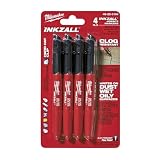
- Milwaukee Ink all Fine Point Marker, Black, 4 Per Pack
- 4 per pack Features Clog Resistant Marker Tip Writes through Dusty, Wet and Oily Surfaces Durable Marker Tip for Writing on Concrete, OSB and Rough Surfaces
- Clog resistant tip writes on dusty, wet and oily surfaces and is optimized for rough surfaces such as OSB, cinderblock and concrete
- Hard hat clip- attaches for easy access
- Quick dry time with reduced smearing and marking
In CAISI’s 2025 Workspace red-team evaluation of upgraded Claude 3.5 Sonnet, the strongest new attack designed for that model had an 81% success rate, compared with 11% for the strongest baseline attack. Across five reported injection tasks, average success was 57% on one attempt and 80% after each attack was attempted 25 times. These are attack success rates in the reported evaluation—not production incident probabilities, prevalence estimates, or guarantees about current systems. NIST’s evaluation write-up emphasizes testing as attackers adapt, measuring task-specific outcomes as well as aggregates, accounting for impact, and considering repeated attempts where retries are cheap.
For your own evaluation, include the indirect-injection routes the agent can encounter, then record both whether an attack succeeds and what it can cause. A low success rate does not make a high-impact scenario—such as exfiltration or code execution—safe to ignore. Re-run tests as tools, prompts, models, and connected data sources change; a single pass/fail run is weak evidence.
A practical rollout sequence
- Inventory the authority. List the agent’s readable and writable resources, tools, credentials, network destinations, and actions that could affect people or systems.
- Remove unnecessary capability. Narrow the tool set and resource scope; prefer read-only access where it can accomplish the task.
- Constrain execution. Isolate the agent, limit egress and secrets, and put policy checks between proposals and actions.
- Gate consequential actions. Require an external approval tied to the exact action, and fail closed if approval or audit controls are unavailable.
- Test and monitor the boundary. Exercise hostile inputs, repeated attempts, and high-impact scenarios; retain structured records of actions and outcomes, and review them when the system changes.
The governing principle is to grant an agent only the authority its task needs, while keeping consequential authorization and execution under controls the model cannot override.
Quick Recap
Product prices and availability are accurate as of the date/time indicated and are subject to change. Any price and availability information displayed on Amazon at the time of purchase will apply.

