
Outdated Drivers Are Slowing You Down
One free scan finds every outdated or missing driver and matches the right update for your exact hardware.Free scan · exact hardware matchWindows Errors? Fix Them Before They Spread
Repair common Windows errors and clear accumulated junk for a smoother, more stable PC - no reinstall needed.Free scan · no reinstallMainframe reliability comes from combining resilient platform features with an application architecture and operating model that can keep serving users when components, systems, sites, or regions fail. IBM Z provides recovery and workload-management capabilities; distributed and cloud patterns can add capacity and separate failure domains. Neither hardware redundancy nor a multi-zone diagram guarantees application availability: the design must match a defined service objective, and recovery must be observable, automated where appropriate, and tested.
What reliability means for an end-to-end service
Reliability is not a single machine attribute. A user-facing service depends on its application, data, network paths, infrastructure, external services, configuration, and the people and processes that operate it. A resilient processor or a second deployment site cannot prevent an application defect, a shared dependency failure, data corruption, or an operational mistake from interrupting the service.
IBM describes mainframe RAS as a system design approach: reliability includes checking and recovery, availability includes recovery from component failures, and serviceability includes identifying and replacing failed elements with limited operational impact. These are platform capabilities, not an end-to-end availability promise. See IBM’s mainframe overview and IBM Z resilience overview.
Set objectives before choosing redundancy
Define what the service must do during normal operation, maintenance, and failure. A service-level indicator (SLI) is a measured signal, such as successful transaction rate or response time; a service-level objective (SLO) is the target for that signal over a defined period. Pair those objectives with a recovery time objective (RTO), the acceptable time to restore service, and a recovery point objective (RPO), the acceptable amount of data loss measured in time.
#1 Best Overall

- Save valuable floor space: 6U wall mount server cabinet Dimensions: 13.78" H x21.65" W x17.72" D.Maximum mounting depth is 14.2"
- Keep critical network equipment secure: glass door and side panels are lockable to prevent unauthorized access. Front door can be installed on either side of the front of the cabinet to satisfy your door swing orientation preference
- Easy equipment configuration: Fully adjustable mounting rails and numbered U positions, with square holes for easy equipment mounting with top and bottom punch-out panels for easy cable access
- Durability: Made of high quality cold rolled steel holds up to 110lb (50kg) (Easy Assembly Required)
- PCI & HIPPA and EIA/ECA-310-E compliant
Make the measurement scope explicit: identify which user journey or service is covered, which dependencies are included, and the measurement window. IBM Cloud describes availability as MTBF/(MTBF+MTTR), where MTBF is mean time between failures and MTTR is mean time to repair or restore. The formula emphasizes that both failure frequency and recovery time matter; a platform availability figure alone does not establish an application’s result. IBM’s high-availability guidance includes an illustrative calculation, not an observed benchmark.
How mainframe capabilities contribute to resilience
Mainframes can contribute resilience within a system and across systems. The useful question is not whether a platform is “reliable” in isolation, but which failure it can absorb, how work is moved, and whether the application and its data remain usable after that failure.
Parallel Sysplex: concurrent work across systems
IBM describes Parallel Sysplex as an infrastructure in which applications can run concurrently across multiple systems and share a common view of data and services. This can support distributing work and recovering from failures without relying on one system or resource. IBM also says a properly configured Parallel Sysplex and sysplex-enabled workload can be configured without a single point of failure. That qualification matters: it is a configuration-dependent vendor description, not a blanket property of every installation or application. Review the IBM Z resilience documentation for the platform mechanisms.
Rank #2

- Universal 19” Rack Mount Compatibility – Perfect for pro audio, video, IT, and network gear. Compatible with mixers, routers, patch panels, servers, power amps, and more.
- Heavy-Duty Load Capacity – Built to support up to 550 lbs. Ideal for studio gear, DJ setups, server equipment, and AV components that demand serious stability.
- Robust Steel Frame & Design – Made with 1.5mm thick steel and weighs 36 lbs for maximum durability, reduced vibration, and long-term reliability in any setting.
- Mobile & Secure – Preinstalled with 3” industrial-grade caster wheels (lockable), making it easy to move and position your rack exactly where you need it.
- All-In-One Setup Kit Included – Comes with 34 rack screws (5mm & 6mm), a 1U blank spacer, and an assembly tool—ready for fast installation out of the box.
CICS: route transaction work across regions and systems
For transaction workloads, CICS can distribute work among regions, z/OS logical partitions, and separate mainframe hardware systems. IBM documents these arrangements as ways to handle demand peaks and keep service available while part of an environment is taken down for maintenance or replacement. Routing by itself does not make a transaction safe to replay or ensure every destination can access consistent data; the application’s transaction, state, and data design must support the routing behavior. The relevant CICS documentation is for CICS TS 5.5, so check the documentation for the version actually deployed.
GDPS: coordinate recovery across sites
For site-level continuity, IBM describes GDPS as combining Parallel Sysplex and remote-copy technology. Its documented capabilities include mirroring critical data between sites and automating recovery operations. Those mechanisms can support disaster recovery, but achievable recovery time, distance, and data-loss exposure depend on the specific topology, configuration, workload, and operating procedures. IBM summarizes these capabilities in its Z resilience material.
Where distributed scale fits
Distributed components can add capacity and isolate application tiers, but every added network path and dependency also becomes part of the service’s latency and failure budget. A design that combines mainframe systems with distributed services should map the full request path: which tier handles each step, where state lives, what happens when a dependency is slow or unavailable, and whether the remaining capacity can meet demand after a failure.
Rank #3

- ADJUSTABLE DEPTH: 4- Post 22U 19" server rack enclosure with 4 vertical rails and adjustable mounting depth 5.7" to 33.0" (14,4cm to 83,8cm); IT rack is compatible with various servers / switches / data / video / AV and other IT networking equipment
- EASY SHIPPING AND ASSEMBLY: Enclosed 22U data rack cabinet ships compact flat-packed to avoid damage and facilitate installation; Include wheels & levelling feet to offer more stability; Home server rack cabinet is only 46.6in (118,3cm) in height
- DESIGN AND VENTILATION: Half height server rack cabinet has lockable and removable door and side panels with vented top allowing airflow; 4 Post 19" rack with 1764lb (800kg) weight capacity (stationary); Computer cabinet rack is EIA/ECA-310-E Compliant
- HARDWARE INCLUDED: Rolling home network rack includes rack mounting and equipment mounting hardware, such as 20 M6 cage nuts / screws, PVC cup washers; Front/rear doors and side panels Keys, 2x allen keys; Rack assembly hardware; Casters and leveling feet
- THE IT PRO'S CHOICE: Designed and built for IT Professionals, this 22U IT Server Cabinet is backed for life, including free lifetime 24/5 multi-lingual technical assistance
Match the deployment pattern to the failure domain
| Failure to address | Possible architectural response | Key design question |
|---|---|---|
| Component or process | Recover or restart the component; route work to another healthy instance where the workload permits. | Can a retry or reroute preserve transaction correctness and avoid overloading the surviving instance? |
| Region within a mainframe environment | Distribute work across CICS regions or logical partitions, subject to application and data design. | Can other regions accept the traffic, and do they have the state and capacity required? |
| Mainframe system | Use a multi-system design such as a properly configured Parallel Sysplex. | Are the workload, shared services, and data arrangements configured to avoid a hidden single point of failure? |
| Cloud availability zone | Place service components across zones to address a single-zone failure. | Are dependencies also distributed, and can surviving zones carry the required load? |
| Site or cloud region | Use a cross-site or multi-region design when the service must withstand a broader outage. | What replication delay, data consistency behavior, and recovery process can the service tolerate? |
IBM distinguishes multi-zone designs, which address a single-zone failure, from multi-region designs, which address failure of an entire region. This is not a universal ranking: a broader failure boundary usually brings different cost, data movement, and operational trade-offs. IBM’s high-availability design guidance describes these patterns; service availability and implementation details can vary by IBM Cloud service and geography.
Choose replication for the workload’s latency and data-loss tolerance
Replication choices affect both responsiveness and recovery. Synchronous replication may require an operation to wait for a remote acknowledgement, making network latency part of the transaction path; asynchronous replication can allow a lag between primary writes and the remote copy, which affects potential data loss after a failure. Neither approach is universally best. Evaluate data volume, network latency, consistency requirements, topology, and governance against the workload’s RTO and RPO. IBM’s resiliency guidance highlights data strategy, topology, and governance as design considerations.
Quick wins for a faster PC:
Scan for outdated or missing drivers - takes under a minuteDriver Scan →Repair Windows errors before they cause bigger problemsFix Now →Fix the driver behind crashes, sound loss and screen glitchesFind Drivers →Design capacity and failover, not just duplicate infrastructure
Redundancy is useful only if the surviving path can actually serve users. Before adopting active-active or active-standby operation, establish what happens to in-flight work, application state, transaction ordering, and writes during a failure. Decide which system or site is authoritative for each data set and how operators or automation resolve an ambiguous failover decision.
Rank #4
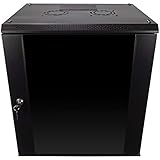
- DURABLE BUILD: Constructed from high-quality Cold Rolled Steel, the NavePoint Consumer Series 12U network cabinet boasts a sturdy, welded frame. Fitting EIA standard 19” networking equipment, this server cabinet confidently supports up to 110 lbs, providing a resilient base for your vital IT gear and equipment
- CONVENIENT DESIGN: This 12U cabinet features a reinforced, heat-treated, tempered glass front door with a security lock. Perfect for applications requiring both security and accessibility, its compact design of 17.72"L x 21.65"W x 24.42"H offers a practical solution for space-constrained settings.
- EASY & CUSTOMIZABLE EQUIPMENT SET UP - The 12U IT cabinet, with removable side panels and security locks, offers customization at its finest. Whether it's for an efficient device or cable management, this data cabinet ensures secure, adaptable configurations that suit your networking server requirements
- ENHANCED VENTILATION & SECURITY - Built-in fans and flow-through ventilation work to prevent overheating, ensuring optimal operation of your equipment. The reinforced, lockable tempered glass front door not only boosts security but also facilitates easy monitoring of installed equipment.
- SAFETY & COMPLIANCE - All NavePoint products are built to industry standards.
- Capacity: Determine whether the remaining systems can handle peak demand after losing a node, zone, or site; include headroom for recovery work.
- Routing: Define how traffic is moved, how unhealthy destinations are identified, and how the service behaves if routing information is stale.
- Data: Set consistency and replay rules, identify acceptable replication lag, and ensure backup and restore plans cover corruption as well as infrastructure loss.
- Dependencies: Trace shared network, identity, storage, and external-service dependencies that could defeat otherwise separate failure domains.
- Operations: Specify who or what initiates failover, what evidence is required, and how the environment returns to its normal state.
IBM’s resiliency guidance recommends aligning backup and replication decisions with RTO and RPO and considering dependent services and infrastructure in continuity planning. A recovery target should be treated as a design requirement to validate, not as a result guaranteed by deploying a second system.
Independent reader supportYour contribution helps us test, update, and keep practical guides available for everyone.Operate the design with observability, automation, and exercises
Reliability work continues after deployment. Monitor the end-to-end service against its SLIs and SLOs so teams can detect deviations before users report them. Observability should cover the mainframe workload, distributed tiers, data movement, routing, and dependencies that contribute to the user’s transaction—not just the health of individual machines.
Automate repeatable operational actions where doing so reduces manual delay and error, but define safeguards and escalation paths for actions that can affect data or expand an outage. Keep continuity procedures current and test them under conditions that exercise the actual failure boundary, including recovery of dependent services. Record what the exercise proves: restoration time, recovered data point, capacity after failover, and any manual steps that remain. IBM recommends end-to-end observability, operational automation, and tested continuity plans in its resiliency guidance.
What’s actually slowing this PC down?
Pick the symptom - the matching free tool is one click away.
Apply SRE practices to mainframe services
Site reliability engineering (SRE) applies engineering methods to service operations, including measurable objectives, monitoring, automation, and learning from failures. These practices can apply to mainframe operations as well as distributed systems, though the tools and platform-specific work differ. Broadcom’s mainframe SRE white paper focuses primarily on z/OS and explicitly notes that some principles apply to both mainframe and distributed systems. Use that perspective to connect mainframe specialists and distributed-service teams around shared service objectives and recovery responsibilities.
A practical sequence for building a resilient hybrid service
- Define the service boundary. Identify the user journey, its dependencies, and the SLI measurement window. Set SLOs, RTO, and RPO based on business impact.
- Map failure domains. Mark dependencies at component, process or region, system, zone, site, and cloud-region levels. Identify shared resources that cross apparent boundaries.
- Assign each failure a response. Decide whether the service should tolerate the failure in place, route around it, restore from backup, or invoke disaster recovery.
- Validate workload behavior. Check transaction semantics, state handling, data consistency, routing, and peak capacity for the selected mainframe and distributed patterns.
- Instrument and automate. Build end-to-end service signals and alerts around the objectives; automate safe, repeatable recovery actions with appropriate controls.
- Exercise recovery and revise. Test the relevant failure scenarios, measure actual restoration and data recovery against objectives, document gaps, and update the design and runbooks.
The result is a layered design: mainframe resilience mechanisms can help keep transaction processing available across regions or systems, while distributed and cloud patterns can provide additional capacity and separation across zones or sites. Its reliability is established by how well those layers meet the service’s objectives in a real failure—and how reliably the organization can detect, recover, and learn.
Quick Recap
Product prices and availability are accurate as of the date/time indicated and are subject to change. Any price and availability information displayed on Amazon at the time of purchase will apply.

