
Free tools Windows power users keep installed
One-click scans. No signup required.
iTechGuides is reader-supported. When you buy through links on our site, we may earn an affiliate commission. As an Amazon Associate I earn from qualifying purchases. Learn more
A hexagonal aperture changes which points on the lens a camera ray can start from. It should not change how a diffuse surface samples the hemisphere above it. If switching to a hexagonal aperture breaks diffuse shading across a scene, the aperture code is almost certainly sharing state, random numbers, or sample indices with the bounce code. The fix is to keep those two sampling domains separate, and the rest of this article explains how to check for that and why the diffuse estimator itself is not the problem.
Two samplers that answer different questions
The lens sampler picks a point on the aperture for each camera ray. Rays that leave different lens points converge on the focal plane and spread out elsewhere, which is what produces defocus blur. A circular aperture samples a disk; a hexagonal one samples a hexagon. Only the distribution of lens points changes.
The diffuse sampler runs after a camera ray hits a surface. It chooses an outgoing direction in the hemisphere above the hit point to estimate indirect light. In a correctly built path tracer, the lens plays no part in this step.
What’s actually slowing this PC down?
Pick the symptom - the matching free tool is one click away.
Why the Lambertian estimator does not depend on the aperture
For an ideal Lambertian surface, the BRDF is the albedo divided by π, and it is the same in every outgoing direction. The rendering integral weights incoming light by the cosine between the incoming direction and the surface normal, which accounts for projected area. The Ray Tracing GPU Edition book’s section on diffuse BRDF and Monte Carlo sampling works through this relationship.
#1 Best Overall
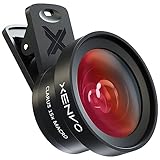
- ✔ COMPATIBLE WITH ALL SMARTPHONES, TABLETS, and LAPTOPS including ALL iPhone models, Samsung Galaxy and Note, Google Pixel, Huawei and more. CONTENTS INCLUDE: TruView 0.45x Wide Angle Lens, Clarus 15x Macro Lens, TruGrip Lens Clip, GlowClip Mini Rechargeable LED Light + Charging Cable, Quick-Release Lanyard, DuraCase, EasyClip, and Cleaning Cloth.
- ✔ TRUVIEW 0.45x WIDE ANGLE LENS - CAPTURE 45% MORE PICTURE WITH EVERY SNAP: Shoot stunning photos of people, pets, travel scenery, landscapes, architecture, selfies and more. NO DARK CORNERS (vignetting) like cheaper lenses. Crafted from aircraft-grade aluminum and premium optical glass for durability and clarity. Multi-element, coated glass lenses minimize ghosting, reflections, lens flare, and other artifacts. Xenvo cell phone lens attachment is ideal for hobbyists and photography pros alike.
- ✔ CLARUS 15x MACRO LENS - MARVEL YOUR SENSES. MAGNIFY NEARBY SUBJECTS FOR BREATHTAKING, SUPER CLOSE-UP PHOTOS: Capture all the intricacies and details with precision-focus for razor crisp macro photos every time. (For best results, position macro lens approximately 1/2 inch from subject. Not designed for zooming in on distant subjects.) THE TRUGRIP LENS CLIP offers SUPERIOR GRIPPING POWER to fasten your lenses to your cell phone when you're in action mode, framing your next perfect shot.
- ✔ GLOWCLIP RECHARGEABLE LED FILL LIGHT - The GlowClip LED light clips ANYWHERE on your phone to instantly illuminate your subject and surroundings with warm continuous light. The warm and natural LED light is superior to your smartphone's built in flash—which can be blinding and unnatural—especially in darker settings and venues. FEATURES 3 BRIGHTNESS SETTINGS: Low, Medium and High. Say goodbye to frustrating photo "retakes" and hello to brilliant photos the first time.
- ✔ QUICK-RELEASE LANYARD AND TRAVEL CASE - TRANSPORT AND PROTECT YOUR LENS KIT: Perfect for taking your Xenvo lenses with you on the fly. The travel case stores and protects all lens kit components snugly and safely while the quick-release lanyard is the perfect way to carry your lenses on your next outing. Just drape the lanyard and lens around your neck. The quick-release lanyard head makes it a cinch to access your Xenvo lenses in a flash so you never miss another photo moment.
The article’s own statement of the point reads: “For a Lambertian surface, whose BRDF is ρ/π, the estimator then cancels completely:” (Ibukun Sanni, DEV Community). When the outgoing direction is drawn with cosine-weighted hemisphere sampling, the sampling density is cos θ / π, and the terms in the estimator cancel as shown below.
| Term | Lambertian value | Role in the estimator |
|---|---|---|
| BRDF f | albedo / π | Scattering per outgoing direction |
| Cosine term | cos θ | Projected area of the incoming light |
| Sampling density p | cos θ / π | Probability of drawing that direction |
| Weight f · cos θ / p | albedo | Remaining factor applied to the incoming radiance |
The lens appears in none of these terms. The estimator therefore returns albedo multiplied by whatever radiance the bounce ray finds. A different aperture can change that radiance only by changing where the camera ray goes, which is the defocus effect, and it cannot change the scattering weight itself.
Rank #2

- WHAT YOU CAN GET: 1 camera lens Cleaner 50ml + 1 air blower + 1 two in one Lens Cleaning Pen + 1 Retractable wool soft brush + 5 sensor cleaning swab + 25 lens cleaning Tissue Paper + 2 Microfiber Cleaning Cloth + 8 Cleaner Wipes + 1 storage box.
- WHAT IT USED FOR : Professional Camera cleaning kit for Canon, Sony, Nikon, Pentax, drone, is mainly used for camera, dslr camera cleaning, and Camera details like camera lens and camera sensor, and also used for the camera surface cleaning.
- WHAT WE DIFFERENT FROM OTHERS: We equipped A retractable wool brush, which is super soft and bushy, can be great used in camera lens and sensor dust removing. and because it’s soft and anti-drop wool, your camera can be totally cleaned.
- WHAT’S THE ADVANTAGE: Safety, Simple, Effective, Static-free, Multi-propuse, unique cleaning kit for your life!
- HOW TO GET GUARANTEE: Just e-mail us at any time you like, we are pleased to solve your consultation and make a guarantee to provide returns service.
What a broken diffuse surface usually points to
If diffuse surfaces change brightness or pattern only after the aperture change, the estimator is probably intact and the two samplers are sharing something. These are the most likely causes to check, in rough order of how often they appear:
- Shared random number stream. The lens and the bounce draw from one generator. Changing the number of lens samples per pixel then shifts every later hemisphere direction.
- Reused sample pair. A 2D sample is used both to place the aperture point and to pick the outgoing direction, so the bounce receives correlated or biased directions.
- Invalid lens points. The hexagonal sampler returns points outside the hexagon or a non-uniform distribution. That mainly distorts defocus, but if the sample index is shared, the error can carry into the bounce.
- Lens weight scaling. The camera ray weight is computed from the hexagon’s area incorrectly. That scales every camera path, which looks like a shading problem even though it originates in the lens code.
How to isolate the fault
- Render the scene with the circular aperture using the same build. If diffuse surfaces are already wrong, the cause is not the hexagonal shape.
- Set the aperture radius to a value near zero, which approximates a pinhole. If diffuse surfaces are correct at that setting, the lens path is involved.
- Give the bounce sampler a fixed seed per pixel and bounce index, then swap only the lens function. If the diffuse result is unchanged, the two samplers are independent.
- Disable lens sampling entirely and compare a diffuse-only pixel between the circular and hexagonal settings. Identical values mean the surface path is unaffected by the aperture shape.
Lens sampling versus a post-process bokeh pass
Polygonal bokeh can also be produced by a post-process depth-of-field shader rather than by sampling the lens. L. McIntosh’s 2012 paper in Computer Graphics Forum describes a separable filtering approach for square, hexagonal, and octagonal apertures (McIntosh, Efficiently Simulating the Bokeh of Polygonal Apertures in a Post-Process Depth of Field Shader).
Rank #3

- Professional Camera Lens Cleaning Kit Includes: air blowing * 1, two in one cleaning pen * 1, brush * 1, beauty brush * 1, cleaning cloth * 5, lens paper * 20, cleaning rod * 4, detergent * 1, dry and wet bag *5, tweezers *1, storage box *1, cotton swab *5, instruction manual*1
- Zero Scratches, Efficient Cleaning: Extremely fine Microfiber can easily clean the invisible dust, particles and smudges on Cameras and Lens, leaves zero scratches, streaks or marks. Non-Toxic Alcohol-Free Formula Cleaner Kits also leave zero scratches, streaks or marks after use. Changing the cleaning kit can efficiently and safely clean the dirt on the camera and lens. 2 in 1 lens brush, cleaning brush
- Convenient to Carry and Use: The accessories are all packed in a black storage box. When you need to use it, open the storage box and select the tools you need, It is very simple and convenient
- Rocket Blowing Balloon: The air blower can easily direct a stream of air to blow away dirt and dust from your lenses or camera sensor,unique in appearance
- Service Guarantee: We will reply your messages 24 hours. If you have any problem about our product or service, please let us know if we could help you further. We will make every effort to ensure your 100% satisfaction
| Approach | Where depth of field is computed | Aperture shapes | Effect on rays and diffuse shading | Trade-offs |
|---|---|---|---|---|
| Lens sampling in a path tracer | Camera ray origin, before any shading | Any shape the sampler can draw uniformly | Changes only the lens sample; the diffuse estimator stays separate if sampling domains are kept apart | Defocus is noisy and needs more samples per pixel |
| Post-process shader (McIntosh, 2012) | Screen-space pass applied to the finished image | Square, hexagonal, and octagonal apertures, as described in the paper | Does not alter any rays, so it cannot disturb the diffuse bounce | The paper reports better frame rates than a naive non-separable filter in its own video-game-engine test; that is a 2012 result, not a current benchmark, and the paper does not reproduce the approach in a path tracer |
Scope of the claim
The title is one author’s report about their own renderer, published on DEV Community by Ibukun Sanni. It describes a specific implementation failure, and it does not show that hexagonal apertures break diffuse shading in renderers generally. No independent reproduction of that account is cited here. What the sources do establish is the separation of roles: the aperture decides where camera rays start, and the Lambertian estimator, with its cancelling BRDF, cosine, and density terms, does not use the aperture at all.
The article’s listing shows a posting date of September 26 with a relative age of “last year”, which points to 2025. The year is inferred from that label and is not printed in the listing text.
Quick Recap
Best Value
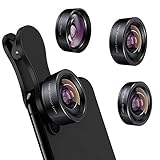
- 3 in 1 Phone Camera Lens Set: Every lens can be used separately. The 20X Macro lens has a best focusing distance of 1.18-3.54 inch, help you to explore the microworld. 120° Wide lens can expand the shooting area of 10%, make a bigger view to the world. 198° Fisheye lens can produce a strong visual effect to make thing cuter
- High Quality: Professional HD Lens with advanced lanthanide optical glass can reduce the reflection and ghosting, bringing you amazing vision with details and clarify. High quality grade aluminum shell can protect the glass offering a long durability
- Clip-on Phone Lens: Easy Use Design. Just attach the lens to the clip and clip it on the phone camera, then you can enjoy the amazing effect of the lens. The clip has soft rubber to avoid scratch on your phone. Strong spring can hold on tightly
- Compatible with Most Smartphones: Universal design of 3.6 cm clip make the lenses compatible with most iPhone, Samsung google phone etc. Note: For different model you might have to use different way to clip the clamp.
- Package Content: 1x 120° Wide Angle Lens, 1x198° Fisheye Lens, 1x 20X Macro Lens, 1x Universal Clip, 1x Storage Bag, 1x User’s Manual
Rank #4

- THIS NIKON DSLR CAMERA LENS BUNDLE CONTAINS: Nikon AF-S DX NIKKOR 35mm f/1.8G Prime Lens + Deluxe Padded Camera Lens Case + 52mm 4-Piece Close-Up Macro Filter Kit + 52mm 3-Piece Filter Kit (UV, CPL, FL) + 52mm Professional UV Lens Filter + 52mm Hard Tulip Lens Hood + Lens Cap Keeper Holder + Deluxe Cleaning Kit
- IMPORTANT LENS FEATURES: F-Mount Lens/DX Format - Format Compatibility: APS-C - Aperture Range: f/1.8 to f/22 - One Aspherical Element - Super Integrated Lens Coating - 52.5mm (35mm Equivalent) - Rounded 7-Blade Diaphragm - 8 Elements in 6 Groups - Silent Wave Motor - Filter Size: 52mm
- THIS LENS IS COMPATIBLE WITH THESE NIKON CAMERAS: Nikon D3 Series, Nikon D4 Series, Nikon D5 Series, Nikon Df, Nikon D3100, Nikon D3200, Nikon D3300, Nikon D3400, Nikon D3500, Nikon D500, Nikon D5000, Nikon D5100, Nikon D5200, Nikon D5300, Nikon D5500, Nikon D5600, Nikon D600, Nikon D610, Nikon D700, Nikon D7000, Nikon D7100, Nikon D7200, Nikon D750, Nikon D7500, Nikon D800, Nikon D810, Nikon D810A, Nikon D850
Product prices and availability are accurate as of the date/time indicated and are subject to change. Any price and availability information displayed on Amazon at the time of purchase will apply.

