
GemFire can expand capacity by adding nodes to a cluster, while eviction, expiration, off-heap memory, and disk overflow determine how data uses memory. But the available official material does not establish which GemFire release is latest today or show that a particular release increased capacity. Treat “latest release” claims—and any capacity figures—as version- and workload-specific until confirmed in current Broadcom release information.
What is new in the latest GemFire release?
There is not enough verified information here to identify GemFire’s latest release or attribute a capacity improvement to it. Broadcom’s versioning guidance explains how release numbers work, but does not identify the current release. Check Broadcom’s current customer download or release channel and the release notes for the exact version before making an upgrade decision.
Broadcom describes GemFire versions in the format major.minor.maintenance.hotfix. Major and minor releases carry feature changes; maintenance and hotfix releases address fixes. Its guidance is to select the latest available maintenance build within the version family being considered. Broadcom’s GemFire versioning guidance explains the distinction.
A separate Broadcom support article says a region-entry-count reporting issue affecting GemFire 10.1.x and 10.2.x is resolved in 10.3.0 or higher. That is a correction to reported entry counts, not evidence of a maximum database size, a capacity increase, or the currently latest release. See Broadcom’s entry-count issue notice.
Outdated Drivers Are Slowing You Down
One free scan finds every outdated or missing driver and matches the right update for your exact hardware.Free scan · exact hardware matchPC Slower Than It Used to Be?
A free scan shows the junk files, broken settings and background clutter dragging Windows down - then fixes them in one click.Free scan · Windows 10 & 11#1 Best Overall
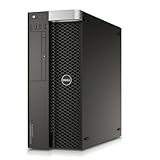
- Intel Xeon Processor: 12-core 2.5GHz processor for high performance computing
- Quadro NVS Graphics: Dedicated NVIDIA graphics card for professional graphics and visualization
- DDR4 Memory: 64GB of DDR4 memory for fast data access and multitasking
- SSD Storage: 480GB solid state drive for fast boot and application loading
- No Operating System: Pre-installed Windows 7 Pro for customization and compatibility
How does GemFire scale capacity?
Scale out by adding nodes
The Spring Data for Pivotal GemFire reference guide describes adding nodes to increase capacity as linear scale-out. Adding nodes can distribute data and work across more machines, but the documentation does not promise that every application or workload will scale perfectly. Results depend on the deployment and its bottlenecks. The guide is historical documentation; use it for the configuration concepts, not as confirmation of current support status. Read the Spring Data for Pivotal GemFire Reference Guide.
Scale up by increasing node resources
Scale-up means giving an existing node more resources, such as CPU, memory, disk, or network capacity. Whether that is preferable to adding nodes depends on which resource limits the workload and how data and activity are distributed. The cited documentation does not supply a universal sizing formula or a comparison of scale-up and scale-out performance.
Rank #2
- Chassis: Dell Precision T5810 Workstation
- CPU: Intel Xeon E5-1620 v3 (4-Cores 3.60 GHz)
- Memory: 8GB DDR4 RAM
- Graphics Card: NVIDIA Quadro K620 (2GB DDR3)
- Storage: 512GB SATA SSD
What determines how much data stays in memory?
Eviction and expiration
Capacity planning is not only a matter of adding memory or nodes. Eviction manages which data remains in memory when configured limits or policies apply; expiration removes data according to configured age or idle-time rules. The reference guide discusses using these mechanisms together. Their effects depend on policy and workload, so they should be chosen with the application’s retention requirements in mind.
Heap and off-heap memory
GemFire documentation includes off-heap configuration, but the choice depends on characteristics such as object size and whether the application needs deserialization. The available guidance does not establish a generally applicable capacity multiplier for off-heap storage. It should not be treated as a simple, guaranteed way to fit a fixed multiple of data into the same machine.
Free tools Windows power users keep installed
One-click scans. No signup required.
Rank #3
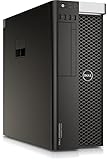
- Dell T7810 Precision Tower Workstation
- 2x Intel Xeon E5-2690 v4 14-Core/28 Threads 3.1GHz (3.5GHz Turbo)
- 128GB Memory DDR4 – Nvidia Quadro K620 2GB
- Add your own Hard Drives/ SSDs
- Add your own Operating System
Overflow to disk
GemFire can be configured to write evicted values to disk rather than simply discard them. This can reduce the amount of data kept in memory, but disk-backed access has different performance characteristics from in-memory access. The cited material does not establish a general performance ratio for overflow, so validate its impact against the application’s access patterns and latency requirements.
What do the published performance figures actually show?
A 2024 Broadcom Tanzu Community post about GemFire 10.1 reports roughly 4 GB/sec in persistence I/O testing, describing that rate as the limit reached by the test controller. The same post reports a 10× performance improvement in its persistence work. These are vendor-authored results tied to the described test setup: they are not independent benchmarks, do not measure general in-memory throughput, and do not establish a universal capacity gain. Read the GemFire 10.1 post.
Rank #4

- HP Z4 G4 Workstation Tower
- Intel Xeon W-2133 6-Core 3.6GHz (3.9GHz Turbo)
- 64GB DDR4 Memory - Nvidia Quadro P400 2GB
- 512GB NVMe M.2 SSD (boot) + 2TB HDD (storage)
- Windows 11 Pro 64-bit
How to assess a capacity claim before upgrading
- Confirm the exact version. Check the current Broadcom release or download channel and record the full major.minor.maintenance.hotfix number and release date.
- Read the matching release notes. Look for a stated capacity change and its metric, test conditions, supported platforms, and any topology or configuration requirements.
- Match the evidence to your workload. Compare results only when hardware, cluster topology, data shape, persistence settings, and measurement definitions are sufficiently similar.
- Identify the actual constraint. Determine whether the limit is memory, CPU, disk, network, data placement, or retention policy before choosing scale-out, scale-up, off-heap configuration, eviction, or overflow.
- Validate in your environment. A vendor result or configuration example is not a substitute for checking application behavior, latency, and resource use under your own workload.
Broadcom positions GemFire as a platform whose capacity can be scaled up or down with zero downtime. That is vendor product-page language, not a quantified service-level commitment or a workload-independent benchmark. See the GemFire product page.
Quick Recap
Product prices and availability are accurate as of the date/time indicated and are subject to change. Any price and availability information displayed on Amazon at the time of purchase will apply.
Recommended Free Tools

