
No. Rooftop solar can supply a meaningful share of electricity, but its technical potential is not the same as capacity that is available, affordable, or actually installed. Solar farms serve a different role: they can deliver power at utility scale, provided developers can secure suitable land, buyers, permits, and grid access. The evidence points to growth in both, not the disappearance of either.
Why rooftop potential does not equal replacement capacity
The U.S. Department of Energy defines rooftop technical potential using factors such as roof size, shading, direction, and location. It explicitly cautions that this measure does not account for availability or cost: “Rooftop potential is not equivalent to the economic or market potential for rooftop solar—it doesn’t consider availability or cost.” DOE’s Solar Rooftop Potential therefore describes an upper technical estimate, not a forecast of installations or proof that rooftops can replace all utility generation.
A National Renewable Energy Laboratory analysis from 2016, summarized by DOE, estimated that more than 8 billion square meters of U.S. rooftops were suitable for panels, representing more than 1 terawatt of potential capacity. The number is substantial, but it does not mean that this capacity is ready to build: individual roofs vary in condition, structure, tilt, shading, and suitability, and building owners must choose to install systems.
DOE’s page also reports that residential and other small roofs account for about 65% of national rooftop potential, and that 42% of residential rooftops are households with low-to-moderate incomes. It estimates an average of 3.3 million homes per year will be built or need roof replacement, representing roughly 30 GW of potential solar capacity annually. These are estimates presented by DOE from NREL analysis—not annual installations or adoption forecasts.
PC Slower Than It Used to Be?
A free scan shows the junk files, broken settings and background clutter dragging Windows down - then fixes them in one click.Free scan · Windows 10 & 11Outdated Drivers Are Slowing You Down
One free scan finds every outdated or missing driver and matches the right update for your exact hardware.Free scan · exact hardware match#1 Best Overall
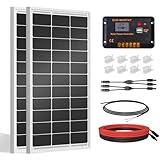
- [Wide Application]: Daily Output 800wh/day under 4 hours full sunshine condition. Perfect for RV, Caravan, Marine, Camper, Electric scooter, Golf Carts, Power wheels, Trolling motor, Tool trailer, Backup power supply for cabin shed home etc.
- [Excellent Performance]: ECO-WORTHY solar panels use high-performance monocrystalline solar cells, which can provide up to 21.5% higher efficiency sufficient light conditions.size:35.2*23.1.37in
- [Durable]: Corrosion-resistant aluminum alloy frame, so that the panel can be used for decades, and can withstand strong wind (2400Pa) and snow load (5400Pa), with a long service life. Ip65 rated junction box provides complete protection.:
- [Complete and Easy]: The back of the pre-drilled and plug-and-play cables allow quick installation, the kit can be connected in series (24V) or parallel (12V) if you need. What you will get: 2 pcs 100W mono solar panel + 2 set of Z mounting brackets + 30A solar controller + 1 pair of 16.4ft 10 awg solar cables + 1 pair of 2-in-1 connectors + 1 pair of 4.92ft tray cable.
- [Support]: 1 year with 24/7 tech support, if any problems or questions about the product,please do not hesitate to let us know through Amazon or call ECO-WORHTY hotline for solution.
What solar farms provide—and what they require
DOE generally defines large-scale, ground-mounted solar as projects greater than 1 megawatt. Their size makes them a distinct deployment option: a project can be planned to serve a utility, municipality, or broader customer base rather than being limited to the usable roof area of individual buildings. But scale does not make siting automatic or impact-free.
As DOE’s large-scale solar siting overview explains, project development can involve finding land and an electricity buyer, evaluating topography and land costs, securing interconnection and transmission access, addressing zoning and environmental effects, obtaining permits, and engaging the host community. Land-use choices and local priorities are part of the project, not details that can be ignored.
Rank #2

- 【Versatile Off-Grid Solar Panels Kit】Generates up to 1.1kWh daily power with 5 hours of full sunlight. All-inclusive kit includes 2x110W N-Type panels, 30A PWM controller, Y connectors, Z brackets, PV and battery cables. Compact design fits Class B camper vans, RV, Camping, marine, boats, rooftops, farms, trailers, caravans, greenhouses, cabins, sheds and more off grid Applications.
- 【N-Type 16BB Performance】Premium N-Type cells with 16 busbar structure achieve 25% high efficiency, eliminating light-induced degradation. Delivers stable output even in low-light/cloudy conditions, with sturdy construction resisting road vibrations, perfectly stable for use on RVs, trailers and other mobile off-grid scenarios.
- 【Smart Controller & Anti-Shade Design】30A PWM controller auto-senses 12V/24V systems, compatible with lithium, gel, sealed and flooded batteries. LCD monitor, dual USB ports, 3-stage charging, and built-in safeguards (reverse polarity, overcharge, etc.) plus anti-shade bypass diodes ensure stable power.
- 【Durable & Expandable Design】IP68 waterproof with corrosion-resistant aluminum frame withstands strong wind and heavy snow. N-type cells feature low temperature coefficient maintains high output in extreme heat. Flexible for 12V/24V systems, PWM supports up to 400W input, easy series or parallel expansion with included connectors.
- 【Reliable Warranty & Support】We back our products with a 10-year warranty for solar panels and a 2-year warranty for the controller. 7*24 customer service and technical support are available to resolve your installation and product concerns efficiently.
DOE, drawing on the Solar Futures Study, reports projections of about 5.7 million acres of ground-mounted solar by 2035 (0.3% of the contiguous United States), rising to as much as 10 million acres by 2050 (0.5%). These are scenario-based projections summarized by DOE, not a statement that all such land is already in use or that every project will have the same local effects.
Why a simple cost comparison can mislead
There is no single cost figure here that establishes rooftop solar as always more expensive—or solar farms as always cheaper—per unit of electricity. DOE and its laboratory partners benchmark residential, commercial, and utility-scale systems separately, using representative systems and industry data. Their methodology distinguishes a minimum sustainable price, modeled as viable under stated long-term assumptions, from a modeled market price that can reflect temporary market conditions. See DOE’s solar PV system cost benchmarks.
Recommended Free Tools
Rank #3

- High-Efficiency Monocrystalline Silicon: The 100W solar panel uses premium monocrystalline silicon cells, providing up to 30% higher efficiency than ordinary silicon, ensuring maximum power output even in low-light environments
- All-Weather Durability: Constructed with a waterproof junction box, edge-seal waterproofing, and a corrosion-resistant aluminum frame, this panel is built to withstand hail, snow, rain, and other adverse weather conditions for long-lasting performance
- Smart Solar Charge Controller: The included controller offers comprehensive protection including overcharge, over-discharge, over-voltage, and short-circuit safeguards, and is compatible with 12V batteries, with a built-in LCD display and USB ports for convenient monitoring and device charging
- Complete Installation Kit: The package comes with all necessary accessories including solar-to-controller cables, O-ring terminal power cables, Z-brackets, and screws so you can install the system quickly and easily without additional purchases
- Versatile Off-Grid Compatibility: Suitable for RVs, boats, cabins, and remote power needs, this system is compatible with a wide range of 12V battery types, making it a flexible and reliable solution for off-grid living
One useful utility-scale reference is the National Laboratory of the Rockies’ 2025 Annual Technology Baseline. It models a 2024 overnight capital cost of $1.49 per watt AC, including grid-connection costs, for a specified 100-MW DC, one-axis tracking PV system. The figure is a benchmark, not a household quote: the ATB reports utility costs on an AC basis, while modules are rated DC, and its 2025 estimates assume a 1.32 DC-to-AC ratio. The 2025 ATB details the system assumptions. Comparing that value with a residential rooftop offer would require aligning system scope, financing, and cost basis.
A fair comparison also needs a shared location and clear boundaries. Roof condition and usable area are not interchangeable with land suitability; local distribution connections are not the same as a large project’s interconnection and transmission needs. Energy production depends on local solar conditions and system design, so panel counts alone do not establish which option delivers more useful electricity.
Rank #4

- 【200W N-Type 16BB High Efficiency】Built with advanced N-type monocrystalline cells and 16BB busbar technology, the Callsun 200 watt solar panel delivers up to 25.6% conversion efficiency. N-type cells provide excellent power generation and reliability, while the 16BB design helps reduce hot spots and microcrack risks for dependable long-term performance.
- 【400W Series Connection for Portable Power Stations】Pair two Callsun 200W panels in series to reach 400W total power, 47.48V Vmp and 54.62V Voc while maintaining 8.43A operating current. This configuration is well suited for many portable power stations with 60V-class solar input limits, helping maximize solar charging within supported voltage and current ranges.
- 【Boost Energy with Bifacial Technology】The Callsun 200W bifacial solar panel features a transparent backsheet that captures sunlight from both the front and rear sides. By utilizing direct, reflected and diffuse light, the bifacial design can generate additional energy from the rear side under suitable installation conditions, helping maximize overall solar output.
- 【TwinCell Anti-Shading Design】The Callsun 200W solar panel features a dual-module parallel design that divides the panel into two independently operating sections. When one section is partially shaded by trees, buildings or other obstacles, the other section can continue generating power. This design helps reduce the impact of partial shading and maintain more consistent energy production.
- 【Compact Design for RVs, Vans & Off-Grid Use】Each panel measures 51.3 × 30.3 × 1.4 inches and weighs 23.8 lbs, delivering strong power output in a compact footprint. This 200W solar panel is ideal for Class B vans, RVs, marine applications, rooftops and other space-conscious off-grid solar systems. Pre-drilled mounting holes make installation with compatible mounting hardware straightforward.
Who can use each option?
- Rooftop solar: Depends on a suitable building and the decisions of its owner or occupants. It can add distributed generation close to homes or businesses, but access is constrained by roof characteristics and the ability or willingness to install a system.
- Solar farms: Developed by utilities, municipalities, or private developers, and can supply electricity to larger groups of customers. They require land, project approvals, a buyer or other route to market, and viable grid access.
These differences mean the options are not simply interchangeable versions of the same project. Rooftops can contribute generation across many buildings, while a solar farm concentrates equipment and grid connection at a selected site.
Independent reader supportYour contribution helps us test, update, and keep practical guides available for everyone.What current forecasts say about the two approaches
The International Energy Agency’s Renewables 2025 forecast expects distributed solar applications—including residential, commercial, industrial, and off-grid projects—to account for 42% of worldwide PV capacity expansion during 2025–2030. It also expects utility-scale and distributed PV together to represent nearly 80% of projected worldwide renewable electricity capacity expansion over that period.
What’s actually slowing this PC down?
Pick the symptom - the matching free tool is one click away.
Best Value
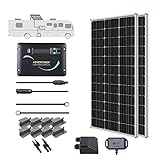
- [Wide Application] 800Wh daily output depends on the 4 hours sunlight availability. This panel is suited for applications that require a smaller footprint, making it a favorite for those with RVs, campers, caravan, boat, Green house and more.
- [Excellent Performance] 22% High solar cell efficiency; Corrosion-resistant aluminum frame for outdoor use, allowing the panels to last for decades as well as withstand high winds (2400Pa) and snow loads (5400Pa)
- [Multiple Protection] The Renogy Adventurer-Li 30A PWM charge controller is designed for aesthetically clean flush mounting on RV or camper walls; Protection against: overcharging, overload, short-circuit, and reverse polarity
- [Easy Installation] Pre-drilled holes and Plug&Play cables on the back allow for fast mounting, and it supports lithium batteries, lead-acid batteries, gel batteries; 3 pairs of Y branch connectors are newly added to meet your parallel requirements
- [VVarranty] 5 year vvarranty and 24/7 technical support team.
Those are global forecasts, not observed results or guarantees. They indicate that the IEA expects both distributed and utility-scale solar to expand; they do not imply that every country, grid, or community will follow the same mix. The more detailed rooftop potential, siting, and cost figures above are U.S.-specific.
How to compare rooftop solar with a solar farm
For a decision in a particular place, compare systems on common assumptions rather than using a national potential estimate or a single headline cost. The relevant questions are:
- What are the installed and lifetime costs, including financing, operation, and maintenance?
- How much energy will each design produce at the location, and when will it produce it?
- How much suitable roof area is actually available, or what land is suitable and acceptable for a ground-mounted project?
- What distribution interconnection, transmission access, permits, and community decisions are required?
- Who can participate in or benefit from the project: a building’s owner or occupants, or a wider group served by a utility-scale development?
These questions help distinguish theoretical resource from a project that can be built and connected. They also avoid treating technical potential, installed capacity, electricity generation, and forecast additions as if they were the same measure.
Quick Recap
Product prices and availability are accurate as of the date/time indicated and are subject to change. Any price and availability information displayed on Amazon at the time of purchase will apply.
Do these 3 things before closing this tab:
1Clear out junk files and repair common Windows errors2Fix the driver behind crashes, sound loss and screen glitches3Repair Windows errors before they cause bigger problems
