
Pause the affected transaction, route the alert to your sanctions or export-control lead, and verify the supplier’s identity and the exact list entry before deciding what to do. A screening hit is not a single legal outcome: the consequences depend on the list, the transaction, and any applicable U.S. jurisdictional connection.
What should you do first?
- Pause the affected activity while you review the alert. Put the relevant order, payment, shipment, access, or other transaction step on hold and promptly involve your company’s compliance lead or qualified counsel. This is a prudent control during review; a hit does not mean every relationship must automatically end, nor does every list independently require a blanket stop.
- Preserve the alert and the transaction context. Keep the screening result and note which transaction or activity triggered it. Avoid treating the alert as cleared or as a confirmed match until the identity and applicable rule have been assessed.
- Assign an owner for the review. Make clear who will confirm the match, determine the applicable restriction, and approve the disposition. If the alert may involve blocked property or a restricted export, escalate promptly rather than allowing routine processing to continue.
How do you determine whether it is really your supplier?
Compare the supplier with the identifying information in the official record, not only with the name string. Check available details such as aliases, address, country, registration information, and other descriptors. OFAC cautions that apparent name matches can be false positives when other identifying information does not fit the listed person.
| # | Preview | Product | Price | |
|---|---|---|---|---|
| 1 |

|
Getting Started in Trade Compliance | $15.99 | Buy on Amazon |
| 2 |
|
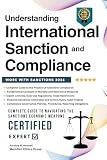
Understanding International Sanction and Compliance: All what you need to know about International... | $28.99 | Buy on Amazon |
| 3 |

|
Trade Compliance Meets AI | $15.00 | Buy on Amazon |
| 4 |

|
Global Trade Compliance A Complete Guide | $93.66 | Buy on Amazon |
| 5 |

|
A COMPREHENSIVE GUIDE TO U.S EXPORT COMPLIANCE | $156.71 | Buy on Amazon |
Record the official source you checked, the date of access, the identifiers compared, and why they do or do not point to the same entity. If the information is incomplete or conflicting, keep the affected activity on hold while you seek clarification; do not treat uncertainty as proof of either a match or a false positive.
Which list is involved, and what does it restrict?
Record the administering agency, list name, exact entry, and any linked order or sanctions program. A consolidated search result is useful for finding potential hits, but it does not by itself establish the legal effect. BIS says its Consolidated Screening List (CSL) combines export-screening lists from Commerce, State, and Treasury; the underlying lists have distinct requirements.
Free tools Windows power users keep installed
One-click scans. No signup required.
#1 Best Overall
| Alert source | What the official material establishes | What to check before deciding |
|---|---|---|
| OFAC SDN or other blocked person | U.S. persons generally may not deal with SDNs and other blocked persons. Property and interests in property within U.S. jurisdiction, or in a U.S. person’s possession or control, must be blocked when the blocking rules apply. OFAC’s 50 Percent Rule can also block certain unlisted entities. | Confirm identity and ownership; assess the relevant U.S. nexus, any property interest, and applicable blocking and reporting obligations. |
| OFAC non-SDN list | OFAC maintains lists that impose non-blocking sanctions or other distinct prohibitions. | Read the specific program and restriction. Do not assume that every OFAC entry requires blocking. |
| BIS Denied Persons List (DPL) | BIS describes DPL parties as denied export privileges under Export Administration Regulations (EAR) Parts 764 and 766. | Read the denial order and determine whether the contemplated dealings fall within its scope. |
| BIS Entity List | For specified items, the EAR can impose license requirements and limit license exceptions when listed entities or relevant addresses are parties to a transaction. | Determine whether the items are subject to the EAR and check the exact entry’s requirements. |
| BIS Unverified List (UVL) | BIS identifies parties whose bona fides it has been unable to verify; specified transactions require a UVL statement before proceeding. | Determine whether the transaction is covered and satisfy the applicable requirement before proceeding. |
These distinctions are described in OFAC’s sanctions and FAQ materials and BIS’s restricted-party list guidance. The CSL is a screening aid, not a substitute for checking the current record maintained by the relevant agency.
Does the restriction apply to this transaction?
Map the transaction before deciding whether a listed party’s presence makes it prohibited or subject to a license or other condition. Identify each party and its role, the goods, software, technology, or services involved, the origin and destination, and the payment and delivery paths. Where relevant, establish the item’s export-control status and whether a U.S. person, U.S.-origin item, U.S. territory, or other U.S. jurisdictional nexus is involved.
For a BIS-related hit, determine whether the items are subject to the EAR and whether the supplier is a party covered by the particular list restriction. Requirements vary by list and entry. For an OFAC-related hit, identify the applicable sanctions program and determine whether the transaction involves a blocked person, property in which that person has an interest, or a separate non-blocking prohibition.
Could an unlisted supplier still be blocked under OFAC’s ownership rule?
Yes. Under OFAC’s 50 Percent Rule, an entity is blocked when one or more blocked persons own, directly or indirectly and in aggregate, 50 percent or more of it—even if the entity is not separately named on an OFAC list. Check available ownership information, including indirect ownership and combined stakes of multiple blocked persons. If the ownership picture is incomplete or the threshold may be met, refer the issue to qualified counsel or your sanctions compliance lead before releasing the transaction.
PC Slower Than It Used to Be?
A free scan shows the junk files, broken settings and background clutter dragging Windows down - then fixes them in one click.Free scan · Windows 10 & 11Crashes, No Sound, or Screen Glitches?
Random freezes, missing sound and display glitches usually trace back to one bad driver. Find and replace yours safely.Free scan · under a minuteRank #3
What are the possible outcomes of the review?
The appropriate disposition depends on the verified identity, the exact restriction, and the transaction facts. It may be to release a confirmed false positive; proceed under an applicable authorization or license; keep the matter on hold while obtaining needed information; reject a prohibited transaction where no blockable interest exists; or block property in which a blocked person has an interest.
Do not treat blocking and rejection as interchangeable. OFAC’s guidance distinguishes a prohibited activity without a blockable interest, which must be rejected, from a case involving blocked property, where blocking obligations apply. The particular property, any required report, and applicable deadlines need case-specific review. Do not infer a reporting deadline or move, return, or otherwise handle potentially blocked property without confirming the applicable requirements.
Rank #4
What should the case record contain?
Keep a record that lets another reviewer understand both the decision and its basis. Include:
- the alert and the official list entry or record you checked, with the access date;
- the identifiers compared and the evidence supporting the match or false-positive determination;
- relevant ownership findings, including indirect ownership where available;
- the parties, roles, items or services, destination, payment and delivery path, and relevant U.S. nexus;
- the rule or order considered, the analysis, the decision-maker, and any required approvals;
- relevant communications, agency guidance, and any authorization or license relied upon.
Re-screen as appropriate because list entries can change. If the exact entry or its application remains unclear, consult qualified sanctions or export-control counsel or contact the agency responsible for that list. BIS publishes separate inquiry contacts for its restricted lists; OFAC provides sanctions program and FAQ resources.
Quick Recap
Best Value
Product prices and availability are accurate as of the date/time indicated and are subject to change. Any price and availability information displayed on Amazon at the time of purchase will apply.

