
Free tools Windows power users keep installed
One-click scans. No signup required.
The U.S. Army designed the Integrated Visual Augmentation System (IVAS), a ruggedized mixed-reality headset based on Microsoft HoloLens, to put mission data and sensor imagery in a soldier’s view. But it did not become standard frontline equipment: a July 2026 Government Accountability Office (GAO) assessment says nearly 10,000 IVAS 1.0 and 1.1 units will remain in storage, while 400 version 1.2 units are to inform a successor effort called Soldier Borne Mission Command (SBMC).
What was IVAS meant to do on the front line?
IVAS was not an unchanged consumer HoloLens handed to troops. The Congressional Research Service (CRS) described it in February 2025 as a ruggedized mixed-reality headset based on commercially available HoloLens. The Army’s intended use was to combine a soldier’s view of the real environment with operational information and imagery from sensors.
Show mission information without looking away
The Army said IVAS could place operational data, including routes and control measures, in the wearer’s field of view. In principle, that would let a soldier consult relevant information while keeping attention on the surrounding area. The Army described this as a first-person augmented-reality view; it was a stated capability, not proof that the overlays improved performance in combat.
Present low-light and thermal imagery
The system was designed to incorporate low-light and thermal sensing, with the aim of improving awareness and target identification. These were intended functions. The available Army and GAO accounts do not establish a combat-proven improvement over existing night-vision or other equipment.
Crashes, No Sound, or Screen Glitches?
Random freezes, missing sound and display glitches usually trace back to one bad driver. Find and replace yours safely.Free scan · under a minuteWindows Errors? Fix Them Before They Spread
Repair common Windows errors and clear accumulated junk for a smoother, more stable PC - no reinstall needed.Free scan · no reinstall#1 Best Overall

- Comfortable on-ear design with lightweight, padded earcups for all-day wear.
- Background noise-reducing microphone.
- High-quality stereo speakers optimized for voice.
- Mute control with status light. Easily see, at a glance, whether you can be heard or not.
- Convenient call controls, including mute, volume, and the Teams button, are in-line and easy to reach.
Display maps and navigation cues
Army program descriptions included 3D mapping and navigation, as well as routes and control measures. The purpose was to make those cues available in the soldier’s view rather than require a separate glance at a map or display.
Bring in vehicle and aerial sensor feeds
The Army described plans for IVAS to integrate sensors from ground and air platforms, including unmanned aircraft systems (UAVs). It could also let soldiers view information from outside a vehicle before dismounting. That concept could help a unit assess an area before moving into it, but the cited material describes intended integration, not routine frontline use.
Support squad rehearsal and training
IVAS was also intended for training. The Army described its Squad Immersive Virtual Trainer as using holographic and mixed-reality imagery for objective-based scenarios and battle drills. CRS notes that military extended-reality systems can support rehearsal of situations that are expensive or dangerous to recreate live. Training use was part of the program’s purpose, distinct from proving the headset suitable for operational deployment.
Rank #2
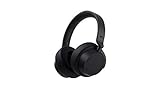
- Spectacular Omnisonic sound wraps you in your favorite music, shows, and more.Control Type:Touch
- Power through your day with up to 18.5 hours of music listening time [2] or up to 15 hours of voice calling on Microsoft Teams [4]. And, listen to almost an hour of music with just a 5-minute charge
- Soft, over-ear pads are breathable, lightweight and comfortable.
- Intuitive touch controls let you skip tracks, answer/end calls, and get hands-free assistance.
- Full charge now lasts up to 20 hours [2]. Listen to almost an hour of music with a 5-minute charge.
How would those capabilities fit together?
The envisioned headset was one element in a connected system, not simply a display with a map. Army descriptions referred to integration with the Integrated Tactical Network and edge computing, as well as vehicle and UAV sensor feeds. Edge computing can help process information closer to where it is used, while network connections can carry shared data to the soldier.
Quick wins for a faster PC:
Scan for outdated or missing drivers - takes under a minuteDriver Scan →Repair Windows errors before they cause bigger problemsFix Now →Fix the driver behind crashes, sound loss and screen glitchesFind Drivers →That design also creates dependencies. Networked mixed reality has to deliver timely, reliable information and remain usable when connectivity is limited or disrupted. CRS identifies latency, cybersecurity, and reliability as considerations for networked extended-reality systems. A useful overlay depends not only on the headset but on the sensors, software, networks, and power needed to supply it.
Why did IVAS not become a fielded frontline system?
Early testing surfaced usability and performance problems
In a March 2023 account of the 2022 operational test, the Army reported that IVAS 1.0 demonstrated some capabilities but had reliability problems, low-light sensor shortcomings, and form-factor issues that prevented soldier acceptance. The Army then described planned changes for later versions, including a revised display and counterweight.
Rank #3

- Compatible devices: Requires a PC that meets the requirements for and has installed one of these operating systems: Microsoft Windows 10, Windows 8.1, Windows 8 and Windows 7
- Connectivity technology: Wired
- Clarity, Comfort, and Convenience - Digital USB for superior clarity, built-in unidirectional microphone with acoustic noise cancellation
- Leatherette ear pads for improved comfort, in-line volume controls
- Pivoting boom microphone with 180-degree movement, flexible 6-foot cable
The Army also reported that its broader campaign of learning included more than 30 soldier test events, over 100 technical sub-tests, more than 1,000 soldiers, and nearly 100,000 hours of user feedback. Those figures describe the Army’s testing and feedback activity as of its March 2023 account; they do not establish that the feedback resulted in a fieldable headset.
The later decision was not to field the early versions
GAO’s July 2, 2026 assessment reports that the Army completed the IVAS rapid-fielding effort in December 2025. It says almost 10,000 IVAS 1.0 and 1.1 units will remain in storage rather than be fielded. GAO also reports that soldiers found the headsets difficult to wear and no better than existing equipment, and that concerns raised about earlier versions were not adequately addressed in version 1.2.
Version 1.2 became a bridge to a separate effort
The Army does not plan to produce IVAS 1.2 as the fielded model. According to GAO, 400 version 1.2 units are to inform SBMC, whose development was scheduled to launch in fiscal year 2026. GAO says the IVAS agreement was transferred from Microsoft to Anduril in April 2025. That transfer and the SBMC effort indicate a change in program direction; they do not mean the older IVAS units are now in service.
Rank #4
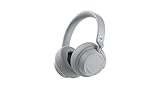
- Spectacular Omnisonic sound wraps you in your favorite music, shows, and more.
- On-ear dials let you adjust volume or keep it quiet with 13 levels of active noise cancellation.
- Soft, over-ear pads are breathable, lightweight and comfortable.
- Intuitive touch controls let you skip tracks, answer/end calls, and get hands-free assistance.
- Power through your day with up to 18.5 hours of music listening time[2] or up to 15 hours of voice calling on Microsoft Teams[4]. And, listen to almost an hour of music with just a 5-minute charge
What does the program’s cost and test history tell readers?
CRS estimated in 2025 that fielding IVAS over 10 years would cost at least $22 billion. This was an estimate of the projected cost to field the system, not a final accounting of money spent. Read alongside GAO’s later account that the early units will not be fielded, it illustrates the distinction between a program’s intended capability, development and testing, and an operational result.
For any soldier-worn system, the practical test is whether its information is reliable and useful enough to outweigh its burden. IVAS’s history makes several considerations especially relevant:
- Wearability: weight distribution, comfort over time, helmet compatibility, and whether the display interferes with ordinary vision.
- Sensor quality: whether low-light and thermal imagery are dependable and useful for identification.
- Reliability: whether the headset and its software function consistently in field conditions.
- Operational advantage: whether overlays and sensor feeds improve on existing equipment enough to justify carrying and maintaining another system.
- Network resilience: whether useful information remains available when links are slow, unavailable, or compromised.
- Training and lifecycle burden: whether rehearsal benefits justify maintenance, cybersecurity work, and the cognitive load of managing a display.
Is the U.S. military using HoloLens in combat?
The evidence cited here supports IVAS’s intended role and the Army’s later decision not to field the older units; it does not establish routine combat use or a verified frontline deployment by thousands of soldiers. The Army’s 2023 account said versions 1.0 and 1.1 were primarily intended for schoolhouses and operational-unit training while feedback was gathered, with 1.2 then planned as the close-combat version. GAO’s 2026 account supersedes that earlier plan: the Army will not field version 1.2 as its operational model and will use a limited number of units to inform SBMC.
What’s actually slowing this PC down?
Pick the symptom - the matching free tool is one click away.
So, the accurate answer is that the Army planned to use a HoloLens-derived headset to give soldiers mission overlays, sensor imagery, mapping, and training tools, but the described frontline concept did not become standard equipment in the versions discussed here.
Quick Recap
Product prices and availability are accurate as of the date/time indicated and are subject to change. Any price and availability information displayed on Amazon at the time of purchase will apply.

