
Do these 3 things before closing this tab:
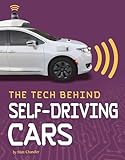
1Fix the driver behind crashes, sound loss and screen glitches2Repair Windows errors before they cause bigger problems3Scan for outdated or missing drivers - takes under a minuteA 2026 Nature study reports a self-driving car using Concept-Wrapper Network (CW-Net), a method that connects a machine-learning planner’s behavior to human-interpretable concepts. In the study, explanations helped a human driver anticipate the vehicle’s behavior, particularly in surprising situations. That is a promising step toward more understandable driving—not proof that autonomous cars can explain every decision or that an explanation makes a car safe.
What the self-driving-car study found
The Nature paper, “Explainable deep learning improves human mental models of self-driving cars,” describes CW-Net as a way to ground a machine-learning planner’s behavior in concepts people can understand. The researchers report deploying the method on a real self-driving car and finding that its explanations improved a human driver’s mental model of the vehicle. The reported benefit was especially relevant when the car behaved in a surprising way.

The practical idea is that a person may better anticipate the car’s next action when its behavior is connected to recognizable concepts, rather than being presented as an opaque output from a model. The available study summary does not provide enough detail to state the number of participants, the size of the effect, or how the method performs across different vehicles and driving conditions.
Who needs an explanation—and when?
An explanation can serve different purposes depending on who needs it. A driver may want to understand what the vehicle is about to do; engineers may need to diagnose a planner; regulators and investigators may need evidence about a decision after an incident. Those are related needs, but they are not interchangeable.
What’s actually slowing this PC down?
Pick the symptom - the matching free tool is one click away.
| Setting | Audience and timing | What the sources support |
|---|---|---|
| Human-facing explanation | A driver trying to understand or anticipate vehicle behavior, including while driving. | The 2026 Nature study reports that CW-Net explanations improved a human driver’s mental model, particularly in surprising situations. Its accessible summary does not specify a general live-use capability. |
| Oversight or incident review | Developers, regulators, and investigators reviewing a bounded test scenario or events leading up to a collision, near miss, or other notifiable event. | The UK government’s Responsible Innovation in Self-Driving Vehicles report recommends that key decisions be explainable in bounded tests and reconstructable for relevant oversight and investigation. |
The UK report connects explanation to safety oversight, accountability, fairness assessment, and learning from collisions and near misses. It places responsibility on the authorised self-driving entity as an organisation; the vehicle itself is not a moral agent. The report recommends that the entity make key decisions explainable in bounded test scenarios and reconstruct decisions leading up to notifiable events so undesirable behavior can be identified and addressed.
Can an explanation be trusted?
Only if it is grounded in how the system actually reached its decision. A fluent account of what a car supposedly noticed or intended is not, on its own, evidence that the account faithfully represents the planner’s process. A 2024 IEEE Access survey on explainable AI for autonomous driving identifies fabricated or unfaithful explanations as a serious safety concern.
Explanations can also have different forms: visualizations, feature-importance displays, logic-based accounts, user-facing language, or analysis of the model itself. No single format automatically establishes that the explanation is accurate. In safety-critical use, the relevant question is whether the explanation is supported by evidence about the decision, not simply whether it sounds plausible.
Why explainability has limits
Some parts of an autonomous-driving system may be easier to explain than others. The UK report notes that rules-based choices such as speed or direction can be more straightforward to describe, while it may be impossible to know with certainty why an image-recognition system classified a particular object or person as it did. Event logs and simulator replay can help reconstruct a sequence of decisions, but reconstruction is not the same as perfect access to every internal process.
Windows Errors? Fix Them Before They Spread
Repair common Windows errors and clear accumulated junk for a smoother, more stable PC - no reinstall needed.Free scan · no reinstallCrashes, No Sound, or Screen Glitches?
Random freezes, missing sound and display glitches usually trace back to one bad driver. Find and replace yours safely.Free scan · under a minuteRank #3
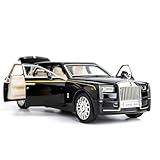
- Product size: 6.69*2.36*1.97 inches Weight: 0.7 pounds Outer packaging: exquisite color translucent packaging box
- Material: Die-cast car model, made of zinc alloy, with plastic parts, rubber tires, detailed interior and exterior decoration.
- Function: Press the two wheels of the front car to trigger the sound of the engine and the lights, with upright car logos,the angel logo is stored in the hood. The details of the body interior are realistic. Place the car on a flat ground, press the body and pull it back, the car will drive forward. (With pull back function)
- This Rolls-Royce Phantom 1/32 car model pull back car is very suitable for children to play with. The paint is exquisite and feels good, and it is heavy to hold. It is also very suitable for car model enthusiasts as a decoration.
- Accessories and collections: This product is very suitable for static accessories and can be used as an accessory next to a computer. For those who are passionate about collecting model car models, this is a great art collection.
Nor does an explanation amount to a safety certification, proof of causation, or guarantee that a vehicle will behave well in every situation. The Nature result is a specific method and reported human-subject outcome. The cited material does not establish independent replication, commercial availability of CW-Net, performance across all users or operating conditions, or a reduction in crashes attributable to explanations alone.
Independent reader supportYour contribution helps us test, update, and keep practical guides available for everyone.What this advance means for drivers
The result matters because autonomous vehicles must be understandable not only to the people who build them but also, in different ways, to people who ride in them and those responsible for oversight. CW-Net offers evidence that connecting a planner’s behavior to human-interpretable concepts can help a person anticipate a vehicle’s actions. The broader challenge is to make such explanations both useful to people and faithful to the system’s actual decisions.
Quick Recap
Product prices and availability are accurate as of the date/time indicated and are subject to change. Any price and availability information displayed on Amazon at the time of purchase will apply.

