
What’s actually slowing this PC down?
Pick the symptom - the matching free tool is one click away.
Nvidia’s wireless push is about putting AI and accelerated computing inside mobile-network infrastructure—not adding an AI feature to phones or home Wi-Fi. The company’s work centers on AI-native radio access networks (AI-RAN) and future 6G networks. Announcements so far describe research, product plans and an operator pilot; they do not establish that 6G is broadly available.
What Nvidia means by bringing AI to wireless
A mobile network’s radio access network, or RAN, connects devices over radio to the wider network. Nvidia’s AI-RAN approach puts AI and accelerated computing into that network infrastructure. That is different from running an AI app on a phone: the focus is on how networks are built and operated, and on using network infrastructure for computing workloads as well as wireless connectivity.
Nvidia describes AI Aerial as a platform for software-defined RAN on accelerated computing. In March 2025, the company said it was collaborating with telecom and research organizations to develop an AI-native wireless network stack based on AI Aerial. (Nvidia’s March 18, 2025 announcement)
| Approach | What the announcements describe |
|---|---|
| Conventional RAN | The comparison point: radio access network infrastructure without the AI-native, accelerated-computing approach described in Nvidia’s announcements. The releases do not provide a detailed technical specification of conventional RAN. |
| AI-native RAN | AI and accelerated computing integrated into RAN infrastructure, with software-defined networking as part of Nvidia’s AI Aerial platform. The stated direction is to develop future 6G networks this way. |
How the effort developed
The announcements mark different stages of work. A research collaboration is not the same as a product announcement, and neither alone demonstrates a broadly deployed network.
#1 Best Overall

- PLEASE NOTE: Exporting an NVIDIA RTX Pro 6000 GPU outside the US requires strict adherence to the U.S. Export Administration Regulations (EAR) and issuance of an export license from the Bureau of Industry and Security (BIS). Compliance and Know Your Customer (KYC) screening may be required as a condition of order acceptance. [NVIDIA Blackwell Streaming Multiprocessor] The new SM features increased processing throughput, and new neural shaders that integrate neural networks inside of programmable shaders | DLSS 4: Multi Frame Generation ensures ultra-smooth frame pacing for lifelike simulations.
- [Double-Flow-Through Design] The RTX PRO 6000 Blackwell features a double-flow-through cooling design, optimizing efficiency and airflow to sustain peak performance under 600W power loads. | [5th Gen Tensor Cores] Deliver up to 3X the performance of the previous generation and support for FP4 precision for faster AI model processing times with reduced memory usage, enabling local fine-tuning of LLMs and generative AI | [4th Gen Ray Tracing Cores] Double the ray-triangle intersection rate of the previous generation to create photoreal, physically accurate scenes and immersive 3D designs with RTX Mega Geometry, which enables up to 100X more ray-traced triangles.
- [PCIe Gen 5] Support for PCIe Gen 5 provides double the bandwidth of PCIe Gen 4, improving data-transfer speeds from CPU memory and unlocking faster performance for data-intensive tasks like AI, data science, and 3D modeling. | [GDDR7 Memory] With 96 GB of GPU memory and 1.8 TB ps bandwidth, it can tackle massive 3D and AI projects, fine-tune AI models locally, explore large-scale VR environments, and drive larger multi-app workflows.
- [DisplayPort 2.1] Achieve unparalleled visual clarity and performance, driving high resolution displays at up to 8K at 240 Hz and 16K at 60 Hz. Increased bandwidth enables seamless multi-monitor setups while HDR and higher color depth support ensures superior color accuracy for precision work, such as video editing, 3D design, and live broadcasting.
- [Universal MIG] Divide a single RTX PRO 6000 Blackwell into multiple isolated instances, each with dedicated resources, allowing for concurrent execution of multiple workloads, optimized GPU utilization, and secure isolation of different applications or users. [WARRANTY] 3 YR Manufacturer's Warranty. Bulk OEM Packaging. Retail Packaging is NOT included.
| Date | Milestone | What it establishes |
|---|---|---|
| March 18, 2025 | Nvidia announced research and development with T-Mobile, MITRE, Cisco, ODC and Booz Allen on hardware, software and architecture for AI-native 6G networks. The work used Nvidia AI Aerial for software-defined RAN on accelerated computing. | A collaboration and development effort, not commercial 6G service. (Nvidia announcement) |
| 2025 | Nvidia announced that it was open-sourcing Aerial software to accelerate AI-native 6G development. | An open-software initiative; the announcement does not by itself establish a finalized 6G standard or widespread deployment. (Nvidia’s Aerial announcement) |
| October 2025 | Nvidia and Nokia announced a strategic partnership to add commercial-grade AI-RAN products to Nokia’s RAN portfolio. T-Mobile was to collaborate on development and testing. | Announced product direction and intended testing, not proof that those products were broadly rolled out. (Nvidia and Nokia partnership announcement) |
| March 16, 2026 | Nvidia said T-Mobile was the first U.S. operator to pilot Nvidia AI-RAN infrastructure with Nokia anyRAN software. The announcement also described work on distributed edge-AI applications using wireless sites and mobile switching offices alongside 5G connectivity. | A pilot as reported by Nvidia, plus an account of planned or developing edge-AI uses—not evidence of general availability or independently measured performance. (Nvidia’s pilot announcement) |
| 2026 | Nvidia announced a wider commitment from telecom and research organizations to build future wireless networks on open, secure, AI-native platforms. | A coalition commitment, not a finalized technical standard or universal deployment. (Nvidia’s coalition announcement) |
What AI-native 6G means—and what it does not
“AI-native” describes the design direction: AI and accelerated computing are intended to be integrated into wireless-network infrastructure, rather than treated only as applications that run on connected devices. Nvidia’s March 2025 description was a network stack based on its AI Aerial platform, with software-defined RAN running on accelerated computing.
That is a development goal, not evidence that 6G specifications are complete or that consumers can subscribe to a 6G service. The cited announcements describe collaboration, a partnership, a pilot and a coalition commitment. They do not report a finished 6G standard or broad commercial 6G coverage.
Rank #2

- NVIDIA Volta GV100 Architecture — 4,608 CUDA Cores, 640 1st-Gen Tensor Cores delivering 14 TFLOPS FP32 and 112 TFLOPS deep learning performance for AI training, inference, HPC, and scientific computing workloads
- 32GB HBM2 ECC Memory — 900 GB/s Bandwidth — High-bandwidth memory on a 4096-bit bus with ECC error correction provides the memory capacity and throughput required for the largest AI models, simulations, and datasets
- PCIe 3.0 x16 Interface — 250W TDP — Standard PCIe Gen3 connectivity with passive cooling designed for enterprise rack server deployment in HPE ProLiant, Dell PowerEdge, and Supermicro platforms with adequate chassis airflow
- NVLink — Scale to 96GB Unified Memory — Connect two V100 GPUs via NVLink at 300 GB/s bi-directional bandwidth to scale GPU memory from 32GB to 96GB for larger AI training and HPC workloads
- Multi-Precision Computing — Supports FP64 (7 TFLOPS), FP32 (14 TFLOPS), FP16 (112 TFLOPS) and INT8 precision modes for flexible deployment across training, inference, and scientific simulation workloads
What the T-Mobile pilot adds
The March 2026 announcement moves the story beyond initial research: Nvidia said T-Mobile was piloting its AI-RAN infrastructure with Nokia’s anyRAN software. Nvidia also described plans to use distributed edge-AI networks for physical-AI applications while supporting 5G connectivity.
In this context, edge AI means computing workloads distributed closer to where data is produced or used, including at wireless sites and mobile switching offices, rather than relying only on distant centralized infrastructure. The announcement presents this as a use of network infrastructure alongside connectivity. It does not provide an independently verified performance comparison, quantify customer-facing benefits or establish that the applications are generally available.
The Tool Desk
Outbyte Driver Updater FREEScan for outdated or missing drivers - takes under a minuteDriver Scan →Outbyte PC Repair FREEClear out junk files and repair common Windows errorsFree Scan →Quick Recap
Rank #3
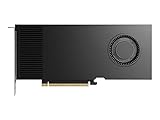
- Professional GPU with Blackwell Architecture
- Blackwell Architecture
- 24GB GDDR7 with PCIe 5.0 & Ray Tracing
- AI Workstation
What to watch next
- Product availability: The Nokia partnership announcement described plans for commercial-grade AI-RAN products, but the cited material does not establish broad availability or deployment.
- Pilot outcomes: Nvidia reported a T-Mobile pilot, but the announcement does not provide independently validated results or a measured performance gain.
- Standards and interoperability: The 2026 coalition shows organizations’ stated commitment to open, secure, AI-native platforms. A commitment is not itself a completed standard or proof that systems from different suppliers already interoperate universally.
- Deployment scope: Further evidence would be needed to determine where AI-RAN is operating, which applications are in use and whether consumers experience a difference.
Product prices and availability are accurate as of the date/time indicated and are subject to change. Any price and availability information displayed on Amazon at the time of purchase will apply.

