
Cadence announced an integration between its Reality Digital Twin Platform and NVIDIA Omniverse on March 18, 2024, bringing 3D visualization and simulation interoperability into a professional data-center design workflow. Cadence says Reality can model a facility and help engineers evaluate cooling and operating scenarios; NVIDIA later described it as part of a broader digital-twin workflow for AI-factory infrastructure.
What is Cadence Reality Digital Twin?
Cadence describes Reality as a platform for virtualizing a data center so engineers and operators can study design and operating scenarios. Its stated methods include artificial intelligence, high-performance computing (HPC), and physics-based simulation. The intended work includes examining air and liquid cooling options, visualizing facility performance, and planning what-if scenarios. It is presented as an engineering and operations tool—not a consumer application or an autonomous system that controls a live data center. Cadence’s March 2024 announcement describes the platform and integration.

What does the NVIDIA Omniverse integration add?
Cadence said the integration connects Reality with NVIDIA Omniverse, using OpenUSD to support interoperability and physically based rendering. In practice, the companies describe bringing 3D assets and simulation data together in a shared digital representation, so teams can visualize a facility and analyze modeled conditions across design scenarios. The announcement describes capabilities and intended workflow; it does not establish that every data center uses the same connected models or has deployed every feature.
How does this fit into an AI-factory digital twin?
NVIDIA’s Omniverse blueprint materials describe a wider AI-factory model that brings together information about compute, power, cooling, and networking. Within that ecosystem, NVIDIA identifies Cadence Reality as a connected thermal-simulation tool; other partner systems address power and infrastructure. OpenUSD is presented as an interoperability foundation for combining assets and simulation data. This makes Reality one component in a multi-domain workflow, rather than a complete substitute for every engineering system involved in facility planning. NVIDIA’s Omniverse blueprint overview outlines that broader approach.
#1 Best Overall
What NVIDIA said in March 2026
In a March 16, 2026 update, NVIDIA said its Omniverse DSX Blueprint was generally available for physically accurate digital twins supporting large-scale AI-factory design, buildout, and operations. NVIDIA said Cadence was integrating SimReady models of NVIDIA GB300 NVL72 systems into Reality to simulate thermal and fluid data, and collaborating on models of Vera Rubin systems. Those statements describe the announced scope at that date; they do not show that all models or capabilities are deployed at every customer site. NVIDIA’s DSX Blueprint announcement provides the update.
What performance figures did Cadence claim?
Cadence’s 2024 announcement claimed the platform could deliver up to 30% improvement in energy efficiency and make design and simulation workflows up to 30 times faster when integrated with NVIDIA Omniverse. These are Cadence’s vendor-reported claims. The cited announcement does not provide an independent comparative benchmark, test protocol, or measured customer-wide outcome to verify those figures, so they should not be treated as guaranteed results.
Rank #2
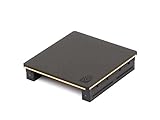
- Part number 900-53651-2500-000 and model: P3651
- This is the 2 slot version for when there is no empty slots between 2 slot cards. If you have one or more empty slots between the cards or the cards are 3 slot this NVLink will not work. See the attached images showing the card layout.
- NVLink 3.0 for any brand of RTX Ampere model graphics cards: 3090, A30, A40, A100 / H100 (Requires three NVLinks), A800, A4500, A5000, A5500, A6000
- This is the same as PNY part number: NVLAMP-2SLOT-BSP and RTXA6000NVLINK-KIT
- This is the same as Dell part number: 0RWJ7Y
What should data-center teams evaluate?
For an owner, operator, or engineering team assessing a digital-twin platform, the most useful questions concern what can be modeled and how well the model connects to real workflows. The announcements describe capabilities, not an independent head-to-head comparison or total-cost analysis.
- Engineering coverage: Determine whether the platform models the thermal and fluid behavior, power, networking, and compute domains your project needs.
- Data integration: Check whether facility and equipment data can be combined, and whether interoperability formats such as OpenUSD fit the tools and assets already in use.
- Model fidelity and validation: Ask how simulation models are validated against equipment specifications or measured facility behavior; the announcements do not provide independent validation results.
- Workflow fit: Establish how the twin connects to design, buildout, and operations work, and which teams maintain its underlying data.
- Scenario testing: Confirm that the tool can represent the workloads, cooling choices, and failure cases relevant to your decisions.
What the announcement means
Cadence’s integration with NVIDIA Omniverse links a data-center modeling platform to a larger 3D and simulation ecosystem. The potential value is the ability to assemble facility and equipment representations and explore modeled scenarios—including cooling and, in NVIDIA’s later AI-factory materials, thermal and fluid behavior. The practical value for any particular operator depends on model coverage, data quality, validation, and deployment; the performance figures remain claims by Cadence rather than independently established outcomes.
Recommended Free Tools
Quick Recap
Rank #4

- CUDA Cores: 4608 / NVIDIA Tensor Cores: 576 / NVIDIA RT Cores: 72
- GPU Memory: 24 GB GDDR6 with ECC / Bandwidth: 624 GB/Sec
- System Interface: PCI Express 3.0 x16
- Four DisplayPort 1.4 Connectors
- 3D Stereo Support with Stereo Connector
Rank #3
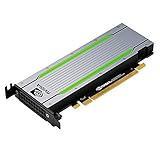
- Video/Sound Cards
- Passive Cooling
Product prices and availability are accurate as of the date/time indicated and are subject to change. Any price and availability information displayed on Amazon at the time of purchase will apply.

