
Do these 3 things before closing this tab:
1Scan for outdated or missing drivers - takes under a minute2Clear out junk files and repair common Windows errors3Fix the driver behind crashes, sound loss and screen glitchesA reliable 4K live stream is an end-to-end system, not a bitrate setting or a particular segment format. For internet-delivered live TV, plan the source and encoder, HLS packaging, origin/CDN delivery, and playback clients together. Choose MPEG-TS or fMP4 according to codec and device support; set the bitrate ladder and latency target for your audience; then validate delivery and failover across the complete path.
How a 4K HLS live stream works
HLS delivers live video over HTTP. A typical pipeline takes a live audio-video feed, encodes one or more renditions, divides media into segments, and publishes playlists that tell clients what to request. The playlists and media are served by a web server or CDN; a compatible player can switch renditions as network conditions change. Apple outlines this workflow in its HTTP Live Streaming overview, and the protocol is also described in IETF RFC 8216.
- Capture and encode: Feed the live source to an encoder. Produce the codecs, resolutions, frame rates, and audio formats your target clients can play.
- Package: Segment the encoded media and generate a multivariant playlist plus the media playlists that point to each rendition’s segments.
- Publish: Make playlists and segments available through an origin or web server and, where appropriate, a CDN.
- Play and adapt: The receiver—typically an app or web page—loads the playlist, requests media, and can move among compatible renditions as available bandwidth changes.
“IPTV” can refer to different systems. This architecture addresses live television delivered over the public internet using HLS; a managed private network or a service using other IPTV protocols may have different requirements.
Choose the container for the codec and playback fleet
MPEG-TS (MPEG transport stream) is still an option for HLS, especially in H.264 workflows, but it is not automatically the best choice for a new 4K deployment. Apple’s current authoring specification permits MPEG-TS or fragmented MP4 (fMP4) for H.264 and specifies fMP4 for HEVC. Apple’s basic deployment guidance says MPEG-TS can be used with H.264 but is not recommended in that guidance. Those are distinct points: a format being permitted does not make it Apple’s preferred choice for every deployment.
The Tool Desk
Outbyte PC Repair FREERepair Windows errors before they cause bigger problemsFix Now →Outbyte Driver Updater FREEScan for outdated or missing drivers - takes under a minuteDriver Scan →#1 Best Overall
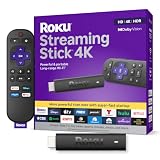
- Stunning 4K and Dolby Vision streaming made simple: With America’s number 1 TV streaming platform,* exploring popular apps—plus tons of free movies, shows, and live TV—is as easy as it is fun. *Based on hours streamed—Hypothesis Group
- Breathtaking picture quality: Stunningly sharp 4K picture brings out rich detail in your entertainment with four times the resolution of HD. Watch as colors pop off your screen and enjoy lifelike clarity with Dolby Vision and HDR10+.
- Seamless streaming for any room: With Roku Streaming Stick 4K, watch your favorite entertainment on any TV in the house, even in rooms farther from your router thanks to the long-range Wi-Fi receiver.
- Shows on the go: Take your TV to-go when traveling—without needing to log into someone else’s device.
- Compact without compromises: Our sleek design won’t block neighboring HDMI ports, so you can switch from streaming to gaming with ease. Plus, it’s designed to stay hidden behind your TV, keeping wires neatly out of sight
| Choice | What the cited Apple guidance establishes | Practical decision |
|---|---|---|
| MPEG-TS | Permitted for H.264 by Apple’s authoring specification; Apple’s basic deployment guidance says it is possible for H.264 but not recommended there. | Consider it when your H.264 encoding and target-player fleet support it and it fits your existing workflow. Confirm compatibility rather than assuming every client handles every combination. |
| fMP4 | Permitted for H.264 and required by Apple’s authoring specification for HEVC. | Use it for an HEVC HLS workflow intended to follow that specification; verify codec, profile, packaging, and device support together. |
| CMAF | Apple describes CMAF as a segmented-media format that can be used by implementations including HLS and MPEG-DASH, with tracks, fragments, and switching sets. | Consider it when aligned media objects across protocols are useful. Check the actual codec, encryption, packaging, and device requirements before treating it as broadly compatible. |
Apple’s HLS authoring specification, basic HLS deployment guidance, and CMAF overview describe these format distinctions. For a single-protocol service, avoid adding format complexity without a device or operational reason. For multi-protocol delivery, confirm that the intended HLS and DASH packaging can actually share the required media objects.
Build a 4K bitrate ladder around the content and audience
A ladder gives compatible clients a choice of renditions, rather than forcing every viewer to receive the highest-bitrate 4K stream. The right set depends on the source’s frame rate and complexity, image-quality goals, network conditions, and which codecs and profiles the target devices support. Decide which devices and features matter—such as H.264 compatibility, HEVC, AV1, or HDR—before settling the ladder. Apple’s authoring specification lists supported codec families including H.264/AVC, HEVC/H.265, Dolby Vision, and AV1, subject to its detailed authoring constraints.
Apple’s specification gives the following 3840×2160 HEVC examples at the source frame rate. They are example variant bitrates, not measurements, guarantees, or universal minimums:
Rank #2

- Ultra-speedy streaming: Roku Ultra is 30% faster than any other Roku player, delivering a lightning-fast interface and apps that launch in a snap.
- Cinematic streaming: This TV streaming device brings the movie theater to your living room with spectacular 4K, HDR10+, and Dolby Vision picture alongside immersive Dolby Atmos audio.
- The ultimate Roku remote: The rechargeable Roku Voice Remote Pro offers backlit buttons, hands-free voice controls, and a lost remote finder.
- No more fumbling in the dark: See what you’re pressing with backlit buttons.
- Say goodbye to batteries: Keep your remote powered for months on a single charge.
| 3840×2160 HEVC variant | Apple example bitrate |
|---|---|
| SDR example 1 | 11,600 kbit/s |
| SDR example 2 | 16,800 kbit/s |
| HDR example 1 | 13,900 kbit/s |
| HDR example 2 | 20,000 kbit/s |
These figures are Apple-published examples in the authoring specification checked in 2026, not results from a comparative test. Do not apply one value to all footage: motion, detail, frame rate, and the chosen quality target affect the encoding decision. An adaptive ladder should also include renditions for the devices and connection speeds you intend to serve; the Apple examples alone do not define a complete ladder.
PC Slower Than It Used to Be?
A free scan shows the junk files, broken settings and background clutter dragging Windows down - then fixes them in one click.Free scan · Windows 10 & 11Crashes, No Sound, or Screen Glitches?
Random freezes, missing sound and display glitches usually trace back to one bad driver. Find and replace yours safely.Free scan · under a minuteSet keyframes and packaging boundaries deliberately
Apple recommends IDR keyframes every two seconds in its authoring specification. IDR frames provide switching opportunities for adaptive playback, while more frequent keyframes can increase encoding overhead. Treat Apple’s interval as a documented recommendation, not a promise that a particular encoder, segment layout, or player combination will produce the desired quality and switching behavior. Validate the chosen encoder and packager together with representative target devices.
For MPEG-TS, avoid chasing isolated “optimization” knobs without measuring the whole stream. The available Apple guidance establishes when TS is permitted and how it is positioned in basic H.264 deployment guidance; it does not establish one universally optimal TS tuning recipe. Verify that encoder output, segment boundaries, playlist references, and client behavior work as a set. If HEVC is required for your design under Apple’s authoring rules, use fMP4 rather than trying to tune MPEG-TS around that requirement.
Rank #3

- The Google TV Streamer (4K) delivers your favorite entertainment quickly, easily, and personalized to you[1,2]
- HDMI 2.1 cable required (sold separately)
- See movies and TV shows from all your services right from your home screen[2]; and find new things to watch with tailored recommendations for everyone in your home based on their interests and viewing habits
- Watch live TV and access over 800 free channels from Pluto TV, Tubi, and more[3]; if you find an interesting show or movie on your TV, mobile app, or Google search, you can easily add it to your watchlist, so it’s ready when you are[2]
- Up to 4K HDR with Dolby Vision delivers captivating, true-to-life detail[4]; and you can connect speakers that support Dolby Atmos for more immersive 3D sound
Reduce latency only after setting an end-to-end target
Conventional live HLS and Low-Latency HLS are not interchangeable promises about viewer delay. Low-Latency HLS adds partial segments, playlist delta updates, blocking playlist reloads, preload hints, and rendition reports. The protocol features can support lower delay, but the achieved end-to-end result depends on the encoder, packager, origin/CDN, player, and network.
Apple’s Low-Latency HLS guidance ties the part target to client-to-server round-trip time (RTT): the part duration must be at least the P95 RTT and should be at least three times the P95 RTT. Apple recommends a one-second part target. It also requires PART-HOLD-BACK to be at least three times the part target. These are protocol configuration constraints, not a guarantee of a particular glass-to-glass delay.
- Measure P95 RTT from the relevant client population to the serving infrastructure; a target that ignores the audience’s network conditions may not satisfy the guidance.
- Set the part target and PART-HOLD-BACK consistently with Apple’s rules and the latency goal.
- Validate playlist updates, partial-segment availability, CDN/origin behavior, and player support under realistic network conditions.
- Measure the complete source-to-screen path in the target deployment before describing its latency to viewers.
For broader operational considerations around streaming media, consult IETF RFC 9317; it does not prescribe a single topology or latency configuration for every service.
Rank #4

- Advanced 4K streaming - Elevate your entertainment with the next generation of our best-selling 4K stick, with improved streaming performance optimized for 4K TVs.
- The newest Fire TV experience (2026) – Our biggest update to Fire TV has a new, modern design that gets you to your entertainment fast. Browse dedicated content categories, pin more of your favorite apps, and get personalized recommendations from Alexa+. Spend less time scrolling, and more time watching.
- Cloud gaming, no console required – Stream Call of Duty: Black Ops 7, Hogwarts Legacy, Outer Worlds 2, Ninja Gaiden 4, and hundreds of games on your Fire TV Stick 4K Select with Xbox Game Pass and Luna via cloud gaming. Xbox Game Pass subscription and compatible controller required. Each sold separately.
- Smarter picks with Alexa+ – Getting to what you love has never been easier. Press the voice remote button and talk naturally to find what to watch across your apps, manage your smart home, or dive into virtually any topic.
- Wi-Fi 6 support - Enjoy smooth 4K streaming, even when other devices are connected to your router.
Plan origin, CDN delivery, and failover as one system
HLS uses standard HTTP delivery, so playlists and media can be served by a web server or CDN. That simplicity does not remove the need to validate playlist freshness, segment availability, cache behavior, and failure recovery. Apple’s authoring specification recommends gzip content encoding for playlists and recommends stream failover, for example by listing duplicate streams in a multivariant playlist. It does not prescribe one universally optimal CDN vendor, cache policy, or complete failover topology.
Apple’s basic deployment guidance identifies three core elements: a receiver such as a web page or app, a web server or CDN, and encoded HLS media. It also gives these recommended media MIME types:
application/vnd.apple.mpegurlfor HLS playlists.video/mp2tfor MPEG transport stream media.
Use the appropriate content type for the media you serve, and confirm your origin and CDN return the playlists and segments as expected. A failover design should be tested, not merely listed: verify that alternate streams are available and that clients can reach them when the primary path fails.
Best Value

- Essential 4K streaming – Get everything you need to stream in brilliant 4K Ultra HD with High Dynamic Range 10+ (HDR10+).
- The newest Fire TV experience (2026) – Our biggest update to Fire TV has a new, modern design that gets you to your entertainment fast. Browse dedicated content categories, pin more of your favorite apps, and get personalized recommendations from Alexa+. Spend less time scrolling, and more time watching.
- Make your TV even smarter – Fire TV gives you instant access to a world of content, tailor-made recommendations, and Alexa, all backed by fast performance.
- All your favorite apps in one place – Experience endless entertainment with access to Prime Video, Netflix, YouTube, Disney+, Apple TV+, HBO Max, Hulu, Peacock, Paramount+, and thousands more. Easily discover what to watch from hundreds of thousands of movies and TV episodes (subscription fees may apply), including free, ad-supported content.
- Getting set up is easy – Plug in and connect to Wi-Fi for smooth streaming.
Choose an operating model that fits the service
A live setup can use separate components or an integrated system. Apple describes an off-the-shelf hardware encoder as one possible component for a live event and notes that an integrated third-party system can combine encoding and segmentation. The cited documentation establishes these patterns, not their comparative cost, performance, or suitability for a particular audience.
- Encoder plus separate packaging and delivery: Choose this when the team needs distinct control over encoding, segmentation, and serving. Confirm the interfaces and monitoring across each handoff.
- Integrated encoding and segmentation: Consider it when consolidating those functions suits the workflow. Confirm it produces the required HLS playlists, codec/container combinations, and outputs for the target players.
A device described as a “4K streaming encoder” is not by itself proof that it can produce a complete, compatible HLS service. Check its resolution, frame-rate, HDR, codec, audio, input/output, and integration requirements against the deployment before selecting it.
Validate the full path before launch
Test representative source material and actual target clients through the complete delivery path. A useful launch checklist is:
- Confirm the codec, profile, container, resolution, frame rate, and HDR mode are compatible with the intended devices.
- Check that the multivariant and media playlists reference available segments and update as intended.
- Verify the encoder and packager produce the chosen keyframe cadence and segmentation behavior.
- Test rendition switching under changing bandwidth, not only on a fast local connection.
- For low latency, check P95 RTT-related settings and measure source-to-screen delay in the target environment.
- Check MIME types, playlist compression, cache behavior, and segment availability at the serving layer.
- Simulate a primary stream or delivery-path failure and confirm that the intended failover works for real clients.
The best architecture is the one that meets the service’s image-quality, device-coverage, latency, resilience, and operating requirements as a complete path. Neither a single bitrate nor a choice of MPEG-TS, fMP4, or CDN can establish that result on its own.
Recommended Free Tools
Quick Recap
Product prices and availability are accurate as of the date/time indicated and are subject to change. Any price and availability information displayed on Amazon at the time of purchase will apply.

