
Applications for the CRTC’s fourth Broadband Fund call are open until October 15, 2026, at 5 p.m. Vancouver time (8 p.m. Gatineau time). The Commission extended the original August 13 deadline to give applicants more time to consult communities, validate needs, gather support letters, and develop projects using its mapping tools. Before preparing a submission, check the Call 4 guides and maps: eligibility depends on both the project type and its location.
What is the CRTC Broadband Fund Call 4?
Call 4 is the CRTC’s fourth application round for funding broadband projects in underserved Canadian communities. Its objective is to increase the number of households with reliable high-speed Internet at or above the universal service objective: 50 Mbps download and 10 Mbps upload. The call opened on April 9, 2026. The deadline change is set out in Telecom Notice of Consultation CRTC 2026-63-1, dated August 6, 2026.
The revised deadline is October 15, 2026, at 5 p.m. Vancouver time (8 p.m. Gatineau time). The CRTC said the extension would allow more time for community and rights-holder engagement, local-needs validation, support letters, and project development using its new mapping tool, while balancing timely funding delivery. Treat this as the operative deadline unless the CRTC issues another change.
Which projects may qualify?
The CRTC describes three broad project types. They are a starting point, not an eligibility ruling: technical, program, and geographic requirements differ by project. Review the Call 4 Technical and Program Details Guide and Call 4 Application Guide before deciding whether a proposal fits.
#1 Best Overall
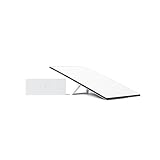
- Starlink provides reliable high-speed, low-latency, internet wherever you live
- Service plan required, activate STARLINK by selecting a service plan that is customized to meet your personal needs
- Select from plans suited for households or travel
- Get online in minutes, set up STARLINK with just 2-steps, plug it in and point at the sky
- STARLINK comes with everything needed to get online including a kickstand, gen 3-router, cables and power supply
| Project type | High-level description | What to verify |
|---|---|---|
| Fixed broadband | New or improved wireline or wireless service delivering at least 50/10 Mbps directly to households in eligible underserved areas that are not satellite-dependent. | Whether the proposed households lack 50/10 service and whether the area and project satisfy Call 4 rules. |
| Satellite-dependent community operating expense | Increased satellite transport capacity intended to improve available telecommunications service. | Whether the community, operating-cost proposal, and service improvements meet the guide’s specific tests. |
| Satellite-dependent community capital project | Construction or upgrade of earth-station equipment or access infrastructure. | Whether the location, infrastructure, and capital work qualify under the applicable criteria. |
Eligible applicant categories include Canadian-incorporated for-profit and not-for-profit corporations; provincial, territorial, and municipal entities and qualifying public bodies; and specified Indigenous governments or band councils. The technical guide also requires the applicant, or at least one member of an applicant group, to demonstrate eligibility to operate as a Canadian carrier. Financial solvency and other general and project-specific requirements apply.
How to check whether a location is eligible
Use the CRTC’s Call 4 geographic resources to investigate project areas and prepare maps. The Commission provides a public Reference Map showing eligible areas and community information, an Eligibility Mapping Tool for creating project maps, and a Mapping Guide explaining the workflow. Find these through the CRTC Broadband Fund Call 4 page.
Rank #2

- Bundle Includes: STARLINK - Mini Kit AC Dual Band Wi-Fi System - White
- FAST SATELLITE INTERNET ANYWHERE: Access high-speed, low-latency internet even in and rural areas using the global Starlink satellite network. Designed by SpaceX, the Starlink Mini Kit provides dependable connectivity without wired infrastructure, making it ideal for travel, camping, work, off-grid cabins, RV setups, and locations with no traditional broadband options.
- COMPACT AND PORTABLE DESIGN: The Starlink Mini is small enough to carry in a backpack yet powerful enough for daily use. Its portable, all-in-one design includes an integrated Wi-Fi router, DC power input, and rugged housing suitable for on-the-go applications. Whether at a campsite, construction site, or temporary location, Starlink Mini offers quick deployment and reliable performance.
- EASY TWO-STEP SETUP: Get online in minutes—simply plug in the Mini, point it at the sky, and connect. The kit includes everything needed for installation, including a kickstand, pipe adapter, power cable, and power supply. Use the Starlink app to find a clear sky view, check obstructions, explore mounting options, and manage your Starlink account and hardware settings.
- BUILT-IN ROUTER WITH WI-FI 5: The Starlink Mini includes an integrated dual-band Wi-Fi 5 router for strong wireless coverage and stable speeds. A built-in ethernet port provides wired connectivity for routers, mesh systems, gaming devices, or network hardware. Average power consumption of 25–40 watts supports efficient operation in off-grid or mobile power setups.
- Check the proposed households or community against the relevant Call 4 map information.
- Use the Eligibility Mapping Tool and Mapping Guide to prepare the project’s geographic materials.
- Confirm the result against the complete project criteria in the applicable Call 4 guide; a map is not a substitute for those rules.
How does the CRTC assess applications?
The CRTC first screens applications against the applicable eligibility criteria. A proposal that fails any criterion will not proceed to further consideration. Among eligible projects, the Commission prioritizes areas not forecast to receive service meeting the universal service objective through federal, provincial, territorial, or regional broadband funding programs. It also prioritizes proposals that would serve more households. The wider assessment considers a project’s contribution to the universal service objective and its likely positive impact; selection is not simply a lowest-cost contest.
How do I apply for funding?
Submit a new, complete Call 4 application through the CRTC’s Broadband Fund Online Intake System. Applications from earlier calls do not carry over. Include all required information, forms, attachments, and supporting evidence specified in the application materials.
Rank #3

- Gen 3 Satellite Dish: Third-generation antenna delivers a stronger, more stable signal and faster performance.
- Wi-Fi 6 Router: Modern router technology supports faster speeds, increased device capacity, and better efficiency.
- Extra 150FT Cable Included: Extended reach for more flexible installation in large spaces or hard-to-access locations.
- High-Speed, Low-Latency Internet: Stream HD content, video conference, or work remotely with confidence.
- Ideal for Rural and Remote Areas: Perfect for homes, cabins, RVs, boats, and off-grid setups where wired internet isn’t available.
- Review the guides and maps. Confirm the project type, location, service gap, applicant eligibility, and required evidence.
- Prepare the complete application. Include the required forms, supporting documents, project information, and maps.
- File through the Online Intake System. The system lets applicants save an unfinished application and return to submit it later.
- Make any changes before the deadline and resubmit. If you edit an application after submitting it, you must submit it again for the revised version to be considered.
- Keep proof of filing. The CRTC says applicants are responsible for timely delivery and should retain proof of sending and receipt for 60 days after filing.
Late or incomplete applications will not be considered. Allow enough time to complete the online submission and resolve any missing information before the deadline.
What community and rights-holder engagement is required?
Community outreach is part of the application’s substantive requirements, not merely an optional supporting attachment. The technical guide calls for applicants to identify affected communities and provide evidence of outreach attempts and invitations to respond. The CRTC’s Call 4 notice also says that, where a proposed project involves service or infrastructure in an Indigenous community, evidence of consent is required before final funding approval. Follow the applicable guide and process for the project rather than treating a general engagement checklist as a substitute.
Rank #4

- 🚀 Next-Generation Connectivity: Enjoy lightning-fast, low-latency internet powered by SpaceX’s Standard Dish — ideal for homes, farms, and rural or remote areas.
- 📶 Enhanced Wi-Fi 6 Router: Includes the latest dual-band Wi-Fi 6 router delivering stronger coverage, faster speeds, and improved reliability for multiple connected devices.
- ⚡️ Easy Plug-and-Play Setup: Simple installation with all required cables and mounts included — connect, power on, and get online in minutes.
- 🌦️ Rugged & Weather-Resistant Design: Built to perform in extreme environments — rain, snow, or high winds — for year-round connectivity.
- 🏕️ Residential & Remote-Area Ready: Perfect for off-grid living, cabins, RVs, and rural households seeking a dependable high-speed internet solution.
What has the Broadband Fund supported so far?
The CRTC’s April 9, 2026 Call 4 notice says approximately $769 million had been allocated to projects serving over 54,000 homes in more than 320 communities. It also reports improved cellphone service on over 650 km of major roads and support for nearly 6,000 km of fibre. Separately, the CRTC’s Broadband Fund page, accessed October 4, 2026, lists 67 projects and $780.1 million awarded, covering 318 communities, including Indigenous communities, and 53,785 households; it also lists 5,973 km of fibre transport infrastructure and 652 km of major roads with cellphone service. These are figures from different CRTC presentations and snapshots, so they should not be combined as though they were one identical tally.
Quick Recap
Best Value
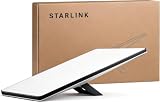
- 🚀 Ultra-Fast Satellite Internet Anywhere Enjoy high-speed, low-latency connectivity even in remote locations where cellular service fails. Stream, work, game, and video-call with stable performance powered by the advanced satellite network.
- 📡 4th Gen Phased-Array Antenna for Maximum Performance The compact Mini device uses cutting-edge phased-array technology to deliver stronger signals, faster speeds, and improved reliability—ideal for RV travel, camping, boating, and off-grid living.
- ⚡ Quick & Easy Setup in Minutes Just power it on, connect through the app, and you’re online. No tools, no technicians, no complicated installation—perfect for travelers, remote workers, and emergency situations.
- 🌦️ Built for Outdoor Adventure – Weather & Heat Resistant Designed for real-world conditions with durable construction that withstands rain, sun, dust, and harsh environments. Stay connected during your outdoor trips, marine activities, field operations, and more.
- 🎒 Ultra-Portable, Lightweight & Travel-Ready Compact form factor makes it easy to carry in a backpack or RV drawer. Ideal for digital nomads, campers, boaters, remote teams, and anyone who needs dependable internet on the go.
Product prices and availability are accurate as of the date/time indicated and are subject to change. Any price and availability information displayed on Amazon at the time of purchase will apply.
Recommended Free Tools

