
As AI systems take on more consequential tasks, instructions alone are not a sound place to put the limits on what they can do. In a refund-support design described by Antonio Lopes Correia, the model interprets a request and finds relevant documents, while application code controls customer access, checks eligibility, assigns risk, and routes cases for human review. The model helps with the work; the surrounding system retains authority over the outcome.
What the refund-support agent lets AI do
The example is an LLM-powered customer-support agent for refund requests. Its model is responsible for interpreting customer intent and retrieving relevant documents. It does not decide who the customer is, determine whether that customer qualifies for a refund, or execute the refund.
Instead, authenticated customer identity scopes the document lookup, and application software applies refund eligibility rules and assigns a risk tier. Medium- and high-risk cases go to a human approval queue; the model does not make the final high-risk decision.
That division is the architectural point: the model can help understand a request, but deterministic application logic and people retain the consequential decisions and actions. This is one described design, not evidence that any particular architecture guarantees reliable or safe AI.
Do these 3 things before closing this tab:
1Repair Windows errors before they cause bigger problems2Scan for outdated or missing drivers - takes under a minute3Clear out junk files and repair common Windows errors#1 Best Overall

- 【Leading AI Mini Workstation】MINISFORUM AI MS-S1 Max Workstation comes with AMD Ryzen AI Max+ 395 processor, which uses AMD's latest generation Zen 5 architecture. It has 16 Cores and 32 Threads, the boost clock is up to 5.1GHz. The overall processor performance is up to 126 TOPS, and the NPU performance reaches up to 50 TOPS. AMD Ryzen AI enables improved productivity, advanced collaboration, and improved efficiency.
- 【AMD Radeon 8060S Graphics 】The MS-S1 Max Mini PC equipped with AMD Radeon 8060S Graphics which built on the new generation of RDNA 3.5 architecture AMD graphics, it brings ultra-high frame rate experiences and advanced content creation features anywhere and delivers staggering performance. It can handle all your computing and multimedia tasks efficiently.
- 【Five 8K Video Output】This MS-S1 Max Workstation comes with five video outputs, 1x HDMI (8K@60Hz), 2x USB4(40Gbps,Alt DP2.0,PD out 15W) and 2x USB4 V2(80Gbps,Alt DP2.0,PD out 15W) Outputs, which support multiple monitors display at the same time and provide a larger and wider filed of view and improve your work efficiency. It is used in fields that require high-performance computing and graphics processing, including digital signage and securities trading, as well as work that uses CAD, such as engineering design, scientific calculations, animation production, and post-production for movies and television.
- 【 Fast and Stable Wire & Wireless Speed】It comes with Two 10G Lan Ports for wired connection and and Wi-Fi 7 / BT5.4 for wireless connection, which increased the network speed greatly and expand its functions and improved performance of computer to a large extent and allows you to use more networks such as software routers (OpenWRT / DD-WRT / Tomato etc.), firewalls, NAT, network isolation etc.
- 【Large Storage & Flexible Expandability】This Workstation equipped with 128GB LPDDR5-8000MHz + 2TB M.2 2280 PCIe4.0 SSD. There is another PCIe4.0 SSD slot available for up to 8TB, these SSD slots are compatible with RAID0 and RAID1, you can store movies, videos, photos, important files easily. What’s more, it also comes with 1x standard PCIex16 slot(PCIe4.0x4) inside.
Why an enforced boundary is different from an instruction
A prompt can tell a model not to perform an action, but an instruction is not the same thing as a technical control. The example adds a build-time dependency allowlist around business-rule code: the policy class may depend on itself and the Java Development Kit (JDK), while adding a JSON library to that class makes the build fail.
This check constrains what the rule code can depend on. It does not prove that every policy is correct or every possible failure is handled, but it makes one architectural boundary enforceable during builds rather than leaving it as a convention in a prompt or README.
Rank #2
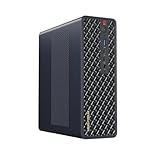
- 【Leading AI Mini Workstation】MINISFORUM AI MS-S1 Max Workstation comes with AMD Ryzen AI Max+ 395 processor, which uses AMD's latest generation Zen 5 architecture. It has 16 Cores and 32 Threads, the boost clock is up to 5.1GHz. The overall processor performance is up to 126 TOPS, and the NPU performance reaches up to 50 TOPS. AMD Ryzen AI enables improved productivity, advanced collaboration, and improved efficiency.
- 【AMD Radeon 8060S Graphics 】The MS-S1 Max Mini PC equipped with AMD Radeon 8060S Graphics which built on the new generation of RDNA 3.5 architecture AMD graphics, it brings ultra-high frame rate experiences and advanced content creation features anywhere and delivers staggering performance. It can handle all your computing and multimedia tasks efficiently.
- 【Five 8K Video Output】This MS-S1 Max Workstation comes with five video outputs, 1x HDMI (8K@60Hz), 2x USB4(40Gbps,Alt DP2.0,PD out 15W) and 2x USB4 V2(80Gbps,Alt DP2.0,PD out 15W) Outputs, which support multiple monitors display at the same time and provide a larger and wider filed of view and improve your work efficiency. It is used in fields that require high-performance computing and graphics processing, including digital signage and securities trading, as well as work that uses CAD, such as engineering design, scientific calculations, animation production, and post-production for movies and television
- 【 Fast and Stable Wire & Wireless Speed】It comes with Two 10G Lan Ports for wired connection and and Wi-Fi 7 / BT5.4 for wireless connection, which increased the network speed greatly and expand its functions and improved performance of computer to a large extent and allows you to use more networks such as software routers (OpenWRT / DD-WRT / Tomato etc.), firewalls, NAT, network isolation etc.
- 【Large Storage & Flexible Expandability】This Workstation equipped with 64GB LPDDR5-8000MHz + 2TB M.2 2280 PCIe4.0 SSD. There is another PCIe4.0 SSD slot available for up to 8TB, these SSD slots are compatible with RAID0 and RAID1, you can store movies, videos, photos, important files easily. What’s more, it also comes with 1x standard PCIex16 slot(PCIe4.0x4) inside.
Which omissions were deliberate—and which were unfinished?
“What’s the gap in your system that everyone calls deliberate?” is a useful question because an intentional design choice and a missing safeguard are not interchangeable. In Correia’s account, some omissions were made to keep authority out of runtime configuration; other protections remained work to be done.
Deliberate design omissions
- Per-tenant risk policies: the author left these out rather than make risk tiers runtime-configurable. The stated concern is that configuration would then hold authority over a consequential rule.
- Durable queue and audit storage: the described queue and audit trail use in-memory adapters. Their interfaces indicate what a production adapter must provide, but persistence is not implemented in this example.
- LLM-as-judge evaluation: the author excluded a language model as evaluator because the reliability of that judge would first need to be established.
Safeguards still unresolved
- Proposal rate limits: the project does not rate-limit refund proposals.
- Duplicate execution after retries: it does not prevent the same approved refund from being executed twice when a retry occurs.
- Knowledge-base degradation: it does not detect when the knowledge base degrades.
These unresolved items matter because a boundary around who may decide is only part of a dependable system. A real service also needs controls for repeated actions, excessive proposals, and deteriorating information. The account does not describe those controls as implemented.
Rank #3

- Built for Local AI and Advanced Workflows – The BOSGAME M5 AI Mini PC is powered by AMD Ryzen AI Max+ 395 with 16 cores, 32 threads, up to 5.1GHz, 50 TOPS NPU performance and up to 126 TOPS total AI performance. It is designed for local AI inference, private AI assistants, coding, data analysis, virtualization, content creation and demanding multitasking while keeping sensitive data on the device.
- 128GB Unified Memory for Large Models and Creative Projects – M5 includes 128GB LPDDR5X-8000 unified memory, giving the CPU and Radeon 8060S graphics access to a large shared memory pool. This helps support memory-intensive AI workloads, large project files, multiple virtual machines, 3D work, video editing and complex professional applications without the capacity limits of typical 32GB or 64GB mini computers.
- Radeon 8060S Graphics for Creation, Rendering and Gaming – Integrated Radeon 8060S graphics with 40 RDNA 3.5 compute units delivers high-end visual performance without a separate graphics card. Use the M5 creator workstation for 4K video editing, 3D rendering, CAD, AI image workflows, high-resolution media and modern gaming, while maintaining a compact desktop footprint.
- 2TB PCIe 4.0 SSD and Flexible Expansion – A pre-installed 2TB NVMe PCIe 4.0 SSD provides fast access to models, datasets, media libraries and project files. A second M.2 2280 PCIe 4.0 slot allows additional storage expansion, while the SD 4.0 card reader supports efficient photo and video workflows for creators and production teams.
- Professional Connectivity and Four-Display Support – Dual USB4 ports, HDMI 2.1 and DisplayPort 1.4 support up to four displays and resolutions up to 8K@60Hz. WiFi 7, Bluetooth 5.4 and 2.5GbE deliver fast networking for cloud collaboration, NAS access and business deployment. Windows 11 Pro, performance-mode switching, Wake-on-LAN and auto power-on support flexible workstation use.
What the evaluation does—and does not—show
The project had not served a real customer, and its evaluation suite consisted of scenarios invented by the author. Passing those cases can show repeatability on the cases tested; it cannot establish how the agent behaves with real users, production traffic, or failures absent from the test set.
The comparison described was between components, not AI providers. End-to-end latency with a hosted model was not measured. The account supplies no attributable statistic quantifying a gain in safety, reliability, latency, or cost, so it supports a qualitative architectural argument rather than a numerical claim about outcomes.
Rank #4

- Speed up your tasks with AI: Unlock new levels of productivity and creativity by upgrading to Intel Core Ultra processors with built-in AI.
- Supports multiple monitors: Connect up to four FHD monitors using DisplayPort and Daisy Chaining*. Or connect two 4K displays using HDMI 2.1 port and DisplayPort.
- Effortless upgrades: The tool-less entry and removable side panel let you quickly access the internal components, making upgrades convenient and stress-free.
- Ready for business: Keep your data secure with a hardware TPM security chip. And when you need to step away from your desk, simply secure your desktop using the built-in lock slot or padlock loop.
- Style meets sustainability: Dell Tower Desktop seamlessly combines elegance with sustainability. Its sleek, modern design, crafted from recycled materials and featuring refined corners, makes it a stylish addition to any home or office.
How to assess the architecture of an AI feature
When reviewing a system that gives AI access to important workflows, trace the boundary from request to action rather than judging it by prompt wording alone:
- Identify the model’s role. Is it interpreting, summarizing, or retrieving—or does it also decide eligibility and trigger an irreversible action?
- Locate the authority. Check whether code or a person owns identity scoping, policy decisions, risk handling, and approval. Look for controls that can be enforced, not just instructions that describe intended behavior.
- Separate intentional exclusions from missing safeguards. Record what was intentionally kept out and why, then list unresolved risks such as retries, rate limits, or data-quality monitoring separately.
- Check the evidence behind reliability claims. Distinguish invented test scenarios from observed customer behavior, and component comparisons from end-to-end measurements.
Correia’s central warning is that increasing capability makes the location of authority more important, not less: “The more powerful the AI becomes, the less you can let the AI itself define the boundaries.”
Quick Recap
Product prices and availability are accurate as of the date/time indicated and are subject to change. Any price and availability information displayed on Amazon at the time of purchase will apply.

