
Yes—Intel documents local inference on Arc discrete GPUs, including the Arc A770, but that does not guarantee a particular model will fit or run well on every Arc card. The practical result depends on the card’s memory, model and quantization, software backend, and system configuration. Intel’s published setup examples establish that Arc is a viable route; they do not establish a universal speed or reliability result.
Does llama.cpp support Intel Arc?
Intel’s llama.cpp SYCL guide lists Intel Arc discrete GPUs among verified devices and includes an Arc A770 in its example device listing. The guide’s example runs a Llama 2 7B Q4 model in GGUF format. This is Intel’s documented SYCL-enabled route, not a claim that every stock llama.cpp build or driver combination will detect an Arc GPU automatically.
The guide describes Linux and Windows through WSL2, recommends Ubuntu 22.04 for its Linux development and testing setup, and directs users to install the Intel GPU driver and oneAPI Base Toolkit before enabling the runtime. It also asks users to confirm that a Level Zero GPU is visible before attempting inference. Follow Intel’s current instructions for the operating system and versions you actually use.
What determines whether a model fits?
Start with the memory on the specific card, not the Arc name alone. Model size and quantization affect memory requirements, and context length adds to what inference needs. Intel’s guide distinguishes GPU-local memory from shared memory; that distinction matters when deciding whether a model can be loaded and how much headroom remains. An example using an A770 does not establish the capacity or performance of another Arc model.
Recommended Free Tools
#1 Best Overall

- Next-Gen Intel Arc Graphics: Powered by Intel Arc A580 GPU with Intel Xe HPG microarchitecture, featuring 384 XMX engines for enhanced AI acceleration and content creation.
- High-Performance Memory: 8GB GDDR6 on a 256-bit interface running at 16 Gbps, delivering excellent bandwidth for 1440p gaming and creative workloads.
- Factory Overclocked: Engine clock set at 2000 MHz out of the box, providing optimized performance for smooth gameplay and multimedia tasks.
- Advanced Dual-Fan Cooling: Features a dual-fan design with striped axial fans and an ultra-fit heatpipe for efficient thermal management. 0dB Silent Cooling stops fans completely at low temperatures for silent operation.
- Durable Construction: Includes a stylish metal backplate for enhanced PCB rigidity and a premium aesthetic, backed by ASRock's Super Alloy components for long-term reliability.
- Record the exact Arc model and its VRAM.
- Identify the model and quantization, such as the guide’s Llama 2 7B Q4 example.
- Choose a context length that fits the intended workload.
- Check that the backend detects the Intel GPU rather than assuming inference is running on it.
Which software route can you use?
Intel documents more than one route. The llama.cpp SYCL guide describes a direct setup using Intel’s GPU runtime components. The IPEX-LLM project also documents integrations for llama.cpp and Ollama. These are distinct software paths with different setup steps and version requirements; the documentation does not establish that one is universally faster.
llama.cpp with SYCL
Use Intel’s SYCL instructions when you want the documented llama.cpp path for Arc. The guide’s checks for Level Zero device visibility are especially useful: if the GPU is not discovered at that stage, a later model command is unlikely to resolve the underlying driver or runtime issue.
Rank #2

- System Compatibility Note: This 2-slot card measures 271 x 112 x 39 mm and requires a single 12V-2x6-pin power connector. Please verify chassis and PSU compatibility before purchase.
- Dedicated Support: Please contact us directly through Amazon for any product questions or assistance you may require.
- Professional Intel Arc Pro B70 GPU: Built on the Intel Xe2-HPG architecture, it features 32 Xe cores and 256 XMX engines, designed to accelerate AI, rendering, and complex visualization workloads.
- Massive 32GB GDDR6 VRAM: Equipped with 32GB of high-speed GDDR6 memory on a 256-bit bus, running at 19 Gbps, which allows for handling large AI models and complex datasets locally.
- High-Performance Engine Clock: Delivers an engine clock of 2540 MHz, providing the compute power needed for demanding professional applications and AI inference.
Ollama through IPEX-LLM
Intel’s IPEX-LLM Ollama quickstart describes using a project-provided Ollama executable and includes Linux and Windows instructions. Its version alignment notes are important: the quickstart warns that updating to specified Windows package versions can require creating a new Conda environment because of a possible sycl8.dll issue. Treat that as a version-specific warning, and check the project’s instructions for the exact versions you install.
What does Intel’s published test establish?
Intel’s Arc A-series inference article reports a test configuration using an Arc A770, an Intel Core i7-12700, and Ubuntu 22.04. Intel specifies 1,024 input tokens and batch size 1 for that setup. Those details provide useful context for Intel’s own test, but they are not a performance promise for a different machine, model, software version, or workload.
The Tool Desk
Outbyte Driver Updater FREEScan for outdated or missing drivers - takes under a minuteDriver Scan →Outbyte PC Repair FREEClear out junk files and repair common Windows errorsFree Scan →Rank #3
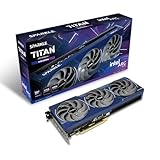
- OC Edition Boost Clock: 2760MHz
- TORN Cooling 2.0
- Metal Backplate
- Blue Breathing Light
- Graphic card sag bracket
No author-specific tokens-per-second result, latency figure, power measurement, or stability observation is established here. Without those measurements, “surprisingly decent” cannot be quantified or generalized. A meaningful comparison would keep the model, quantization, context length, prompt, and generation conditions consistent, while recording the backend and version and confirming GPU use.
Quick Recap
Rank #4

- System Compatibility Note: 2‑slot ITX card, 169.9x123.5x39.2mm, single 8‑pin power, recommended 500W PSU. Verify chassis clearance before purchase.
- Dedicated Support: Please contact us directly through Amazon for any product questions or assistance you may require.
- Intel Arc A380 GPU: Powered by Intel Xe architecture with 6GB GDDR6 on 96‑bit bus – ideal for compact gaming, HTPC, and media builds.
- 2250MHz GPU Clock: Factory overclocked core delivers solid performance for esports titles and everyday creative tasks.
- Small Form Factor ITX Design: Compact 2‑slot card fits easily into mini‑ITX and small form factor cases without sacrificing performance.
How to evaluate a reused Arc card
- Identify the hardware: note the precise Arc model, VRAM, host CPU, system RAM, operating system, and Intel driver version.
- Choose a documented backend: follow Intel’s llama.cpp SYCL path or the IPEX-LLM integration instructions for the backend you plan to use.
- Verify discovery first: use the backend’s device check and confirm the Arc GPU is visible before loading a model.
- Start with a model that fits: record its format, parameter size, quantization, and context length; Intel’s llama.cpp guide uses Llama 2 7B Q4 as an example.
- Measure the workload you care about: report prompt and generation conditions, throughput or latency, and any stability, noise, or power observations. Do not treat a result from one configuration as a benchmark for all Arc cards.
Product prices and availability are accurate as of the date/time indicated and are subject to change. Any price and availability information displayed on Amazon at the time of purchase will apply.

