
Recommended Free Tools
Choose the Xeon generation that your motherboard supports. The representative E3-1230L v3 and E3-1240L v5 are both four-core/eight-thread, 25 W processors, but use different sockets: LGA1150 for the v3 and LGA1151 for the v5. They are not CPU-only upgrade alternatives for the same board. The v5 example has higher Intel-listed base and maximum turbo frequencies and lists DDR4 support, but those specifications alone do not prove a workload performance advantage.
Representative E3-12xxL v3 and v5 specifications
The family labels cover multiple processors, so this comparison uses two specific low-power models: Intel’s E3-1230L v3 specifications and E3-1240L v5 specifications.

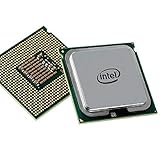

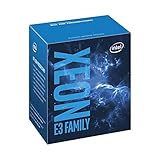

| Specification | Xeon E3-1230L v3 | Xeon E3-1240L v5 |
|---|---|---|
| Launch | Q2 2013 (Intel) | Q4 2015 (Intel) |
| Manufacturing process | 22 nm (Intel) | 14 nm (Intel) |
| Cores / threads | 4 / 8 | 4 / 8 |
| Base / maximum turbo frequency | 1.80 / 2.80 GHz | 2.10 / 3.20 GHz |
| Cache | 8 MB | 8 MB |
| Listed TDP | 25 W | 25 W |
| Socket | FCLGA1150 | FCLGA1151 |
| Listed memory support | DDR3/DDR3L-1333/1600 at 1.5 V | DDR4-1866/2133 or DDR3L-1333/1600 at 1.35 V |
| Lifecycle | Discontinued; end of servicing | Discontinued; end of servicing |
Intel’s maximum turbo figure is a maximum single-core frequency, not an all-core sustained clock or a benchmark score. The table contains Intel specifications, not comparative workload testing.
Why the motherboard decides the choice
The example v3 processor uses FCLGA1150; the example v5 uses FCLGA1151. Intel’s socket guidance says, “CPU sockets are not interchangeable between Xeon generations.” A socket match by itself also does not guarantee that a particular motherboard supports a processor: check the board or server manufacturer’s CPU support list and any required BIOS version before buying. Intel recommends checking compatibility for the individual processor, including chipset compatibility in its processor compatibility guidance.
Do these 3 things before closing this tab:
1Scan for outdated or missing drivers - takes under a minute2Clear out junk files and repair common Windows errors3Fix the driver behind crashes, sound loss and screen glitches#1 Best Overall
The v5 platform is not simply a newer CPU dropped into the older system. Intel’s E3-1200 v5 datasheet describes a two-chip platform with a discrete C230-series chipset on the motherboard. Treat the system’s documented platform support—not the processor generation name—as the deciding compatibility check.
What changes between these examples—and what does not
Clock specifications
The E3-1240L v5 has a higher listed base frequency (2.10 GHz versus 1.80 GHz) and maximum turbo frequency (3.20 GHz versus 2.80 GHz) than the E3-1230L v3. Both have four cores, eight threads, 8 MB cache, and a listed 25 W TDP. These differences may help frame a specification comparison, but they do not establish how either CPU will perform in a particular application.
Memory
Intel lists DDR3/DDR3L for the v3 example and DDR4 or DDR3L for the v5 example, with different listed voltage conditions. Actual usable memory depends on the motherboard: check its manual for supported memory types, DIMMs, and population rules. A CPU’s memory listing does not mean a board can use every listed type.
Power varies within the v5 L-series
“L” does not identify one uniform power or frequency tier across the family. For example, Intel’s S1200SPO compatibility listing includes the four-core E3-1260L v5 at 45 W alongside the four-core E3-1240L v5 at 25 W. That listing applies to the S1200SPO board; it should not be generalized to other motherboards.
Graphics
Intel lists no graphics output and no Quick Sync Video for the E3-1240L v5. The cited E3-1230L v3 product page does not provide a GPU specifications section, so it does not establish that the v3 example supplies usable integrated graphics. If display output matters, verify the exact CPU and system documentation and confirm that the motherboard has a usable display output.
Independent reader supportYour contribution helps us test, update, and keep practical guides available for everyone.How to decide what to buy
- Identify the exact system. Record the motherboard or server model and revision, then find its manufacturer’s CPU support list and BIOS requirements for the processor you are considering.
- Match the platform. The representative v3 is LGA1150 and the v5 is LGA1151. Do not plan a CPU-only swap between these examples; verify the exact board support even when a socket appears to match.
- Check the installed memory. Compare the board’s supported memory and DIMM rules with the memory already fitted and the exact processor’s listing. If changing boards, include the cost and compatibility of replacement memory in the decision.
- Confirm graphics needs. Check whether the exact CPU and system provide the display capability you need; do not infer integrated graphics from the Xeon E3 family name.
- Evaluate the actual used or old-stock listing. Both representative processors are discontinued. Intel’s archived specifications do not establish present-day availability, price, or seller condition. Verify the model marking, return terms, and motherboard support with the seller before purchase.
For a verified LGA1150 system, a supported v3 processor is the plausible upgrade route; for a verified LGA1151 system that supports the exact CPU, the v5 may offer the cited specification differences. If choosing v5 requires a motherboard replacement, compare the full platform cost with replacing the system rather than judging by the processor’s price alone.
Quick Recap
Product prices and availability are accurate as of the date/time indicated and are subject to change. Any price and availability information displayed on Amazon at the time of purchase will apply.

