
Do these 3 things before closing this tab:
1Fix the driver behind crashes, sound loss and screen glitches2Repair Windows errors before they cause bigger problems3Scan for outdated or missing drivers - takes under a minuteA wave-shaper synthesizer uses a nonlinear mapping or shaping table to change a waveform’s shape and harmonic content. To make one, first decide whether you mean a software instrument, an analog circuit, or a feature within a larger synthesizer: each needs a different design, and the title alone does not identify a specific build. The documented examples below show what the feature can do and which design choices a real project would need to specify.
What a wave shaper does in a synthesizer
A wave shaper changes the relationship between an input signal’s amplitude and its output, or maps the signal through a shaping table. The resulting waveform differs from the input, which changes its timbre and harmonic content. Yamaha describes the AN-X oscillator wave shaper as changing waveform shape to create distortion and alter harmonic content in its AN-X Operation Manual; the Algoritm FM Synthesizer manual likewise describes shapers as transformation functions.

“Wave shaper” is the broad category, not a synonym for “wave folder.” A folder is one type of shaping behavior. Other possibilities include saturation, power curves, and selectable transfer tables; a particular device may offer one or several.
Choose what “multifunction” means
There is no specified circuit, platform, or target device in the title. “Multifunction” could mean selectable shaping curves, or a shaper combined with other synthesis functions. Existing instruments show that selectable shaper tables are one practical interpretation, but they do not establish the features of a design you might build.
#1 Best Overall

- Dynamic Modulation Options: Offers a broad range of modulation capabilities to craft intricate soundscapes and evolving tones.
- Dual-Function Module: Combines a tidal modulator and function generator into one compact Eurorack unit for versatile performance.
- Adjustable LFO Precision: Features adjustable low-frequency oscillation to create rich, varied modulation effects.
- Robust & Reliable Build: Engineered with high-quality components to ensure stable performance in professional modular setups.
- Seamless Eurorack Integration: Easily connects with existing modular systems to expand your creative sound design possibilities.
| Implementation | Input and role | What to plan for |
|---|---|---|
| Oscillator feature | Shapes a generated waveform, such as sine or triangle, as part of a synthesizer voice. | Choose the source waveform, shaping behavior, level, and any modulation of the shape. |
| Standalone effect | Shapes an incoming audio signal rather than only an oscillator’s output. | Specify how the incoming signal is handled and what controls change the shaping. |
| Modular hardware module | Adds shaping within a modular synthesizer system. | Account for the existing rack and system; it is not a complete keyboard instrument. |
These are different design goals, not interchangeable product formats. A keyboard instrument integrates the sound source and performance system, while a modular module assumes a compatible system around it.
Distinguish folding from saturation
In the Algoritm manual’s fold example, the signal is amplified beyond available headroom and its peaks are mirrored back into that headroom. Saturation instead reaches a headroom ceiling. Folding therefore produces reflections as the waveform crosses a threshold, while saturation limits or bends peaks. These descriptions illustrate behaviors rather than defining every circuit implementation.
Rank #2

- Advanced Wave Sequencing 2.0 technology for evolving, organic sounds with intricate details
- 37 full-size keys provide expressive play and a portable form factor for easy transport
- 64 stereo voices offer extensive modulation options for complex sound design and performance
- 14 simultaneous effects add depth and richness to your sounds for professional-quality results
- Gigabytes of samples, including modeled filters like MS-20 and Polysix
Plan the controls and signal path
A useful design brief should say where the signal originates, which shaping behaviors are selectable, and how the player controls them. The documented instrument examples point to waveform choice, a shaper type or table, level or gain, and modulation as meaningful variables.
- Input: Decide whether the shaper receives an oscillator waveform or arbitrary incoming audio. Korg describes its multi/poly oscillator shaper as processing sine or triangle inputs.
- Shaper selection: State whether the device offers folding, saturation, power curves, or a table of selectable curves.
- Level and gain: Explain how the input level affects the signal entering the shaping stage; the intended design’s specific range is not established.
- Modulation: Decide whether the shape can change during performance. Yamaha’s AN-X manual says its oscillator wave shaper can respond to velocity and change over time through an oscillator envelope.
Without a target platform or schematic, it is not possible to give reliable component values, power requirements, output levels, or assembly steps. Those depend on the actual circuit or software architecture and should be specified before treating a concept as a build recipe.
The Tool Desk
Outbyte Driver Updater FREEScan for outdated or missing drivers - takes under a minuteDriver Scan →Outbyte PC Repair FREERepair Windows errors before they cause bigger problemsFix Now →What existing instruments demonstrate
Korg’s multi/poly is a full analog-modeling synthesizer, not a dedicated wave-shaper unit. Korg says it processes simple waveforms through a shaper table, identifies a Berkeley shaper for traditional wavefolder timbres, and lists over 90 other shaper types. The product page does not state a publication year for that feature count.
The CubuSynth Engine V2 manual offers modular-system context: its July 2023 manual says the wavefolder is based on schematics by Eddy Bergmann and adds a CV input based on Tom Wiltshire’s Vintage VCA. This documentation describes a design reference, not current stock or a confirmed sales channel.
Rank #4
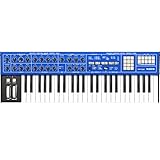
- Behringer WAVE Waveform Synthesizer for Creative Soundscapes
Questions to resolve before building
- Is the goal a software instrument, an analog circuit, a modular module, or an oscillator feature inside a larger synthesizer?
- Will it shape only generated oscillator signals, or also accept external audio?
- Which shaping behaviors or tables are essential, and what controls should select or modulate them?
- What host system, electrical levels, power, and safety requirements apply to the chosen implementation?
Those details are not established by the named manuals and product page. In particular, they do not supply a target build’s circuit schematic, components, output levels, power requirements, or test results.
Quick Recap
Best Value

- A feature-rich synthesizer and sequencer rolled into one Eurorack module!
- Pulse, square, triangle, and sawtooth waves
- Envelope, filter, sample and hold, glide, and 2 LFOs
- Program long sequences, and daisy-chain additional sequencers to infinity!
Product prices and availability are accurate as of the date/time indicated and are subject to change. Any price and availability information displayed on Amazon at the time of purchase will apply.
What’s actually slowing this PC down?
Pick the symptom - the matching free tool is one click away.

