
Recommended Free Tools
Before buying automated license plate readers (ALPRs), a city should be able to justify the public-safety need, test the system under local conditions, and enforce clear rules for data, access, sharing, security, audits, and deletion. The purchase is not just a camera decision: it is a long-term contract for a system that captures, processes, stores, and makes vehicle data searchable.
Start with the public-safety need, not the camera specification
Write the problem statement before issuing a request for proposals (RFP). Identify the specific public-safety objective, the evidence that the problem warrants ALPR, the alternatives considered, and the measurable outcomes that would justify continuing the program. Set authorized uses in both city policy and the contract; a general promise to use the system for public safety is not a meaningful use restriction.
Deployment locations need an explanation that can be reviewed. Palo Alto says it considers factors such as crime statistics, common vehicle ingress and egress, and traffic volume, while seeking the benefit of fewer cameras. That is one city’s approach, not a universal siting formula. Ask bidders and the responsible department to map proposed locations, explain the selection criteria, assess sensitive sites and potential disparate impacts, and establish how placements will be periodically reviewed or changed.
Define exactly what the city is buying
An ALPR service includes more than readers mounted on vehicles or poles. Its boundary may include cameras, illumination, plate-reading and vehicle-attribute software, alert lists, databases, cloud hosting, integrations, user interfaces, APIs, and copies or exports held by the city, vendor, or partner agencies. The RFP should require a data-flow diagram and a description of each component, its operator, and where data is captured, processed, transmitted, stored, or copied.
#1 Best Overall

- LICENSE PLATE RECOGNITION CAMERA - Features 8mm - 32mm lens for an 15° - 40° Viewing Angle. F1.6 Max Aperture, 1/1.8" 4-Megapixel CMOS Image Sensor and License Plate Recognition Distance 26.25ft - 98.43ft. Supports recognizing vehicle type, vehicle color, and license plate details. Supports IVS, Tripwire & Intrusion as well as displaying vehicle plate, vehicle path & loitering detection.
- SMARTER SECURITY – Query and review license plate details professionally on a PC using a web browser. Works with most standard web browsers however for an optimal experience it is recommended to use Microsoft Edge in IE mode as the camera may require the use of a .exe plugin. Supports storage to a MicroSD Card (up to 256GB), PC/Windows only supports SFTP, IE mode in Microsoft Edge, Firefox, Chrome (limited query options).
- ACTIVE DETERRENTS – This outdoor POE IP LPR camera features a heavy-duty metal weatherproof IP67 housing as well as 4 IR LEDs for night vision up to 98 feet, includes red/blue warning LEDs which can be used as an active deterrent. Dual H.265/H.264 compression allows for maximum encryption with the latest technology as well as backwards compatibility with legacy platforms.
- SIMPLE, RELIABLE, SECURE – This Amcrest POE camera features a secure connection. At Amcrest, we want to ensure the safety of our customers, their loved ones, homes and businesses. Compatible with the following Amcrest AI NVR's for live view purposes only: B0C381YK91, B0CDHDHPR8, B0CBL8W9NY, B0D464HMBB, B0D47X8WJJ
Require vendors to disclose camera models, fields of view, image-quality requirements, supported plate formats and vehicle attributes, software and model versions, integrations, alert-list sources, and how frequently those lists are updated. Specify how software or model changes will be notified, tested, approved, recorded, and rolled back. The city should be able to see what configuration was in place when an alert or system incident occurred.
Test performance in local conditions before acceptance
Do not rely on a vendor’s headline accuracy figure unless its measurement method and test conditions are disclosed and comparable to the city’s needs. Require each bidder to explain how it calculates read and alert performance, then test representative local conditions: plate formats, weather, lighting, glare, occlusion, vehicle speed, camera angle, and the proposed installation locations.
Measure distinct failure modes separately: incorrect plate reads, plates the system misses, incorrect alerts, and how confidence scores behave. Set acceptance thresholds and the test protocol before award, and make the city’s access to test results, system configuration, incident reports, documentation, and logs a contractual requirement. The reviewed public sources do not establish a current, independent, vendor-by-vendor accuracy comparison or a universal accuracy figure.
Rank #2

- 𝐄𝐧𝐡𝐚𝐧𝐜𝐞𝐝 𝐃𝐮𝐚𝐥-𝐂𝐚𝐦𝐞𝐫𝐚 𝐂𝐥𝐚𝐫𝐢𝐭𝐲 𝐚𝐭 𝐔𝐩 𝐭𝐨 𝟒𝟎 𝐟𝐭 (𝟏𝟐 𝐦): Capture every event around your home in ultra-clear 3K resolution. Enjoy sharp, detailed visuals with 8× zoom to see what matters most.
- 𝐒𝐨𝐥𝐚𝐫-𝐏𝐨𝐰𝐞𝐫𝐞𝐝, 𝐈𝐧𝐬𝐭𝐚𝐥𝐥 𝐎𝐧𝐜𝐞 𝐚𝐧𝐝 𝐢𝐭 𝐑𝐮𝐧𝐬 𝐅𝐨𝐫𝐞𝐯𝐞𝐫: Experience constant peace of mind with this solar-powered security camera that's easy to set up and always on, thanks to its removable solar panel.
- 𝟑𝟔𝟎° 𝐆𝐮𝐚𝐫𝐝𝐢𝐚𝐧, 𝐍𝐨 𝐁𝐥𝐢𝐧𝐝 𝐒𝐩𝐨𝐭𝐬: Say goodbye to blind spots with full home coverage by installing the product vertically. Enjoy 360° Pan & Tilt Surveillance , check your front porch, monitor your backyard, and keep an eye on the driveway with ease.
- 𝐕𝐞𝐫𝐬𝐚𝐭𝐢𝐥𝐞 𝐈𝐧𝐬𝐭𝐚𝐥𝐥𝐚𝐭𝐢𝐨𝐧, 𝐄𝐟𝐟𝐨𝐫𝐭𝐥𝐞𝐬𝐬 𝐒𝐞𝐭𝐮𝐩: Experience the convenience of a 7-minute installation with its compact size and wire-free design.
- 𝐑𝐞𝐬𝐭 𝐚𝐬𝐬𝐮𝐫𝐞𝐝 𝐬𝐞𝐫𝐯𝐢𝐜𝐞: you can enjoy a worry-free experience, all backed by our professional customer service team.
Use a pilot or acceptance period with written remediation and termination rights if the system does not meet agreed thresholds. Treat every alert as a lead that needs checking, not as proof. Santa Monica Police Department says an alert does not establish that a crime occurred or that anyone in the vehicle committed one; staff should review the original image and verify relevant details before relying on it. A record associated with a vehicle does not by itself identify the driver or establish an occupant’s involvement.
Set ownership, retention, and deletion rules in the contract
Define who owns and controls plate reads, images, plate strings, derived analytics, audit logs, exports, and case records. Separate city data from vendor telemetry, and limit any vendor license to what is necessary to provide the contracted service. The California State Auditor reported ambiguity about data ownership in reviewed contracts and highlighted the importance of clear ownership and security guarantees. Santa Monica describes an agreement under which the city owns its data and the vendor has a limited license to process it for the service.
Specify routine retention, the rationale for the period, how automated purging works, and how deletion is verified in production systems, replicas, backups, and vendor-held copies. Define a documented exception for evidence or legal holds, including who may authorize it, what data is preserved, who can access it, and when the hold ends. Palo Alto and Santa Monica describe 30-day routine retention with investigative or legal-preservation exceptions; those local examples do not establish a universally correct period or legal standard. The city must check its own records laws and applicable statutory requirements.
Rank #3
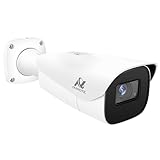
- Compatibility-- Only Work With ONWOTE TD Series NVR (PNT-808, PNA-8016-T, PNT-1232).
- LPR-- License Plate Recognition IP Network PoE Camera.
- 4MP Resolution-- 2592×1520 @30fps for sharp and fluid video.
- 1/1.8" Low-Light Image Sensor-- Ensuring clear images even in dim conditions.
- 8-32mm Motorized Varifocal Lens @F1.6 for adjustable field of view.
Control who can search data and where it can go
Limit access to named, trained users with a legitimate work purpose. Require individual credentials, least-privilege permissions, strong authentication, prompt account revocation when roles change, and disciplinary consequences for misuse. Searches should record a case number or purpose justification, rather than allowing unaccountable browsing.
Decide explicitly which outside agencies may access or receive data. Set purpose limits, approval steps, eligible jurisdictions, written-agreement requirements, restrictions on onward transfer, and procedures for responding to legal demands. Specify whether and how partner-agency access will be logged and audited. A product’s defaults or a vendor’s current policy cannot substitute for enforceable city rules; the ACLU has warned that corporate defaults can change.
What’s actually slowing this PC down?
Pick the symptom - the matching free tool is one click away.
The security schedule should address encryption in transit and at rest, key management, breach notification, vulnerability handling, independent security assessments, personnel screening and training, subcontractors, hosting locations, business continuity, and secure deletion. Require evidence for security commitments and a remedy if the vendor fails to meet them. Palo Alto describes encrypted transmission and remote vendor storage for its own arrangement; that description should not be assumed to apply to another provider.
Rank #4

- Feature-Rich, Wire-Free Security - The C425 camera addresses common security camera challenges with its easy installation and maintenance. It offers a range of features designed to simplify monitoring and enhance security
- Wire-Free & Versatile Installation - This IP66 weatherproof camera offers hassle-free, wire-free mounting. Its magnetic base enables easy attachment to metal surfaces, providing flexible indoor and outdoor placement
- Extended Battery Life - The 10000mAh battery offers up to 300 days of use. For continuous power, use the optional Tapo A200 Solar Panel (sold separately), which eliminates the need for recharging
- 2K QHD with 142° FOV - The 2K QHD resolution provides clear details like license plates, offering 1.7x the pixels of 1080p. The 142° field of view covers a larger area for broader monitoring
- Full-Color Night Vision - Capture vibrant, full-color images at night with the integrated Starlight sensor and built-in spotlights
Make audit rights usable, then publish meaningful information
Require searchable, tamper-resistant records of each query, including the user, date and time, stated purpose, search terms, result, export, sharing event, administrative action, and vendor access. The city should be able to export and retain those logs independently rather than relying only on a vendor dashboard. Define supervisory or independent review frequency, how findings and corrective actions are documented, and what consequences follow a violation.
Transparency should be part of program operations, not an optional vendor feature. Publish the use policy, retention schedule, sharing rules, a complaint route, and audit summaries. Disclose camera locations where legally appropriate, and report program outcomes on a regular schedule. Redwood City’s procurement plans identify transparency and vendor accountability as safeguards; Santa Monica describes reviewable user activity and policy-based audits.
Independent reader supportYour contribution helps us test, update, and keep practical guides available for everyone.Evaluate value with local measures, not raw activity counts
Before launch, establish a baseline and an evaluation plan. Define the cases or outcomes ALPR is intended to support, how staff will record the system’s contribution, and what will be reported. Include false-alert and error rates, time saved, relevant recoveries or other outcomes, policy compliance, complaints, and program costs. A count of reads, alerts, arrests, or recoveries alone does not show that ALPR caused an outcome; reports should provide context and use an appropriate comparison where possible.
Free tools Windows power users keep installed
One-click scans. No signup required.
Best Value

- Professional License Plate Recognition (LPR): This LPR Camera captures and reads vehicle plates accurately day and night. Ideal for parking lots, toll stations, and access control.
- Utral Low Light & 120dB WDR: Equipped with a 1/1.8" sensor and advanced low-light technology. Delivers sharp license plate images even under headlight glare or complete darkness.
- 4MP@30fps & 8-32mm 4x Motorized Zoom Lens: Records smooth 2592×1520 video at 30fps. Remote 4x auto focus zoom via web browser. Recommended ANPR distance: 23-98ft.
- 256GB SD Card Slot & IP67 IK10: Supports storage up to 256GB. Metal housing is weatherproof (IP67) and vandal-resistant (IK10) for outdoor use.
- Compatibility: Only supports TVT NVRs, not other NVRs.Please refer to the manual and video instructions for operation. If there are any issues, we provide 24/7 professional technical support.
A 2012 Office of Justice Programs/National Institute of Justice survey sampled 500 agencies; 305 responded (61%). Of those respondents, 70 (23%) reported ALPR use. In a follow-up of those 70 agencies, 40 responded (57.1%). Among those responding users, 68% reported increased stolen-vehicle recoveries, 55% increased arrests, and 50% increased productivity; fewer than half (48%) reported having ALPR policies. These are historical, self-reported survey responses, not causal findings, current prevalence estimates, or present-day performance benchmarks.
Compare bids on equal terms and budget for the full contract
Require every bidder to provide equivalent disclosures and face equivalent test conditions. A comparison should cover the whole service and its exit path, not just the camera price.
| Evaluation area | What to require from each bidder |
|---|---|
| Local performance | Test protocol and results for reads, missed reads, false alerts, and confidence behavior under representative local conditions. |
| Coverage and deployment | Hardware specifications, installation constraints, fields of view, and ability to adjust locations. |
| Data control | Ownership and permitted-use terms for city data, hosting details, retention controls, and deletion process. |
| Sharing and audit | Access and partner-sharing controls, searchable logs, export capability, and support for city review. |
| Security | Contractual safeguards, independent security evidence, incident response, and subcontractor disclosures. |
| Changes and accountability | Notice, testing, approval, documentation, and rollback procedures for software or model changes; named vendor responsibilities. |
| Exit and portability | Data export, migration support, deletion verification, and termination rights. |
| Operations | Accessibility and usability for trained staff, support arrangements, and documented incident handling and references. |
| Total cost | Full-term costs for hardware, installation, connectivity, cloud storage, software, integrations, support, training, replacement, security reviews, audits, and exit or migration. |
The reviewed sources do not provide current comparable bids or reliable price benchmarks. Normalize local proposals across the full term, including recurring charges and end-of-contract costs, instead of extrapolating a price from one city’s contract.
Keep the system within a reviewable policy
Federal guidance treats objectives, deployment, data quality, hot-list management, security, retention, access, sharing, accountability, and sanctions as connected ALPR policy concerns. Its central practical point is that the system needs ongoing management: “Like all law enforcement resources, ALPR must be carefully managed to ensure quality of data, security of the system, compliance with laws and regulations, and privacy of information.” — Office of Justice Programs/National Institute of Justice.
Do these 3 things before closing this tab:
1Fix the driver behind crashes, sound loss and screen glitches2Clear out junk files and repair common Windows errors3Scan for outdated or missing drivers - takes under a minuteThat means policy and contract terms should operate together. The contract must preserve city control, audit access, security duties, and remedies; city rules must govern authorized uses, people, locations, retention, sharing, verification, and review. A camera visible in a public place does not eliminate privacy questions about systematic capture and searchable location histories.
Quick Recap
Product prices and availability are accurate as of the date/time indicated and are subject to change. Any price and availability information displayed on Amazon at the time of purchase will apply.

