
Cyborg insects could help search teams investigate tight, cluttered spaces that conventional robots struggle to enter. Researchers have demonstrated controlled movement, obstacle navigation, sensor-equipped prototypes and, according to NTU Singapore, a field deployment in Myanmar. But these are early research systems—not proven rescue equipment that can independently find survivors or improve rescue outcomes.
What is a cyborg insect?
A cyborg insect is a living insect fitted with electronic equipment. The insect supplies its own locomotion; researchers add components such as electrodes, a circuit board, sensors or a small payload to influence movement or collect information. The idea is to combine an animal’s ability to move through complex terrain with electronics that can guide it or report what it encounters.
There is no single standard design. Research groups have worked with Madagascar hissing cockroaches and darkling beetles, among other differences in equipment and control. A system demonstrated in one experiment should not be assumed to have the sensors, range or capabilities of another.
How do researchers guide them?
Electrical stimulation
NTU Singapore describes a cockroach system in which implanted electrodes connect to a lightweight circuit board. Gentle electrical stimulation can prompt a change in direction or speed while the insect moves on its own legs. This is remote influence over movement, not a machine steering every step like a conventional wheeled robot.
#1 Best Overall

- Magic Amber: Amber is an ancient organic material with high scientific and educational value. It can be used to study subjects such as fossil formation, geology, biology, and chemistry
- Real Insects:Each amber contains real insects, making amber an excellent object for displaying the history of science and natural history, and helping people better understand the evolution of the earth and life
- Excavation Adventure: Embark on an exciting excavation adventure, Use the tools to uncover hidden amber and then match them with the classification guide to learn more about these fascinating specimens
- Dig Up 6 Insect Amber: They can excavate 6 insect ambers (made of Artificial Resin) just like real geologists, creating enduring memories of amber specimen-collecting
- Fun Educational Gift: Looking for the perfect educational gift? Our STEM series Amber Dig Kit is both fun and informative, encouraging kids to learn about amber and geology in a memorable way
In a 2025 report, NTU described an automated assembly prototype that uses computer vision and a robotic arm to place electrodes and attach a backpack. The prototype assembled an insect in 1 minute 8 seconds, compared with a manual process that NTU said often took more than an hour. Professor Hirotaka Sato said the approach made deploying large numbers “far more practical”; that is the researchers’ assessment of the prototype, not evidence of a field-ready production system.
Navigation that uses natural behavior
Osaka University and Diponegoro University have reported another approach: sensors monitor obstacles and movement, and the system issues a command when needed while otherwise allowing the insect to navigate using its natural behavior. The goal is not necessarily to steer continuously, but to intervene when the insect’s own movement needs guidance.
Rank #2

- You will receive 15 different insect specimens in this exquisite set, which is enough to satisfy your observation and use times.
- The product comes with a convenient storage bag, a magnifying glass, and instructions, so that you can observe and understand these specimens more conveniently.
- Our specimens are made of high-quality resin, which is strong and durable, and not easy to break or change color.
- Our specimens are insects that died naturally in nature, and are made in their natural form when they survive outdoors.The shape and size of each insect are different.
- Our specimen collection is very suitable for you to give to your family, friends, relatives, neighbors, and animal specimen making, biology or quirks enthusiasts.
Control that responds to the insect’s state
A 2026 University of Osaka report describes a separate method that combines heartbeat activity, neural-signal features and movement data to estimate an insect’s state and decide whether stimulation is appropriate. Its best-performing offline Random Forest model achieved 93% overall accuracy when classifying five experimental conditions. The report says it performed especially well for natural and food-related states, with overlap among ultraviolet, chemical and heat conditions. That figure is not search-and-rescue accuracy, nor evidence that a cyborg insect can reliably identify a survivor.
What have cyborg insects demonstrated?
Results so far span laboratory movement tests, obstacle courses and specialized prototypes. They show that researchers can influence insect movement and explore possible sensing or mobility roles; they do not establish equivalent performance in a disaster site.
Rank #3

- CATCH BUGS & OBSERVE THEM UP CLOSE - With this bug catcher and habitat kit, kids can capture bugs and insects, then watch them through the habitat's magnified viewers. The bug catcher, tweezers, and net make it easy to catch bugs of all types.
- MAKE THE PERFECT BUG HABITAT - The bug habitat provides a 360° view and includes a removable base, easy-open lid with latches, and 2 magnifying viewers. The base provides a place for natural objects to make bugs feel at home while they're observed.
- 2 BUILT-IN MAGNIFYING GLASSES - The magnified viewers are designed to offer up-close observation of the bugs you catch. The larger, stationary magnifier lets kids see their bugs up close, while the other telescopes and moves to watch bugs in action!
- EVERYTHING KIDS NEED - This bug catching kit includes everything kids need to catch and observe bugs in their natural state: habitat container and latching lid with magnified viewers and removable base, scissor-style bug catcher, net, and tweezers.
- AMAZON EXCLUSIVE - Blue Marble has developed this product exclusively for Amazon.
| Research approach | Demonstration reported | What the result does not establish |
|---|---|---|
| NTU cockroach assembly and movement tests (2025) | In laboratory tests, insects turned by more than 70 degrees and reduced speed by up to 68%. A group of four covered over 80% of an obstacle-filled test area in 10.5 minutes. | These are results from the described experiments, not guaranteed performance across field conditions or evidence of survivor detection. |
| University of Osaka cockroach obstacle course (2025) | Insects traversed sandy ground with stones and wood and reached a target in unfamiliar terrain. | Reaching a target in an obstacle course is not the same as locating or confirming a trapped person. |
| University of Queensland darkling beetles (2025) | Researchers remotely guided beetles sideways and up vertical walls. The climbing test used a tethered power supply; the researchers also demonstrated climbing with a battery equivalent to the beetle’s body weight. | The demonstrations do not provide a like-for-like comparison with cockroach systems or establish performance in rubble or a live emergency. |
| NTU and Waseda underwater suit (2026) | A flexible, oxygen-generating suit kept insects active and moving underwater for up to three hours in tests. | The reported duration does not establish durability in disaster conditions or a complete underwater rescue capability. |
NTU’s 2022 account also described a backpack designed to sense movement, carbon dioxide emissions and heat signatures in rubble. Those features belong to that described design; they should not be attributed to every cyborg insect system.
Have cyborg insects been used in a real disaster?
NTU reports that ten cyborg insects accompanied Singapore’s Civil Defence Force contingent to Myanmar on 30 March 2025, two days after the 28 March earthquake. The university describes this as the first humanitarian operation and field deployment of insect-hybrid robots. NTU said the deployment demonstrated potential for exploring areas that conventional robots may find difficult to access.
Rank #4

- 【Complete Entomology Starter Kit For Budding Scientists】Unleash the wonder of the natural world! This all-in-one set includes 12 unique resin insect specimens, a magnifying glass for detailed observation, and 12 educational information cards. Packaged in a beautiful gift box, it's the ultimate resource for home or classroom science exploration
- 【Ethical & Real Insect Specimens, Perfectly Preserved】Each insect lived a full life and died of natural causes in the wild before being ethically sourced and preserved in crystal-clear resin. This humane process captures their authentic form and intricate details, offering a safe and fascinating way for students to study real bugs up close
- 【Hands-On Learning That Sparks Curiosity & Discovery】Transform screen time into learning time! Students can use the magnifier to examine each bug, read the info cards to learn fun facts and use their curiosity to understand insect biology, ecology, and biodiversity
- 【Durable, Pocket-Sized Displays For Lasting Enjoyment】Crafted from high-quality, non-yellowing resin, each block (1.7"x1.1"x0.6") is built to last. Their compact size makes them perfect for little hands, easy to store, and great for display on a desk or shelf as unique mini-collectibles or quirky paperweights
- 【The Unforgettable Gift For Curious Minds】Searching for a unique birthday, holiday, or back-to-school gift? This professionally presented set is a guaranteed hit! It inspires a love for science and makes an exceptional present for students, teachers, and any collector of cool oddities and curiosities
This is a reported field deployment, an important step beyond a laboratory demonstration. NTU’s account does not establish routine operational use, verified survivor detections or improved rescue outcomes. It therefore supports saying that cyborg insects have been deployed in a humanitarian operation—not that they are already a dependable first-response service.
Independent reader supportYour contribution helps us test, update, and keep practical guides available for everyone.Can they find survivors under rubble?
That remains a possible use, not a capability established across these demonstrations. A system carrying appropriate sensors might help gather information in a confined or cluttered area. The 2022 NTU backpack concept included movement, carbon-dioxide and heat sensing, but the reported work does not show that every prototype carries those sensors or that they have reliably detected people beneath rubble in operational conditions.
Do these 3 things before closing this tab:
1Fix the driver behind crashes, sound loss and screen glitches2Clear out junk files and repair common Windows errors3Scan for outdated or missing drivers - takes under a minuteBest Value
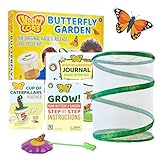
- Explore the Science of Metamorphosis: Bring science to life with a real butterfly metamorphosis experience. Live caterpillars are not included with the kit. Use the included voucher to redeem Painted Lady caterpillars and watch them grow, form chrysalises, and emerge as butterflies. An additional $10.95 redemption fee applies
- Science Kit Kids Can Watch: Give kids a close-up view of one of nature's most fascinating transformations! This hands-on science kit for kids encourages observation, curiosity, and discovery as the butterfly life cycle unfolds
- STEM Learning Through Nature: Explore the butterfly life cycle, growth, development, and metamorphosis through an interactive 3-week project kids can experience at home or in the classroom. A fun way to turn science concepts into hands-on learning kids can see happening in real time
- Raise, Observe, and Release: Includes a reusable butterfly habitat, feeding supplies, instructions, STEM Activity Journal and a voucher for live Painted Lady caterpillars. Additional fee applies for voucher redemption
- Educational Gift for Curious Kids: Make learning an adventure with a memorable science gift for kids who love animals, insects, nature, and discovering how things work. Great for birthdays, holidays, classrooms, homeschooling, or summer learning
Finding a signal is also different from confirming a survivor’s location, communicating usable information to responders and doing so reliably in a changing emergency scene. The reported field deployment does not establish those outcomes. Treat claims about survivor-finding as prospective unless a specific trial demonstrates them.
What still needs to improve before responders can rely on them?
- Power: The electronics and communications need usable power without excessively limiting the insect’s movement or operating time. A tether used in one beetle climbing test illustrates that demonstrations may rely on support not suitable for field use.
- Integrated sensing and navigation: Combining cameras, sensors, control and communication into a small, reliable payload remains development work. A sensor designed for one prototype does not guarantee a complete search system.
- Durability: The underwater suit tests show a specific capability under test conditions. Further durability work and testing in simulated disaster environments were still underway in NTU’s account.
- Validation: Laboratory obstacle courses, test areas and one reported humanitarian deployment are not substitutes for repeated, independently evaluated trials in simulated and live disaster environments. Rescuers need to know what the insect can detect, how reliably it reports findings and how the system performs when conditions are unpredictable.
- Operational usefulness: A useful rescue tool must produce information teams can act on. The cited reports do not establish that cyborg insects have become routine equipment or that they improve rescue outcomes.
Are cyborg insects ready to be first responders?
No—not as an established or independently validated rescue tool. The research demonstrates plausible ways to influence insect movement, traverse test terrain and develop sensor-equipped systems. NTU’s Myanmar deployment is a significant early field demonstration, but it does not show routine service or proven survivor detection. For now, cyborg insects are a developing research approach that could eventually assist responders in places conventional robots cannot easily reach.
Quick Recap
Product prices and availability are accurate as of the date/time indicated and are subject to change. Any price and availability information displayed on Amazon at the time of purchase will apply.

