
On a 3,880-record public benchmark, plain Gemma 4 26B scored 75.3% overall, compared with 77.3% for Jev 1.13.0—a reported 2.1 percentage-point Jev lead. The pooled yes/no scores were effectively tied, while Jev led by 4.5 points on multiple-choice questions. The comparison also found lower as-shipped calibration error for Jev, though calibrating Gemma with labeled examples brought its median error much closer.
These are results from one author-reported EC2 L4 case study, not a general guarantee or a simultaneous Jev API test. They are most useful for understanding where the two approaches differed on the tested data and what to verify before choosing one for a real workload.
| # | Preview | Product | Price | |
|---|---|---|---|---|
| 1 |

|
NVIDIA Tesla L4 24GB PCIe Graphics ACELLERATOR HH/HL 75W GPU 900-2G193-0000-000 | $3,950.00 | Buy on Amazon |
| 2 |

|
NVIDIA L4 | $4,292.00 | Buy on Amazon |
| 3 |
|
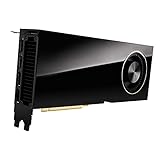
PNY VCNRTXA6000-PB NVIDIA 48GB GDDR6 Graphics Card | $6,169.96 | Buy on Amazon |
| 4 |

|
msi Gaming GeForce GT 1030 4GB DDR4 64-bit HDCP Support DirectX 12 DP/HDMI Single Fan OC Graphics... | $119.97 | Buy on Amazon |
| 5 |

|
VIPERA NVIDIA GeForce RTX 4090 Founders Edition Graphic Card | $4,440.00 | Buy on Amazon |
What the comparison measured
The benchmark compared plain Gemma 4 26B inference with published results for Jev 1.13.0. Its author describes a pre-registered effort to read probabilities for allowed answer labels from Gemma, then compare accuracy and calibration with DiffusionGemma and the published Jev results. The headline comparison here is plain Gemma versus Jev.
The test used community 4-bit AWQ builds of both 26B model checkpoints on an NVIDIA L4 with 24 GB of memory. For the model arms, the author reports matched flags, prompts, answer-label tokens, and scoring code. A Jev request parser supplied the shared prompt format for Gemma, and the evaluation used Bespoke Labs’ scoring definitions.
Recommended Free Tools
#1 Best Overall
- 24GB Video Memory
- Fourth Generation Tensor Cores
- HALF HEIGHT BRACKET ONLY
The public suite contained 3,880 human-labeled records in 13 subsets. The author reports that rebuilt subset checksums matched the published suite. The tasks covered several answer formats:
- Yes/no: BoolQ, PAWS, SQuAD 2.0, Civil Comments, and Aegis 2.0.
- Multiple choice: MultiNLI, PubMedQA, VitaminC, and English- and German-language MASSIVE intents.
- Five-level ratings: HelpSteer2 and SummEval.
The Jev figures came from Bespoke Labs’ published run; the author did not make new Jev API calls for this comparison. The benchmark article was published September 24, 2026: Plain Gemma 4 26B vs Jev on one EC2 L4.
Rank #2
- 900-2G193-0000-000
How accuracy differed by answer format
The table reports the article’s accuracy figures. Its point differences are percentage-point differences, not relative percentage changes.
| Question type | Records | Jev 1.13.0 | Plain Gemma 4 26B | Reported comparison |
|---|---|---|---|---|
| All tasks | 3,880 | 77.3% | 75.3% | Jev ahead by 2.1 points; reported 95% range 0.2–4.0 points |
| Yes/no | 1,399 | 84.6% | 84.8% | Effectively tied; reported difference range spans 2.8 points ahead to 2.5 behind |
| Multiple choice | 1,848 | 82.8% | 78.3% | Jev ahead by 4.5 points; reported range 2.0–7.1 points |
| Five-level rating | 633 | 45.2% | 45.5% | Nearly the same exact-level accuracy |
The overall and category ranges should be interpreted cautiously. Jev per-record answers were not published, so the author compared independent proportions rather than paired outputs. Pairing could narrow the ranges if it were possible; correlations between records that share passages or source articles could widen them. The figures therefore do not establish how the models would compare on a different dataset or prompt.
Rank #3
- Memory: 48GB, GDDR6
- PCI Express x16 4.0 interface
- Maximum resolution: 7680 x 4320 pixels
- Ports: 4 x DisplayPorts
- Backed by a 3 years manufacturers warranty
Calibration: Gemma improved substantially with labeled examples
Accuracy measures whether an answer is correct; calibration measures whether a model’s stated confidence aligns with how often its answers are correct. In this benchmark, the reported median expected calibration error (ECE) across 13 subsets was 0.071 for Jev as shipped and 0.180 for plain Gemma as shipped. Lower ECE indicates closer agreement between confidence and observed accuracy under the benchmark’s measure.
After fitting one temperature using 50 labels from each subset, Gemma’s reported median ECE fell to 0.080. It remained above Jev on 8 of the 13 subsets after fitting. This is a comparison with calibrated Gemma and uncalibrated Jev; the article notes that Jev could also improve if calibrated on its own outputs. Temperature fitting also requires labeled examples, so its usefulness depends on whether suitable labels are available for the intended task.
Rank #4
- Chipset: NVIDIA GeForce GT 1030
- Video Memory: 4GB DDR4
- Boost Clock: 1430 MHz
- Memory Interface: 64-bit
- Output: DisplayPort x 1 (v1.4a) / HDMI 2.0b x 1
Reported latency and estimated cost on the L4
For the tested prompts, the author reports 61 milliseconds per plain Gemma decision on the instance and estimates a maximum cost of $5.43 per million decisions at full GPU utilization. The cost calculation uses the stated g6.xlarge hourly rate. For comparison, the article estimates Jev at $5.54 per million decisions using the study’s median input length of 132 tokens.
These estimates are workload-specific, not universal prices. The Gemma estimate assumes the GPU is fully utilized; an hourly instance still incurs cost while idle, and longer prompts increase serving costs. The Jev estimate is tied to the stated median input length. To compare economics for a deployment, use your own prompt lengths, traffic patterns, concurrency, and expected utilization rather than treating either figure as a flat per-decision price.
Do these 3 things before closing this tab:
1Scan for outdated or missing drivers - takes under a minute2Repair Windows errors before they cause bigger problems3Fix the driver behind crashes, sound loss and screen glitchesBest Value
- 16,384 NVIDIA CUDA Cores
- Supports 4K 120Hz HDR, 8K 60Hz HDR and variable refresh rate as indicated in HDMI 2.1A
- New streaming multiprocessors: up to 2x power and power efficiency
- Fourth generation tensor cores: up to 2x AI power
- Third-generation RT cores: up to 2x ray tracing performance
What the result does—and does not—support
The benchmark is a useful point of reference for this particular setup, but it has material limits. Its closing summary identifies one L4 in us-east-1, three instances across runs, one run per arm, community 4-bit checkpoints, and public datasets that predate Gemma 4 and may overlap its training data. The results do not establish performance on other hardware, quantizations, prompt templates, or traffic distributions.
For a practical choice, weigh the tested task mix alongside deployment needs. Jev led overall and on multiple choice in this comparison; yes/no and five-level exact-match accuracy were nearly level. Gemma’s calibration improved sharply after fitting on labeled examples, while its inference latency and estimated compute cost describe only the tested prompts and full-utilization scenario. A hosted API and self-hosted GPU also impose different operational responsibilities, which this benchmark’s accuracy results alone do not resolve.
Quick Recap
Product prices and availability are accurate as of the date/time indicated and are subject to change. Any price and availability information displayed on Amazon at the time of purchase will apply.

