
The Tool Desk
Outbyte Driver Updater FREEScan for outdated or missing drivers - takes under a minuteDriver Scan →Outbyte PC Repair FREERepair Windows errors before they cause bigger problemsFix Now →IoT can generate durable revenue by pairing connected devices with services customers continue to value: monitoring and maintenance subscriptions, usage-based charges, Hardware-as-a-Service, or fees tied to a measurable outcome. The right choice depends on what customers value, what you can measure and bill reliably, and whether the economics still work after connectivity, cloud, support, updates, and hardware costs.
How IoT generates revenue
A connected product can create revenue beyond its initial sale by supporting services throughout its lifecycle. Telemetry and device interactions may also help improve products, customer support, and operations, creating opportunities for paid services. Those are potential value pathways, not automatic revenue: the offer must solve a recurring customer problem, and the business needs a way to deliver and charge for it.

Common IoT business models include subscriptions, usage pricing, Hardware-as-a-Service (HaaS), outcome-based pricing, and combinations of these approaches. The distinctions are important: a subscription charges for ongoing access or service, usage pricing charges for a defined unit of consumption, and outcome pricing depends on an agreed result.
Which IoT business model should you choose?
Connected product plus subscription
Sell the equipment and charge periodically for services such as remote monitoring, predictive maintenance, dashboards, fleet visibility, proactive support, or service levels. This can add recurring digital revenue while leaving the initial hardware sale intact. The subscription must remain useful over time; otherwise customers may cancel. Include the costs of connectivity, cloud telemetry, customer support, security, and software updates in the economics. Zuora’s IoT monetization guide describes this as an entry model for adding a recurring digital offer to a hardware business.
Quick wins for a faster PC:
Repair Windows errors before they cause bigger problemsFix Now →Fix the driver behind crashes, sound loss and screen glitchesFind Drivers →Clear out junk files and repair common Windows errorsFree Scan →#1 Best Overall

- Dual-Core Performance Up to 240 MHz: Run sensor processing, wireless communication, automation logic and connected-device tasks on a 32-bit dual-core ESP32 platform designed for responsive embedded and IoT projects
- Built-in Wi-Fi and Bluetooth 4.2: Connect to 2.4 GHz Wi-Fi networks or use Bluetooth Classic and BLE for wireless sensors, smart devices, remote controls, home automation and other connected projects
- Flexible Power-Saving Modes: ESP32 power-management features support dynamic clock scaling and low-power operating modes, helping developers reduce energy use in compatible sensing, monitoring and connected-device applications, suitable for battery-powered Internet of Things (IoT) devices.
- USB-C Programming with CP2102: Connect through USB-C for power, sketch uploads and serial monitoring, while GPIO, UART, SPI and I2C interfaces support sensors, displays, motor drivers and other modules (USB-C cable not included)
- Over-the-Air Update Support: Configure OTA functionality through a compatible ESP-32 software framework to update deployed firmware over Wi-Fi without reconnecting the board by USB for every revision
Usage or consumption pricing
Charge for a defined, observable unit such as data volume, service hours, API calls, or machine cycles. A usage model can make charges track consumption, but it is not simple pay-per-use unless the business can reliably turn device events into billable units. Define what counts as usage, how it is measured, and how customers will see it on a bill. Zuora highlights the need for mediation that converts telemetry into usage charges.
Hardware-as-a-Service
Bundle equipment, software, and maintenance into a recurring fee. The customer pays for access or service rather than making a conventional upfront capital purchase. This can lower the customer’s initial purchasing hurdle, but it shifts more responsibility to the provider for equipment financing, lifecycle management, maintenance, and refreshes. Model those commitments before setting the recurring price. Zuora’s guide outlines this model alongside subscriptions and usage pricing.
Rank #2

- Certified & Future-Ready: Espressif-certified ESP32-WROOM-32E ensures full hardware compatibility and lifetime firmware support. Upgraded 8MB Flash handles IoT data and OTA updates.
- Dual-Core Speed: 240MHz dual-core processor runs Wi-Fi/BLE and sensors 2x faster. 38 GPIO pins (10 RTC) support SPI/I2C/UART for LCDs, motors, and industrial sensors.
- Plug & Play Dev: USB-C driver pre-installed: upload code instantly on Windows/Mac/Linux. Works with Arduino IDE, MicroPython, and Espressif IDF.
- All-Environment Ready: Run Wi-Fi smart switches (Home Assistant) and BLE tracking on one board. Industrial-grade stability (-40°C~85°C) for outdoor/automated systems.
- Advantages: The ESP32 development board offers high performance, low power consumption, and rich wireless connectivity, making it suitable for developers of all levels, especially beginners.
Outcome-based pricing
Charge against a result agreed with the customer, such as equipment uptime, energy savings, or units produced. This can align incentives, but only if both sides agree on the baseline, how the result is measured, what counts toward it, and how responsibility is allocated. A sensor reading alone does not prove that the IoT service caused an improvement or guarantee savings.
Hybrid offers
Combine models when they correspond to distinct customer value: for example, equipment sales with a monitoring subscription, usage charges, support tiers, or paid add-ons. Zuora says many business leaders blend two or three models as their offers mature; treat that as the vendor’s guidance, not a universal formula. Each component should have a clear value proposition and billing rule.
Free tools Windows power users keep installed
One-click scans. No signup required.
Rank #3
How to choose and price an IoT offer
- Start with the customer problem. Identify who receives value, what problem the service solves, and how often that problem recurs. Do not choose a pricing label before identifying the value customers will pay for.
- Decide what the customer owns or accesses. Establish whether the customer buys equipment, rents it, subscribes to a service, or combines these arrangements.
- Define the billing basis. Choose whether charges are based on time, device count, measured usage, or an agreed outcome. Explain the meter and billing rules in terms customers can verify.
- Test adoption friction and costs. Consider the customer’s capital budget and the provider’s hardware financing, connectivity, cloud, support, software-update, and billing costs.
- Check measurement and margin at scale. Confirm that the meter or outcome is precise and trusted enough for billing, and that expected margins remain healthy as the device fleet grows.
- Pilot and learn. A practical starting point is a narrowly scoped paid monitoring or maintenance service where customers already see recurring value. Track actual usage and service costs, then test willingness to pay. Add consumption billing only when billable events can be measured and explained; offer outcome pricing only after agreeing on the result, baseline, and attribution. This is a decision framework, not a sequence that suits every industry.
These trade-offs draw on the model descriptions in Zuora’s guide and the device and data operations described in AWS IoT Core documentation. Neither source establishes a general margin benchmark or a universally best model.
What an IoT monetization operation needs
A monetized IoT service is an operating business, not just a sensor sale. Depending on the offer, its requirements may include secure device identity and connectivity, onboarding and fleet management, firmware and software updates, data ingestion and routing, storage, analytics, monitoring, customer support, and billing aligned with the offer.
Rank #4

- 2.4GHz Dual Mode WiFi + Bluetooth Development Board
- Support LWIP protocol, Freertos
- SupportThree Modes: AP, STA, and AP+STA
- Ultra-Low power consumption, Compatible with Arduino IDE
- ESP32 is a safe, reliable, and scalable to a variety of applications
For example, AWS documents IoT Core connectivity and message routing, fleet services, edge processing, industrial data tools, and digital twins. The specific capabilities and costs depend on the deployment; a service that bills for usage also needs a dependable way to translate telemetry into customer-readable charges. AWS’s IoT Core documentation describes its own platform architecture, not a requirement to use AWS.
AWS’s smart-home solution guidance describes telemetry and user interactions as potential inputs to product improvement, customer experience, operational efficiency, predictive maintenance, self-service support, and new service models. Whether a business may use particular data, and on what terms, depends on its customer expectations, data rights, security practices, geography, and industry. These sources do not provide jurisdiction-specific legal advice.
Recommended Free Tools
Best Value
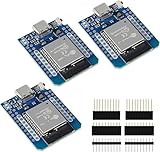
- D1 Mini NodeMCU Type-C ESP32 WLAN WiFi Bluetooth IoT Development Board 5V Compatible for Arduino
- Designed with ultra-low power technology, it offers the full range of performance and features of the ESP32 chip. The pin arrangement provides compatibility with the modules developed for the D1 Mini ESP8266 while also offering fast WLAN, enhanced GPIO, Bluetooth functionality, and with its higher performance, a wider range of applications.
- 100% compatible with Arudino IDE, Lua and Micropython, it shows robustness, versatility, and reliability in a wide variety of applications and power scenarios.
- All I/O pins have interrupt, PWM, I2C and one-wire capability, except the pin DO.
- Designed with ultra-low power technology, it offers the full range of performance and features of the ESP32 chip. The pin arrangement provides compatibility with the modules developed for the D1 Mini ESP8266 while also offering fast WLAN, enhanced GPIO, Bluetooth functionality, and with its higher performance, a wider range of applications.
What reported IoT examples show—and what they do not
AWS has published customer examples illustrating operational changes associated with connected systems. These figures are reported by AWS, not independently verified here; they should not be treated as typical results or proof that monetization alone caused the changes.
| Customer and use | AWS-reported result | Source and qualification |
|---|---|---|
| Fujitsu General used AWS IoT Core to add intelligent connectivity and remote monitoring to air-conditioning systems. | 250% growth in adoption and 60% savings on monthly computing costs. | AWS-reported figures in its 2025 blog; the page does not establish that monetization alone caused the outcomes or that another company should expect them. AWS customer examples. |
| Toyota used AWS IoT SiteWise in manufacturing facilities. | Operational availability rose from 78–82% to 92%, and monthly downtime fell from 40 hours to 20 hours. | AWS-reported figures in its 2025 blog; they are customer-case results, not independently verified or a forecast for other manufacturers. AWS customer examples. |
| Konecranes’ shift from rigid annual maintenance contracts toward more flexible data subscriptions. | Zuora reports a 29% increase in active subscribers in the reported period. | Vendor-authored example in Zuora’s guide; the figure is not independently verified here, and the guide reproduces a customer quote rather than establishing an independent causal result. |
Zuora’s guide attributes this statement to Raheel Farhat, Digitalization & Transformation Lead at Konecranes: “The data they provide delivers tremendous value to our customers. We just needed to find the best way to monetize that value. Zuora helped us transition to a more flexible subscription model.” It is a quote reproduced in Zuora’s guide; the original interview was not independently verified here.
Building and connecting an IoT product
For developers, an IoT development board is one possible starting point for a connected product. AWS provides SDKs, samples, developer guides, and porting guides for products on different hardware platforms. Board suitability depends on requirements such as radio, power, protocol, and cloud compatibility; AWS documentation does not verify any particular board’s performance or fit. AWS IoT Core documentation covers supported development resources.
Other service categories to evaluate include managed IoT cloud and edge platforms, cellular connectivity, analytics and fleet management, and subscription or usage billing software. AWS’s IoT partner page names providers including Soracom in connection with device-data connectivity and on-demand services; listings can change, so check current capabilities and availability directly. A vendor’s inclusion here is not an endorsement or a claim about commercial terms.
Do these 3 things before closing this tab:
1Scan for outdated or missing drivers - takes under a minute2Clear out junk files and repair common Windows errors3Fix the driver behind crashes, sound loss and screen glitchesQuick Recap
Product prices and availability are accurate as of the date/time indicated and are subject to change. Any price and availability information displayed on Amazon at the time of purchase will apply.

